Shanghai's automotive industry rides foreign investment surge
![BMW displays its 320 Group 5 racing car, which debuted in 1977, at Auto Shanghai. [Photo Li Fusheng China Daily] 1.png](/cmsres/d2/d2a9a423c18b44bc98a06fefb661e735/262f30ac341c2dc2dcd7a016293336c3.png "BMW displays its 320 Group 5 racing car, which debuted in 1977, at Auto Shanghai. [Photo Li Fusheng China Daily] 1.png")
Despite the complexities of the current international landscape, foreign-funded complete vehicles and supply chain enterprises have not shied away from China.
Instead, they have converged on Shanghai for the 21st Shanghai International Automobile Industry Exhibition — running from April 23 to May 2 — bringing together a plethora of innovative ideas and grand visions.
The influx of foreign-invested projects is injecting a strong impetus into the city's automotive industry. Indeed, its robust auto industry chain foundation and vast consumer market have emerged as key advantages in the next phase of the global auto sector restructuring.
Ripple effect
In a significant move towards bolstering its automotive industry, the Shanghai Municipal Government and Japan's Toyota Motor Corporation signed a strategic cooperation agreement on April 22.
The agreement represents a substantial step forward for the auto giant's wholly-owned Lexus new energy vehicles production plant in Shanghai's Jinshan district.
With a total investment of 14.6 billion yuan ($2 billion), the project is expected to start construction in June and get the first vehicle off the production line in 2027.
Following US electric automaker Tesla's Shanghai Gigafactory, it signifies another globally impactful new energy vehicles initiative that is settling in Shanghai.
Aside from manufacturing, the agreement outlines collaboration across the EV value chain — encompassing areas such as partnerships with upstream and downstream enterprises, autonomous driving, hydrogen energy, battery recycling and supply chain logistics.
The announcement of Toyota's Lexus project in Jinshan has sparked interest from industry players in cities like Ningbo, Suzhou and Changshu, seeking supply and other commercial opportunities.
Also on April 22, German luxury auto brand Mercedes-Benz held a "technology day" event in Shanghai. Ola Källenius, chairman of the board of management of Mercedes-Benz Group AG, emphasized the importance of the group's glocalization in China.
Over the past two decades, China has been Mercedes-Benz's second home, evolving from "in China, for China" to a new phase of "in China, for the world," the businessman noted.
The group is currently collaborating with Chinese large language model companies to optimize cloud infrastructure in intelligent assisted driving, integrating China's LLMs into Mercedes-Benz models.
On April 23, the first day of the Auto Shanghai 2025, another German automotive giant, BMW AG, showcased its collaboration with Chinese LLMs businesses — with two AI intelligent bodies set to be integrated into next year's domestically produced BMW new-generation models.
More investments
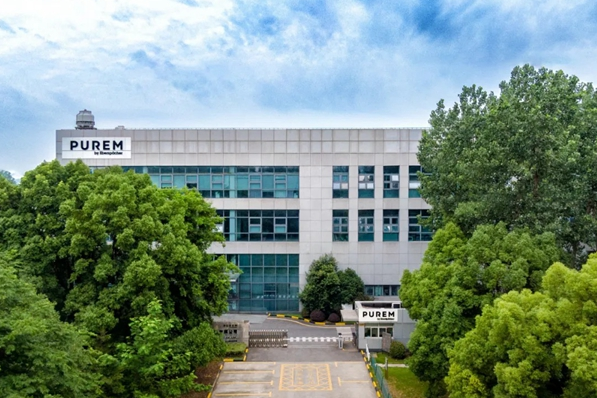
As foreign-funded complete vehicle factories cluster in the city, the supply chain naturally follows suit — this year, the pace of foreign investments in the automotive industry chain in Shanghai has notably quickened, with several key projects landing in its different regions.
On Jan 6, German automotive components and systems manufacturer Schaeffler Group established a wholly owned subsidiary in Jiading district.
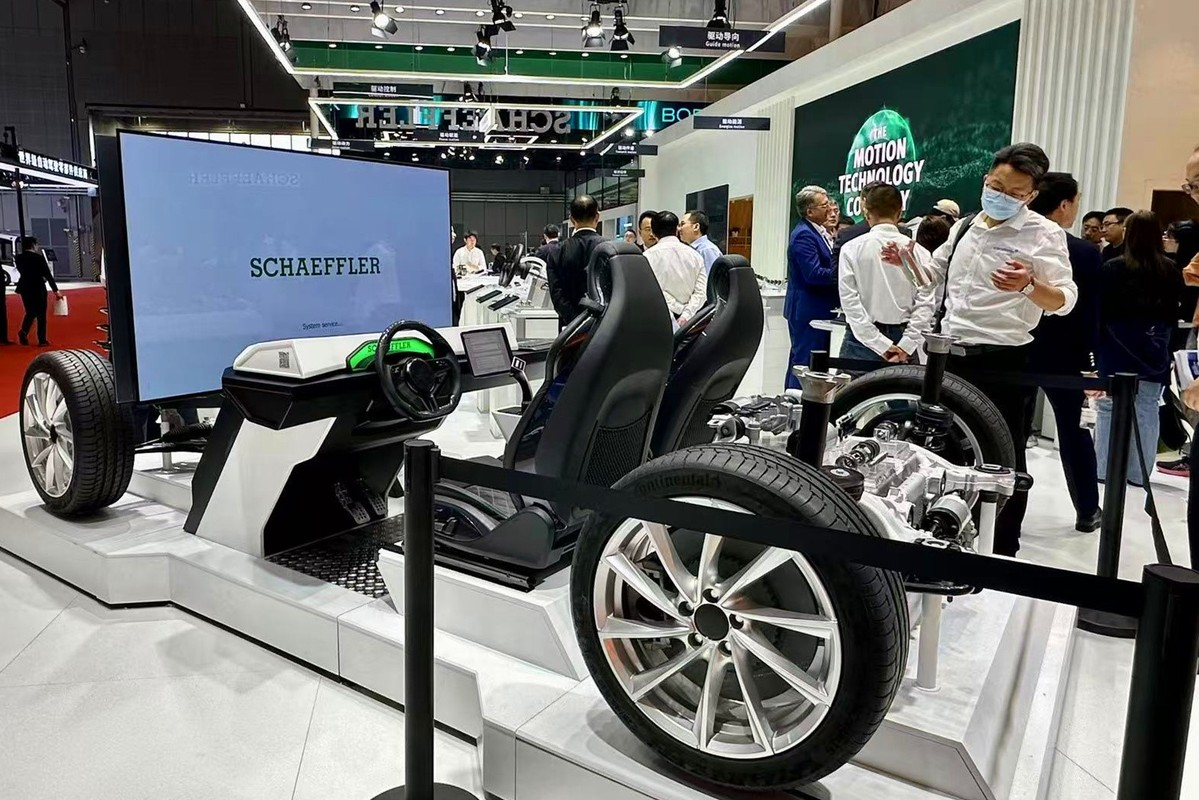
The facility focuses on hydrogen-related technologies and products to provide hydrogen solutions for end-users in different applications scenarios.
On Feb 11, Tesla's Shanghai Megafactory officially commenced operations in the Lin-gang Special Area, with initial plans to produce 10,000 commercial energy storage batteries annually — totaling nearly 40 gigawatt-hours of energy storage.
In March this year, the first batch of such batteries were shipped from Shanghai port to Australia, marking production in China and global delivery.
Tesla anticipates a minimum of 50 percent year-on-year growth in energy storage product installations by the end of 2025.
On April 14, Cellasto — a brand for the microcellular and compact polyurethane elastomers developed by German chemical company BASF — invested roughly 500 million yuan to establish a second plant in Pudong New Area.
The new facility aims to provide automotive shock absorbers for China's new energy vehicles market, with operations expected to start in 2027.
'Shanghai speed'
Shanghai continues to defy expectations with its rapid industrial pace. Toyota's Lexus project — scheduled to run from initial talks in 2023 to a construction launch this June and a 2027 vehicle rollout — is widely expected to showcase the city's unrivalled efficiency.
Tesla's Shanghai Megafactory set a new standard — taking less than nine months from commencing construction in May last year to starting production in February this year.
Shanghai's agile approach to the evolving new energy vehicles market includes a coordinated mechanism and online platforms for quick responses — streamlining processes from land allocation to infrastructure adjustments.
With foresight that secured coveted land for the Lexus factory, the city's robust industrial ecosystem and talent pool have made it a hub for automotive production.
So far, Shanghai has built automotive industry clusters and developed a complete industry chain covering R&D, design, smart manufacturing, brand marketing, after-sale services and cultural exchanges, reinforcing its position as a global automotive powerhouse.
Source: Jiefang Daily