Explore cultural destinations housed in century-old Shanghai landmarks
In Shanghai, every heritage building holds a piece of the city's memory. From the Bund to Suzhou Creek, three century-old structures, the former Brunner-Mond Building, the former Yongxing Warehouse, and the former Guang'er Warehouse, have been restored with care and brought back to active use. Once central to the city's early trade, industry, and finance, they now serve as cultural destinations shaped by contemporary demand.
01 Former Brunner-Mond Building
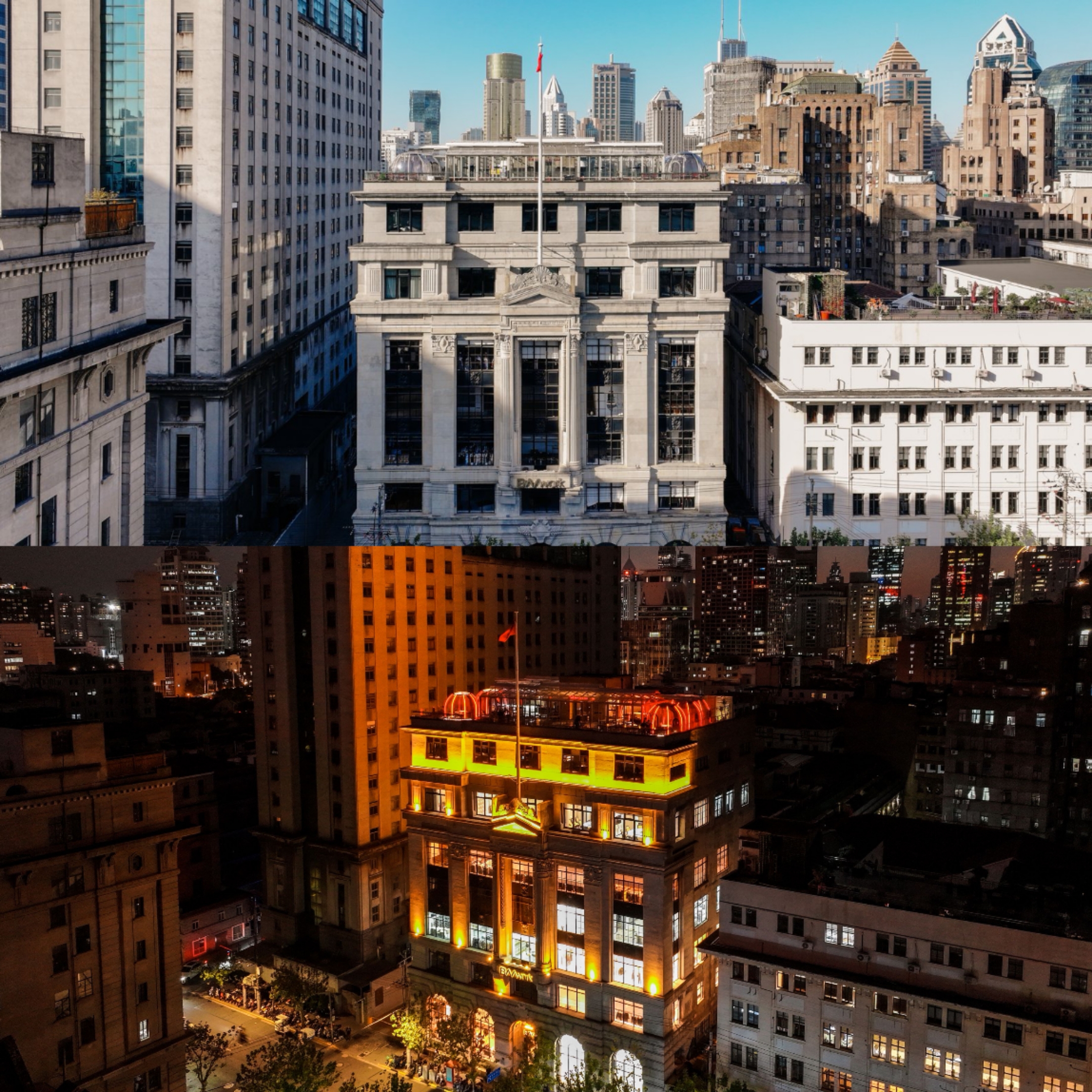
The former Brunner-Mond Building stands at No 133 Middle Sichuan Road in Huangpu district. Constructed between 1921 and 1923, it originally housed the China headquarters of the British chemical company Brunner Mond & Co. Over the years, this building witnessed the development of China's modern chemical trade.
The seven-story reinforced concrete structure is a representative example of neoclassical architecture along the Bund, influenced by British interpretations of Renaissance design. Recent restoration returned the granitic plaster facade to its original texture and tone. Architectural details such as the five steps leading to the entrance, the four-leaf brick door, and the corridor ceiling reliefs have all been preserved.
Today, the building has been reimagined as a mixed-use space combining creative offices, cultural venues, and retail experiences. While its historic character remains intact, the interior has been modernized to accommodate galleries, art institutions, and curated concept stores. Regular art exhibitions and cultural salons keep this century-old landmark active and relevant.
02 Former Yongxing Warehouse
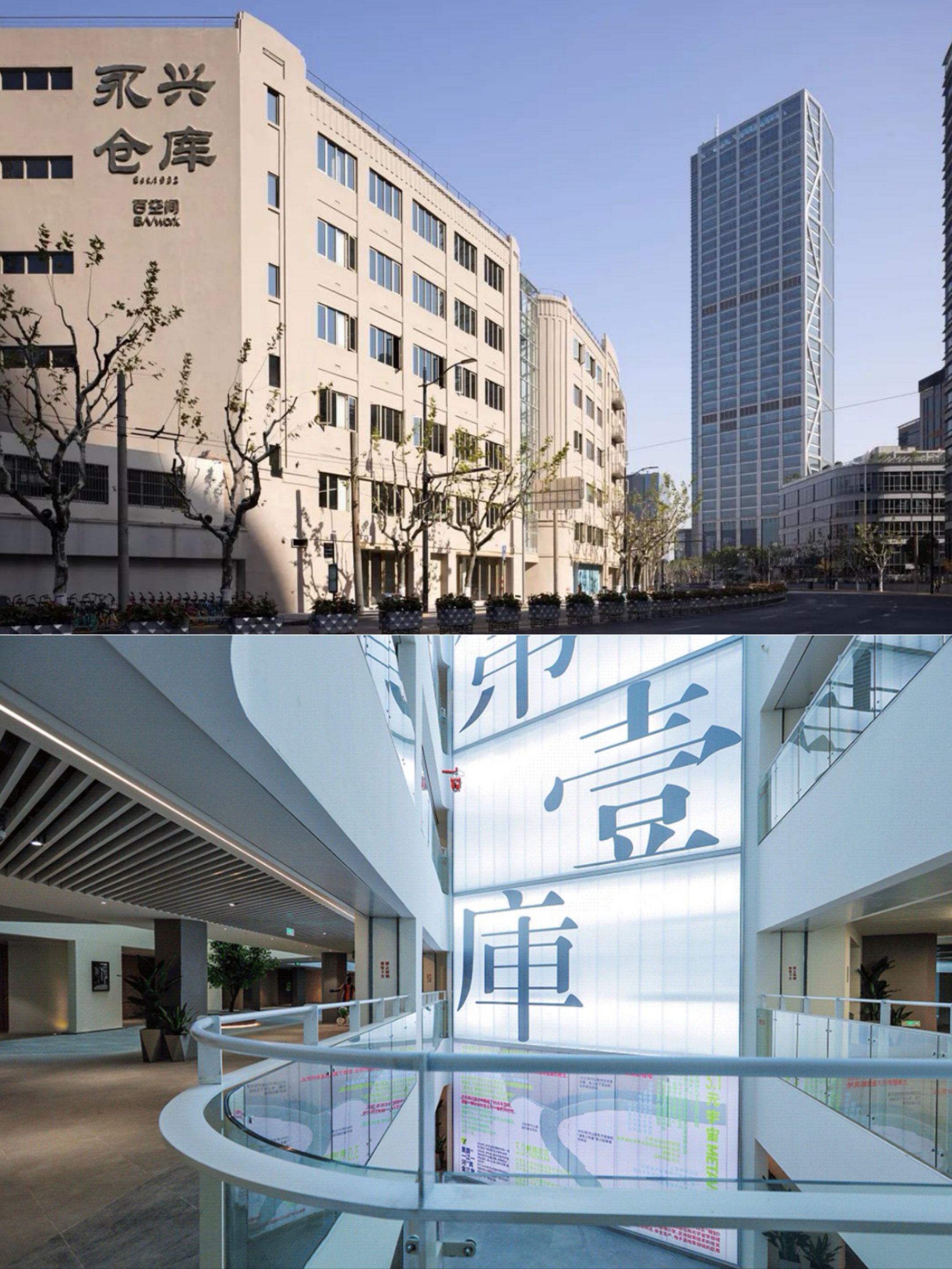
The former Yongxing Warehouse, located at No 61 Yangshupu Road in Hongkou district, was first built in 1929 and expanded in 1935. At the time, the surrounding area was one of Shanghai's most important industrial corridors. The warehouse served as a major storage facility supporting trade and shipping networks and earned recognition as the "Far East's first warehouse".
Its facade reflects a balance between industrial function and restrained decorative design. Clean lines and subtle Art Deco influences define its exterior. In 2021, the building underwent preservation-focused renovation. Key historical elements, including more than 400 hexagonal columns, were retained. A contemporary 10-meter-high glass-domed lobby was introduced to improve circulation and light while echoing geometric motifs found in the original design.
This revitalized complex has attracted more than 20 enterprises across tech applications, green fashion, and cultural sectors. Through ongoing industry forums and creative exhibitions, it has evolved into a key creative hub within the North Bund, demonstrating the enduring possibilities of industrial heritage.
03 Former Guang'er Warehouse
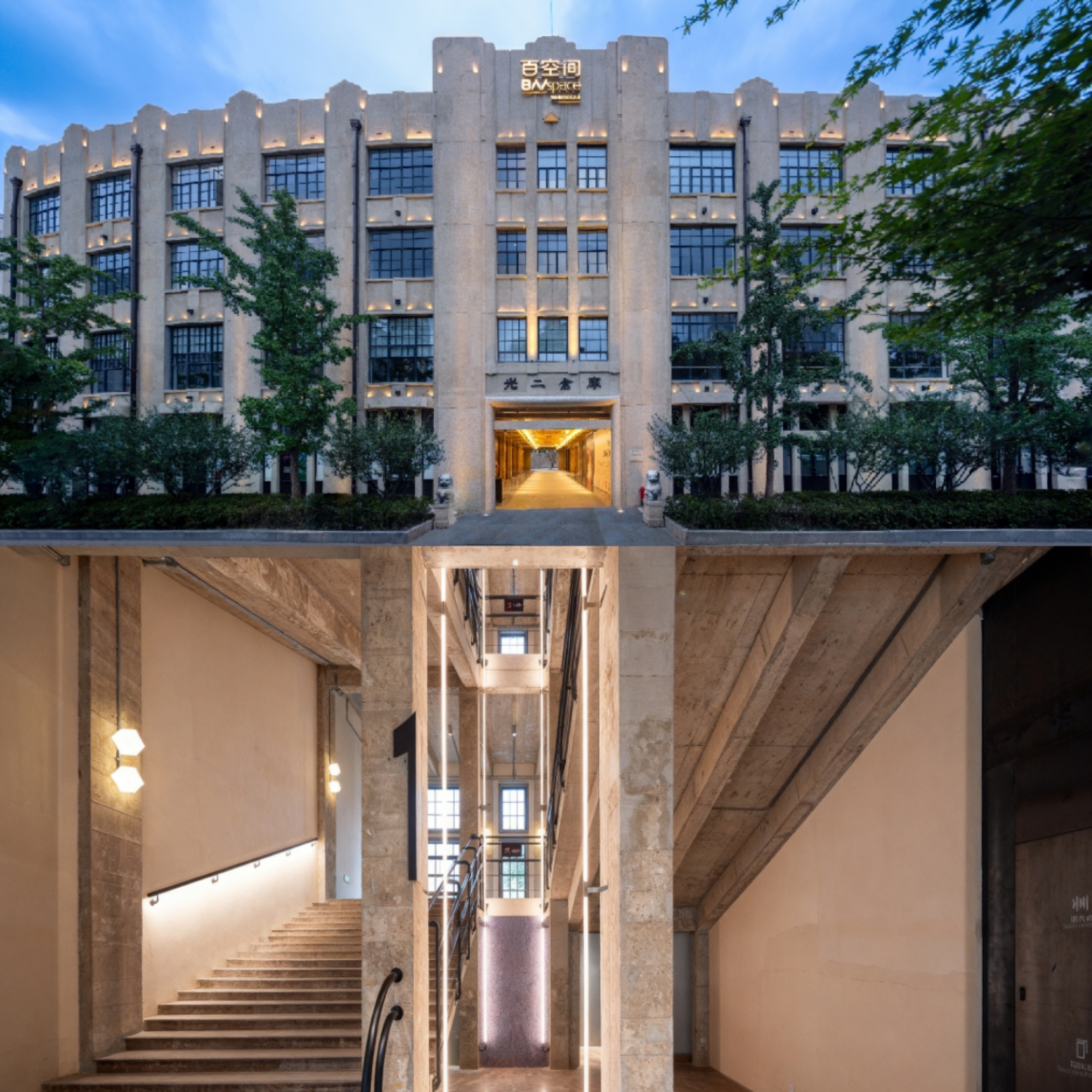
The former Guang'er Warehouse, located at No 195 Guangfu Road in Jing'an district, was built in 1933 as a warehouse for the Bank of Communications. It was among the bank's largest and best-equipped storage facilities of its time.
The building exemplifies a disciplined Art Deco style. Its south facade, symmetrically arranged along Suzhou Creek, features a gray granitic plaster finish and vertical geometric moldings. The entrance is marked by raised decorative lines and a geometric pediment.
During restoration, careful attention was paid to the south facade, repairing the granitic plaster and geometric moldings to restore its historic appearance. Inside, the column-free floor slab structure, typical of 1930s warehouse design, was fully preserved.
This building carries the legacy of Shanghai's modern industrial past and its technical ingenuity, having witnessed the evolution of financial warehousing and the rise of the creative industries. Today, it houses flexible art exhibition spaces, design and homeware showrooms, curated fashion boutiques, and showroom-style offices. A selection of distinctive dining options, including Michelin Guide restaurants, adds to its appeal.
Sources: Shanghai Historical Building Protection Administration Center, Bai Space