British girl stands tall after scoliosis surgery in Shanghai
A 12-year-old girl from the UK, also known as Little D, is recovering well after undergoing complex corrective surgery for severe scoliosis in Shanghai last month. Once facing the prospect of never standing straight, she now shows promising signs of recovery.
Her condition, marked by a 104-degree spinal curvature, had worsened rapidly despite bracing, prompting her family to seek specialized treatment in China.
After unsuccessful attempts to find adequate treatment in Europe, Little D's family turned to the Spine Center at Xinhua Hospital, affiliated with the Shanghai Jiao Tong University School of Medicine. Doctors there determined she required immediate surgery.
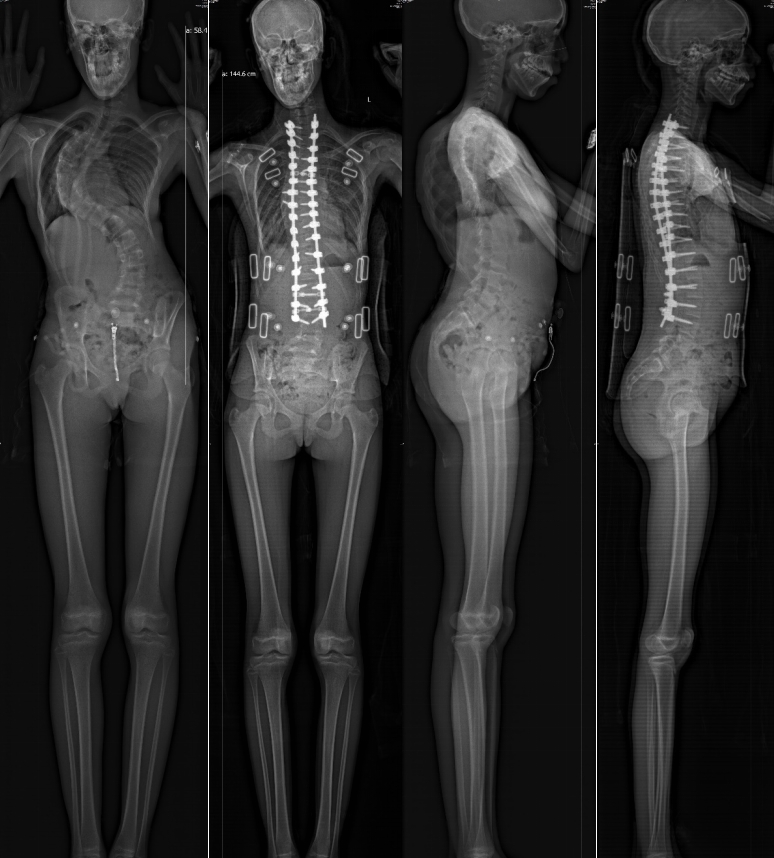
Her case was particularly complex due to the severity of her spinal deformity, significant razorback deformity, and restrictive respiratory dysfunction.
Professor Yang Junlin, director of the Spine Center and lead surgeon, described the rapid progression of her scoliosis as "extremely rare in clinical practice".
He explained that the surgical team chose a direct corrective surgery over the more common halo-gravity traction because of the patient's sensitivity to pain and difficulty tolerating prolonged traction.
The four-hour operation, completed in July, involved osteotomy and derotation techniques to correct the severe spinal curvature while preserving as much spinal flexibility as possible.
Surgeons limited the spinal fusion to L4, preserving 20 percent more bending function compared to traditional fusion at L5. The team achieved nearly 80 percent correction of the scoliosis.
Following the procedure, Little D grew eight centimeters taller and regained the ability to walk, bend, and climb stairs within a week.
Her family expressed high praise for the medical services received at Xinhua Hospital, highlighting the hospital's quick response, multidisciplinary approach, and international patient services.
They especially commended the professionalism and warmth evident throughout the entire treatment process, from pre-operative communication to post-operative support.
The family also noted the advantages of China's public hospitals, citing their short treatment cycles, advanced surgical techniques, and positive outcomes.
Xinhua Hospital has established itself as a key center for scoliosis treatment, founding the Scoliosis Clinical Research Center of Shanghai Jiao Tong University School of Medicine in 2018 and China's first Rare Spinal Deformity Treatment Center in 2023.
The center has performed over 900 severe scoliosis surgeries and nearly 100 for rare spinal deformities, with no fatalities or serious complications.
The team has pioneered minimally invasive techniques that reduce the need for blood transfusions in over 95 percent of patients and enable most patients to walk within two to three days after surgery.
Source: Shanghai Observer