Reed parrotbill: A small bird and Shanghai's green progress
[Video/the information office of the Fengxian district government]
At a recent rural arts event in Shanghai's Fengxian district, an outdoor installation inspired by the reed parrotbill invited visitors into the reed beds that define the bird's world. Created by Australian artist Kit Wise and his collaborators, the work reflects the species' close ties to Shanghai's coastal wetlands.
The reed parrotbill (Paradoxornis heudei), a globally near-threatened and second-class nationally protected species in China, depends on reed wetlands for shelter and food, and is rarely seen due to its specialized and shrinking habitats.
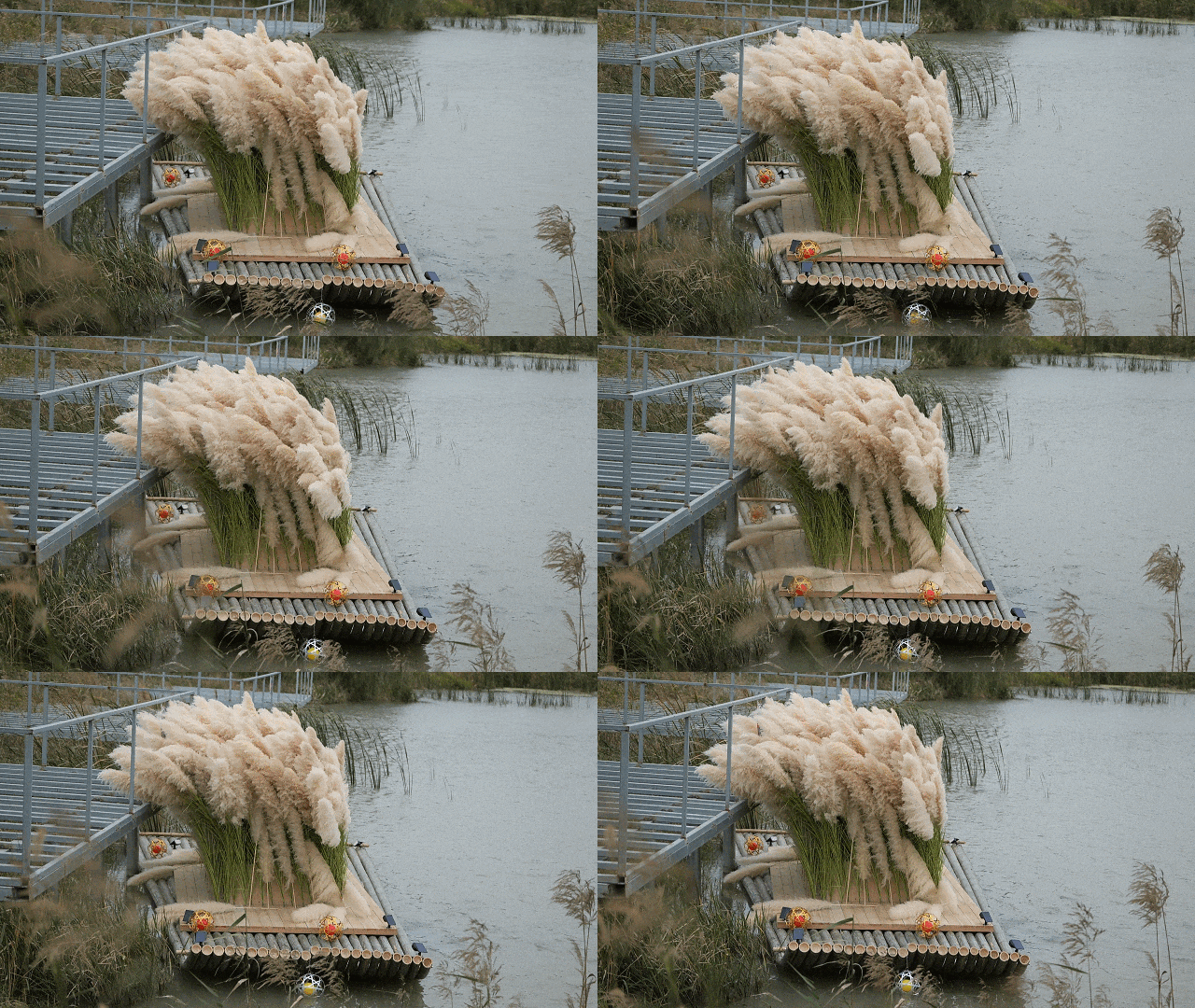
Wise, dean of the School of Art at Royal Melbourne Institute of Technology University in Australia, said the idea for the piece was inspired by his wife, Gu Xin, a Shanghai native whose childhood memories include wetlands once teeming with migratory birds. Learning about the reed parrotbill's unique reliance on reeds deepened his appreciation for the city's natural heritage.
The site is a special place for certain species, including the reed parrotbill, which is often found nesting and living in the reeds, Wise said, adding that he wanted to make something that would remind people about this special environment while also helping the birds to survive and thrive there.
His wife, now an associate professor at Monash University, said she is heartened that rare bird species have begun to reappear as local ecological conditions steadily improve.
Reed parrotbill's return
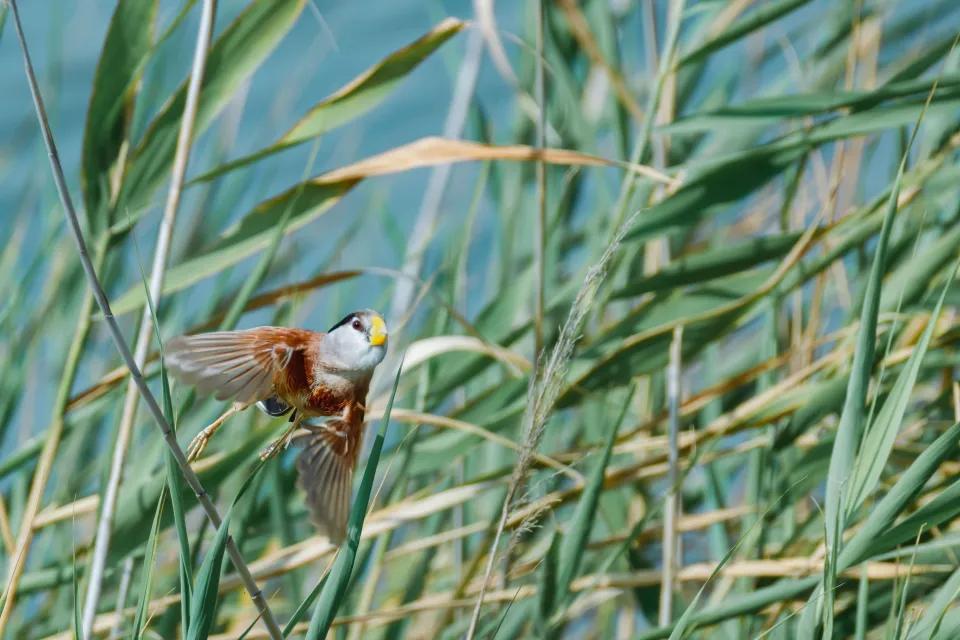
China's systematic research on the reed parrotbill began in the late 1980s, when a stable population was found on the coastal mudflats of Fengxian, confirming the species' continued presence in the lower reaches of the Yangtze River.
In later years, changes in land use and shifts in habitat conditions made sightings increasingly uncommon.
Encouraging progress came during Shanghai's first citywide biodiversity survey, launched in 2023. In August 2024, researchers in Fengxian photographed the reed parrotbill near the Bihaijinsha waterfront — a sighting that suggests a recovering local population and signals the health and resilience of the wetland ecosystem along the northern shore of Hangzhou Bay in Fengxian.
Ecological progress
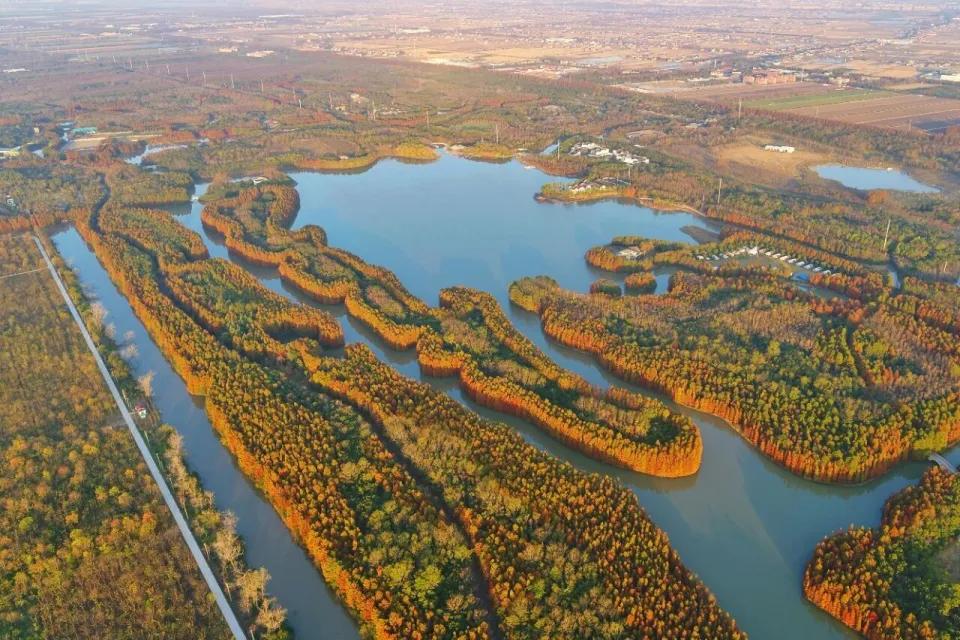
Recognized as an indicator species for tidal wetlands and reed habitats, the parrotbill's presence highlights the real improvements achieved through Fengxian's ongoing ecological restoration efforts.
Since setting the goal of becoming a national ecological garden urban district in 2017, Fengxian has advanced major initiatives, including large-scale forest development covering tens of thousands of hectares, a green corridor exceeding 500 kilometers, and the construction of 100 parks.
These efforts have created exemplary wetland landscapes, enhanced biodiversity, and strengthened the coastal ecological shield. In 2021, Fengxian became the first district in the city to receive the title of China's Most Eco-Competitive City.
The district now enjoys a mild average annual temperature of 16.5 C, more than 130 days of comfortable climate each year, and the fewest high-temperature days in Shanghai. It was recognized as a national climate-livable county-level region in 2023.
Source: Information office of the Fengxian district government