Stefan Paul: AI, predictive analytics key to Shanghai port efficiency
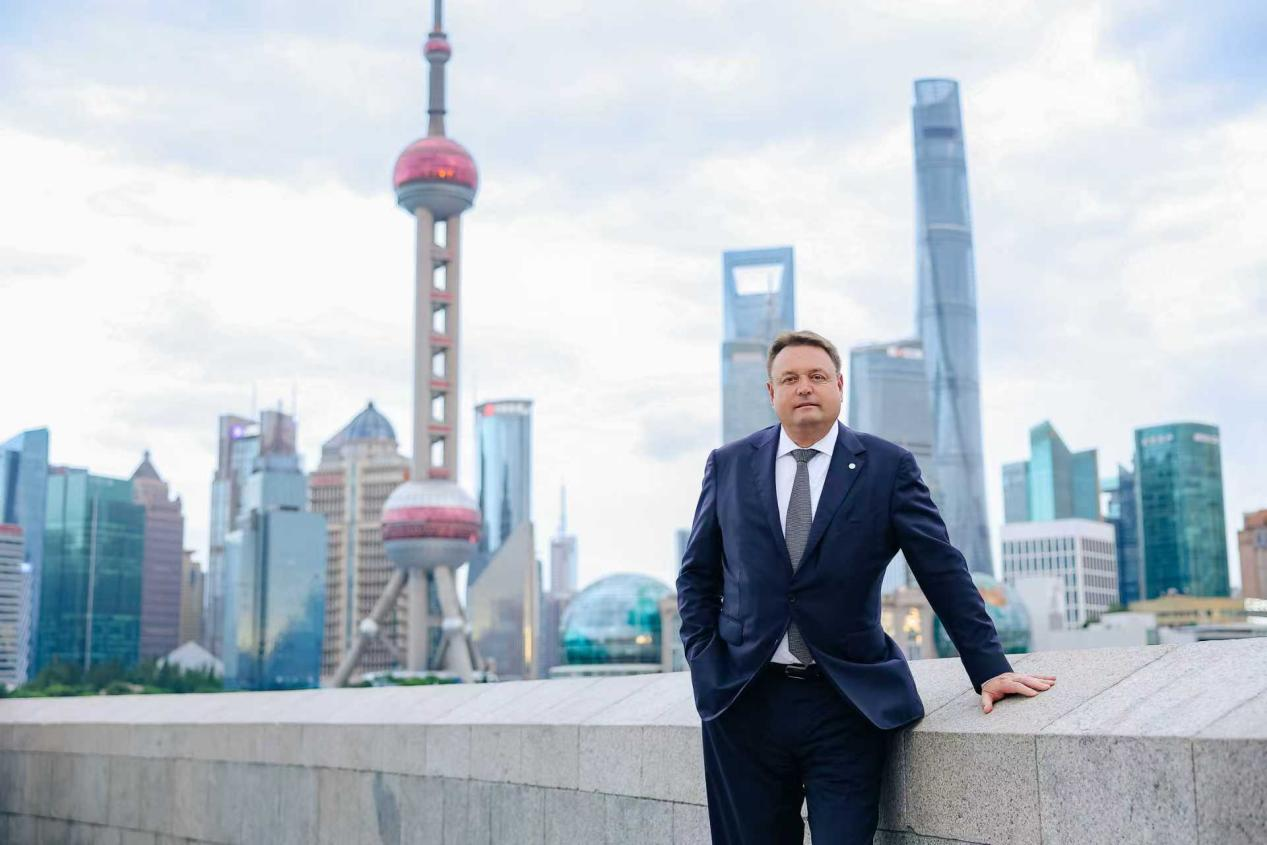
Shanghai's ambition to become the world's smartest and most adaptable port is achievable through digitalization and resilience measures, according to Kuehne+Nagel's Global CEO Stefan Paul, who outlined the company's commitment to supporting this vision during a media interview in Shanghai on Oct 11, ahead of the 37th International Business Leaders' Advisory Council (IBLAC) for the Mayor of Shanghai.
With Shanghai managing over 50 million TEUs annually, Kuehne+Nagel aims to leverage its expertise to enhance port operations.
"We're partnering with stakeholders to integrate advanced visibility tools, predictive analytics, and AI-driven planning into port operations," Paul said, noting that the goal is to optimize cargo flows and enable real-time decision-making.
Resilience is also a key focus. Kuehne+Nagel intends to strengthen multimodal connectivity and contingency planning.
According to Paul, "Our global network and local expertise allow us to respond swiftly and flexibly to changing conditions," which is essential for ensuring supply chain continuity amidst disruptions.
In line with Shanghai's "dual carbon" goals of achieving peak carbon dioxide emissions before 2030 and carbon neutrality before 2060, Kuehne+Nagel plans to introduce low-emission logistics solutions in China.
"Supporting the city's 'dual carbon' goals fully aligns with Kuehne+Nagel's Living ESG cornerstone in our Roadmap 2026," Paul stated.
The company's strategy incorporates various sustainable practices, including sustainable aviation fuel for air logistics, biofuel for sea freight, hydrogenated vegetable oil insetting, and battery electric vehicles for distribution, all supported by carbon offset programs.
Kuehne+Nagel is also investing in sustainable infrastructure. Paul specified that investments are being made "in energy-efficient warehousing and building standards, offering emission reduction practices and digital tools that optimize routing and reduce empty miles" across all locations, including China.
"We're also partnering locally to test zero-emission transport solutions and enhance data transparency for carbon tracking," Paul added, emphasizing Shanghai's potential as a leader in supply chain decarbonization.