Shanghai to prioritize innovation, opening-up for 2030 vision
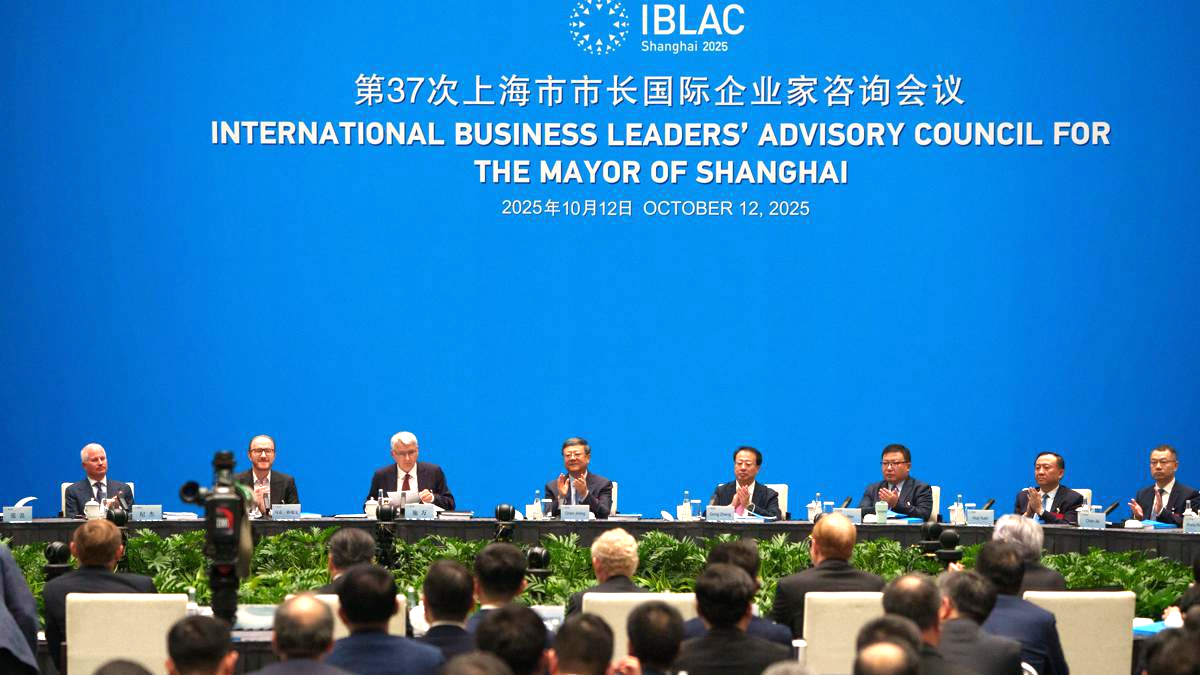
Shanghai's commitment to openness, innovation, and inclusiveness will be central to its continued success and development towards 2030, according to Chen Jining, Party secretary of Shanghai, speaking at the 37th annual meeting of the International Business Leaders' Advisory Council for the Mayor of Shanghai on Oct 12.
Chen emphasized that these qualities are "the most distinctive characteristics of Shanghai" and "the spiritual strength for Shanghai's future development".
The city plans to harness these traits to expedite the construction of "five centers", encompassing international economic, financial, trade, shipping, and scientific and technological innovation hubs, and to evolve into a globally influential socialist modern international metropolis.
Shanghai Mayor Gong Zheng highlighted the city's remarkable economic achievements, with its gross domestic product reaching 5.39 trillion yuan ($755.73 billion) last year, ranking fifth among global cities, and a per capita GDP exceeding $30,000.
"We have overcome multiple unexpected challenges and continued to advance the construction of the 'five centers'," Gong said, noting that Shanghai's core competitiveness has reached a new height.
Over the past five years, strategic emerging industries have contributed 43.6 percent of the total industrial output above designated size, while knowledge-intensive service industries accounted for 38 percent of GDP.
The total transaction value of financial markets reached 3,650 trillion yuan, placing Shanghai among the world’s top leading cities. Shanghai Port has maintained the top global ranking in container throughput for 15 consecutive years, becoming the first port in the world to handle more than 50 million TEUs annually.
Shanghai has also made notable progress in high-level reform and opening-up. Gong said that the four major platforms of the China International Import Expo have become increasingly prominent, with intended transaction volume exceeding $80 billion last year.
The city has rolled out nearly 1,200 reform measures, easing the burden on businesses by more than 116 billion yuan in 2024 alone. Over the past five years, Shanghai has attracted almost $100 billion in actual foreign investment, with an average of over 5,700 new foreign-funded enterprises established annually.
Looking ahead, Gong outlined several priorities, including advancing the "five centers", fostering new quality productive forces, implementing high-level reform and opening-up, and building a modern people's city.
Shanghai will focus on strengthening the core functions of the "five centers" to enhance its global influence. "We will serve the development of a new economic pattern, concentrate on key points and breakthroughs, and promote a substantial leap in urban capabilities," Gong explained. This will include advancing high-quality scientific and technological supply, enterprise transformation and upgrading, and talent development.
To elevate its position as a financial center, the city will accelerate the improvement of the "four systems" of financial markets, products, institutions, and infrastructure, while strengthening the "five key areas" of technological finance, green finance, inclusive finance, pension finance, and digital finance.
Shanghai will deepen integration across the Yangtze River Delta by promoting cross-regional collaboration in technological and industrial innovation, supporting the unified national market, and developing world-class industrial clusters to help enterprises expand internationally.
To improve the quality of life for its residents, Shanghai will continue to advance major urban renewal tasks such as the renovation of urban villages, expanding affordable housing and improving access to inclusive, high-quality public services in employment, social security, education, medical care, elderly care, and childcare.