IBLAC: More than three decades of global wisdom helps shape Shanghai's future
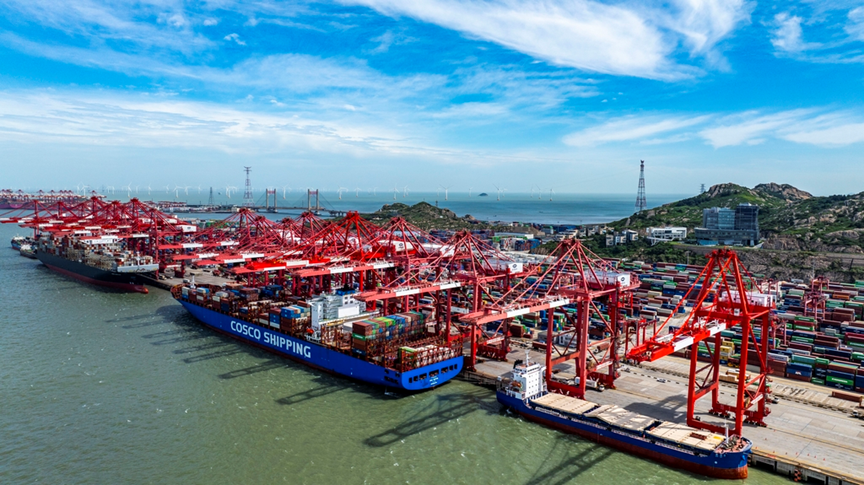
Shanghai Port handled more than 55 million twenty-foot equivalent units, or TEUs, in 2025, a year-on-year increase of 6.9 percent, extending its run as the world's busiest container port by throughput to 16 consecutive years.
More than half of that volume was handled at Yangshan Deep-Water Port, one of the world's largest automated container terminals.
Few, however, know that the origins of Yangshan Deep-Water Port can be traced back more than three decades to a meeting of the International Business Leaders' Advisory Council for the Mayor of Shanghai.
At the third IBLAC meeting in 1991, Huub Crijns, then-chairman of Dutch company Pakhoed, proposed that the shallow waters of Shanghai Port would restrict access for a new generation of container ships and bulk carriers.
His insight was an early catalyst for the development of Yangshan Deep-Water Port, which serves as the cornerstone of Shanghai's status as a global shipping hub.
The evolution of IBLAC
Established in 1989, IBLAC was founded with a clear mission: to provide Shanghai's leadership with international perspectives and advice to drive economic development and deepen the city's integration with the global economy.
Since its inauguration, IBLAC has grown from 12 members from eight countries to 42 members, along with 11 honorary members.
Over the years, the industry representation has expanded beyond manufacturing to include finance, healthcare, consumer goods, logistics, and energy management.
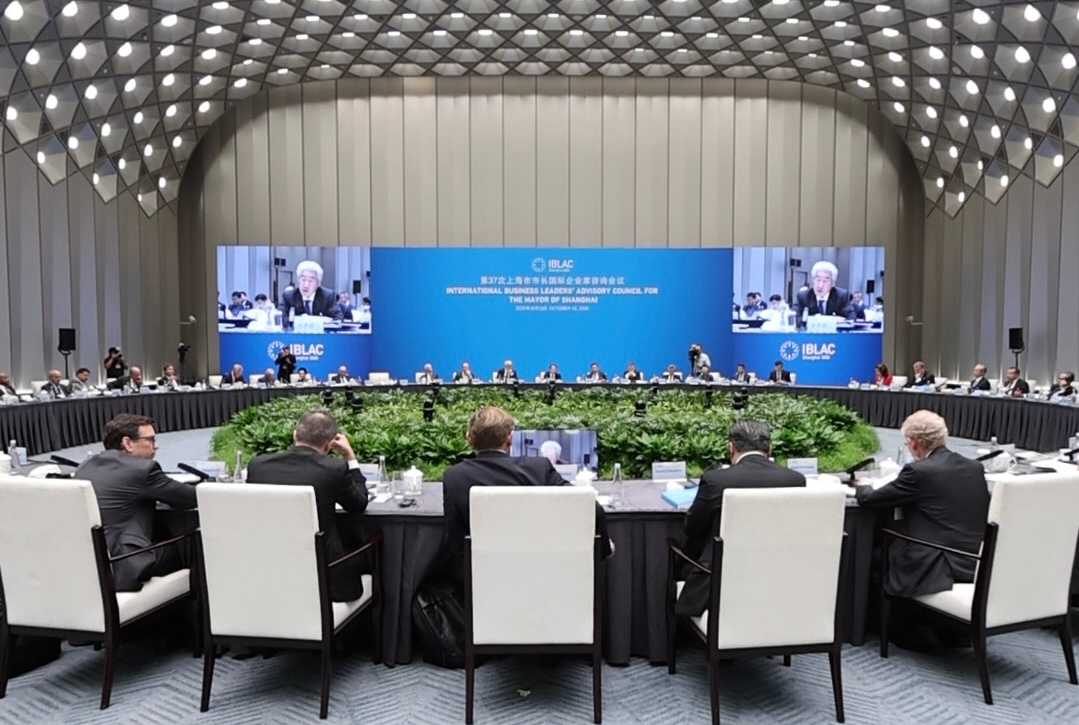
That broadening of industry representation mirrors Shanghai's transformation from a traditional industrial and commercial hub into an international center for economy, finance, trade, shipping, and science and technology innovation.
The themes of the meetings have been providing a lens through which to view Shanghai's evolving priorities and strategic shifts over the years.
In the 1990s, when the city was still primarily an industrial and commercial base, discussions focused on how to increase the added value of manufacturing, remove barriers to foreign investment, and revitalize State-owned enterprises.
With the turn of the century and Shanghai's deeper engagement with the world, the agenda shifted toward strengthening innovation, building an environmentally sustainable city, and accelerating the modern service industry.
Since the 2010s, the themes of the talks have reflected the city's growing ambition to enhance its soft power, develop a resilient, low-carbon city, and establish an international science and technology innovation center.
Services now account for more than 79 percent of the city's GDP. The 38th IBLAC meeting, to be held in Shanghai on Oct 10 and 11, will focus on promoting the innovation-driven development of the city's service industry.
Beyond its specific proposals, IBLAC's lasting legacy may well be the culture of the kind of candid dialogue it has fostered.
Members particularly value the afternoon closed-door sessions introduced in 2009. This format allows for more frank and direct conversations with Shanghai’s leadership following the general meeting. This open exchange has built trust and confidence among the international business community.