RHI Magnesita CEO: Shanghai makes progress on data-driven green innovation
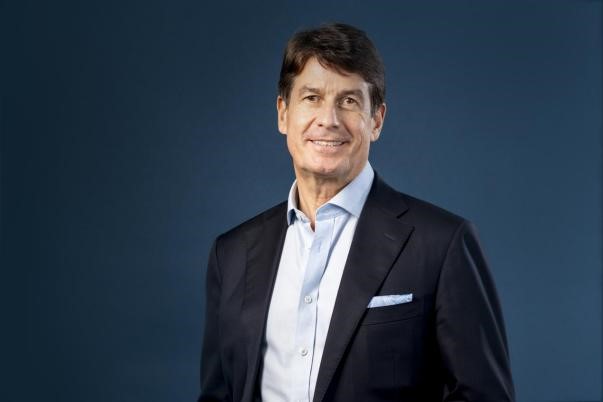
Shanghai has moved from theory toward implementation in the use of data in green innovation over the past year, said Stefan Borgas, chief executive officer of RHI Magnesita, on the sidelines of the 38th annual meeting of the International Business Leaders' Advisory Council (IBLAC) for the Mayor of Shanghai on Oct 11.
Borgas said projects using data for green innovation are now underway, and his company is beginning to put such projects into practice.
Borgas identified cross-company and cross-border data exchange as the next hurdle for green transformation. "In green transformation, we need the supply chain to be connected. It cannot be done inside a company. It has to be done across the supply chain," he said.
He credited the IBLAC meeting with helping pinpoint such issues and said regulation is becoming more supportive of global data exchange.
He recommended that Shanghai keep pushing for cross-border data exchange, continue building its ecosystem with global talent, and bring green technology to the forefront of innovation.
"The push on green tech can be a little bit more aggressive," Borgas said.
On supply chain resilience, Borgas said global data exchange is the single biggest opportunity.
"We need to make sure that the product demand all over the world is recognized the minute it occurs, and the data flows all the way through the entire supply chain," he said.
RHI Magnesita is a global leader in refractory products, systems, and solutions for industrial processes operating at temperatures above 1,200 C. The company serves steel, cement, glass, non-ferrous metals, and other industries, helping customers improve operational efficiency and advance more sustainable production.
As China forms a key component of the group's business, manufacturing network and innovation capabilities, the company has set up its regional headquarters in Shanghai, a thriving hub for international corporations, to leverage global expertise and local capabilities in serving industrial customers across China and the wider Asia-Pacific region.
The company is pursuing two major innovation initiatives through its Shanghai headquarters. The first involves automating industrial applications at customer sites using robotics and artificial intelligence, with pilot production already running in China and a global launch expected in the coming weeks.
The second is a circular economy business model that will recover and reuse materials traditionally sent to landfill. "If we can correct that, we can reduce global mining demand by 20 to 30 percent. It is a massive positive impact for the environment," Borgas said.
He said sophisticated sorting technologies, including laser and radar technology, AI, machine-learning algorithms, and robotics, are needed to return the materials to the supply chain.
"It's not waste management anymore. It's really sophisticated sorting," he said.
Shanghai serves as the company's China and East Asia headquarters, a role Borgas attributed to the city's innovative environment, central logistics location, and appeal to international talent.
"I think Shanghai is the coolest city in the world," he said. "It's large, it's vibrant, it's open, it's safe."