Shanghai explores creating special fund for rare diseases
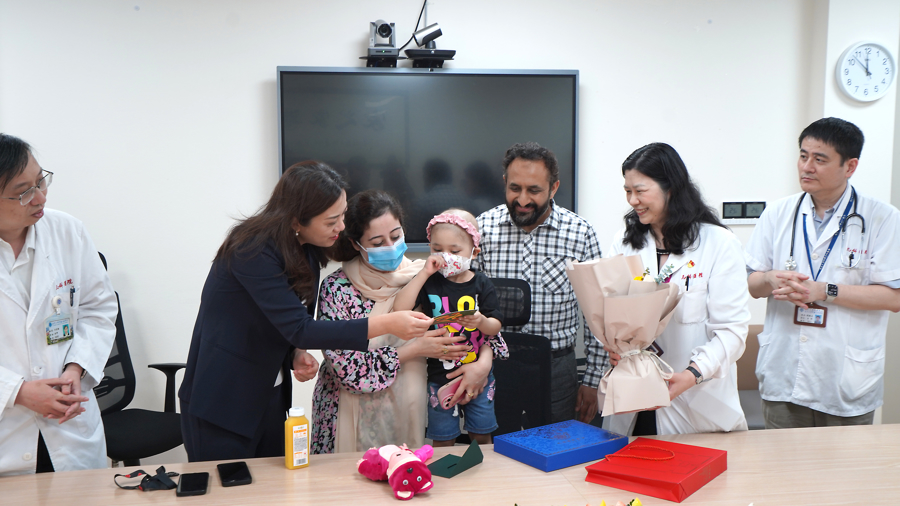
Feb 28 is the Rare Disease Day. In China, there are over 20 million patients with rare diseases. Rare diseases impose a much higher financial burden than common illnesses, with the rate of poverty caused by illness exceeding 35 percent.
Experts have called on Shanghai to explore establishing a special fund for rare diseases to help build a more robust safety net for patients.
Although the financial burden on rare disease patients has been reduced in recent years thanks to the inclusion of expensive rare disease drugs in the national basic medical insurance, many patients who require lifelong medication still struggle to afford high treatment costs, said rare disease experts.
"Take Gaucher disease (an inherited metabolic disorder) as an example. The current drugs covered by medical insurance have restrictions on indications," said Huang Guoying, chairman of the Shanghai Foundation for Rare Disease, adding: "For patients who rely on enzyme replacement therapy, if they have to stop using medication due to financial constraints, they face irreversible skeletal deformities and damage to multiple organs."
To address the challenge of covering high-cost rare disease drugs, Shanghai introduced a "multi-party co-payment" model in 2013.
Rare disease experts suggested that Shanghai create a rare disease special fund by combining government support, commercial insurance, and charity.
"Although Shanghai has multiple assistance mechanisms for rare diseases, there is still an urgent need for an overarching coordination mechanism," said Huang Ming, a former member of the Standing Committee of the Shanghai Committee of Chinese People's Political Consultative Conference, the city's political advisory body.
"Relying solely on the separate efforts of enterprises, charities, or a few government departments cannot ensure a stable source of funding. We believe that establishing a special fund can institutionally resolve the uncertainty of fundraising," said Huang.
On March 1, 2025, the Regulations of Shanghai Municipality on Medical Security took effect. The new rules encourage wider participation by social organizations in the diagnosis, treatment, research and development, and insurance coverage of rare diseases, providing a foundation for building a more diversified security system for rare disease patients.
The regulations seek to streamline the import of drugs and medical equipment, while encouraging pharmaceutical companies to increase investment in innovative drug R&D.
Huang, from the Shanghai Foundation for Rare Disease, noted that a government-led, multi-stakeholder cooperation mechanism is the fundamental approach to addressing the complex challenges posed by rare diseases.
Leveraging its status as a biopharmaceutical hub, Shanghai is accelerating efforts in rare disease diagnosis and treatment, research, legislation, and protection, said Huang. These initiatives are being advanced in tandem with the growth of the city's pharmaceutical industry to ensure that care becomes more affordable and accessible, he said.
Source: Shanghai Observer