Qingpu launches entrepreneurship community for young professionals

Shanghai's Qingpu district held a themed event for young professionals at the Yangtze River Delta Hi-Tech Park on March 1, inaugurating the district's first entrepreneurship community for young talent.
The community leverages key platforms such as the Shanghai West Software Information Park and NetEase Shanghai International Cultural and Creative Technology Park. By integrating resources including innovator spaces and entrepreneurship salons, it aims to facilitate resource matchmaking, technical exchanges, and market opportunity sharing, fostering a youth talent cluster for innovation and entrepreneurship. The cluster features incubation spaces, social empowerment, supporting facilities, and work-life balance offerings.
Located in Zhaoxiang Town, the community covers a core area of 2.5 square kilometers. It has already attracted 850 enterprises, fostering a youth entrepreneurship ecosystem focused on cutting-edge technological fields such as digital energy, artificial intelligence, and semiconductors.
The area has also secured over 1,500 talent apartments. Supported by the Qingfeng Talent housing rental subsidy policy, rents for some apartments are expected to fall to around 1,000 yuan (about $145) per month, with some as low as a few hundred yuan.
To attract outstanding young entrepreneurial talent and start-ups, Qingpu has introduced a series of supporting policies covering areas such as office and living spaces. At the event, nine major initiatives to build a youth talent entrepreneurship ecosystem were unveiled: leveraging entrepreneurship competitions, building resource matching platforms, constructing an overseas students startup park, optimizing entrepreneurial spaces, establishing angel funds, improving talent incentive mechanisms, meeting housing needs, creating vertical communities, and developing a 15-minute entrepreneurship and living circle.
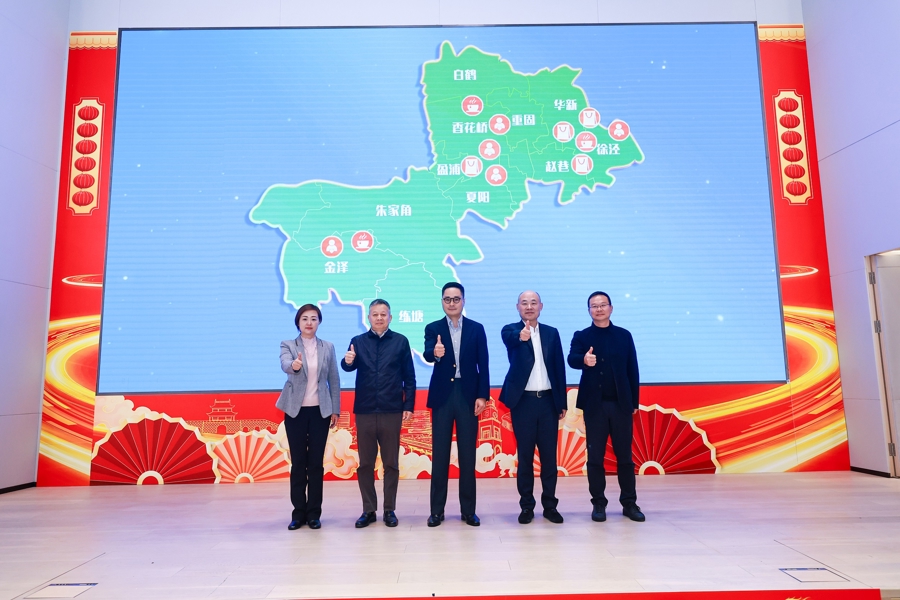
Qingpu is also making use of factory buildings, office towers, and rural resources to provide free or subsidized entrepreneurial spaces for entrepreneurs. Agricultural businesses entities operating in rural areas that lease idle private houses or collective resources for light dining, cultural creativity industries, or technological innovation can be classified as start-ups or growth-stage enterprises and qualify for certain financial incentives. Evaluations are based on social impact indicators, including investment intensity, jobs creation, annual revenue, and tax contributions.
The district is set to further optimize the work-life balance by developing high-quality housing options such as youth talent apartments and youth talent stations, allocating affordable housing for high-level professionals, and ensuring transitional housing for start-ups. It will continue refining support policies and services to attract more outstanding young talent in the future.
Source: Shanghai Observer