'Startup in Shanghai' enhances city's innovative appeal to global entrepreneurs
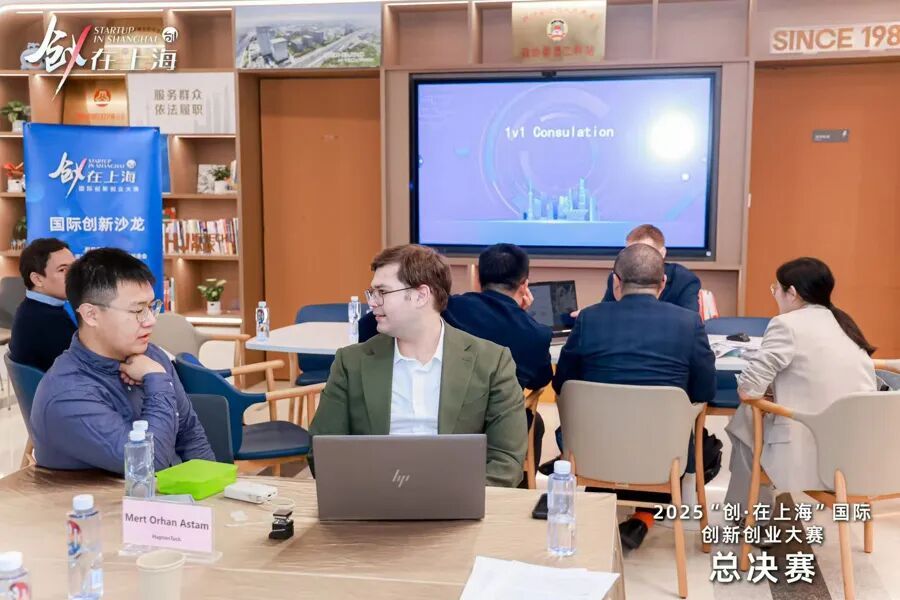
Shanghai has recently proposed launching the Global Scientific and Technological Innovation Acceleration Program to attract young science and technology talent from around the world to start businesses in the city.
By expanding the international reach of innovation and entrepreneurship competitions, including the "Startup in Shanghai" International Innovation and Entrepreneurship Competition and Shanghai Global Talents Innovation & Entrepreneurship Competition, and making better use of policies and service platforms such as the work permit for foreign entrepreneurs and the Overseas Startup Gateway Program, the city aims to attract young science and technology talent from around the world to start businesses in Shanghai.
For overseas entrepreneurs, "Startup in Shanghai" offers not only a platform to showcase their ideas but also a gateway to the Chinese market and Shanghai's innovation ecosystem.
For the first time last year, the edition opened to international entrepreneurs, attracting 71 teams from 21 countries with projects spanning robotics, artificial intelligence, new materials, healthcare, and other fields.
This year, the competition plans to expand its overseas divisions to the United Kingdom, Germany, France, the Netherlands, Singapore, and other countries, while attracting high-quality global projects through the WeStart TOP100 Competition.
Overseas startups entering the Chinese market may face challenges related to policy compliance, company registration, financing, application scenarios, and supply chain development. In 2025, the competition introduced a flexible funding mechanism for overseas teams without a legal entity, setting aside a two-year window during which project funding can be claimed. Teams that establish a company in Shanghai and secure financing during that period become eligible for support.
Winning overseas teams may also apply for technology innovation vouchers to access services such as business incubation, testing and certification, technology finance, and intellectual property support.
Peter Hrapko, a Slovak entrepreneur, was among the first beneficiaries of the mechanism. After winning an award in the finals, his team became eligible for policy support. If the team establishes a company in Shanghai within two years and secures five million yuan ($718,640) in angel financing, it will qualify for 600,000 yuan in support from the "Shanghai Technology Innovation Fund for Technology-based Small and Medium-sized Enterprises".
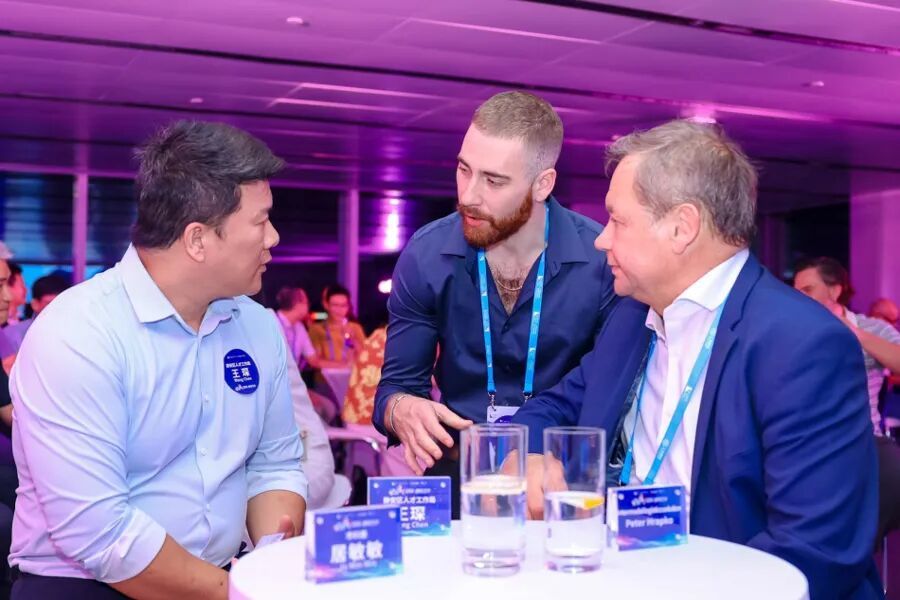
To better support overseas projects in areas such as policy compliance, legal services, application scenarios, financing, and supply chain development, the competition organized matchmaking events such as "Lin-gang Workshop" and "Jing'an Night", connecting overseas projects with local investors, high-quality incubators, and potential customers.
During an industry matchmaking event held alongside the semifinals, Hrapko received invitations from several Shanghai districts. Following the competition, the Shanghai Science and Technology Entrepreneurship Center helped connect his team with district departments, logistics parks, and potential customers, helping the team finalize a plan based on Baoshan's industrial strengths.
The competition is backed by a comprehensive support ecosystem. Since its launch in May 2025, the TOP100 competition has attracted early-stage, small-scale, and hard-tech projects from 71 overseas teams across 21 countries, including the United States, the Netherlands, France, the United Kingdom, Finland, Russia, Slovakia, Japan, and Zimbabwe. After several rounds of selection, 16 international projects advanced to the semifinals in fields such as robotics, healthcare, artificial intelligence, semiconductors, information technology, new energy, and new materials.
Beyond the competition, Shanghai unveiled the Shanghai Global Science and Technology Partnership Plan in April. The plan aims to leverage the city's high-quality incubators, advanced proof-of-concept platforms, and the Overseas Students Entrepreneurship Park to position Shanghai as the premier destination in China for overseas startup teams.
Sources: Official WeChat account of Shanghai Science and Technology (ID: "sh_stcsm"), Jiefang Daily