Foreigners come to China for hospital expertise
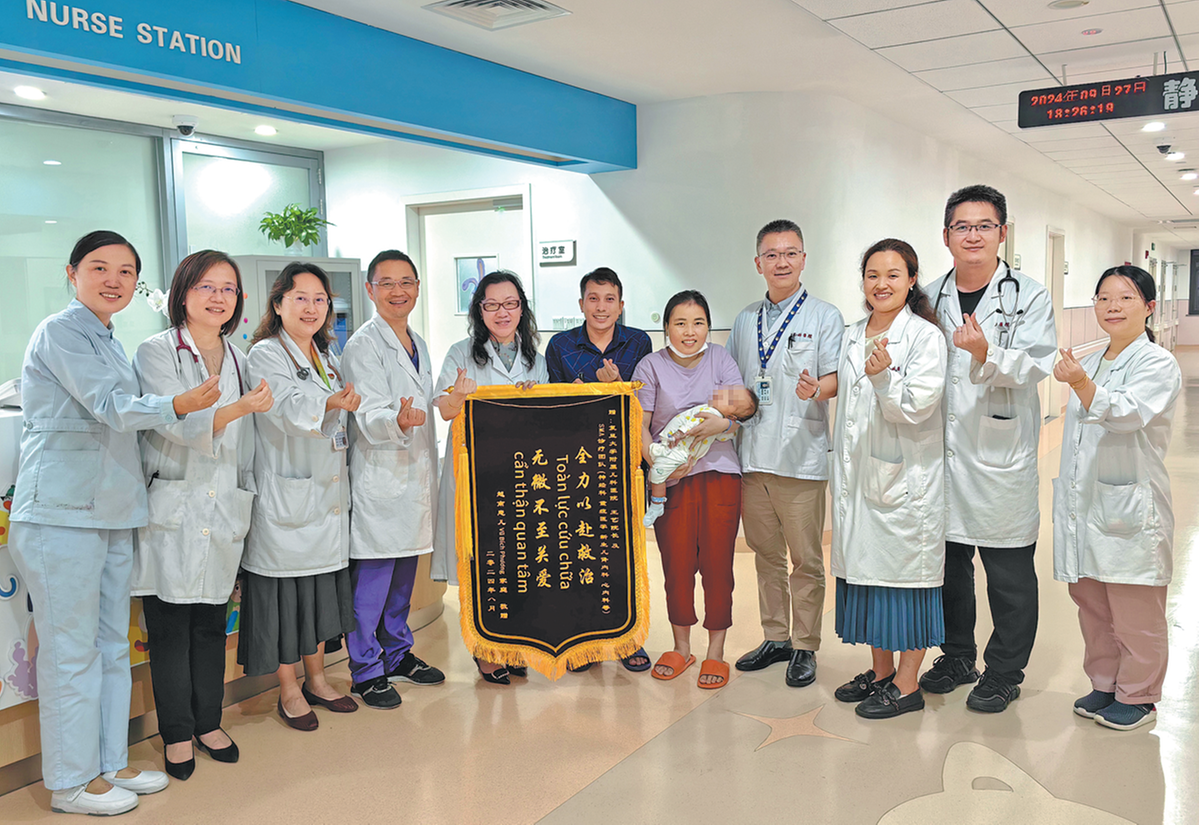
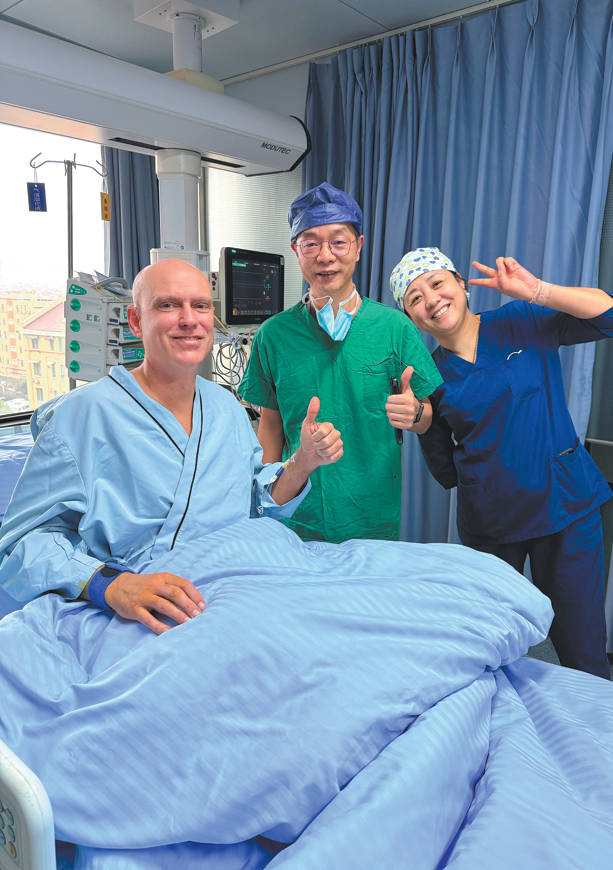
Oscar Chalupsky, a former captain of South Africa's Olympic kayaking team and a 12-time world champion, was diagnosed with a high-risk form of multiple myeloma — a type of bone marrow cancer — six years ago.
He sought treatment in multiple countries, including South Africa, Portugal, and Germany, and without exception was told by doctors his condition was too "difficult to treat or even hopeless".
Using artificial intelligence tools like ChatGPT and DeepSeek, he searched for "the world's best hematology department" and set his sights on Ruijin Hospital in Shanghai. "I didn't come to this Shanghai hospital to just have a try. I have high expectations for Chinese healthcare," said the 62-year-old.
After communicating online in November, the international medical department and hematology team at Ruijin Hospital decided to accept Chalupsky for a pre-treatment evaluation in Shanghai. In December, he flew to Shanghai and underwent evaluations, including a whole-body PET-MR, bone marrow biopsy, and T-cell function tests. After that, a treatment plan was developed.
Armed with a plan based around CAR-T cell therapy, a new frontier in cancer treatment, he kicked off his treatment locally. CAR-T therapy involves isolating T-cells from a patient's blood and reprogramming them to attack cancer cells after they are reinfused into the body.
Chalupsky's story highlights a growing trend of what netizens have dubbed "reverse medical tourism", where individuals travel to China for healthcare services.
The trend marks a significant shift from what happened up until 10 years ago, when some Chinese patients traveled to Western countries for medical care. Now, patients from overseas are coming to China, drawn by the country's medical expertise and advanced facilities.
Beyond the country's advantages of efficiency and cost, industry experts said foreign patients are increasingly coming to China to seek treatment for complex health conditions, including cancer. China's healthcare system boasts unmatched strengths in specialized areas, such as proton therapy, targeted drugs, and CAR-T cell therapy, with advanced technology and extensive clinical experience, they said.
"China has found a balance in the global healthcare 'impossible triangle' of high quality, affordability, and short wait times," said Wang Jian'an, an academician with the Chinese Academy of Sciences and a national political adviser from the medical sector.
Global beacon
Following his positive experience, Chalupsky recommended two patients from New Zealand — who had seen his medical journey on social media — to seek treatment at the Shanghai hospital.
"Such situations are becoming increasingly common, with many foreign patients taking the initiative to recommend us through social media," said Gong Yanchun, director of the international medical department at Ruijin Hospital.
The hospital's international medical services began in the 1990s, initially called foreign-related medical services and providing healthcare for expats in Shanghai.
Over the years, the international medical department has developed to now have independent wards, dedicated teams, and separate services. With nearly 100 beds, Ruijin is one of the largest public medical institutions in the country providing international medical services.
Last year, the outpatient volume at the international medical department was approximately 150,000 visits, representing growth of about 7 percent compared with 2024, the hospital said. The number of outpatient visits by foreign patients increased by around 15 percent year-on-year.
Not only are more foreign faces appearing in Chinese hospitals, but their treatment needs are also changing. In the early years, most foreigners came for physical examinations and imaging tests. Nowadays, they are more attracted by the specialized health fields offered by Chinese hospitals, said industry observers.
"In some typical cases, patients often have been to many countries, researched literature, consulted AI, and eventually traveled long distances to China," said Gong.
"They choose China not because it's cheaper, but because they recognize the world-class expertise that the hospitals here can offer," he said, citing as examples CAR-T cell therapy, treatment of complex neurological disorders, and proton therapy, which are among Ruijin's in-demand services.
Shanghai Renji Hospital's outstanding pediatric liver transplant techniques have made it a new destination for young patients from Asia and even further afield. For more than a decade, the hospital has achieved the highest number of pediatric liver transplants worldwide.
Shanghai Huashan Hospital, renowned for its advantages in neurosurgery, has not only become a beacon of hope for patients globally, but also a destination for foreign doctors to advance their training.
In September 2023, Shanghai launched a pilot program for international medical tourism in its public hospital system. Thirteen top-tier hospitals with high performances in innovation and technical capacity, as well as experience in treating international patients, were invited to join the program and asked to look at ways to provide better medical services for foreigners.
Official data showed that in the first half of 2024, the total volume of Shanghai's international medical services exceeded 300,000 visits.
A year after the pilot began, the list was expanded to 22 hospitals, mostly institutions with strength in specialized areas including oncology, cardiovascular disease, and neurology.
According to data released by the Chinese Hospital Association last year, a total of 850 medical institutions across 57 cities on the Chinese mainland provided international medical services.
Fresh hope offered
In recent years, China's ongoing medical technology innovations have brought new hope not only for patients in the country but also beyond its borders.
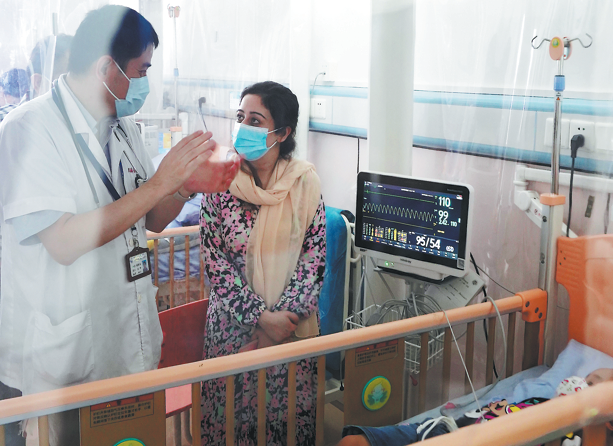
Last year, a 4-year-old Pakistani girl suffering from a severe genetic disorder was brought to the Children's Hospital of Fudan University in Shanghai for medical treatment shortly after her parents learned online that a Chinese-developed gene-editing drug had been used to successfully treat young patients suffering the same disease.
The girl, who had thalassemia, an inherited blood disorder, became the first foreign youngster to benefit from the breakthrough Chinese gene-editing technology.
After four months of treatment, doctors announced in May that the girl had ended her dependency on blood transfusions, and had returned to living a normal life.
"With the multi-disciplinary team's diligent care, the child's total hemoglobin concentration has surpassed 100 grams per liter, the level of a healthy person," said Qian Xiaowen, who was in charge of her case.
The treatment used a base-editing drug called CS-101, designed to target severe beta-thalassemia. The clinical research project was launched in 2023 by the hospital in collaboration with CorrectSequence Therapeutics, a Shanghai-based biotech firm.
Patients with severe thalassemia typically require transfusions once a month throughout their entire life, and may die from complications without them, doctors said.
"We express our sincerest gratitude to the Shanghai hospital's healthcare workers. Our family felt not only the physical care for the child but also emotional support throughout the entire journey," said Muhammad Adeel, the girl's father.
Innovative drugs and medical devices from China have been received remarkably well on the global stage in recent years, enhancing the recognition of the country's medical technology.
China's brain-computer interface technology, for instance, has enabled paralyzed individuals to control a powered wheelchair and direct a robotic dog to retrieve deliveries with their thoughts. The medical technology milestone was announced by the Shanghai-based Center for Excellence in Brain Science and Intelligence Technology of the Chinese Academy of Sciences in December.
In late January, Jiangsu province-based Simcere Pharmaceutical Group Ltd revealed it had reached an exclusive licensing and collaboration agreement with Boehringer Ingelheim, a German pharmaceutical giant with extensive experience in global immunotherapy.
They will jointly develop Simcere's self-developed bispecific antibody SIM0709, potentially a first-in-class treatment of inflammatory bowel disease.
"Many patients with inflammatory bowel disease still experience disease progression and severe complications despite existing anti-inflammatory therapies. We're pleased to partner with Simcere to accelerate the development of this potentially transformative medicine that may change patients' lives," said Carine Boustany, United States research site head and global head of immunology and respiratory diseases at Boehringer Ingelheim.
Efficient, quick, affordable
International patients have praised the efficiency of Chinese hospitals.
On the social media platform Xiaohongshu, or RedNote, Irishman Richie Lenehan, shared his experience about medical treatment at Shanghai's Huadong Hospital after suffering ligament damage while playing soccer.
"I was shocked by the highly efficient procedures and low costs of Chinese hospitals," he said.
At the hospital, he moved from registration to receiving his X-ray results in just one hour, spending 130 yuan ($18.7) on the test.
Lucas, an exchange student from France, had a similar experience in Shanghai after fracturing his thumb. "If I cannot hold a pen anymore, my dream of becoming an architect might be over," said the 24-year-old.
After three weeks of cast immobilization following the fracture, a follow-up examination found the fracture had healed in the wrong position, necessitating corrective internal surgery.
The French student arrived at a medical branch of Parkway Shanghai on Nov 17 and had surgery within four days.
"We quickly formulated a surgical plan to precisely cut through the partially healed callus and realign the displaced bones," said Wang Anqia, who handled the case. "This is like repairing a leaning tower, where every 'brick' must be put back in place."
Wang said postoperative imaging showed that the fracture ends were precisely aligned and positioned, achieving a perfect outcome.
Parkway Shanghai saw a 15 percent increase in the number of foreign patients in 2025 compared with the previous year.
China's healthcare cost-effectiveness is also attractive to international patients.
Knee replacement surgery in China, for example, costs around 60,000 yuan, compared with $50,000 in the US, and MRI scans in China cost a fraction of those in the US.
"The breakthrough in domestic high-end medical equipment reduces proton therapy costs to 15 to 20 percent of those in Western countries," said Chen Haitao, director of the institute for medical imaging technology at Ruijin Hospital, at an event in April held by the hospital to unveil progress on proton therapy, which attacks a tumor without harming the surrounding tissues.