Russian visitor saved from sudden heart attack in Shanghai
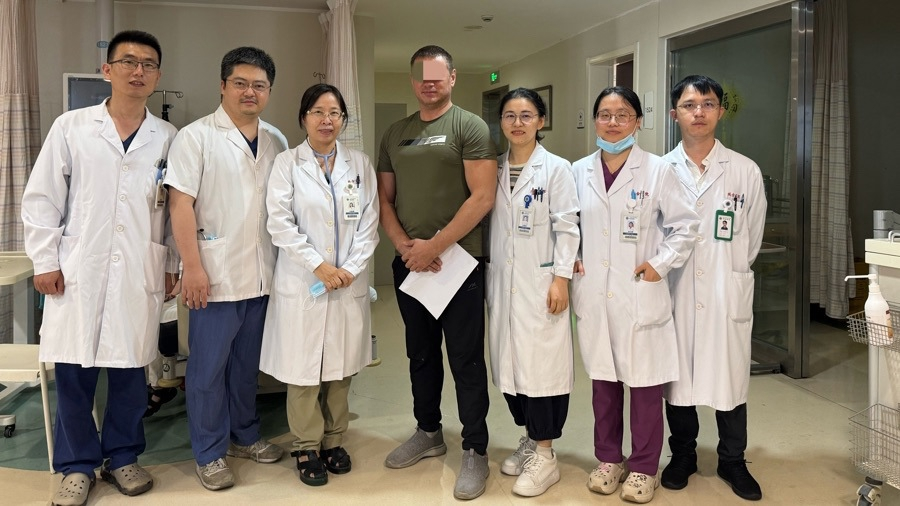
A 54-year-old Russian tourist named Alexander, who recently suffered an acute myocardial infarction during his visit to Shanghai, expressed gratitude to the medical team that saved his life.
Alexander was resting in his hotel room when he was struck by persistent, severe chest pain. Hotel staff rushed him to Ruijin Hospital, where doctors immediately performed an electrocardiogram and cardiac enzyme tests.
The test results showed significantly elevated troponin levels, and the medical team suspected severe coronary artery disease and decided to perform emergency coronary angiography.
For patients with acute myocardial infarction, time is muscle. Every minute of delay increases irreversible damage to heart tissue and raises the risk of life-threatening arrhythmias, cardiogenic shock, or sudden cardiac arrest.
A major challenge before surgery was communication. Neither Alexander nor his wife spoke Chinese or English. Cardiologist Sun Yanyi used a translation app to explain the procedure and its risks to the couple. After ensuring they fully understood the treatment plan and potential risks, Alexander and his wife signed the consent form.
The angiography revealed complete occlusion of the proximal right coronary artery, indicating a high-risk blockage. Leveraging Ruijin Hospital's streamlined chest pain center protocol, the interventional cardiology team reopened the blocked vessel and implanted a stent within a short time. The procedure was successful, laying a foundation for the patient's recovery.
Cardiologist Zhu Tianqi warned that the incidence of acute myocardial infarction remains high and is increasingly affecting younger individuals. He noted that heart attacks among patients in their twenties and thirties are no longer rare.
High-risk groups include people with hypertension, diabetes, chronic kidney disease, sleep apnea, and hyperlipidemia, as well as younger individuals who frequently stay up late, overwork, or smoke heavily, Zhu added.
Doctors advised that people experiencing brief, mild chest discomfort should seek outpatient medical evaluation. If chest pain persists for more than 20 minutes and does not improve after taking vasodilators such as nitroglycerin, they should seek emergency medical care immediately.
Shanghai's network of chest pain centers now covers all district-level and tertiary hospitals, enabling rapid diagnosis and treatment of life-threatening cardiac conditions.
Source: Shanghai Observer