China–US: Old Friends, New Stories | Foreign affairs veteran recalls the day 'Shanghai Communique' was issued
Editor's note: This year marks the 55th anniversary of China-US Ping-Pong Diplomacy, a historic episode that paved the way for the normalization of bilateral relations.
To revisit the journey of people-to-people exchanges between the two countries, this series features interviews with representative figures from sports, culture, economy, current affairs, and education, all of whom have contributed to China-US exchanges over the past 55 years.
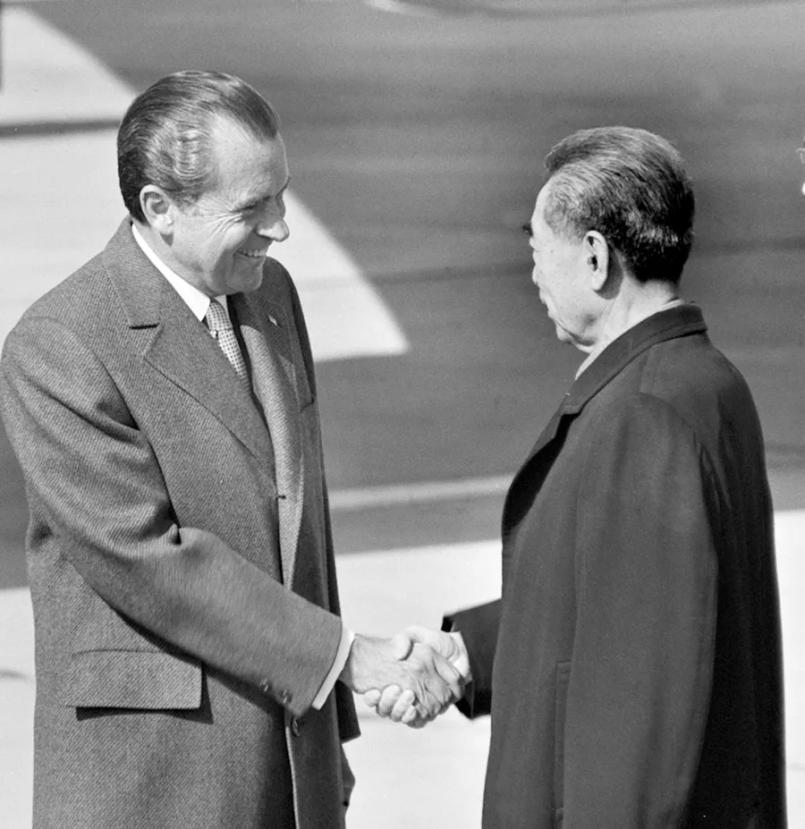
On Feb 28, 1972, the Shanghai Communique was issued in Shanghai during then-US president Richard Nixon's visit to the city, marking a historic turning point in bilateral relations between China and the United States.
"What we have said in that communique is not nearly as important as what we will do in the years ahead to build a bridge across 16,000 miles and 22 years of hostility which have divided us in the past," said Nixon in a speech delivered at a banquet held at Jinjiang Hotel after the Shanghai Communique was released.
Xia Yongfang, a veteran foreign affairs official from Shanghai, recorded Nixon's remark in her briefing notes of the day, and today she can still recite it word for word.
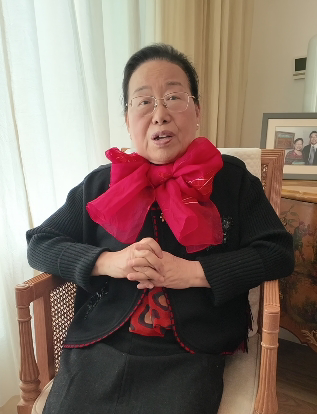
"I was fortunate to be both a participant and a witness to the rapprochement of China-US relations," Xia said. Her work included compiling daily briefing reports, often working through the night.
Toward the end of 1971, Xia, a former deputy secretary-general of the Shanghai People's Association for Friendship with Foreign Countries, was chosen as a member of a reception team for Nixon's upcoming visit to Shanghai. She spent three months stationed at Jinjiang Hotel, where the US delegation would stay.
In Xia's memory, members of the US delegation were lively and friendly, showing strong curiosity about China.
"US journalists were 'hungry' — after more than 20 years of estrangement between the two nations, they would interview anyone they met. A reporter said he simply had no time to eat or sleep — 'The most important thing was to get the information back as fast as possible'," Xia recalled.
Some moments left a lasting impression on Xia's mind. US visitors kept chopsticks, coat hangers, and cigarettes from the hotel as souvenirs. Some bought large quantities of Chinese goods, while others sent dozens of postcards at the airport. Many praised Chinese cuisine, joking that they would "save their appetite" for their next visit to China.
In another encounter, a US journalist asked an elderly local woman: "Do you welcome Americans?" The woman replied with a smile: "Of course. The People's Republic of China has been established for more than two decades, and Shanghai has undergone great changes. You should come and see it."
"I was just a small cog in the overall picture of China-US diplomacy, but I did my part," Xia said. The experience, she added, inspired her to continue contributing to people-to-people exchanges.
Looking ahead, Xia said that policies such as visa-free transit would increasingly attract international visitors. She hopes wider participation in grassroots exchanges will help present "a true, multi-dimensional and panoramic view of China to the world."
China-US Ping-Pong Diplomacy
Ping pong diplomacy began in early April 1971 at the World Table Tennis Championships in Nagoya, Japan, when US player Glenn Cowan accidentally boarded a bus carrying the Chinese team, leading to an unexpected encounter with Chinese player Zhuang Zedong.
In the days that followed, the Chinese government invited the US table tennis team to visit China. On April 10, 1971, the team arrived in Beijing, becoming the first US delegation to enter the country since 1949.
The visit became a powerful symbol of goodwill, signaling a willingness on both sides to improve relations.
A year later, in April 1972, the Chinese table tennis team paid a return visit to the US, further strengthening emerging cultural and diplomatic ties between the two sides.
Source: Shanghai People's Association for Friendship with Foreign Countries