Shanghai unveils measures to upgrade special customs supervision areas
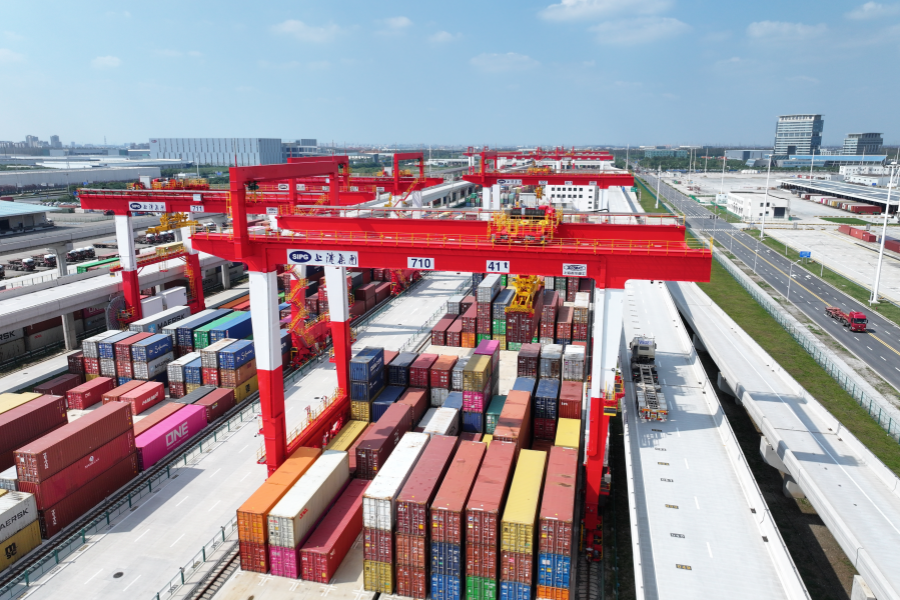
Shanghai has introduced 17 policy measures to upgrade its special customs supervision areas and promote high-quality development, making better use of their role in connecting domestic and international markets and resources.
Issued by the Shanghai Municipal Development and Reform Commission, the new framework replaces a 2021 policy and assigns more clearly defined strategic roles to each zone.
Under the updated plan, Yangshan Free Trade Zone will focus on bonded manufacturing, high-end shipping services, and emerging forms of international trade. The area south of Shanghai Pudong International Airport will focus on the full large-aircraft industry chain, including R&D and manufacturing, aviation materials sales and distribution, and maintenance and testing services.
The Waigaoqiao Free Trade Zone is set to develop into a global trade cluster integrating domestic and foreign trade as well as onshore and offshore operations, with a focus on international trade and bonded business related to integrated circuits, biopharmaceuticals, and advanced manufacturing.
Meanwhile, the Shanghai Jinqiao Comprehensive Bonded Zone will expand R&D, manufacturing, testing, and other bonded businesses in integrated circuits, life sciences and healthcare, and high-end equipment, while the Shanghai Caohejing Comprehensive Bonded Zone will focus on R&D and manufacturing, inspection and testing, and logistics and distribution in fields such as next-generation electronic information technology, biopharmaceuticals, and aerospace.
The Waigaoqiao Port Comprehensive Bonded Zone and the Pudong Airport Comprehensive Bonded Zone will further develop commodity futures delivery, warehousing and distribution for biopharmaceuticals, integrated circuits, and high-end consumer goods, financial leasing, cross-border e-commerce, and bonded repair services.
The comprehensive bonded zones in Songjiang, Qingpu, Fengxian, and Jiading districts will pursue differentiated development paths, covering areas such as medical devices, fashion consumer goods, next-generation information technology, green energy, general-purpose new materials, bonded racing cars, integrated circuit R&D and manufacturing, and bonded repair of medical devices.
The measures also aim to foster new business models. Shanghai will promote the establishment of a Zhangjiang Science City sci-tech innovation comprehensive bonded zone and introduce an innovative "1+N" customs supervision model, assigning comprehensive bonded zone customs registration codes to enterprises outside the zone so that bonded R&D policies can be extended beyond the zone's physical boundaries.
Bonded repair services will be further expanded by allowing export products processed and manufactured in China, along with their components, to return from overseas to comprehensive bonded zones for repair and then be re-exported, without being subject to the comprehensive bonded zone repair product catalogue or the catalogue of prohibited imported used mechanical and electrical products. Cross-border e-commerce enterprises will be encouraged to establish international distribution platforms and settlement headquarters within the zones, and returned cross-border e-commerce export goods will be allowed to be stored in the same warehouses as goods in the zones, sorted, consolidated, and then re-exported.
Additional initiatives include support for commodity trading, storage and transportation, and futures delivery, as well as the expansion of bonded display functions and import channels for automobiles, yachts, jewelry, cultural and artistic works, and fashion consumer goods. Bonded financial leasing for aircraft, vessels, and large equipment will also be promoted, while the city enhances bonded marine liquefied natural gas and green methanol storage, transportation, and bunkering capacity.
Shanghai will promote smarter customs supervision through the application of artificial intelligence, the Internet of Things, digital twins, and blockchain technologies, with plans to explore the development of a city-level smart customs supervision support platform.
For imported duty-free equipment and parts subject to import license management, enterprises in comprehensive bonded zones may complete customs release procedures when the equipment exits the zones by presenting import licenses consistent with the equipment's status at the time of entry; equipment and parts for which import licenses have been submitted before exiting the zones will not require customs declarations when they exit after the regulatory period expires. Drugs and veterinary drugs that are produced by enterprises in comprehensive bonded zones and have obtained relevant domestic approvals will be exempt from the requirement to obtain import clearance forms when sold domestically.
Major technical equipment and related parts imported or exported by enterprises in comprehensive bonded zones for financial leasing may be placed under off-site entrusted customs supervision when actual entry into the zones is impractical. Aircraft and aero-engine manufacturers in the zones will be allowed to conduct off-site completion, test flights, and delivery based on their actual business layout.
Advanced Certified Enterprises within the zones will be eligible to apply for exemptions from relevant guarantees for outward processing, outbound testing, outbound repair, and batch deliveries with centralized declarations, provided that risks remain manageable.
Land use policies will also be refined to promote more intensive and efficient use. Shanghai will align the zones with territorial spatial planning and support mixed-use functions for eligible industrial land, allowing industrial, R&D, warehousing, and public service facilities to be combined where conditions are met. New project guidelines will identify suitable project types for the zones, prioritize high-tech, high-value-added enterprises, and guide the orderly adjustment of projects that do not align with the zones' industrial priorities or are unsuitable for development within the zones.
Low-efficiency land in the zones will be prioritized in annual revitalization and redevelopment tasks, while national special-purpose bond policies will be used to support areas with such needs in preparing annual plans for new land reserves and special-purpose bond applications. Supporting living and service facilities, including dining and parking, will be improved in and around the zones to better serve employees working there.
Note: The English text is for reference only. In case of any discrepancies, the Chinese version shall prevail.
Source: Shanghai Municipal Development and Reform Commission