All about Western & TCM health checks in Shanghai
It's that time of year again — peak season for annual health checkups. These checkups are crucial for everyone to get a handle on their physical condition and to assess the risk of various diseases and disorders. Sometimes, these checks can be lifesavers.
Today, we're breaking down the standard items included in health checkups and their functions.
First, medicine is split into two main approaches: Western and Traditional Chinese Medicine (TCM). Health checkups can follow either approach.
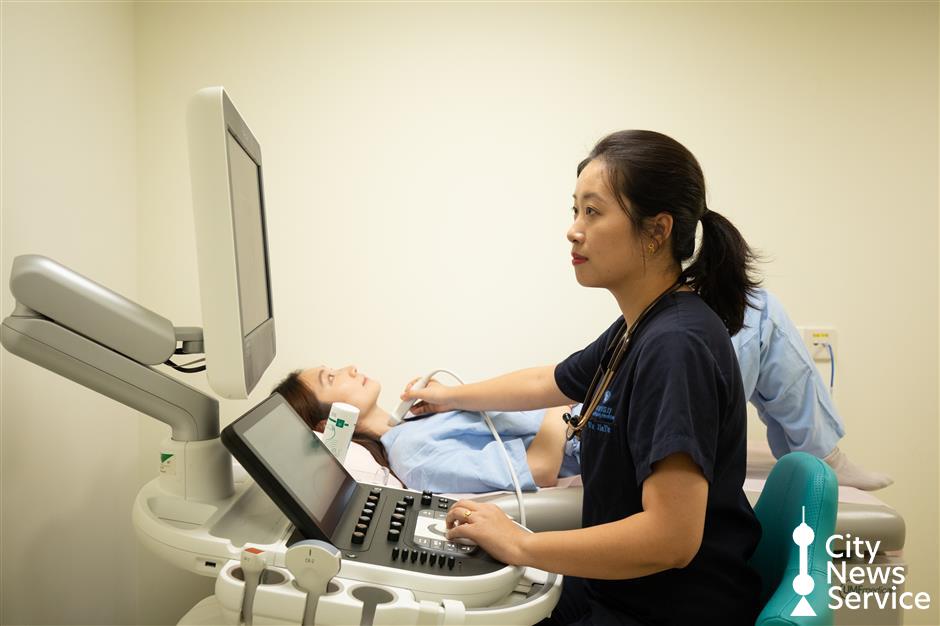
In Shanghai, most hospitals and clinics offer Western-style checkups that focus on the structures and organs of the body. Meanwhile, some TCM hospitals provide checks focusing on bodily functions, meridians and inner balance.
Starting with the Western checkups, they typically include BMI measurements, blood tests, urine tests, equipment checks and manual examinations by doctors. If any abnormalities are found, you'll be informed in your report and given suggestions for lifestyle changes or advised on what may be needed for follow-up treatment.
This Big List of Major Tests Done for Western Style Medical Checkups
MRI / MRA
This one's all about the brain and nearby areas —cerebrum (the main part of the brain), cerebellum (controls balance and coordination), brainstem (controls basic body functions), eyeballs, nasal cavity, sinuses, middle ear and inner ear. An MRI / MRA checks for brain diseases like intracranial tumors (tumors inside the skull), stroke, cerebral atrophy (brain shrinkage) and hydrocephalus (fluid buildup in the brain). It's your early warning system for issues like microinfarcts (tiny strokes) from cerebrovascular diseases, brain tumors, and other brain lesions.
Heart Checks: Cardiac Ultrasound, ECG, Coronary CT and Coronary Angiography
Think of your heart as a house. A cardiac ultrasound looks at the house's structure — room sizes, wall thickness and the stability of doors and windows. An ECG (electrocardiogram) checks the electrical circuits for any problems. Coronary CT (computed tomography) and coronary angiography focus on the pipelines, with angiography being more precise than CT. These tests complement each other and aren't interchangeable.
Tummy Trouble: Gastroenteroscopy
This test examines your stomach and large intestine using an endoscope (a flexible tube with a camera). It's the top method for diagnosing issues like stomach ulcers, pain, tumors and polyps (abnormal tissue growths) in the large intestine.
ENT (Ear, Nose, Throat) Examination
- Ear Examination: Checks the external auditory canal (ear canal) for congestion, swelling, secretion, or neoplasms (abnormal growths); the eardrum for congestion, swelling, or perforation (holes); and the tympanic cavity (middle ear) for congestion, swelling, or granulation (small growths).
- Nasal Examination: Looks for deformity, redness, swelling or neoplasms; checks the nasal mucosa (lining of the nose) for congestion, swelling or festering; the nasal septum (divider between nostrils) for deviation (crookedness); and the nasal cavity for polyps or secretions.
- Pharyngeal Examination: Inspect the pharyngeal mucosa (throat lining) for congestion or swelling; the tonsils for enlargement or neoplasms; and the vocal cords for congestion, swelling, polyps, or nodules (small lumps).
Thyroid Function
This test checks for hyperthyroidism (overactive thyroid) or hypothyroidism (underactive thyroid).
Thyroid and Cervical Lymph Node Ultrasound
Assesses for thyroid nodules (small lumps) and diffuse lesions (widespread abnormalities), and checks for enlargement of lymph nodes in the neck.
Carotid Doppler Ultrasound + TET & UCG
- Carotid Doppler Ultrasound: Evaluates the carotid arteries (neck arteries) for abnormalities, plaque presence and plaque characteristics like size, number, location and stability.
- Treadmill Exercise Test (TET): Diagnoses cardiovascular diseases such as coronary artery disease and assesses heart function to gauge the extent of disease or treatment effectiveness.
- Ultrasonic Cardiogram (UCG): Scans the heart's structure and blood flow, including the surrounding great vessels, to assess cardiac function.
Cervical / Lumbar MRI
Screens the cervical (neck) or lumbar (lower back) spine for herniated discs (slipped discs), bone lesions (abnormal growths), bone spurs (osteophytes), sciatic nerve compression, or metastatic spinal tumors (cancer spread to the spine).
What are the options?
Private hospitals offer an elevated experience:
Shanghai offers a myriad of private health checkup facilities, and almost all public and private hospitals provide health checkup services. For expats and Chinese with higher demands, international hospitals with multilingual staff, nicely designed environments, and higher-quality services might be the way to go.
Take Shanghai United Hospital, for example. They have the United Family Health Management Center, staffed by experienced medical professionals from both China and abroad. This team provides efficient, professional, and personalized preventive healthcare and screenings.
Long-term health management services are now a thing in Shanghai
Their approach includes a special scheme: "Program Design — Report Interpretation — Physical Examination Formulation — Follow-Up Program — Follow-Up Treatment."
Under their health management program, you get an in-depth consultation with a physician to create a personalized screening plan based on your health condition, family history and risks. After the screening, they offer a health management program tailored to your results.
You can receive early intervention and treatment for health-impacting factors, gain a clear picture of your health status, and get professional health advice. This service also offers early diagnosis and treatment to reduce disease risk, plus full life-cycle health tracking and regular follow-up services.
After the evaluation, you review the results with your physician and discuss the next steps to develop a personalized health program to achieve your health goals.
This program spans 12 months, with dedicated staff coordinating visits, tests, and treatments.
Beyond identifying health problems, United Family Hospital & Clinics also helps manage various conditions. They provide one-on-one healthy lifestyle coaching to reduce disease risks, professional health management consultants to assist with medical appointments, and chronic disease management counseling to improve your quality of life.
Regular follow-ups assess your cardiovascular and cerebrovascular risks, matching you with specialists for ongoing management.
In case of early tumor detection through preventive screening, a multidisciplinary joint consultation is arranged. Medical staff will help you choose the best treatment program, offering minimally invasive options like radiofrequency ablation and endoscopic therapies.

Yueyang Hospital, one of the big names in Shanghai for high-tech TCM treatments.
TCM health checkup
Beyond the realm of Western-style checkups, some traditional Chinese medicine (TCM) hospitals in Shanghai offer a special flavor of health assessments rooted in TCM theories. At the top of this game is the Shanghai Yueyang Hospital of Integrated Traditional Chinese and Western Medicine, famed for its deep-dive TCM checkups.
A deep dive into the emerging high-tech world of Traditional Chinese Medicine
Yueyang Hospital... this place is like a high-tech wizard's den, brimming with gadgets and gizmos designed to evaluate you based on TCM's meridian theories (energy pathways in the body). We're talking about the whole shebang: TCM's four diagnostic methods (inspection, listening and smelling, inquiry and pulse-taking), eye diagnosis (assessing health through the eyes), TCM constitution judgment (evaluating a person's inherent physical and psychological traits), and even infrared thermal imaging (using heat patterns to diagnose issues). Yes, you read that right, thermal imaging.
Dr Zhou Yang from Yueyang Hospital's disease prevention center, the kind of doctor who likely dreams in acupuncture charts, puts it this way: "Western medicine mainly checks the body's structure, like if there's a stone, lump, tumor, or nodule (small growth), and whether an organ is shrunken, enlarged, or deformed. However, TCM evaluates the whole body's function and a person's overall system."
Zhou continues, "All our appliances here are cutting-edge, developed with intelligent AI (artificial intelligence) and big data technologies. These machines and their data give us a complete picture of a person's constitution and healthcare needs. Based on the results, we recommend TCM treatments like herbal soups, exercise guidance, and moxibustion (burning herbs near the skin to apply heat). This service isn't just for the elderly; it's a hit among the young and middle-aged too, especially those battling insomnia (trouble sleeping), back and joint pain, fatigue, and irregular menstruation."
In essence, while Western-style checkups excel at pinpointing diseases, TCM checkups are like a holistic tune-up for your body, enhancing health and conditioning your system. Zhou emphasizes that each approach has its strengths: "Western-style checkups are fantastic for detecting diseases, but TCM checkups can be more useful for overall health enhancement and body conditioning."