Shanghai upgrades vocational education for high-tech industries
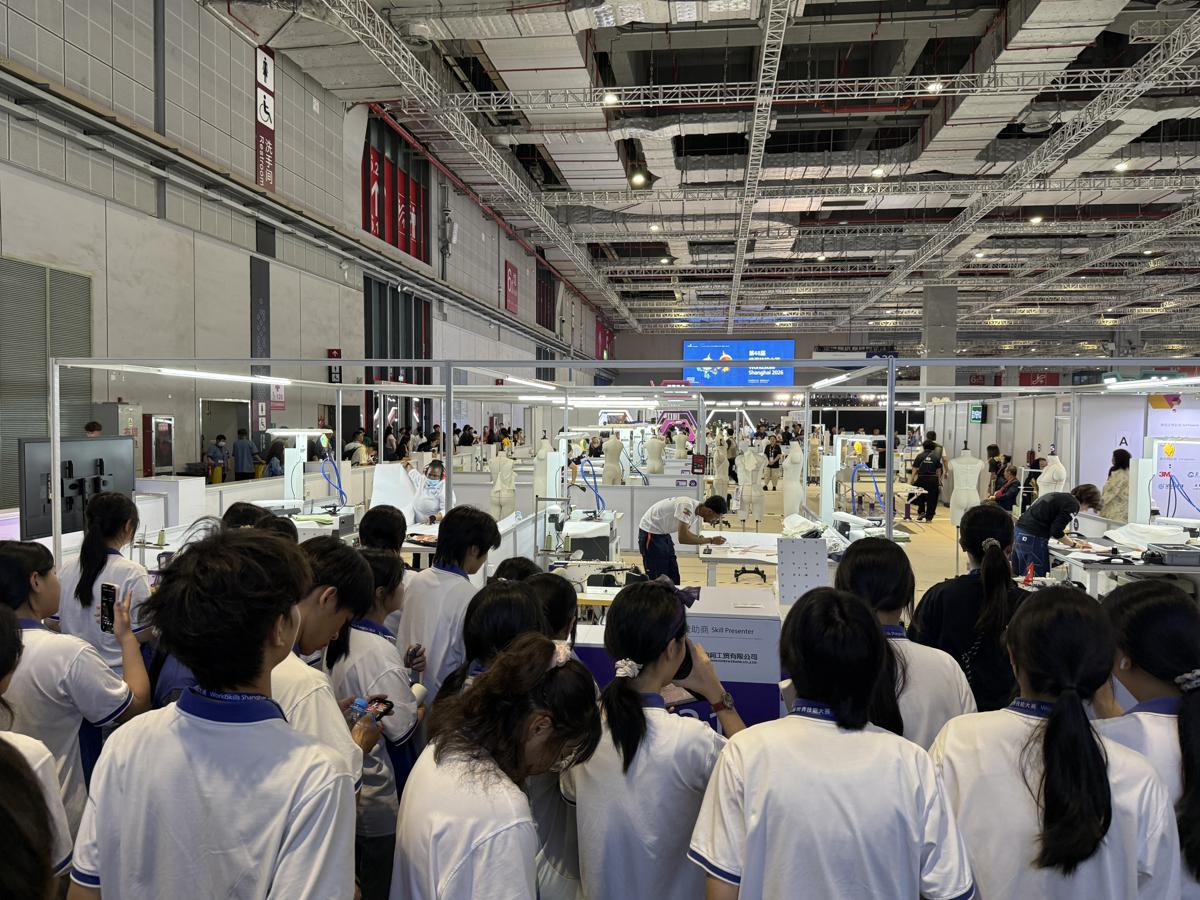
As host of the 48th WorldSkills Competition, Shanghai is accelerating the transformation of its vocational education system to align classroom instruction with the shifting demands of modern industries.
The metropolis now has 4.06 million skilled workers, including 1.45 million highly skilled workers. In 2025, Shanghai recorded 725,900 instances of subsidized vocational skills training, along with 71,700 instances of people newly obtaining vocational skill level certificates at senior worker level or above.
As China's manufacturing sector undergoes digital transformation and industrial restructuring, vocational institutions are retooling their curricula to cultivate talent that meets specific industry requirements.
At Shanghai Construction Management Vocational College, which hosts China's national training bases for the Floristry and Landscape Gardening skills, the influence of the event extends far beyond elite training.
"Competition standards drive teaching reform by updating professional benchmarks and integrating international evaluation systems," said Ling Min, a vice-president of the college. "We embed global best practices into our programs, build world-class teaching teams, and upgrade training facilities through hosting these events."
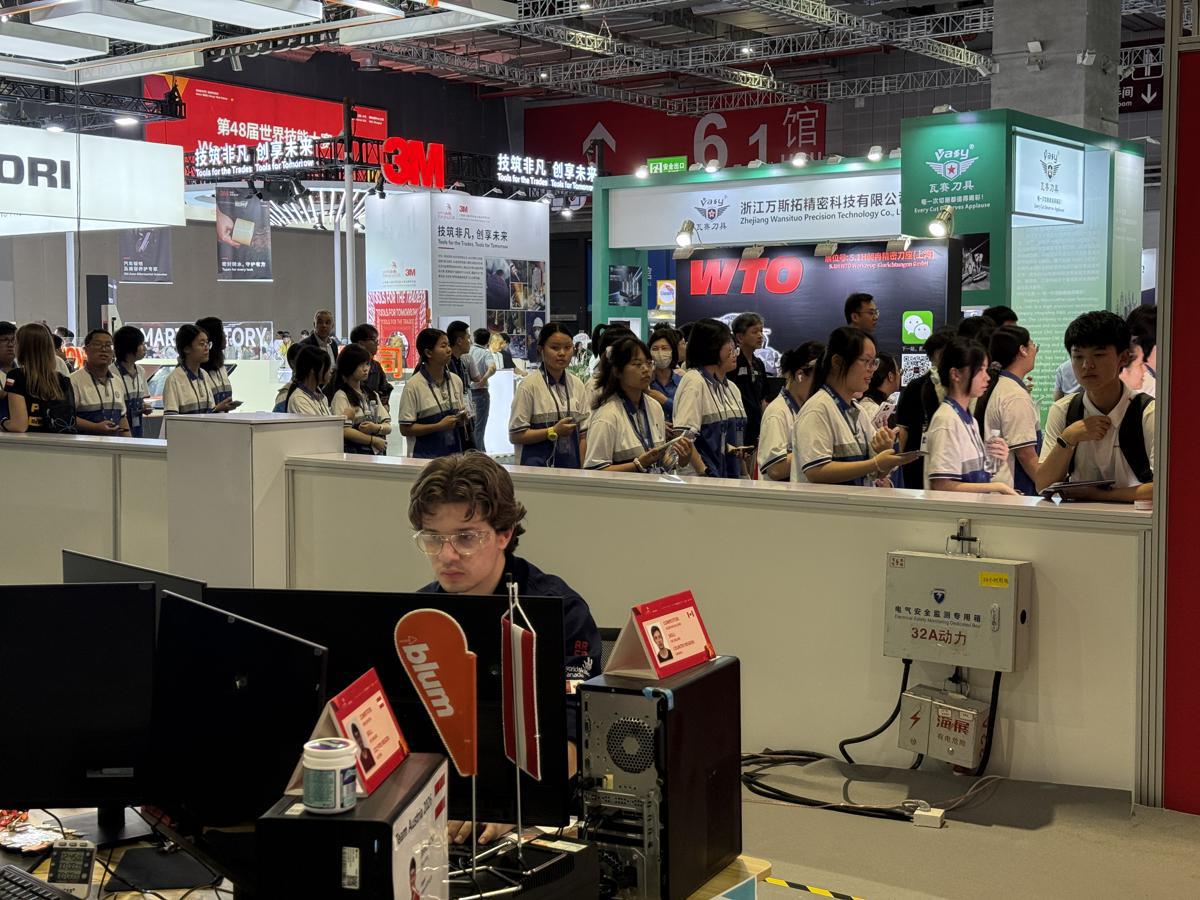
The college has developed a complete methodology for translating WorldSkills standards into general curricula that benefit all students, according to Cheng Qun, another vice-president of the college.
She cited a landscape design graduate surnamed Gu as an example. Gu participated in WorldSkills training, won gold at the Second Vocational Skills Competition of the People's Republic of China, and secured employment four months before graduation.
"Behind him stands a replicable mechanism," Cheng said. To align education with market needs, the college has established eight industry colleges in partnership with leading enterprises.
"Frontline industries introduce new technologies and standards, while enterprises co-develop courses matching our academic framework," Ling explained. "Mixed teaching teams of corporate engineers and campus instructors use real projects as case studies."
Backed by these measures, this year's inaugural graduating class has achieved an employment rate exceeding 96 percent to date.
Responsiveness to industrial shifts also guides the development of new majors. This year, the college added three new majors: artificial intelligence data engineering technology, building reinforcement and restoration technology, and unmanned aerial vehicle application technology.
Similar shifts are unfolding across the city. According to Shanghai's 2025 annual report on vocational education quality, 28 percent of programs across the city's 28 independent higher vocational colleges directly serve Shanghai's three leading industries — integrated circuits, biomedicine, and AI — while 53 percent serve six key industries, including electronic information.
Meanwhile, institutions like the Shanghai Business and Information College are aligning their programs with emerging sectors such as the low-altitude economy.
"We began organizing faculty and students to study flight control technology in 2022, and have since formally incorporated UAV coursework into our intelligent manufacturing program cluster," said Vice Principal Ma Mingjuan.
As the lead technical support unit for the Unmanned Aerial Systems skill competition at the 48th WorldSkills Competition, the school has translated competition modules — including drone disassembly, flight programming, and AI integration — into regular courses.
The event has also inspired students. "After visiting, I realized these are areas where China, as a major manufacturing power, must excel. Perhaps one day I can join the ranks of these competitors," said Zhou Yu, a 17-year-old second-year numerical control major.
Despite progress, educators acknowledge persistent challenges, particularly the lag between rapid changes in industry and curriculum updates. Ling noted that many instructors lack frontline corporate experience, while updating advanced equipment remains costly.
The city is trying to close those gaps. A 2026 pilot program allows selected courses to be integrated with vocational skill level certification. Shanghai also launched a pilot program to build "industry-education-evaluation" skills ecosystems, with support for enterprise-led talent training bases and subsidized apprenticeships.
Teachers of specialized subjects at vocational schools are, in principle, expected to complete six months of industry practice every five years, while the city brought in 50 master craftsmen and skilled artisans to establish skill master studios.
Cheng said the college will judge its next curriculum review by one measure: whether graduates find jobs in the industries they trained for. "Programs must follow industrial trends, and the final test is employment," she said.
Source: China Daily website