Shanghai releases regulations to optimize business environment (Issue 121)
Laws and Regulations
National
1. Measures for Credit Restoration Management to Take Effect on April 1, 2026
[Keywords: Credit restoration]
The National Development and Reform Commission (NDRC) recently released the Measures for Credit Restoration Management. The document stipulates that dishonest behaviors shall generally be categorized into three levels based on severity: minor, general, and serious. In line with the principle of proportional punishment, different disclosure periods will be set for each category, and in principle, minor dishonesty records will not be disclosed. The document will be implemented from April 1, 2026.
2.Six Authorities Deploy Measures to Enhance Consumer Goods Supply-Demand Alignment
[Keywords: Consumer goods, Supply and demand]
The Ministry of Industry and Information Technology (MIIT) and five other authorities recently issued the Implementation Plan on Enhancing Consumer Goods Supply-Demand Alignment and Further Boosting Consumption. The document outlines 19 key tasks across five areas. It proposes that by 2027, the consumer goods supply structure will be significantly improved, with the development of three consumption sectors each exceeding 1 billion yuan and ten consumption hotspots each exceeding 100 billion yuan, and the creation of a range of high-quality consumer products with rich cultural appeal and global recognition.
Shanghai
1.Shanghai Releases Regulations to Optimize Business Environment
[Keywords: Business environment]
On November 26, the Decision of the Standing Committee of the Shanghai Municipal People’s Congress on Amending the Regulations of Shanghai Municipality on Optimizing the Business Environment was adopted at the 25th Session of the 16th Standing Committee of the Shanghai Municipal People’s Congress. Key highlights of the document include: supporting innovation and open development and expanding high-standard opening-up; effectively unlocking innovation vitality and accelerating the development of an international sci-tech innovation center; maintaining market competition order and safeguarding the rights and interests of business entities. The document will take effect on January 1, 2026.
2.Shanghai Encourages Establishment of Foreign-funded R&D Centers
[Keywords: Foreign-funded R&D centers]
On November 25, the Shanghai Municipal Commission of Commerce issued the Provisions of Shanghai Municipality on Encouraging the Establishment of Foreign-funded R&D Centers. The document applies to foreign-funded R&D centers, global R&D centers, and foreign-funded open innovation platforms within the administrative area of the municipality. It took effect on December 1, 2025, and will remain valid until November 30, 2030.
3. Shanghai Comprehensively Deepens Regulatory Reform for Drugs and Medical Devices
[Keywords: Drugs, Medical devices]
The General Office of the Shanghai Municipal People’s Government recently issued the Several Measures of Shanghai Municipality on Deepening Reform of Drug and Medical Device Regulation and Promoting the High-quality Development of the Pharmaceutical Industry. The document proposes 22 detailed measures focusing on six aspects: supporting R&D innovation, deepening the implementation of national reform pilot tasks, improving the quality and efficiency of review and approval, expanding high-standard opening-up and cooperation, establishing full lifecycle supervision, and strengthening regulatory capacity building.
4. Shanghai Issues Compliance Guidelines for Advertising "Three Products and One Device"
[Keywords: Three Products and One Device, Advertising]
On 30 November 2025, the Shanghai Municipal Administration for Market Regulation issued the Compliance Guidelines for Advertising Activities Involving Drugs, Medical Devices, Health Foods and Foods for Special Medical Purposes. The document provides compliance guidance to advertising applicants and specifies 13 categories of prohibited advertisement content.
Q&A
The Information Office of the Shanghai Municipal People’s Government held a press briefing to explain the Several Measures of Shanghai Municipality on Deepening Reform of Drug and Medical Device Regulation and Promoting the High-quality Development of the Pharmaceutical Industry (hereinafter referred to as the “Measures”). A reporter asked:
Q1
What reform initiatives are set out in the Measures?
A1
“Deepening Reform” and “Promoting Development” are the two keywords of the Measures. While ensuring both high-level safety and high-quality development, the Measures firstly play the “reform card” by actively undertaking national reform pilots and taking the initiative to carry out reforms within the scope of local authority. Secondly, the Measures play the “service card” by focusing on the industry’s characteristic of “having many new technologies and new enterprises”, strengthening proactive services for enterprises, and enhancing Shanghai’s soft power. This approach aims to achieve a positive interaction between high-level safety and high-quality development.
The Measures specifies reforms primarily in the following five aspects:
First, Shanghai will undertake national pilot reform tasks. For example: (1) Shanghai will seek to pilot the review and approval of supplemental applications for drugs manufactured overseas, as well as the filing review of generic drugs, in order to accelerate the market entry of first generic products. (2) It will select eligible products for pilot programs on segmented manufacturing of biological products, advance cross-border segmented manufacturing pilots for major foreign investment projects, and provide customs clearance facilitation. (3) Shanghai will encourage medical institutions to accelerate pilot programs for developing and using in vitro diagnostic reagents.
Second, Shanghai will proactively introduce innovative reform measures. For example: (1) Shanghai will launch a pilot program for continuous manufacturing of pharmaceuticals and promote shared laboratories for medical device manufacturers. (2) It will refine the procedures and guidelines for changes to marketed drugs. (3) It will reform the review and approval procedures for supplemental applications relating to chemical drugs and other products. (4) Shanghai will support industrial parks with a high concentration of medical device enterprises in sharing testing and inspection services, as well as process water, gas and other facilities, in order to develop specialized industrial clusters. (5) It will support third-party pharmaceutical logistics enterprises to establish warehouses across provinces.
Third, Shanghai will advance full-chain service innovation. Focusing on all stages from the R&D to the end use of drugs and medical devices, the Measures integrate the functions of competent authorities to drive innovation in services. For example: (1) Focusing on key areas and products, a service checklist will be established for key R&D pipelines centered on the nine major categories of products prioritized by Shanghai. The relevant authorities will introduce corresponding measures to support innovation and provide proactive guidance at each stage, including clinical trials, registration and market entry, intellectual property protection, medical insurance inclusion, and hospital entry. (2) Shanghai will accelerate the capacity expansion and upgrading of district-level service stations for registration guidance of biopharmaceutical products. These stations will engage in information collection for innovative products under development, offer early-stage guidance and follow-up services for key projects, provide tailored support throughout the entire process from R&D to product registration, market entry, and local implementation. (3) Shanghai will strengthen the role of standards as a guiding force. It will actively participate in the formulation and revision of national standards for pharmaceuticals and medical devices and the alignment of international standards. Furthermore, Shanghai will promote standard-setting research in frontier technologies such as brain–computer interfaces and cell and gene therapies, as well as in traditional Chinese medicine, and support the development of group standards for digitalized traceability in drug and medical device manufacturing processes. (4) Shanghai will help enterprises expand globally by providing internationally recognized testing services for domestically manufactured drugs and medical devices. It will facilitate international multi-center clinical trials for innovative drugs and devices in Shanghai, and broaden the scope of export sales certificates issued for medical devices.
Fourth, Shanghai will leverage inter-departmental collaboration mechanisms to deepen the coordinated reform of medical services, medical insurance, and pharmaceuticals. For example: (1) Medical institutions, R&D organizations, and pharmaceutical companies are encouraged to jointly develop platforms for innovation and commercialization of traditional Chinese medicine. (2) Relying on the drug clinical trial big-data regulatory platform, the city will improve the quality and efficiency of clinical trials. (3) Pharmaceutical distribution enterprises are encouraged to build digital and intelligent supply chain collaboration platforms. (4) Shanghai will explore a pilot for designated medical institutions to import urgently needed drugs and medical devices for rare diseases that have not yet been registered or marketed in China. (5) A coordinated mechanism will be established to collect feedback on the efficacy of volume-based procurement drugs.
Fifth, Shanghai will enhance the quality and efficiency of review and approval processes to ensure that “regulation facilitates acceleration”. Key measures include:(1) Shanghai will shorten review and approval timelines for clinical trials of eligible innovative drugs, reduce the batch-release time for seasonal influenza vaccines, and shorten the average first-time registration cycle for Class II medical devices to six months. (2) For marketed Class II medical devices that are imported or transferred from other provinces and municipalities to be manufactured in Shanghai, the city will optimize submission requirements for registration dossiers and on-site production inspection procedures. (3) Shanghai will explore an efficient end-to-end mechanism to connect the R&D, approval, and use of “new and high-quality” drugs and medical devices, and refine hospital entry procedures for irreplaceable new drugs used in clinical emergency and critical care.
Expert Perspective
Major Revision of Shanghai FTZ Regulations: The Upgrade Path of China’s High-standard Opening-up
By Jiang Fengwen (Chance Bridge Law Firm)
[Continued from the Previous Issue]
II. Historical Background and Evolution of the Revision to the Regulations of the Shanghai Pilot FTZ
2. Practical Impetus for Revising the Regulations
Over the past decade, the coverage, administrative framework, and external environment of the Shanghai Pilot FTZ have undergone significant changes. Building upon institutional innovation, the FTZ has placed greater emphasis on functional expansion and industrial development. In particular, the establishment of the Lingang Special Area in 2019 ushered the Shanghai Pilot FTZ into a new development stage characterized by the “One Body, Two Wings” structure, necessitating corresponding adjustments to the management regulations.
On the other hand, international economic and trade rules are undergoing profound changes. Issues related to “Behind-the-Border Measures”, such as digital trade, green economy, intellectual property protection, state-owned enterprise reform, and labor and environmental standards, are gradually becoming core components of high-standard international economic and trade rules. China’s applications to join high-standard economic and trade agreements, including the Comprehensive and Progressive Agreement for Trans-Pacific Partnership (CPTPP) and the Digital Economy Partnership Agreement (DEPA), also require stress testing and institutional alignment through FTZs.
The necessity for revising the Regulations is also driven by the upgrading of domestic development strategies. The report of the 20th National Congress of the Communist Party of China clearly proposed to “implement the strategy to upgrade pilot free trade zones”. As a pioneer of reform and opening-up, Shanghai needs to further empower the development of the “Five Centers” (i.e., international economic, financial, trade, shipping, and scientific and technological innovation centers) through institutional opening-up. Additionally, 77 pilot measures initially implemented in the Shanghai Pilot FTZ have been approved by the State Council for replication and promotion in other FTZs or across the country. This requires Shanghai to further innovate through the revision of the Regulations to maintain its pioneering advantage.
[To be Continued]
One Week in Shanghai
Latest News
1.Shanghai Out-of-court Corporate Restructuring Center Established
[Keywords: Out-of-court corporate restructuring center]
The First Seminar on Shanghai Out-of-court Corporate Restructuring was successfully held in Shanghai recently, during which the Shanghai Out-of-court Corporate Restructuring Center was officially unveiled. The center was established by the Shanghai Eastern International Commercial Mediation Center and serves as a specialized service platform focused on resolving enterprise risks and facilitating restructuring and regeneration.
Corporate Activities
1.Gattefossé Shanghai Technical Center of Excellence Upgraded and Unveiled
[Keyword: Gattefossé]
Gattefossé, a French expert in lipid chemistry and plant-based ingredients, recently marked the 20th anniversary of its entry into the Chinese market with the official inauguration of its fully upgraded Shanghai Technical Center of Excellence.
Competitive Events
1.CUPRA FIP Finals 2025 to Kick off in Shanghai
[Keywords: CUPRA FIP Tour]

The CUPRA FIP Finals, the year-end championship of the International Padel Federation's global circuit, will be held at the Jiangwan Sports Center in Yangpu District from December 3 to 6. The tournament attracts 64 top-ranked professional players from around the world and marks a historic milestone as Asian athletes will make their debut at the highest-tier event of the FIP Tour.
Forum & Exhibition
1.Global Data Ecosystem Conference 2025 Held in Shanghai
[Keywords: Global Data Ecosystem Conference]
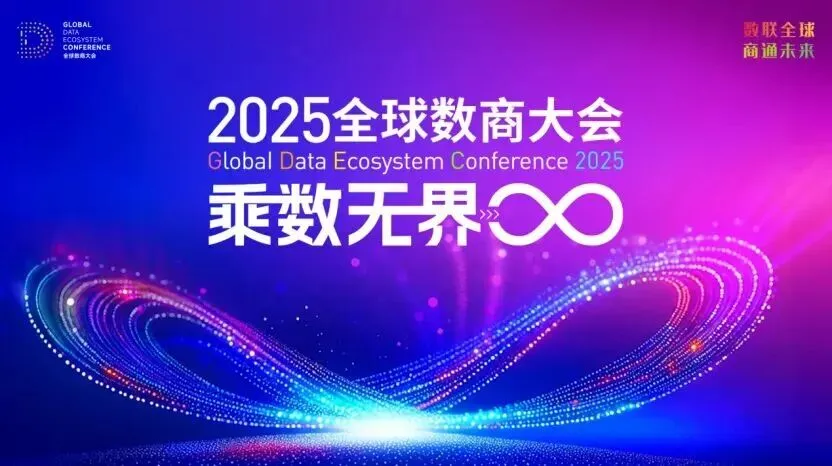
The Global Data Ecosystem Conference (GDEC) 2025 was held in Shanghai from November 25 to 26. This year’s conference is themed “Connecting the World through Data, Enabling the Future of Trade — Multiplying without Boundaries ∞”. It featured four main sections: forums, business matchmaking, exhibitions, and application showcases. The event welcomed nine academicians from China and abroad, along with over 400 data business enterprises.
Culture & Art
1. "Touching Infinity: Art Beyond Time" Exhibition to Land at BUND 33
[Keywords: Watch exhibition]

On December 8, the major exhibition “Touching Infinity: Art Beyond Time” is set to make a grand debut at BUND 33. Over 160 magnificent treasures will be showcased in a panoramic display for the first time, including 114 important museum pieces that are leaving Switzerland for the first time to make their Asian premiere.
2. SHOAC Citizens' Concert 2026: Tickets for First Half of Year Now on Sale
[Keywords: SHOAC Citizens' Concert]

The Shanghai Oriental Art Centre (SHOAC) Citizens’ Concert 2025 recently announced its program for the first half of 2026, with tickets now on sale. From January to June next year, eight SHOAC Citizens’ Concert performances will be staged successively at the SHOAC. The lineup features brilliant presentations by both world-renowned artists and local art troupes.
3.China Experimental Xiqu Exhibition 2025 to be Staged Soon
[Keyword: Traditional Chinese opera]
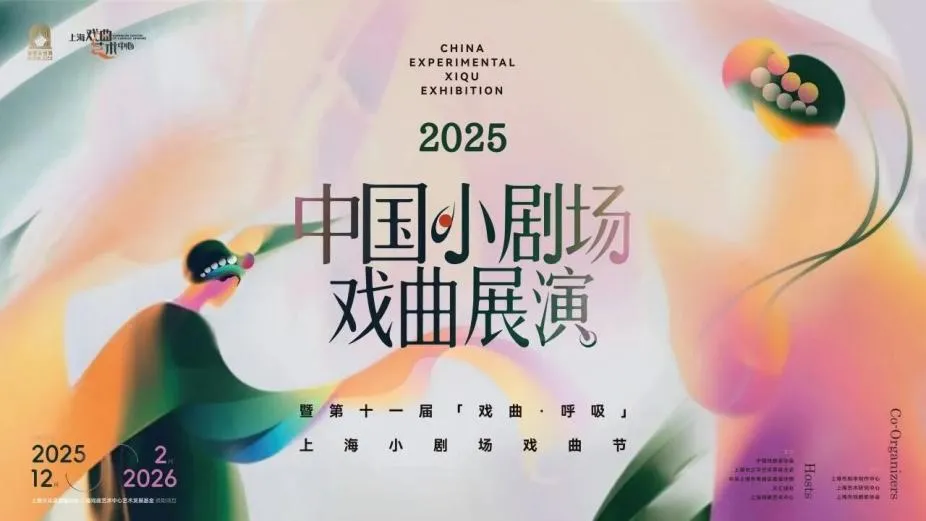
The China Experimental Xiqu Exhibition 2025 and the 11th “Xiqu · Huxi” Shanghai Experimental Xiqu Festival will be held in Shanghai from December 2025 to February 2026. For the main section of this year’s exhibition, the organizer has received 75 submissions from 19 provinces, municipalities and autonomous regions across the country, including over 50 original works. The submitted productions cover more than 30 opera genres. Nearly 30% of the plays will make their debut.