Five authorities jointly issue notice on launching the 'Shanghai Sci-Tech Credit Loans' special program (Issue 123)
Laws and Regulations
National
1. MIIT Revises and Issues Measures for the Administration of Public Service Platforms for Industrial Technology Infrastructure
[Keywords: Industrial technology infrastructure, Public service platforms]
Recently, the Ministry of Industry and Information Technology (MIIT) released the newly revised Measures for the Administration of Public Service Platforms for Industrial Technology Infrastructure. The document requires applicant entities for service platforms to clearly specify the industry sectors and service scope covered by their applications. The key service industries and fields include equipment, petrochemicals and chemicals, steel, nonferrous metals, building materials, light industry, textiles, food, medicine, new-generation information technology, biotechnology, new energy, new materials, new energy vehicles, artificial intelligence (AI), the metaverse, brain-computer interfaces, etc. The scope of services mainly covers metrology and testing, standard verification and testing, quality reliability testing and inspection, certification and accreditation, industrial information, intellectual property, and commercialization of sci-tech achievements.
2. Public Consultation on the Measures for Risk Assessment of Online Data Security (Draft for Comments)
[Keywords: Online data, Risk assessment]
Recently, the Cyberspace Administration of China (CAC) released the Measures for Risk Assessment of Online Data Security (Draft for Comments) to solicit public opinion. The document provides that online data processors handling important data are required to conduct risk assessments of their online data processing activities on an annual basis. The deadline for submitting feedback is January 5, 2026.
Shanghai
1. Shanghai Releases Action Plan to Promote Innovative Development of Cultural Trade
[Keywords: Cultural trade]
Recently, the Shanghai Municipal Commission of Commerce, together with three other authorities, issued the Action Plan on Promoting the Innovative Development of Cultural Trade in Shanghai. The document sets out measures such as actively developing the “new three categories” for global expansion of cultural products and services, continuously consolidating the strengths of traditional cultural trade sectors, strengthening the development of enterprise entities and platform carriers, stepping up trade promotion efforts, and improving supporting measures.
2. Five Authorities Jointly Issue Notice on Launching the "Shanghai Sci-Tech Credit Loans" Special Program
[Keywords: Shanghai sci-tech credit loans]
Recently, five authorities including the Shanghai Head Office of the People’s Bank of China jointly issued the Notice on Launching “Shanghai Sci-Tech Credit Loans” Special Program. The document encourages financial institutions in Shanghai to use the “Shanghai Sci-Tech Credit Score” as a key reference for assessing the innovation capacity of enterprises and, on the premise of controllable risks, to extend loans to local enterprises.
Q&A
At a press briefing held by the State Taxation Administration (STA) to introduce how tax and fee data reflects economic and social performance, the official in charge of relevant department of the STA answered a reporter’s question
Q
Since the beginning of this year, the policies and service measures on tax refund upon departure for overseas visitors have been continuously optimized. In what key areas are these improvements reflected? What positive roles have these measures played in facilitating travel to China for overseas visitors and in boosting inbound consumption?
A
Since the beginning of this year, the STA has closely revolved around the implementation of the decisions and arrangements set by the CPC Central Committee and the State Council and, in coordination with the Ministry of Commerce, the Ministry of Finance, the Ministry of Culture and Tourism, the General Administration of Customs etc., further optimized the policies and services for tax refunds upon departure for overseas visitors. Measures such as lowering the minimum purchase threshold for tax refunds upon departure, raising the cash refund ceiling, easing the requirements for shop registration and streamlining registration procedures, and promoting the “refund upon purchase” initiative have been introduced to continuously improve the shopping experience and actively support the expansion of inbound consumption. From January to November this year, the number of overseas visitors who processed tax refunds upon departure increased by 285% year on year, and the sales figures of refunded goods and the amount of tax refunds both saw a year-on-year growth of 98.8%.
First, the number of participating stores has increased rapidly, and consumer demand are better met. The eligibility criteria for tax refund stores have been relaxed. Building upon the existing A and B taxpayer credit rating required for tax refund stores, a new M rating has been introduced for newly established stores. This allows new stores to become tax refund stores provided they meet all other relevant regulations, and further expands the scope and number of participating stores.
Since the beginning of this year, five additional regions, namely, Dalian, Hubei, Jilin, Guizhou and Inner Mongolia, have been included in the policy implementation. Tax refund stores now cover 28 provinces, autonomous regions and municipalities nationwide. As of the end of November, the total number of tax refund stores nationwide had reached 12,252, 9,151 of which were newly added this year. Over 7,000 stores now offer “refund upon purchase” services. The continuous expansion of tax refund coverage has effectively met the needs of international visitors seeking tax refunds.
Second, the variety of goods has become more abundant, and the consumption structure continues to improve. From January to November this year, tax refund stores nationwide sold goods across 329 major product categories, an increase of 84 categories compared with the same period last year, representing a year-on-year growth of nearly 40%. China Chic products have gained strong popularity, and their appeal to shoppers is constantly growing. Sales figures and tax refund amounts for domestically produced technology products represented by smartphones, as well as traditional Chinese goods represented by silk and tea, both recorded multifold growth.
Third, tax refund services have been enhanced through innovation, and the consumption experience continues to improve. Tax authorities have provided comprehensive consultation services for overseas visitors through the multilingual intelligent consultation hotline 12366 and the publication of the Guide to Tax Refund upon Departure for Overseas Visitors in 17 languages. Tax authorities have also produced more than ten thousand promotional products, including videos and graphic materials, and organized over one thousand online and offline training sessions.
At the same time, the tax refund information system has been optimized and upgraded, interconnected with the invoicing system, and equipped with convenient QR code payment options. These have increased the efficiency of tax refund processing by 45%. Various regions have also improved the efficiency of refund eligible goods verification and enriched refund payment channels by setting up centralized refund points for “citywide processing”. They continuously innovate and upgrade intelligent and convenient services and constantly improve the tax refund experience.
Going forward, the tax authorities will continue to work closely with relevant departments to fully implement and refine “tax refund upon departure” policies for overseas visitors, further optimize tax refund services, and actively promote end-to-end online processing. Continuous efforts will be put up to enhance the shopping and tax refund experience and boost the appeal of the “China Tour” for overseas visitors.
Expert Perspective
Major Revision of Shanghai FTZ Regulations: The Upgrade Path of China's High-standard Opening-up
By Jiang Fengwen (Chance Bridge Law Firm)
[Continued from the Previous Issue]
III. Main Contents and Innovative Highlights of the Revision to the Regulations of the Shanghai Pilot FTZ
3. Breakthrough in Cross-border Data Flow and Digital Trade Rules
As an important initiative aligning with high-standard international economic and trade rules, the Regulations has achieved major breakthroughs in the area of cross-border data flows. Articles 39 to 44 of the Regulations set out dedicated provisions on “Development of Digital Economy” and make it clear that “a data security compliance mechanism for cross-border data transfer that combines a negative list with operational guidelines will be established to facilitate cross-border data flows”. This mechanism, while ensuring data security, provides a transparent and predictable institutional environment for enterprises engaging in cross-border data transfer.
Specifically, the Shanghai Pilot FTZ will, “in accordance with national arrangements, promote the registration of intellectual property rights for data products, build a high-standard international data economy industrial park, focus on the deployment of new types of data infrastructure, introduce international data cooperation projects, accelerate the development of an international data processing hub, and foster the growth of international data industry". These initiatives will support Shanghai in building itself into a hub for the international data industry and inject new momentum into the development of the digital economy.
In terms of digital trade rules, the Shanghai Pilot FTZ has taken the lead in formulating negative lists for cross-border data flows in three areas, namely, finance, trade and shipping. The Shanghai Data Exchange has established the country’s first data trading alliance chain, with more than 5,000 data products listed for trading. These innovations not only provide an important reference for the formulation of digital trade rules nationwide but also strengthen China’s voice in the shaping of international digital trade rules.
4. Sci-Tech Innovation, Talent Support, and Entire Industrial Chain Development
The latest revision of the Regulations adds new chapters on “Sci-Tech Innovation and Talent” and "Full Industrial Chain". This reflects the Shanghai Pilot FTZ’s shift from solely pursuing institutional innovation to a dual-driven approach that combines institutional innovation and functional cultivation.
In terms of sci-tech innovation, the Regulations explicitly promote the aggregation of innovation factors, strengthen basic and cutting-edge research, and facilitate cross-border technology transactions. This will enhance the Shanghai Pilot FTZ’s role as a driving force in sci-tech innovation and support Shanghai’s efforts to build a sci-tech innovation center with global influence.
Talent is the primary resource for innovation. The Regulations systematically outline the policies and service supporting measures implemented by the Shanghai Pilot FTZ to attract domestic and overseas talent for entrepreneurship and employment.
In terms of development of entire industry chains, the Regulations clearly define the industrial layout of the Shanghai Pilot FTZ under the new circumstances, as well as the development directions for key sectors such as biomedicine and AI. The Shanghai Municipal Development and Reform Commission will focus on priority industries including integrated circuits, biomedicine and high-end manufacturing, and undertake reform tasks aimed at integrated innovation across entire industry chains. It will also deepen coordination between the municipality and districts to advance the development of future industries such as new energy storage, embodied intelligence, deep-sea exploration and mining, and new materials. This integrated innovation model across the entire industry chain will propel the Shanghai Pilot FTZ from a hub of institutional innovation to a hub for industrial development.
5. Improvements in “Behind the Border” Measures and Legal Guarantee
As a key effort to align with high-standard international economic and trade rules, the Regulations set out dedicated provisions on “Behind the Border” Measures (referring to policy measures that relate to a country’s domestic regulatory system and affect international trade and investment, such as competition policy, intellectual property protection, environmental standards, labor standards, state-owned enterprises and government procurement). Articles 45 to 50 of the Regulations clarify institutional measures in areas including government procurement, intellectual property protection and ecological and environmental protection.
For example, in the field of government procurement, the Regulations require “further enhancing of information transparency for projects subject to limited competition, optimizing procurement processes by improving the level of electronic procurement, and strengthening the transparency and fairness of procurement procedures”. These requirements are highly aligned with high-standard international economic and trade rules.
In terms of intellectual property protection, the Regulations emphasize the strengthening of comprehensive protection for trademarks, patents, geographical indications, etc. High-standard intellectual property protection is not only a requirement of international economic and trade rules, but also an inherent necessity for encouraging innovation and enhancing the competitiveness of industrial chains.
In the area of environmental protection, the Regulations mandate the implementation of high-standard environmental protection measures and the promotion of green and low-carbon development. This reflects China’s balanced approach in its opening-up strategy, which gives due consideration to both development and environmental protection.
With respect to legal guarantee, the Regulations refine content such as the application of law and the adjustment of laws and regulations to leave room for deepening reform and innovation. It also clarifies systems for government services, regulatory innovation, risk prevention, and regulatory mutual recognition and cooperation, with an aim to enhance administrative efficiency. In addition, the Regulations promote pilot programs for the opening up of foreign-related legal services and strengthen support for these services. Furthermore, it reinforces the role of diversified dispute resolution mechanisms, including judicial trials, arbitration, and commercial mediation, to improve dispute resolution capability. These measures on legal guarantee will create a stable, fair, transparent, and predictable business environment, and enhance the soft power of the Shanghai Pilot FTZ.
[To be Continued]
One Week in Shanghai
Latest News
1. IMF Shanghai Center Officially Commences Operations
[Keyword: IMF]
Recently, the opening ceremony of the International Monetary Fund (IMF) Shanghai Center was held. The center will serve as a hub for advancing research activities, and provide policy references for emerging market and middle-income countries on issues of common concern. It will also help the IMF deepen exchanges with regional member countries and other stakeholders, including international financial institutions, academia, think tanks, civil society organizations and the private sector.
2. Shanghai Releases Model Practices for the Development of the Five Centers in 2025
[Keywords: Five Centers]
Recently, the Office of the Leading Group for Accelerating the Development of the “Five Centers” in Shanghai focused on major reform initiatives and policy innovation pilots that are pioneering and demonstrative in nature, and selected and released 15 model practices for the development of the “Five Centers” in Shanghai in 2025. These model practices showcase the phased achievements of Shanghai’s efforts to build the “Five Centers”.
3. List of Shanghai's Top 50 Most Promising Startups for Investment in 2025 Unveiled
[Keywords: Promising for investment, Startups]
Recently, the list of “Shanghai’s Top 50 Most Promising Startups for Investment in 2025” was officially unveiled at the 18th Shanghai International Private Equity Forum (SIPEF). Companies on the list are included in the Shanghai Key Cultivation Startup Enterprise Pool. Nearly one-hundred-member units affiliated with three Shanghai-based private equity investment associations will focus on connecting these listed companies with financial capital.
4. China Computing Power Platform (Shanghai) Takes the Lead in Connecting to National General Platform
[Keywords: Computing power platform]
Recently, the regional sections of the China Computing Power Platform were officially launched. Among them, the China Computing Power Platform (Shanghai) was the first to complete the integration of its local computing power platform with China’s national general platform. This significant progress marks a phased breakthrough in the development of a nationally integrated computing power network. It provides a bridge for the optimized allocation and efficient aggregation of computing resources across the Yangtze River Delta region and nationwide.
Corporate Activities
1. Tesla Shanghai Gigafactory Rolls Out Its 4 Millionth Vehicle
[Keyword: Tesla]
Recently, the Tesla Shanghai Gigafactory reached a new milestone with the rollout of its four millionth vehicle. Currently, the Shanghai Gigafactory contributes nearly half of Tesla's global electric vehicle deliveries.
2. Döhler Shanghai R&D Building Officially Put into Operation
[Keyword: Döhler]
Recently, the Döhler Shanghai R&D Building was officially put into operation. The facility integrates multiple laboratories covering grains, dairy products, powdered flavors, dry mixes, herbal extracts and food processing research. They will carry out R&D works across the full range of natural ingredients and provide more comprehensive and higher-level technical support and innovation momentum for the Chinese and Asian markets.
Competitive Events
1.X·TIME 2025 International Entrepreneurship Competition Global Finals Set to Commence
[Keywords: International Entrepreneurship Competition]
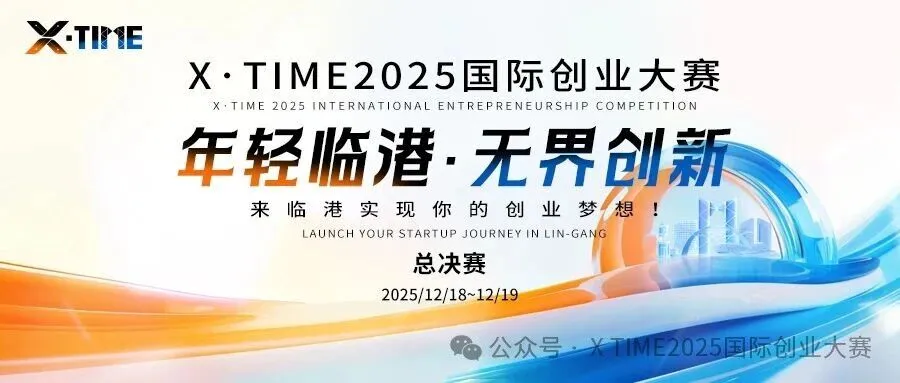
The X·TIME 2025 International Entrepreneurship Competition Global Finals will be held from December 18th to 19th. A total of 128 shortlisted projects will take part in a series of intensive and high standard roadshow presentations. The competition covers “5+X” cutting-edge tracks, including integrated circuits, high-end equipment, digital economy, new energy vehicles, and civil aviation. It fully showcases innovative forces aligned with the development direction of Lingang.
Culture & Art
1. "Picasso Through the Eyes of Paul Smith" Exhibition to Open Soon
[Keywords: Picasso, Paul Smith]
Starting December 22, the Museum of Art Pudong (MAP) will grandly present the major Picasso exhibition, Picasso Through the Eyes of Paul Smith. The exhibition is jointly organized with the Musee Picasso Paris and presented in collaboration with British designer Paul Smith. Featuring over 80 original masterpieces from the Musée Picasso Paris, the exhibition spans all major periods of Picasso's prolific career.
2. QIPAO: Glamour and Modernity Beyond Shanghai” Special Exhibition to Open Soon
[Keywords: Shanghai Style Qipao]

Starting December 23, the exhibition "QIPAO: Glamour and Modernity Beyond Shanghai" will be displayed at the Shanghai Museum on People's Square and will be open to the public free of charge. The exhibition brings together nearly 300 items/sets of Shanghai style qipao and various fashion treasures dating from the 1910s and spanning more than a century.