Shanghai Customs fully promotes use of electronic certificates for inspection and quarantine of imported goods (Issue 124)
Laws and Regulations
National
1. Supreme People's Court Issues Revised Provisions on Causes of Action in Civil Cases
[Keywords: Civil cases, Causes of action]
Recently, the Supreme People’s Court (SPC) officially released the Circular on the Issuance of the Revised Provisions on Causes of Action in Civil Cases. Focusing on supporting the development of new-quality productive forces, the revised Provisions add causes of action related to data and virtual online property and further refine those concerning intellectual property rights. To promote the development of a law-based business environment, the revised Provisions also improve the classification of causes of action relating to competition disputes and commercial disputes. Furthermore, to strengthen the development of foreign-related rule of law, the revised Provisions take into account the practical needs of maritime adjudication and refine causes of action relating to maritime and maritime commerce. It will come into effect on January 1, 2026.
2. Six Authorities Issue Policy Document to Promote High-quality Development of Service Outsourcing
[Keywords: Service outsourcing]
Recently, the Ministry of Commerce, together with five other authorities, released the Action Plan for Promoting the High-quality Development of Service Outsourcing. The document sets out six key tasks, including implementing actions to upgrade platform carriers, promote innovation-driven development, cultivate market entities, expand market reach, regulate industry growth, and enhance talent cultivation.
3. Three Authorities Issue Notice to Strengthen Coordination Between Commerce and Finance and Further Boost Consumption
[Keywords: Commerce, Finance, Boost consumption]
Recently, the General Office of the Ministry of Commerce and two other authorities issued the Circular on Strengthening Coordination Between Commerce and Finance to Further Boost Consumption. The document puts forward 11 policy measures across three dimensions. These measures focus on key areas such as commodity consumption, service consumption, new forms of consumption, consumption scenarios, and consumption support, and target critical aspects such as strengthening mechanisms, ensuring effective implementation, and fostering synergy.
Shanghai
1. Shanghai Issues Measures to Manage Filing and Performance Evaluation of New-type R&D Institutions
[Keywords: New-type R&D institutions]
Recently, the Shanghai Municipal Science and Technology Commission and the Shanghai Municipal Finance Bureau jointly issued the Management Measures for the Filing and Performance Evaluation of New-type R&D Institutions in Shanghai. The document clearly defines the scope of new-type R&D institutions in the city, as well as filing procedures and conditions, main content of performance evaluation, evaluation results, and supporting methods. The document will take effect on January 1, 2026, and remain valid until December 31, 2030.
2. Shanghai Customs Fully Promotes the Use of Electronic Certificates for the Inspection and Quarantine of Imported Goods
[Keywords: Inspection and quarantine certificate for imported goods]
Recently, the Shanghai Customs released an announcement on the full rollout of electronic certificates for the inspection and quarantine of imported goods. All such certificates will be issued in electronic form. If a paper certificate is indeed required, applications may still be processed according to the original procedures.
Source: Shanghai Customs
Q&A
The head of the Research Office of the SPC answers media questions on the issuance of the Decision of the Supreme People’s Court on Amending the Provisions on Causes of Action in Civil Cases
Q1
What issues should be noted in applying the revised Provisions on Causes of Action in Civil Cases?
A1
To address potential issues during the application of the revised Provisions on Causes of Action in Civil Cases, the Circular on the Issuance of the Revised Provisions on Causes of Action in Civil Cases has provided further specific regulations.
First, it clarifies the coordination between causes of action under Part IX "Tort Liability Disputes” and those under other parts, such as "Personality Rights Disputes", "Property Rights Disputes", and "Disputes over Intellectual Property Rights and Competition". When determining the specific cause of action for a tort liability dispute, the specific causes of action listed under Part IX “Tort Liability Disputes” in accordance with the relevant provisions of the Tort Liability Law should be applied first. Where no corresponding cause of action is provided, the causes of action under other parts, such as “Personality Rights Disputes”, “Property Rights Disputes”, or “Disputes over Intellectual Property Rights and Competition”, may be applied. For example, a motor vehicle traffic accident may result in both personal injury and property damage. In determining the cause of action, the cause of action of “Disputes over Motor Vehicle Traffic Accident Liability” under Part IX “Tort Liability Disputes” should be applied, rather than the cause of action of “Disputes over Rights to Life, Health, and Bodily Integrity” under Part I “Personality Rights Disputes”, nor the cause of action of “Disputes over Compensation for Property Damage” under Part III “Property Rights Disputes”.
Second, it clarifies the nature and functions of causes of action in civil cases. People’s courts at all levels shall not treat the Provisions on Causes of Action in Civil Cases as equivalent to the case acceptance conditions set out in Article 108 of the Civil Procedure Law of the People’s Republic of China. Nor shall they rule not to accept, or to dismiss, a claim on the grounds that there is no corresponding cause of action applicable under the Provisions on Causes of Action in Civil Cases and thereby restrain the party’s right of action.
Third, it clarifies the issues concerning the change of causes of action. Where the legal relationship stated by a party at the time of filing a lawsuit is inconsistent with the actual legal relationship in dispute, the people’s court shall, when closing the case, change the cause of action accordingly based on the nature of the legal relationship between the parties as ascertained by the court.
Fourth, it further standardizes the application of certain causes of action. For causes of action whose titles contain enumeration marks (specifically “、”), the cause of action should be determined based on the specific circumstances of the case, rather than citing the entire title directly. For example, with respect to the cause of action of “Disputes over Rights to Life, Health, and Bodily Integrity”, the specific cause of action should be determined based on the particular personality rights or interests that have been infringed upon. For the cause of action of “Contract Disputes over Carriage of Goods by Sea and Navigable Waters”, the specific cause of action should be determined according to the specific waters where the dispute arose. Similarly, for the cause of action of “Disputes over Unauthorized Use of the Unique Name, Packaging, or Decoration of Well-known Goods”, the applicable cause of action should be determined based on the specific subject of infringement.
Source: SPC
Expert Perspective
Major Revision of Shanghai FTZ Regulations: The Upgrade Path of China’s High-standard Opening-up
By Jiang Fengwen (Chance Bridge Law Firm)
[Continued from the Previous Issue]
IV. The Leading Role of the Shanghai Pilot FTZ in Advancing the Development of Pilot FTZs Nationwide
1. From a Single Frontrunner to a Flourishing Landscape: The Formation of a Nationwide Pilot FTZ Framework
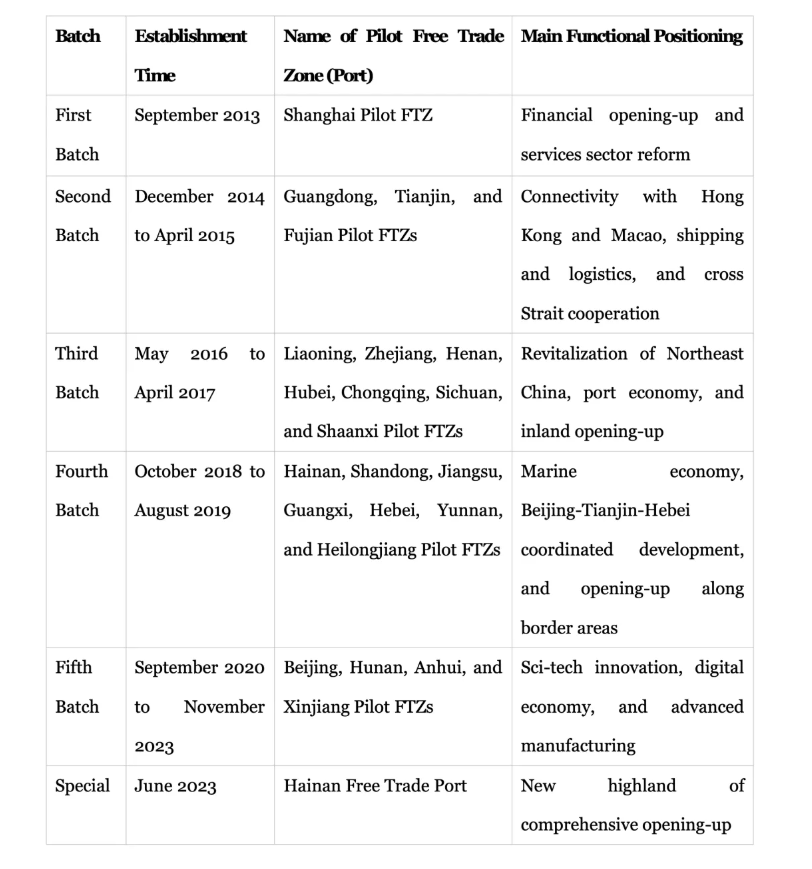
The greatest value of the Shanghai Pilot FTZ lies in its provision of replicable and scalable experiences for the reform and opening-up of the whole country. Since the establishment of the Shanghai Pilot FTZ in 2013, China has successively set up 22 pilot FTZs (including the Hainan Free Trade Port) in multiple batches. This has formed a new “1+22” comprehensive opening-up framework that spans the eastern, western, southern, northern, and central regions, and brings the total number of FTZs to 23 nationwide. Building on Shanghai experience, these FTZs have carried out differentiated explorations aligned with their local characteristics, and together, formed a “matrix” supporting China’s high-standard opening-up.
The replication and promotion of institutional innovation achievements represented by the Shanghai Pilot FTZ has become a normalized mechanism for China to deepen reform and opening-up. In July 2025, the State Council issued the Notice of the State Council on Fully Aligning Free Trade Pilot Zones with International High-standard Economic and Trade Rules and Advancing the Replication and Promotion of High-level Institutional Opening-up Pilot Measures. The document extended 77 proven, effective, and risk-controllable measures from the Shanghai Pilot FTZ to other pilot FTZs or nationwide. These measures cover seven areas, including trade in services, trade in goods, digital trade, intellectual property protection, reform of government procurement, reform of behind-the-border regulatory systems, and risk prevention and control. They have generated spillover effects for a new round of institutional innovation achievements.
Table: Timeline and Functional Positioning of China’s Pilot Free Trade Zones (Ports)
(23 in Total)
[To be Continued]
One Week in Shanghai
Latest News
1. Shanghai Customs Technical Center Launches Core Service Station in Hongqiao
[Keywords: Shanghai Customs Technical Center]
Recently, the Shanghai Customs Technical Center set up a comprehensive service station in Changning district, a key part of Hongqiao International Central Business District. The new station will provide “one-stop, cutting-edge, and digitalized” comprehensive technical services for enterprises in the Hongqiao International Central Business District and the Yangtze River Delta region.
2. China-Switzerland International Proof-of-Concept Center Settles in Pudong
[Keywords: China-Switzerland International Proof-of-Concept Center]
Recently, the China-Switzerland International Proof-of-Concept Center was officially inaugurated in Zhangjiang Science City, Pudong. The center focuses on cutting-edge fields such as biomedicine, high-end medical devices, and micro-nano electronics. By introducing Switzerland’s mature proof-of-concept and technology commercialization models, it provides technical feasibility verification, prototype development support, and commercial resource matching for early-stage research findings.
Corporate Activities
1. Musinsa Standard Parkson Shanghai Store Opens
[Keywords: Musinsa Standard]
Recently, the global fashion retail platform Musinsa officially announced the opening of its first international flagship store, Musinsa Standard Parkson Shanghai, at the Parkson shopping center, No. 918 Huaihai Middle Road. To meet the diverse needs of Chinese consumers, the store offers a full display of Musinsa Standard menswear and womenswear collections and features nearly 1,500 apparel and accessories items.
Competitive Event
1. 2026 National Disruptive Technology Innovation Competition Officially Kicks off
[Keywords: National Disruptive Technology Innovation Competition]
The 2026 National Disruptive Technology Innovation Competition kicked off recently and is now open for project submissions. The competition focuses on key fields including integrated circuits and micro-nano systems, AI and information systems, scientific instruments and new experimental systems, medical devices, biomedicine, energy, resources and environment, as well as advanced manufacturing and transport systems.
Culture & Art
1. Shanghai Grand Opera House Expected to Complete Venue Construction in December
[Keywords: Shanghai Grand Opera House]
After six years of construction, the Shanghai Grand Opera House is expected to complete venue construction and interior decoration this month. Upon its opening, the facility will feature four core functions: opera performance, creation, production, and education. Additionally, it will serve functions such as opera arts exchange, exhibition of opera history, and research on opera theories.
2. The 8th Show Life Shanghai International Musical Festival Unveiled
[Keyword: Musical]
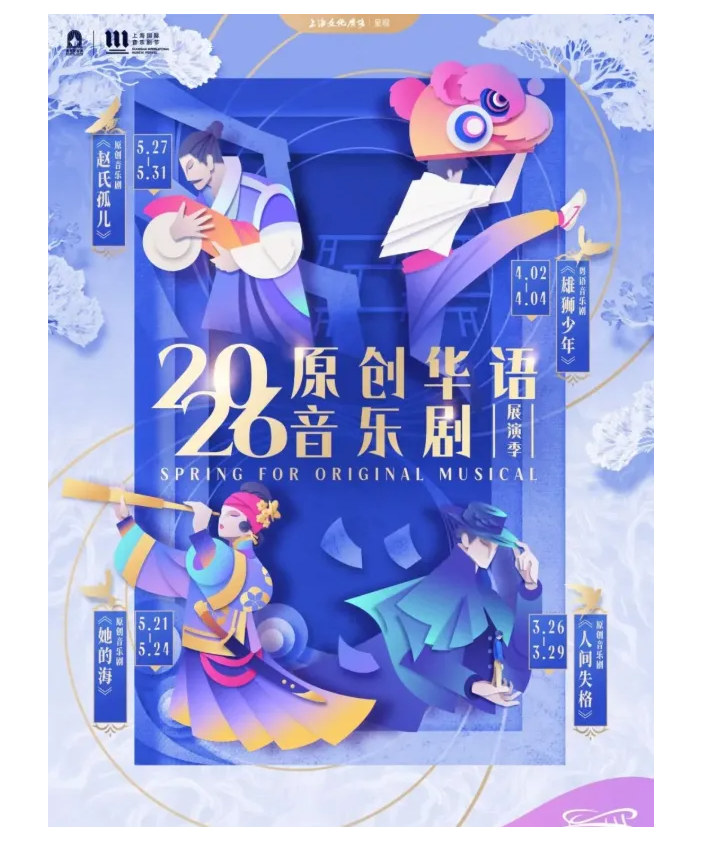
On December 16, the 8th Show Life Shanghai International Musical Festival officially opened at Shanghai Culture Square. This year’s festival is built around four main pillars, namely, a season of performances, a dedicated program, a forum, and a featured event. In addition to original Chinese language musicals, the season of performances will also feature a host of musical stars active on stages around the world.
3. "A Journey of Jade: The Liangzhu Culture" Special Exhibition Opens
[Keywords: Jade artifacts, Liangzhu]

Recently, the special exhibition "A Journey of Jade: The Liangzhu Culture" opened at the new venue of the Shanghai University Museum. The exhibition highlights the high status and exquisite craftsmanship of Liangzhu ritual jade artifacts. Taking technological progress as a central theme, the exhibition explores the core values of the Liangzhu culture to decode the evolution of the early civilization.