Shanghai introduces several measures to accelerate capacity enhancement of exhibition and convention industry (Issue 126)
Laws and Regulations
National
1. Newly Revised Foreign Trade Law to Take Effect on March 1, 2026
[Keywords: Foreign trade]
On December 27, 2025, the Foreign Trade Law of the People’s Republic of China, as revised for the second time at the 19th meeting of the Standing Committee of the 14th National People’s Congress, was promulgated. The document explicitly encourages the development of international trade in services through various modes, including cross-border delivery, consumption abroad, commercial presence, and the movement of natural persons.
2. Implementing Regulations for the Value-added Tax Law of the People's Republic of China Released
[Keywords: Value-added tax law]
The Implementing Regulations of the Value-added Tax Law of the People’s Republic of China were released recently. The document clarifies the scope of goods, services, intangible assets and real estate referred to in Article 3 of the Value-added Tax Law and sets out specific circumstances in which cross-border sales of services and intangible assets are subject to a zero-tax rate. It took effect on January 1, 2026.
3. Two Authorities Issue Notice to Enhance Cross-border Financing Facilitation for Domestic Enterprises
[Keywords: Overseas, Listing funds]
Recently, the People’s Bank of China and the State Administration of Foreign Exchange jointly released the Notice on Issues Concerning the Administration of Funds Raised by Domestic Enterprises from Overseas Listings. The document mainly covers four aspects: unify the management policies for funds in both domestic and foreign currencies, facilitate enterprises’ domestic use of raised funds and management of exchange rate risks, simplify administrative procedures, and further regulate the management of raised funds. It will be implemented from April 1, 2026.
4. NFRA Releases Measures for the Management of M&A Loans by Commercial Banks
[Keywords: Commercial banks, M&A loans]
Recently, the National Financial Regulatory Administration (NFRA) released the Measures for the Management of Merger and Acquisition Loans by Commercial Banks. The document aims to better align financial supply with market demand, effectively increase funding support for mergers and acquisitions (M&A), promote high-quality development of the M&A market, and advance industrial transformation and upgrading.
Shanghai
1. Shanghai Issues Action Plan to Accelerate the Development of a World-class Business Environment
[Keywords: Business environment]
Recently, in a bid to accelerate the development of a world-class business environment, adhere to stimulating vitality through a market-oriented business environment, support development through a law-based business environment, and integrate with the global economy through an internationalized business environment, the General Office of the Shanghai Municipal People’s Government issued the Action Plan of Shanghai Municipality for Accelerating the Development of a World Class Business Environment (2026). The document proposes 26 tasks and measures across four areas including government services, market competition, industrial ecosystem, and social co-governance, with the aim of comprehensively improving the quality and effectiveness of business environment development.
2. Shanghai Introduces Legislation to Support the High-quality Development of Cruise Economy
[Keywords: Cruise economy]
The Several Provisions of Shanghai Municipality on Promoting the Development of Cruise Economy were released on December 30, 2025. The document encourages cruise operators to develop international cruise routes, promote the orderly development of multi-port itineraries for foreign-flagged cruise ships, and explore pilot programs for “cruises to nowhere” itineraries. It will take effect on March 1, 2026.
3. Shanghai Introduces New Regulations on Safety Management of Civil Unmanned Aircrafts
[Keywords: Civil unmanned aircrafts]
On December 26, 2025, the General Office of the Shanghai Municipal People’s Government issued the Interim Measures of Shanghai Municipality for the Flight Safety Management of Civil Unmanned Aerial Vehicles. The document specifies that owners and users of civil unmanned aerial vehicles (UAVs) shall complete real-name registration in accordance with relevant national and municipal regulations. Furthermore, it sets out qualification requirements for entities and individuals engaged in flight activities.
4. Sixteen Authorities Release Sixteen Measures to Boost Service Consumption in Shanghai
[Keywords: Service consumption]
Recently, the Shanghai Municipal Commission of Commerce, together with 15 other authorities, issued the Several Measures on Further Boosting Service Consumption in Shanghai. The document sets out sixteen initiatives across four areas, namely, enrich the supply of high-quality service consumption, stimulate new momentum of service consumption through brand innovation, deepen coordinated efforts to create integrated consumption scenarios, and optimize the environment to generate new growth in service consumption. These initiatives aim to promote the quality improvement and capacity expansion of service consumption in Shanghai.
5. Shanghai Introduces Several Measures to Accelerate the Capacity Enhancement of the Exhibition and Convention Industry
[Keywords: Exhibition and convention industry]
On December 25, 2025, the Shanghai Municipal Commission of Commerce issued the Several Measures on Accelerating the Capability Enhancement of the Exhibition and Convention Industry in Shanghai. The document proposes ten initiatives, including expanding incremental growth to stimulate the development of the exhibition and convention industry, and broadening visitor and exhibitor sources to strengthen the linkage effects of exhibitions and conventions, and improving services to reduce the overall costs of organizing these activities. The document took effect on January 1, 2026, and will remain in force until December 31, 2027.
Q&A
An official from a relevant department of the NFRA answered reporters' questions on the Measures for the Management of Merger and Acquisition Loans by Commercial Banks:
Q1
What are the primary considerations for broadening the scope of application for M&A loans in the Measures?
A1
China's economy is currently at a critical stage of transitioning from old growth drivers to new ones. While traditional industries are entering a phase of consolidation and optimization, emerging industries are still in the process of cultivation and growth. In addition to M&A transactions for controlling purposes, market entities are showing a markedly growing demand for achieving industry integration and transformation through equity participation and investment. Broadening the scope of application for M&A loans will help support the upgrading and transformation of traditional industries while accelerating the development of new momentum and strengths for economic growth, and ultimately enhance the quality and efficiency of financial services for the real economy.
Q2
What are the primary considerations for optimizing the conditions of M&A loans in the Measures?
A2
M&A transactions are typically large in scale and highly time sensitive, and the entities involved often face significant funding pressure. To better meet the financing needs of these transactions, the Measures, on the basis of introducing M&A transaction loans for equity acquiring purposes, raise the maximum percentage of a M&A transaction loan for controlling purposes to the transaction price from 60% to 70%. It further extends the maximum loan term from seven years to ten years. These optimizations of M&A loan conditions aim to provide greater financing convenience for M&A transactions.
Q3
What impact will the implementation of the Measures have?
A3
The implementation of the Measures will help increase the supply of funding for M&A transactions and further leverage the positive role of M&A and restructuring in revitalizing existing assets and driving incremental growth. It will optimize resource allocation, accelerate the upgrading of traditional industries and the development of emerging industries, and ensure a smooth transition between old and new growth drivers. Furthermore, the implementation of the Measures will encourage commercial banks to enhance their comprehensive service capabilities, expand service coverage, and strengthen the foundation for sustainable development.
Source: NFRA
Expert Perspective
Major Revision of Shanghai FTZ Regulations: The Upgrade Path of China's High-standard Opening-up
By Jiang Fengwen (Chance Bridge Law Firm)
[Continued from the Previous Issue]
V. The Far-reaching Impact of the Regulatory Amendments on China's High-standard Opening-up
1. Institutional Opening Up: An Upgraded Path for China’s Opening-up
The revision and implementation of the Regulations of the Shanghai Pilot FTZ mark a shift in China’s opening-up from an approach focused on the flow of goods and production factors to one centered on rules, regulations, management, and standards. This transition adapts to the evolving landscape of global economic and trade rules and is also an inevitable calling when China’s economy reaches the current stage of development.
The core of institutional opening-up lies in benchmarking against high-standard international economic and trade rules and building an institutional framework commensurate with high-standard opening-up. The latest revision of the Regulations reflects the features of institutional opening-up across multiple fields. For example, in the field of digital trade, the Regulations propose the formulation of a negative list for outbound data transfer. Data falling outside of this negative list does not need to undergo declaration or security assessment procedures when exported. This approach not only meets enterprises’ needs for cross-border data flows but also aligns with international digital trade rules such as the Digital Economy Partnership Agreement (DEPA). In the field of intellectual property protection, the Regulations emphasize strengthening comprehensive protection of trademarks, patents and geographical indications, and meet the standards set out in high-standard economic and trade agreements such as the Comprehensive and Progressive Agreement for Trans-Pacific Partnership (CPTPP).
Institutional opening-up is also reflected in the alignment with “behind-the-border” rules. The Regulations specifically address issues traditionally considered to fall under domestic regulatory purview, such as government procurement, competition policy, environmental protection, and labor rights. This demonstrates China’s determination to proactively integrate into a system of high-standard international economic and trade rules. For example, in the field of government procurement, the Regulations call for raising the level of digitalized procurement to streamline procurement procedures, enhancing the transparency and fairness of procurement processes, and gradually aligning with international standards.
2. An Important Milestone in Building an Internationalized Business Environment
The business environment forms the foundation on which a market economy thrives and is a key reflection of international competitiveness. The latest revision of the Regulations benchmarks against the World Bank’s new B-READY indicator system for business environment, and introduces provisions on matters such as the right to independently choose telecommunications networks. These efforts are aimed at building a world-class business environment characterized by convenient trade and investment, efficient administration, standardized government services, and a sound law-based framework.
Article 9 of the Regulations clearly stipulates that “the development of the pilot free trade zone shall be evaluated based on the sense of gain felt by enterprises and other market entities. With the transformation of government functions as the core, we will practice the service philosophy of ‘responding to every request and not interfering unnecessarily’, and benchmark against the highest standards and best practices to create a stable, fair, transparent, and predictable development environment for enterprises and other business entities to invest and conduct businesses.” This legislative approach, oriented toward the sense of gain of market entities, reflects a shift from a government centered mindset to an enterprise centered one.
In terms of government services, the Regulations require advancing the "integrated government service platform" reform and promoting the standardization, normalization and facilitation of government services. Article 54 of the Regulations clearly states that "efforts shall be made to promote the standardization, normalization and facilitation of government services, push forward the 'integrated government service platform' reform, improve the platform functions of the citywide unified government service app ‘Suishenban’, and enable more government service matters to be handled conveniently ‘at one’s fingertips and with immediate processing’.” These measures will significantly reduce institutional transaction costs and enhance enterprise satisfaction.
In terms of supervision, the Regulations emphasize innovation in regulatory approaches and clearly set out new regulatory models such as “categorized, coordinated and smart regulation”, with a view to enhancing the precision and effectiveness of regulation. Article 56 of the Regulations provides that “the pilot free trade zone shall innovate regulatory methods, promote credit rating and classification supervision, strengthen risk-based integrated regulation, and reduce interference with market entities that operate in compliance with the law and in good faith.” This differentiated regulatory approach not only improves regulatory efficiency but also alleviates the burden on enterprises.
[To be Continued]
One Week in Shanghai
Latest News
1. "Shanghai Enterprises Going Global" Service Platform Launched
[Keywords: Enterprises going global, Service platform]
On December 26, 2025, the “Shanghai Enterprises Going Global” service platform was officially launched. The platform integrates a main website, a WeChat mini program, and an official WeChat account. Structured around three core functions of “consultation, administrative services, and professional support”, the main website comprises 10 major sections covering information services and practical guides. It aims to provide full-process support for enterprises going global.
Corporate Activities
1. Laird Technology Innovation Center Officially Inaugurated
[Keywords: Laird, Qnity]
Qnity Electronics recently announced the official inauguration of the Laird Technologies innovation center at Xinzhuang Industrial Park in Shanghai. The new center integrates four core functional areas: a customer experience center, an application laboratory, a customer solution enablement center, and a precision testing laboratory.
Competitive Events
1. Shanghai Unveils 2026 Sports Events Calendar
[Keywords: Sports events]
The Shanghai Administration of Sports recently released the 2026 Shanghai Sports Events Calendar. Shanghai plans to host a total of 165 international and domestic sports events throughout 2026, including the Formula 1 Chinese Grand Prix, the ATP Masters 1000, the Shanghai Marathon, the Shanghai River Regatta, the Shanghai Sailing Open, and the UCI Track World Championships.
Culture & Art
1. Shanghai New Year Celebration Season to Run Through the Lantern Festival
[Keywords: New Year celebration season]
Recently, Shanghai fully kicked off its New Year celebration season featuring coordinated activities across culture, tourism, commerce, sports and exhibitions. The celebration season will run from now until March 3, spanning three major festive periods: New Year’s Day, the Spring Festival, and the Lantern Festival.
2. Shanghai Center of Chinese Operas Releases Performance Schedule for January and February
[Keywords: Xiqu]
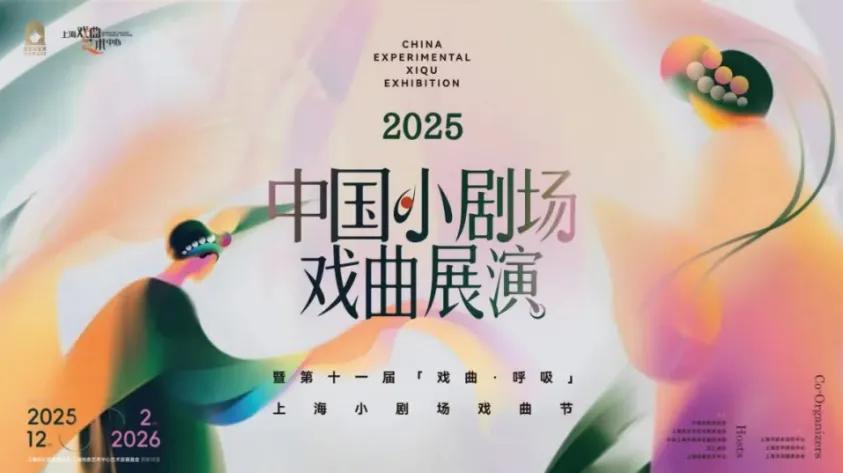
The main program schedule for the China Experimental Xiqu Exhibition in January and February was released recently. The program covers a variety of traditional opera genres, including Kunqu Opera, Peking Opera, Yue Opera and Huai Opera.