Shanghai issues plan to build 'Shanghai Style' brand (Issue 135)
Laws and Regulations
National
1. 2026 Cross-Border Trade Facilitation Campaign Officially Launched
[Keywords: Cross-border trade]
On March 16, the General Administration of Customs (GAC), together with 24 other authorities, jointly launched a six-month cross-border trade facilitation campaign for 2026. This year’s campaign introduces a new package of 29 policy measures to enhance the quality and efficiency of foreign trade. The measures mainly focus on deepening innovation in import and export customs clearance supervision, optimizing supervision services for new forms of foreign trade, improving cross-border logistics efficiency, strengthening smarter port construction, promoting the alignment of standards and rules, and enhancing comprehensive support for enterprises.
Source: Website of the Chinese Government
2. GAC Fully Rolls Out Cross-District Return Policy for Cross-Border E-Commerce Retail Exports
[Keywords: Cross-border e-commerce, Retail exports, Cross-district returns]
Recently, the GAC issued the Announcement on Fully Rolling Out Cross-District Returns for Cross-Border E-Commerce Retail Exports. The document specifies that enterprises engaging in cross-district returns for cross-border e-commerce retail exports shall operate in a compliant manner and have an independent functional area for processing. Relevant data from their production and operation systems shall be accessible to, or connected with, the GAC’s information systems. This document will take effect on April 1, 2026.
Source: International Services Shanghai
Shanghai
1. Shanghai Releases 2026 Key Tasks for Transforming Government Functions and Reforming the Administrative Approval System
[Keywords: Transformation of governmental functions, Administrative approval]
The General Office of the Shanghai Municipal People’s Government recently issued the Shanghai’s Key Tasks to Transform Government Functions and Reform the Administrative Approval System in 2026. The document sets out 24 measures across four areas: accelerating the development of a high-standard market system and building a world-class business environment; continuously deepening the reform of the administrative approval system and building an efficient service-oriented government; continuously strengthening precise and coordinated government supervision to enhance governance capacity; and advancing reform and innovation within the government itself to ensure high-quality economic and social development.
Source: Shanghai Municipal People's Government
2. Shanghai Issues Plan to Build the "Shanghai Style" Brand
[Keywords: Shanghai Style]
The Shanghai Municipal Commission of Commerce recently issued the Overall Plan for Building the “Shanghai Style” Brand to Drive Consumption Quality and Expansion. The document sets out 16 key tasks across five areas, including designing and releasing a unified visual identity system for the “Shanghai Style” brand, establishing a service certification and evaluation system for “Shanghai Style”, and including market entities or products that pass certification in an official recommendation list and authorizing them to use the unified logo.
Source: Shanghai Municipal Commission of Commerce
3. Shanghai Releases Version 3.0 of the Policy List for the High-Quality Development of the Digital Advertising Industry
[Keywords: Digital advertising industry]
On March 18, the Shanghai Municipal Administration for Market Regulation issued the Shanghai Policy List for the High-Quality Development of the Digital Advertising Industry (3.0 Version). The document covers 41 robust measures, including funding support, tax and fee reductions, talent incentives, and technological innovation, thereby establishing a full-cycle, multi-tiered, and wide-coverage policy service system to support the industry’s development.
Source: Shanghai Municipal Administration for Market Regulation
Q&A
At a press conference held by the GAC to interpret the newly revised regulatory framework for registration of overseas manufacturers of imported foods, an official from the GAC answered questions from the media.
Q
It was mentioned that the newly revised Regulations of the Customs of the People’s Republic of China on the Registration Administration of Overseas Manufacturers of Imported Foods introduces four major innovations in facilitation measures. Could you elaborate on the specific conveniences that will be brought to applicant enterprises after the implementation of the Regulations?
A
First, the new Regulations gives full consideration to alignment with the existing registration system. The import trade of the 96,000 food enterprises already registered worldwide will not be affected, and they will benefit from the implementation of the new Regulations.
(1) Registration will be automatically renewed for 95% of the enterprises already registered. Pursuant to the Regulations and the relevant implementation announcement, food manufacturers other than those producing meat and meat products as well as bird’s nest and bird’s nest products will enjoy automatic renewal upon expiry of their registration. This makes the management of registration validity more efficient. For the above two categories of enterprises whose registration cannot be automatically renewed, the Regulations extends the application period for renewal from 3–6 months before expiry to 3–12 months, thereby allowing more sufficient time for these enterprises to apply for renewal of registration.
(2) Changes for existing enterprises will become more convenient. For registered enterprises seeking to make changes, we have adopted a more flexible and pragmatic approach. We mainly assess whether the changes will have a significant impact on the food safety, hygiene management or protection systems before deciding whether to approve them, thus ensuring the smooth operation of food trade to the greatest extent possible.
Second, for enterprises applying for new registrations, the revision introduces four aspects of facilitation.
(1) Application process is more convenient. The previous dual-track system of “official recommendation” and “enterprise self-application” have been optimized into a single model where applications are submitted by enterprises. For imported foods categorized as requiring official recommendation for registration, enterprises may directly submit applications to the Chinese side after obtaining inspection reports and recommendation letters issued by the competent authorities.
(2) Application materials are further streamlined. The proof-of-identity documents for enterprises are no longer limited to business licenses; official certificates issued by authorities may also be submitted. Registration information such as “type of production” and “production capacity” is now required on an as-needed basis.
(3) Information feedback is faster. Enterprise registration progress will be notified directly to enterprises via the system and communicated to the overseas competent authorities.
(4) A fast-track “list-based registration” channel has been added. For countries and regions that have already established a good cooperative relationship and reached bilateral arrangements on import registration with China, their enterprises may benefit from the expedited registration process available under the “list-based registration” model.
We believe that, following the implementation of the new Regulations, the import registration process for law-abiding and compliant food enterprises will become more efficient and convenient.
Source: GAC
Expert Perspective
Foreign Investment Guide to China: Interpretation of Key Revisions and Highlights of the Catalogue of Encouraged Industries for Foreign Investment (2025 Edition)
By Zhang Peng, Wang Siming [Beijing Dentons Law Offices]
[Continued from previous issue]
II. Key Items Removed or Adjusted in the 2025 Edition
Removal of regional “automobile manufacturing (complete vehicles)”
In the 2022 Edition, the catalogues of encouraged industries in many provinces in central and western China (including Inner Mongolia, Guangxi, Chongqing, Sichuan, Guizhou, Yunnan, Shaanxi, Gansu, Qinghai, Ningxia, and Xinjiang) explicitly listed “automobile manufacturing (complete vehicles)”. In the 2025 Edition, this expression has disappeared from the catalogues of the relevant provinces, and the following new features have emerged:
- The policy orientation has shifted towards new energy vehicles. Provinces such as Hubei, Hunan, Anhui, Liaoning, and Hainan have newly added or highlighted industries related to the design, R&D, and component manufacturing for new energy vehicles.
- Greater emphasis is placed on key segments of the automotive industry chain, such as design and R&D, the “trinity” of EV systems (battery, electric motor, and electronic control) and “three intelligences” (intelligent driving, intelligent cockpit, and intelligent connectivity), battery recycling and circular utilization, as well as charging and battery-swapping.
- Manufacturing of special-purpose vehicles is retained (subject to the Provisions on Administration of Investment in the Automobile Industry).
III. Preferential Policies Available to Foreign-Funded Investment in Encouraged Fields
Foreign-funded enterprises that fall under the encouraged industries catalogue may enjoy the following preferential policies:
- Exemption from customs duties: Equipment imported for self-use within the total amount of investment is exempt from customs duties, except for items specified in the Catalogue of Imported Commodities for Foreign-Funded Investment Projects Ineligible for Tax Exemption and the Catalogue of Major Technical Equipment and Products Ineligible for Tax Exemption on Import.
- Preferential land use policies: Land will be supplied in priority for eligible projects. The minimum land transfer price (opening bid) may be set at no less than 70% of the national minimum price standard for the corresponding land grade and location. Flexible land-use arrangements such as long-term leasing, lease-before-transfer, and land transfers with flexible terms may be adopted to reduce initial land costs.
- Income tax incentives: Investments in western regions and Hainan Province are eligible for a preferential corporate income tax rate of 15%.
- Tax incentives for reinvestment: Where foreign investors use profits distributed by domestic enterprises to directly reinvest into industries listed in the National Catalogue and meet relevant conditions, they are eligible for tax credit benefits.
IV. Conclusion
The revision of the Catalogue of Encouraged Industries for Foreign Investment (2025 Edition) reflects a shift in China’s foreign investment policy toward “systematic and deep integration”. Against the backdrop of a continued decline in global cross-border direct investment, beyond the basic objectives of stabilizing the overall scale of foreign investment and continuously optimizing its structure, China’s foreign investment policy now places greater emphasis on leveraging foreign investment to expand domestic demand, boost consumption, and promote sci-tech innovation. It also stresses enhancing high-quality services for foreign investment, bolstering support for key foreign investment projects, promoting domestic reinvestment by foreign investors, and encouraging localized production. Foreign investors are encouraged to actively position themselves in emerging sectors and adopt more in-depth localization strategies to tap into the potential of the Chinese market.
One Week in Shanghai
Latest News
1. Certificating Ceremony Held for 42nd Batch of MNCs Regional Headquarters and R&D Centers
[Keywords: MNCs, R&D centers]
On March 18, a certificating ceremony was held for the 42nd batch of MNC regional headquarters and R&D centers. Certificates were awarded to 30 MNC regional headquarters and 15 foreign-funded R&D centers. These newly certified entities demonstrate a high degree of industrial clustering, with most of them operating in Shanghai’s key industries, including biomedicine, integrated circuits, high-end equipment, automobiles, and fashion consumer goods.
Source: Shanghai Release
2. Fifth Anniversary of the Hongqiao International CBD
[Keywords: Hongqiao International CBD]
On March 23, the Information Office of the Shanghai Municipal People’s Government held a municipal press conference, at which an official from the Administrative Committee of the Hongqiao International Central Business District (CBD) presented the achievements of the Hongqiao International CBD over the five years since the launch of the Hongqiao International Opening-up Hub. Over the past five years, the main economic indicators of the District have doubled. Its regional GDP has exceeded RMB 200 billion, tax revenue has risen from RMB 26.8 billion to RMB 51.8 billion, and the number of corporate legal entities has grown from 49,000 to nearly 100,000. The District has successfully fulfilled all targets set out in the 14th Five-Year Plan and achieved remarkable results in its development as a leading hub for international business, sci-tech innovation, global conventions and exhibitions, and integrated transportation.
Source: Shanghai Release
3. GARP Shanghai Representative Office Settles in Dishui Lake Financial Bay
[Keyword: GARP]
On March 17, the Shanghai Representative Office of the Global Association of Risk Professionals (GARP, based in the USA) was officially registered and established in Dishui Lake Financial Bay in the Lingang Special Area
Source: Shanghai Lingang
4. RCA Shanghai Centre Settles at Donghua University
[Keywords: RCA Shanghai Centre]
The Royal College of Art (RCA) Shanghai Centre was recently inaugurated at Donghua University. The Centre will foster deep cooperation in high-end education programs, industry-university-research collaboration, innovation and entrepreneurship education, and alumni services. It will inject new impetus into art and design education in China and beyond.
Source: International Services Shanghai
Corporate Activities
1. AstraZeneca Cell Therapy Innovation Center to be Established in Zhangjiang
[Keywords: AstraZeneca]
On March 19, AstraZeneca officially announced that it will build a cell therapy innovation center in Zhangjiang Science City. The center will serve as a full-chain innovation platform covering early-stage research, viral vector development, clinical manufacturing, and registration support. It will become a key hub in AstraZeneca’s global cell therapy network, marking a further elevation of China’s position in next-generation cell therapy innovation worldwide.
Source: Pudong Release
2. BASF's First Wholly-Owned Agricultural Solutions Company in China Settles in Pudong
[Keyword: BASF]
BASF’s first wholly-owned agricultural solutions company in China, BASF Agricultural Technology (Shanghai) Co., Ltd., was recently established in the Waigaoqiao Bonded Area. By choosing Waigaoqiao, the company has opted for an efficient, integrated “R&D + headquarters + logistics” model and industrial ecosystem. Leveraging its established base and a top-tier logistics hub, this model will ensure the effective implementation of BASF’s strategy to deeply integrate with and participate in the development of China’s agricultural market.
Source: Pudong Release
3. Haleon Builds its First Oral Health Manufacturing Base in China in Shanghai Lingang
[Keyword: Haleon]
The Lingang Special Area Administration and Haleon (China) Co., Ltd. recently signed an investment agreement in Shanghai, officially launching the Haleon oral health manufacturing base project in Shanghai’s Lingang area. The total investment is approximately GBP 65 million (nearly RMB 600 million). The new facility will mainly produce professional oral health products including Sensodyne and Parodontax. By building its own production capacity, Haleon aims to strengthen its supply chain and better meet the growing demand of Chinese consumers for high-quality oral care solutions.
Source: Shanghai Lingang
4. Global Microelectronics Engineering Company Melexis Chooses Huangpu
[Keyword: Melexis]
Melexis, the Belgian global microelectronics engineering company, recently announced the official establishment of its wholly foreign-owned enterprise, Melexis Integrated Circuits (Shanghai) Co., Ltd., in Shanghai Huangpu. Setting up this wholly-owned entity is an important step in Melexis’ localization strategy for 2026. The new entity not only lays a solid organizational foundation for achieving end-to-end localized manufacturing, but also empowers Melexis to operate independently in China and facilitates settlement in renminbi.
Source: Shanghai Huangpu
5. Ralliant's Asia-Pacific Headquarters Officially Lands in Minhang
[Keyword: Ralliant]
U.S. company Ralliant has recently established a wholly-owned subsidiary, Ralliant Technologies (Shanghai) Co., Ltd., in Minhang, marking the official launch of its Asia-Pacific headquarters there. The project will coordinate the management of Ralliant’s 15 affiliated companies across nine countries and related regions worldwide, while exploring supporting infrastructure, such as regional supply chains, bonded warehouses, and maintenance centers.
Source: Invest in Minhang
Forums and Exhibitions
1. Global Developer Pioneers Summit 2026 Set to Open
[Keywords: Global Developer Pioneers Summit]

The Global Developer Pioneers Summit 2026 (GDPS 2026) will be held from March 27 to 29 at the West Bund International Convention and Exhibition Center in Xuhui District, Shanghai. Under the theme of “Developer, Find, Find, Find”, the Summit will center on six dimensions, namely, finding answers, technologies, scenarios, talent, jobs, and friends to facilitate efficient matching of industrial resources and foster an innovation ecosystem for developers.
Source: GDPS
Culture & Arts
1. AW2026 Shanghai Fashion Week Set to Open
[Keywords: Shanghai Fashion Week]
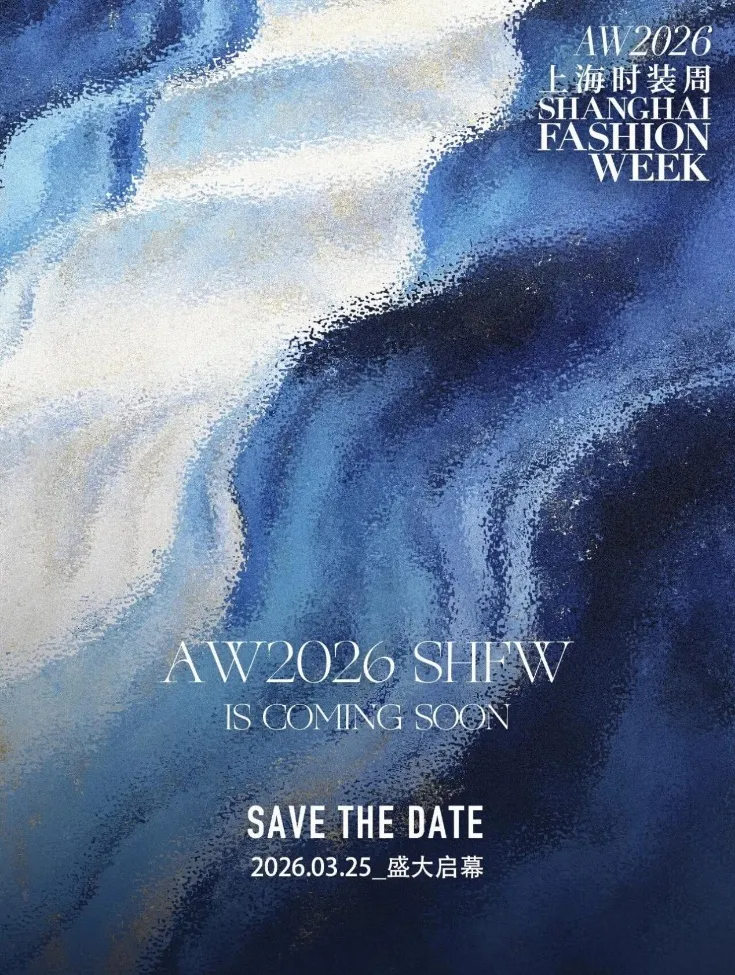
AW2026 Shanghai Fashion Week (SHFW) will officially open on March 25. With the theme “Design Ahead, Fashion Ascends”, this season’s event will create a city-wide fashion consumption season in districts including Huangpu, Jing’an, Changning, Xuhui, Pudong, Hongkou, and Baoshan. It will feature innovative runway and presentation experiences at trendsetting landmarks such as Xintiandi, Yongyuan Road, and Yandang Road. In partnership with e-commerce platforms, it will also integrate online and offline channels to build city-wide fashion consumption areas and rich fashion and cultural experience zones where products can be viewed, pre-ordered, and purchased.
Source: International Services Shanghai
2. The 41st Shanghai Spring International Music Festival to Open on March 26
[Keywords: Shanghai Spring International Music Festival]

The 41st Shanghai Spring International Music Festival will be held from March 26 to April 12. This year’s festival will present 68 main performances, including 59 music performances and 9 dance performances, as well as 13 themed events, comprising 5 sub-festivals, 5 educational showcases, and 3 call-for-entry activities, along with a rich variety of fringe programs.
Source: Shanghai Federation of Literary and Art Circles
3. Tchaikovsky Moscow State Conservatory and Shanghai Philharmonic Orchestra Launch In-Depth Cooperation
[Keywords: Tchaikovsky Moscow State Conservatory, Shanghai Philharmonic Orchestra]
The Shanghai Philharmonic Orchestra and the Tchaikovsky Moscow State Conservatory recently signed a strategic cooperation agreement in Shanghai, officially launching a three-year in-depth collaboration. The partnership will carry out comprehensive cooperation across six areas including artistic production, talent cultivation, joint creation, resource sharing, arts education, and youth music education.
Source: Shanghai Philharmonic Orchestra