Shanghai issues action plan for high-quality development of new towns in 2026 (Issue 136)
Laws and Regulations
National
1. Nine Authorities Jointly Issue 16 Measures to Promote Travel Service Exports and Expand Inbound Consumption
[Keywords: Travel service exports, Inbound spending]
Recently, nine authorities including the Ministry of Commerce (MOFCOM) issued the Policy Measures on Promoting Travel Service Exports and Expanding Inbound Consumption. The document puts forward 16 specific measures in seven areas, namely, expanding inbound tourism spending, facilitating inbound business activities, stimulating inbound spending on sporting events, boosting inbound cultural and entertainment spending, expanding inbound health-related spending, developing inbound spending on education and training, and improving support measures.
Source: MOFCOM
2. Administrative Measures for Overseas Lending by Domestic Enterprises Issued
[Keywords: Domestic enterprises, Overseas lending]
Recently, the People’s Bank of China and the State Administration of Foreign Exchange issued the Administrative Measures for Overseas Lending by Domestic Enterprises. The document aims to further support and regulate overseas lending business conducted by domestic enterprises and, through raising the macro-prudential adjustment parameter, increase the upper limit for outstanding overseas lending balances. The Measures will take effect on April 20, 2026.
Source: People's Bank of China
Shanghai
1. Shanghai Issues Action Plan for High-Quality Development of New Towns in 2026
[Keywords: New towns, High-quality development]
Recently, the 2026 Shanghai Action Plan for High-Quality Development of New Towns was released. Centering on the primary objective of strengthening the functions of new towns as comprehensive nodal cities, the document sets out 26 tasks and measures across six areas: industry, innovation, services, facilities, branding, and mechanisms.
Source: Shanghai Municipal Development & Reform Commission
2. Implementation Rules for the High-Standard Opening-Up Pilot Program in Cross-Border Trade Open for Public Comments
[Keywords: Cross-border trade, High-standard opening-up pilot]
On March 25, the Shanghai Branch of the State Administration of Foreign Exchange released the Notice on Issuing the Implementation Rules for the High-Standard Opening-Up Pilot Program in Cross-Border Trade by the Shanghai Branch of the State Administration of Foreign Exchange (Draft for Comments). The document specifies that facilitation measures cover eight categories of business, including facilitating cross-border receipt and payment under current account transactions and optimizing settlement for new forms of international trade.
Source: Shanghai Branch of the State Administration of Foreign Exchange
Q&A
At a recent regular press conference of MOFCOM, the spokesperson of the MOFCOM presented relevant information and answered questions from the media.
Q1
Recently, MOFCOM, together with relevant authorities, issued the Policy Measures on Promoting Travel Service Exports and Expanding Inbound Consumption. Could you please brief us on the situation regarding travel services? What are the next steps to further optimize the inbound consumption environment and enhance facilitation across the entire process?
A1
Travel services include not only personal travel for tourism, overseas study, and medical treatment, but also various types of business travel. It stands as the largest sector in China’s trade in services, with its import and export volume accounting for over one quarter of the total trade in services.
In recent years, China has continuously introduced a series of measures such as standardizing services, facilitating visa issuance, and internationalizing payment services to optimize the international consumption environment and enhance the appeal of inbound spending. “ChinaTravel” has become a new trend among overseas tourists. In 2025, travel service exports reached 393.98 billion yuan, an increase of 49.5% year-on-year. This makes it the fastest-growing sector in service exports, although the volume of exports remained smaller than that of imports.
In order to further unlock the potential of inbound spending and build inbound spending destinations with global appeal, the MOFCOM, together with relevant authorities, issued the Policy Measures on Promoting the Export of Travel Services and Expanding Inbound Consumption, which set out 16 policy measures in seven areas.
This document, based on diverse inbound purposes and consumption needs, focuses on various inbound scenarios such as tourism and shopping, business exhibitions and conferences, sporting events and performances, healthcare, and education and training. The document encourages all localities to provide resource support for inbound spending infrastructure in light of local realities and increase the supply of high-quality services. It also calls for building national tourism brands, strengthening precision global marketing, and continuously improving visa policies. Furthermore, efforts will be made to remove bottlenecks in dining, accommodation, transportation, sightseeing, shopping, and entertainment for inbound visitors, while further enhancing convenience in payment, tax refunds, communications, sightseeing and ticketing. The goal is to encourage more international travelers to “want to come, be able to come, and be willing to return to China.”
Moving forward, we will work together with various authorities and localities to promote the prompt implementation and effectiveness of these policy measures. The goal is to further optimize the inbound spending environment, expand service exports, and open up new space for service consumption.
Q2
We have noticed that recently, many senior executives of multinational companies (MNCs) have visited China to discuss investment and cooperation projects. Many of them have expressed strong confidence in the opportunities offered by China’s large market. What considerations and measures does MOFCOM have going forward to attract foreign investment?
A2
Recently, global heads of many MNCs such as Apple, Eli Lilly, BASF, Volkswagen, Bosch, and Al-Futtaim Group, as well as representatives from chambers of commerce and associations including the US-China Business Council, have paid intensive visits to China. Many of them visited the MOFCOM and had candid and pragmatic exchanges with us. They all highly recognize the strong resilience and innovation vitality of the Chinese economy, the advantages of China’s ultra-large market, and its continuously improving business environment. They regard China as an innovation base for the global development of MNCs. For many MNCs, investing in China has evolved from an option for resource allocation to a necessity for strategic development.
This morning, BASF’s largest single investment project globally, the BASF (Guangdong) Verbund site, was officially put into operation. Recently, quite a number of MNCs have announced plans to further expand their investment in China. For example, Eli Lilly plans to invest USD 3 billion in China over the next decade to expand production; Novo Nordisk announced the expansion of its manufacturing base in Guangzhou; and Schneider Electric announced the construction of two new factories in Xiamen and Wuxi as well as the upgrading of its R&D center in Beijing. These actions demonstrate the long-term commitment and confidence of MNCs in the Chinese market.
This year marks the first year of the 15th Five-Year Plan period. Not long ago, the National People’s Congress and the Chinese People’s Political Consultative Conference successfully convened, and the Outline of the 15th Five-Year Plan for National Economic and Social Development was reviewed and approved. The implementation of the Outline will lay a firm foundation for China to basically achieve socialist modernization and unlock substantial incremental market opportunities for MNCs in China.
Together with relevant local authorities and departments, we will fully implement the decisions and arrangements of the CPC Central Committee, unswervingly expand high-standard opening-up, and deepen reforms of the mechanisms for promoting foreign investment. We will effectively implement policies such as the Catalogue of Encouraged Industries for Foreign Investment, tax credit policies for reinvested profits, and supporting measures for foreign-funded R&D centers. Moreover, we will enhance services and support for MNCs’ investment projects in China, dynamically update the list of key foreign-invested projects, and provide strong support in areas such as cross-border data flows, R&D and innovation, and talent attraction, so as to facilitate the rollout and growth of more foreign-investment projects.
Source: MOFCOM WeChat Official Account
Expert Perspective
Frontier Observations on "Selected Cases" in Company Law in 2025 (Extracts)
By Sun Binbin, Wen Han, Xing Haoran, Lu Yang, Li Yongzhen (Zhong Lun Law Firm)
I. Dispute Over a Shareholder’s Right to Information: The Dispute Over a Shareholder’s Right to Information in the Case of Company J v. Company X
1. Case overview
Company J is an international enterprise that was initially incorporated in Italy, subsequently redomiciled in the Netherlands, and later listed in the United States. In 2003, Company J and an enterprise based in Wenzhou jointly established a joint venture , Company X. Subsequently, due to divergent business philosophies and the governance risks inherent in an equity structure in which each party held 50% of the equity interests, the company fell into a deadlock. The foreign shareholder attempted to exit its investment by transferring its equity interests but failed. It then initiated legal proceedings, requesting the joint venture to provide documents such as the articles of association, resolutions of the board of directors, and financial books and records, and indicated that it might initiate arbitration or litigation abroad at a later stage.
Prior to filing the lawsuit, in order to prevent key financial documents from being tampered with or destroyed, Company J applied to the Longwan District People’s Court of Wenzhou, Zhejiang Province, for preservation of evidence before litigation. The court rendered a ruling in accordance with the law granted the application and implemented the preservation by copying and sealing the relevant documents.
After accepting the case, the joint venture challenged Company J’s standing as a party, arguing that its name was inconsistent with the registered name of the original foreign shareholder. Company J subsequently submitted supplemental evidence and relevant European Union regulations, explaining that, despite cross-border redomiciliation and name change in connection with its listing in the United States, it was in fact the same legal entity.
Through a pre-trial conference, the Longwan District People’s Court reviewed the evidence, verified the relevant EU provisions, and consulted publicly available information from the U.S. Securities and Exchange Commission, ultimately confirming that Company J was indeed the original foreign shareholder. All parties raised no objection to this determination, which in turn facilitated the mediation of the case.
Through mediation, on December 26, 2024, the Longwan District People’s Court issued a civil mediation statement under case number (2023) Zhe 0303 Min Chu No. 4850, confirming the mediation agreement reached by the parties regarding the transfer of 45% of the equity interests held by the foreign shareholder at an agreed price.
2. Mediation guidance
1.In handling disputes involving foreign-funded enterprises, the people’s courts shall attach importance to equally protecting the lawful rights and interests of both Chinese and foreign parties. The courts shall accurately apply domestic laws such as the Foreign Investment Law and the Company Law as well as relevant foreign laws, to foster a law-based environment conducive to foreign investment, help stabilize market expectations for foreign investment, and provide strong judicial services and supports for advancing high-standard opening-up and further attracting and utilizing foreign investment.
2. The people’s courts shall, in light of the actual operational conditions of companies, fully leverage legal means and actively explore approaches similar to this case, where a “major dilemma” in corporate governance is resolved through the “narrow focus” on a dispute over shareholders’ right to information. Courts must seek the optimal solution for handling cases within the legal framework to substantively resolve conflicts and disputes in a comprehensive manner at minimal cost. They should make every effort to avoid the situation where the conclusion of one case gives rise to multiple new ones.
3. Brief case commentary
When handling disputes among shareholders, particularly those in companies with a 50/50 equity structure, the complexity of the case often goes beyond the scope of a single lawsuit. Although this balanced equity structure is initially designed to achieve checks and balances in decision-making, it can easily lead the company into a deadlock in corporate decisions when shareholders develop divergent business philosophies. Once a deadlock forms, it often triggers a cascade of litigation. These include disputes over the shareholder’s right to information, disputes over the validity of corporate resolutions, disputes over liabilities for damaging the interests of the company, and even disputes over corporate dissolution, thereby plunging the company into protracted internal friction, business stagnation, and asset impairment.
Among these, lawsuits concerning a shareholder’s right to information are often used by shareholders not involved in day-to-day operations as a preliminary measure to ascertain the company’s true financial status and gather evidence. However, in practice, such lawsuits frequently encounter enforcement difficulties. If a company refuses to cooperate in providing, or conceals or falsifies, key documents such as financial books and records, then even if the shareholder prevails in the lawsuit, the enforcement process may still be fraught with obstacles and the purpose of inspection remains difficult to achieve. Therefore, relying solely on lawsuits over the shareholder’s right to information often fails to fundamentally resolve the deep-seated conflicts and the crisis of trust among shareholders.
Against this backdrop, court-led mediation that facilitates a comprehensive resolution of all disputes among all parties has become an efficient approach to breaking corporate deadlocks of this kind. This case illustrates the advantages of this approach: while hearing the dispute over the shareholder’s right to information, the court acutely identified the latent issues behind the case including equity transfer, governance deadlock, and the risk of corporate dissolution, and proactively guided the parties to conduct overall negotiations on core issues such as equity transfer, amendment of the articles of association, and the continued existence of the company. By adopting a strategy of promoting negotiations through litigation and relying on court-facilitated mediation within the litigation process, the plaintiff prompted both sides to directly face the litigation costs and the risk of corporate collapse. It ultimately led to a comprehensive agreement on equity transfer and adjustments to the corporate governance structure. This proves to be an efficient way to resolve disputes of this nature.
In addition, the preservation of conduct before litigation obtained by Company J in this case provides an important and feasible reference for similar cases. The author has also successfully implemented preservation measures in a dispute over a shareholder’s right to information. In such cases, in addition to explaining the necessity of preservation, the applicant often needs to clearly identify the specific location of the subject matter to be preserved (such as finance offices, archives room, or hosting servers) and must be able to exercise actual control over such locations or items. If the applicant cannot provide specific clues, the preservation ruling may prove unenforceable and thus fail. Therefore, before filing an application for preservation, shareholders should, to the greatest extent possible, ascertain the storage locations of the target documents, the persons responsible for their management, and the procedures for accessing them through preliminary consultations, publicly available corporate information, communications with internal personnel, and other channels. All these details should be clearly set out in the application. Where necessary, shareholders may also provide site diagrams or information on custodians to facilitate the court’s timely and accurate implementation of preservation measures.
One Week in Shanghai
Latest News
1. Passenger Flows at Shanghai Ports for Entry and Exit Continue to Rise
[Keywords: Entry and exit]
Since the beginning of this year, passenger flows for entry and exit at Shanghai ports have continued to increase. As of 9:00 a.m. on March 28, the total number of inbound and outbound passengers inspected at Shanghai ports this year had exceeded 10 million, including approximately 5.055 million departures and 4.945 million arrivals, up 2.6% and 3.3% year on year, respectively.
Source: Shanghai Release
2. Shanghai Releases Service Package 3.0 for Handling Enterprise-related Rights Infringements
[Keywords: Enterprise-related, Rights-infringing information]
Recently, the Cyberspace Administration of the CPC Shanghai Municipal Committee released the upgraded Service Package 3.0 for Handling Enterprise-related Rights Infringements. Focusing on the pain points most frequently reported by enterprises, the document offers targeted optimizations, including intensified rectification of five categories of prominent issues and improved guidance for filing complaints on relevant platforms.
Source: Cyberspace Administration Shanghai
3. Pudong New Area Enterprise Going Global Cooperation and Matchmaking Conference Held
[Keywords: Going-global services]
On the afternoon of March 25, the “Converge Strengths in Pudong, Navigate Globally” Matchmaking Conference for Overseas Investment from Pudong was held in the Shanghai Eastern Hub International Business Cooperation Zone. At the event, Pudong’s “1+5+N” overseas investment service system and a number of “going global” achievement were released, and plaques were unveiled on site for four overseas liaison offices of Shanghai Pudong Enterprise “Going Global” Comprehensive Service Center in Singapore, the United Kingdom, Germany, and Greece.
Source: Pudong Release
Corporate Activities
1. Estée Lauder Companies China Fulfillment Center Officially Put into Operation
[Keywords: Estée Lauder]
Recently, the Estée Lauder Companies China Fulfillment Center, located in the Xinzhuang Industrial Park in Minhang District, was officially inaugurated. The Center innovatively adopts a “dual-warehouse” model that coordinates the operation of bonded and non-bonded warehouses, providing integrated logistics services for the full brand portfolio of the Estée Lauder Group in the Chinese market.
Source: Minhang Today
Competition Events
1. The Fourth "Shanghai Culture and Creativity" Innovation and Entrepreneurship Competition Kicks off with a Fresh New Look
[Keywords: Shanghai Culture and Creativity]
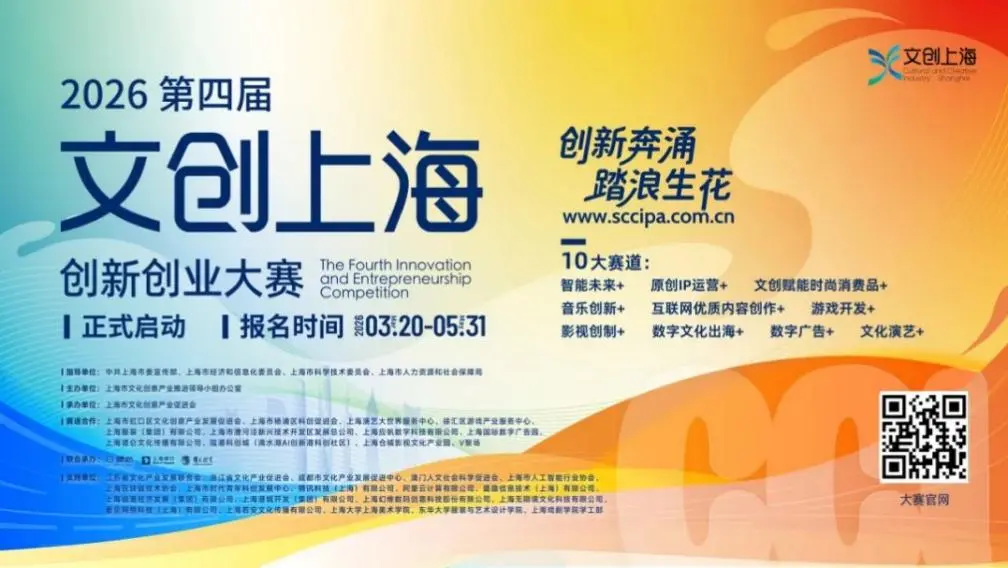
Recently, the Fourth Shanghai Culture and Creativity Innovation and Entrepreneurship Competition was officially launched. With “cross-sector integration” as its core concept, this year’s Competition features deep participation from all districts to create an innovative model of “one vertical track and one distinctive focus per district”. Ten vertical tracks have been established around the key industrial priorities of each district, and each track is backed by dedicated industrial resources and policy support. Registration for participation is open until May 31.
Source: Shanghai Release
Forums and Exhibitions
1. Tourism Plus Shanghai 2026 Opens
[Keywords: Tourism Plus Shanghai]
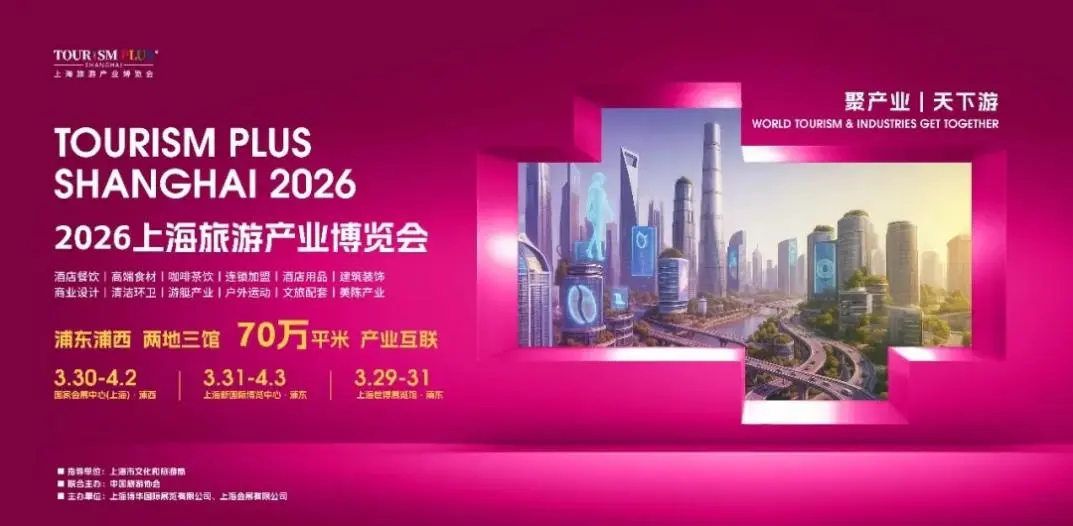
The Tourism Plus Shanghai 2026 opened on March 29. Presented in the form of five cluster exhibitions, the event is taking place sequentially across three major venues: the Shanghai World Expo Exhibition and Convention Center, the National Exhibition and Convention Center (Shanghai), and the Shanghai New International Expo Center. The total exhibition area covers 700,000 square meters, spanning 16 major industry categories and 58 exhibition sections. It brings together more than 6,000 exhibitors showcasing over 100,000 new products.
Source: Shanghai Tourism
Training and Seminars
1. Shanghai (Yangtze River Delta) Green Tech Intellectual Property Management Clinic Opens for Enterprise Registration
[Keywords: Green technology, Intellectual property management clinic]
Recently, the Shanghai (Yangtze River Delta) Green Tech Intellectual Property Management Clinic (IPMC) officially opened for enterprise registration. The program includes four days of intensive training and field visits, four months of one-on-one mentoring, and intellectual property financing matchmaking activities. Upon completion of the program, participants will receive certificates issued by the WIPO. Registration for this program is open until April 20.
Source: Green Technology Bank
Culture & Arts
1. 2026 Shanghai Peach Blossom Festival Opens
[Keywords: Shanghai Peach Blossom Festival]
On March 26, the 36th Shanghai Peach Blossom Festival in 2026 kicked off in Nanhui Peach Blossom Garden, Huinan Town. With the theme “Splendid Pudong, Peachy Delights”, this year’s festival features not only flower viewing but also a variety of activities including cultural performances, folk festivals, and family-friendly hiking tours.
Source: Splendid Pudong