Shanghai unveils 10 new measures to boost gaming and esports (Issue 139)
Laws and Regulations
National
1. State Council General Office Releases Opinions on Deepening Investment Approval System Reform
[Keywords: Investment approval]
The Opinions of the General Office of the State Council on Deepening the Reform of Investment Approval System was released recently. The document explicitly requires strengthening coordination between policies on approval and filing administration for enterprise investment projects and those on the administration of production factors and funds. For projects prohibited by the State, support including land, sea, energy, and water usage, as well as environmental impact assessment, shall be withheld in accordance with laws and regulations, and no government investment or financing support shall be provided.
Source: Website of the Chinese Government
2. Interim Measures for the Administration of AI Anthropomorphic Interactive Services Released
[Keywords: AI, Anthropomorphic, Interactive services]
Recently, the Cyberspace Administration of China and four other authorities issued the Interim Measures for the Administration of AI Anthropomorphic Interactive Services. Adhering to the principles of balancing development with security and combining innovation with law-based governance, the document encourages innovative development of anthropomorphic interactive services, and implements inclusive and prudent as well as categorized and tiered regulation, promoting such services to serve the greater good.
Source: Cyber China
3. Two Authorities Issue Circular to Strengthen Import–Export Credit Support to Serve the 15th Five Year Plan High-Quality Commerce Development with a Sound Start
[Keywords: Import–export credit]
Recently, the Ministry of Commerce (MOFCOM) and the Export–Import Bank of China jointly issued the Circular on Strengthening Import–Export Credit Support to Facilitate a Sound Start of High-Quality Commence Development under the 15th Five Year Plan. The document puts forward specific measures in three key areas, namely, promoting innovative trade development, expanding the space for two-way investment, and advancing high-quality development of the Belt and Road Initiative.
Source: MOFCOM
4. Supreme People's Court Releases Third Batch of Typical Mediation Cases Concerning Foreign-Related Commercial and Maritime Disputes
[Keywords: Foreign-related, Commercial and maritime affairs, Mediation]
Recently, the Supreme People’s Court released the third batch of typical mediation cases concerning foreign-related commercial and maritime disputes. This batch of 6 cases covers multiple areas such as cross-border investment, equity transfer, sales contracts, ship operation and management, marine salvage, and recognition and enforcement of foreign-related arbitral awards.
Source: Supreme People's Court
Shanghai
1. Shanghai: High-Quality Development of a Modern People-Centered City
[Keywords: Modern, People-centered city]
Recently, the Implementation Opinions of the CPC Shanghai Municipal Committee and Shanghai Municipal People’s Government on High-Quality Development of a Modern People-Centered City were released. The document outlines 24 specific tasks across eight key areas, including optimizing the layout of urban functions, stimulating innovation-driven development momentum, implementing urban renewal actions and enhancing the quality of life. It explicitly sets the goal that by 2035, Shanghai will basically be built into a socialist, modern and international metropolis with global influence.
Source: Shanghai Municipal People's Government
2. Shanghai Unveils 10 New Measures to Boost Gaming and Esports
[Keywords: Gaming and esports]
The Several Measures of Shanghai on Supporting the Development of the Gaming and Esports Industry were recently released. The document puts forward ten measures such as building a gaming and esports hub, creating a springboard for going global, enhancing the Shanghai brand, and empowering the industry through science and technology.
Source: Wenhui Daily
Q&A
The spokesperson of the MOFCOM answered questions from reporters at a regular press conference of the MOFCOM:
Q1
The Outline of the 15th Five-Year Plan for National Economic and Social Development proposes to vigorously attract foreign-invested enterprises to establish R&D centers in China. What are MOFCOM’s considerations regarding this objective?
A1
Foreign-invested R&D centers are an important component of China’s innovation system. Many MNCs are upgrading their “manufacturing bases” in China into “innovation sources”, and foreign-invested R&D centers in China are evolving from localized adaptation hubs to global innovation pivots.
I would like to share a set of data with you. In 2025, the actual foreign capital utilization in China’s scientific research and technical services sector accounted for nearly one-fifth of the country’s total. This proportion has increased steadily for seven consecutive years and is 3.8 times that of 2018. In 2025 alone, 14,000 new foreign-invested enterprises were established in this sector, representing a year-on-year increase of 27.2%. In recent years, a number of MNCs such as Roche Diagnostics, AstraZeneca, Philips, Porsche and Schneider Electric have successfully launched R&D centers in China.
We have continuously strengthened policy support for foreign-invested R&D centers. For example, the updated Catalogue of Encouraged Industries for Foreign Investment, which took effect on February 1 this year, has added more encouraged items in areas such as R&D in innovative pharmaceuticals and digital creative technologies. In February, the Ministry of Finance, MOFCOM and other authorities jointly issued a circular to continue exempting foreign-invested R&D centers from import duties, import VAT and consumption tax on eligible imported scientific research supplies.
Going forward, the MOFCOM will work with relevant authorities to attract more MNCs to locate their R&D operations in China. By leveraging China’s well-developed industrial system, high-caliber talent pool, and abundant application scenarios, these companies will be able to fully demonstrate their strengths and capabilities in China’s advancement of green, digital and intelligent transformation, and share development opportunities.
Q2
We have noted that the National Conference on the Service Sector was recently held in Beijing. The conference made important arrangements for further expanding capacity and enhancing quality of the service sector. What is the MOFCOM’s plan for promoting the high-quality development of the service sector?
A2
First, we will expand and upgrade service consumption. Services consumption is closely linked to both the economy and people’s livelihood. We will continue to combine efforts to improve people’s wellbeing and boost consumption, and balance investment in physical assets with investment in human development. We will remain committed to both “opening up to the outside world and liberalizing the domestic market”, advance pilot programs for new business forms, models and scenarios of consumption, and promote high-quality, diversified and convenient development of life services such as domestic services, accommodation, and catering.
Second, we will promote opening-up and cooperation in the service sector. On the one hand, efforts will be made to steadily expand opening-up pilots in areas such as value-added telecommunications, biotechnology and wholly foreign-owned hospitals, and to improve the negative list administration system for cross-border services trade. On the other hand, we will coordinate the planning and development of platforms such as national demonstration zones for innovative service trade, foster new drivers for service exports, and enhance the international competitiveness of “China Service”.
Third, we will promote innovation and upgrading in wholesale and retail. Wholesale and retail are an important component of the services sector. We will guide the rational layout of spot markets for bulk commodities, diversify business forms for industrial consumer products, and foster backbone agricultural wholesale markets. Moreover, we will implement retail innovation projects, create new consumption scenarios with “tailor-made solutions for each store”, and stimulate consumption vitality in lower-tier markets.
Source: MOFCOM
Expert Perspective
New Foreign Trade Law Series Interpretation (I): Comprehensively Advancing the Development of a Trade Power through Institutional Opening-Up
By Li Zhenghao, Su Chang, Yuan Xiaokun (King & Wood Mallesons)
[Continued from the previous issue]
Article Summary
This article mainly outlines the institutional improvements in the new revision of the Foreign Trade Law regarding countermeasures and anti-circumvention. At the legislative level, explicit authorization is granted to adopt countermeasures against specific foreign individuals and organizations, and legal liabilities for violations are stipulated. Countermeasures apply to acts that undermine national sovereignty, security or development interests, disrupt normal transactions and cause serious damage to the rights and interests of Chinese entities, and involve discriminatory measures. Countermeasures focus on prohibiting or restricting relevant imports and exports of goods and technologies and cross-border services trade, and may be, aligned with the List Provisions, complemented by measures such as entry restrictions, restrictions on work permits or residence qualifications, and fines. Newly added anti-circumvention clauses prohibit any individual or organization from supporting circumvention of countermeasures through agency, logistics, customs declaration, warehousing or platform services. The article ultimately suggests that enterprises should strengthen trade compliance, verify counterparties and monitor trade flows.
Article Details
III. Supplementing and Improving Corresponding Countermeasures to Enhance Institutional Rigidity
Article 40 and Article 76 of the new Foreign Trade Law, based on the List Provisions and summarizing China’s experience in countermeasures in recent years, grant authorization at the legislative level to adopt countermeasures against specific foreign entities, and clarify the legal liabilities for violations. Key highlights of this revised regime include:
1. Circumstances for and Contents of Countermeasures
Pursuant to Paragraph 1 of Article 40 of the new Foreign Trade Law, countermeasures target foreign individuals and organizations for: (1) undermining the sovereignty, security or development interests of the People’s Republic of China; (2) violating normal market transaction principles, interrupting normal transactions with individuals or organizations of the People’s Republic of China, and causing serious damage to their lawful rights and interests; and (3) taking discriminatory measures against individuals or organizations of the People’s Republic of China and causing serious damage to their lawful rights and interests.
With respect to the specific contents of countermeasures, Paragraph 1 of Article 40 describes them as “measures such as prohibiting or restricting the import and export of goods or technologies and cross-border services trade related to the People’s Republic of China”. Under Article 10 of the List Provisions, in addition to adopting relevant trade bans and restriction measures, the competent authorities may also adopt measures such as restricting or prohibiting the entry of relevant individuals and means of transport, restricting or canceling relevant individuals’ work permits or stay or residence qualifications within China, as well as imposing fines. In our understanding, since matters such as entry and exit and work permits fall outside the direct scope of foreign trade, they are addressed by other relevant laws and regulations rather than the Foreign Trade Law itself.
2. Anti-circumvention Requirements
Paragraph 2 of Article 40 of the new Foreign Trade Law is a newly added anti-circumvention clause based on the List Provisions. This clause prohibits any individual or organization from providing support, assistance or facilitation such as agency, freight, delivery, customs declaration, warehousing or third-party transaction platform services for acts that aim to circumvent countermeasures. The anti-circumvention clause is intended to ensure the proper implementation of countermeasures and is also of practical necessity.
By addressing acts that facilitate circumvention, Paragraph 2 of Article 40 of the new Foreign Trade Law improves the liability chain for countermeasures and helps enhance the effectiveness of countermeasures. It should be noted that, unlike Paragraph 1 which targets “foreign individuals or organizations”, Paragraph 2 applies to “any individual or organization”, and therefore Chinese citizens and organizations shall also comply with this obligation.
Implications
From the perspective of safeguarding national sovereignty, security and development interests, the new Foreign Trade Law grants authorization at the legislative level to adopt countermeasures against specific foreign entities, and imposes explicit prohibitions on providing assistance for circumvention that apply to both domestic and foreign entities. In this regard, enterprises shall establish and improve trade compliance systems, strengthen verification of their counterparties and transaction contents, and enhance the management of all segments of trade activities and the ultimate destination of goods.
[To be continued]
One Week in Shanghai
Latest News
1. Shanghai Ranks First Nationwide in the Development Environment for SMEs
[Keywords: SMEs, Development environment]
Recently, the China Center for Promotion of SME Development under the Ministry of Industry and Information Technology officially released the 2025 Assessment Report on the Development Environment for SMEs. Shanghai ranked first in overall performance among participating cities at or above the sub-provincial level. The assessment covers five primary indicators, namely, market, legal, financing, innovation, and policy environments. Shanghai excelled in its financing and policy environments, while its rankings in all other categories were among the leading positions nationwide.
Source: Shanghai Commission of Economy and Informatization
2. Policy Collection E-book for the Action Plan of Shanghai for Accelerating the Creation of a World-Class Business Environment (2026) Goes Online
[Keywords: Business environment, Policy collection]
Recently, the Policy Collection E-book for the Action Plan of Shanghai for Accelerating the Creation of a World-Class Business Environment (2026), produced by the Shanghai Municipal Development and Reform Commission, officially went online. The e-book consists of multiple sections, including the full text of the 2026 municipal-level action plan for the business environment, video explainers, departmental initiatives, district (area) plans, and relevant media coverage.
Source: Shanghai Release
3. Shanghai Session of the 8th Brand and Quality Online Shopping Festival Grandly Opens
[Keywords: Brand and Quality Online Shopping Festival]
Recently, the Shanghai session of the 8th Brand and Quality Online Shopping Festival grandly opened. During the course of the month-long event, more than 40 consumption promotion activities that are diverse in form, rich in content and integrated online and offline will be launched. Featuring dedicated sections and columns on platforms, coupon giveaways, pop-up events, livestreaming sessions and themed fairs, the festival aims to provide consumers with a digital consumption experience of “Brand, Quality, and a Better Life”.
Source: Shanghai Commerce
Corporate Activities
Jabil Group Liquid Cooling Piping Project Settles in Jiading Comprehensive Bonded Zone
[Keywords: Jabil Group]
Recently, an exchange meeting was held for the settlement of the Jabil Group Liquid Cooling Piping Project in the Jiading Comprehensive Bonded Zone. Leveraging the functional platform of the Jiading Comprehensive Bonded Zone, Jabil Group will accelerate the construction of the liquid cooling pipeline project, deeply integrate into the innovation ecosystem of the regional industrial chain, and help promote the global application of liquid cooling technology in frontier fields such as AI computing power and data centers.
Source: Shanghai Jiading
Training and Seminars
Briefing Session on the 2026 Annual Reporting of Foreign Investment Information to Be Held Soon
[Keywords: Foreign investment, Annual report]
To help foreign-invested enterprises better understand the filing procedures, compliance requirements and facilitation measures, the Shanghai Foreign Investment Association will hold a briefing session on the 2026 annual reporting of foreign investment information on April 28. Officials from the Shanghai Municipal Administration for Market Regulation and the Shanghai Branch of the State Administration of Foreign Exchange are invited to provide explanations and answer questions from participating enterprises on site.
Source: Shanghai Foreign Investment Association
Culture & Arts
1. 2026 Shanghai International Flower Show Blooms across the City
[Keywords: Shanghai International Flower Show]

From April 18 to May 10, the 2026 Shanghai International Flower Show is in full bloom across the city, running for 23 days. Centered on the theme “Shanghai in Bloom, Instant Wonder”, this year’s event features a citywide layout comprising two main venues, 10 sub venues, and multiple urban commercial districts. One of the highlights is the extension of the main exhibition areas from the central urban districts to five new towns, making seas of flowers a defining feature of Shanghai’s urban landscape.
Source: Shanghai Release
2. 2026 Pudong Festival of Culture and Art Kicks Off
[Keywords: Pudong Festival of Culture and Art]
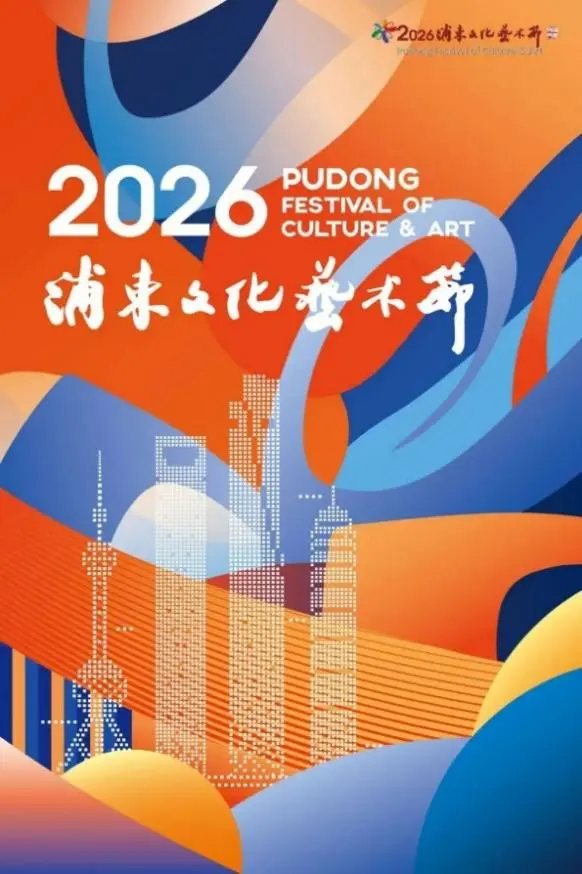
On April 18, the 2026 Pudong Festival of Culture and Art opened. This year’s festival consists of five main sections, namely, Artistic, Dynamic, Charming, Cultural, and People-centric Pudong. Nearly 1,000 events will be held in business districts, theaters, cultural centers, libraries, museums, art galleries and grassroots cultural spaces. The festival aims to deepen the integration of culture, commerce, tourism, sports, and exhibitions, while unlocking new space and new drivers for consumption growth.
Source: Brilliant Pudong