Shanghai rolls out 12 measures to improve the law-based business environment (Issue 149)
Laws and Regulations
National
1. Revised Trademark Law to Take Effect on January 1, 2027
[Keywords: Trademark Law]
The revised Trademark Law of the People's Republic of China was recently adopted at the 23rd Session of the Standing Committee of the 14th National People's Congress (NPC) and will take effect on January 1, 2027. The document expands the scope of registrable trademarks to include dynamic signs, and stipulates that trademark enforcement authorities are empowered to impose administrative penalties for the illegal use of registered trademarks in a manner that misleads the public.
Source: Website of the NPC
2. China Customs and Morocco Customs Sign AEO Mutual Recognition Arrangement
[Keywords: Morocco, AEO Mutual Recognition Arrangement]
Recently, China’s General Administration of Customs (GAC) and Morocco’s Customs Administration signed a Mutual Recognition Arrangement (MRA) for Authorized Economic Operators (AEOs). Following the implementation of the MRA, AEO-certified enterprises from both countries will enjoy a range of facilitation measures, including lower inspection rates for imported goods, priority inspection for shipments requiring physical examination, the designation of enterprise coordinators, and priority customs clearance following the resumption of international trade after disruptions.
Source: Customs Release
Shanghai
1. Shanghai Promotes High-Quality Development of the Fashion Consumer Goods Industry
[Keywords: Fashion consumer goods]
On June 30, the Shanghai Municipal Commission of Economy and Informatization (SMCEI) and four other authorities issued the Action Plan of Shanghai Municipality for Promoting the High-Quality Development of the Fashion Consumer Goods Industry (2026-2028). The document sets the goals of expanding the value of Shanghai’s consumer goods industry to more than RMB 750 billion, with the fashion consumer goods industry surpassing RMB 500 billion, and cultivating 100 leading brand enterprises that represent the city’s fashion identity by 2028. Shanghai aims to become a globally influential fashion industry hub, a source of fashion innovation, and a destination for fashion consumption.
Source: SMCEI
2. Shanghai Rolls Out 12 Measures to Improve the Law-Based Business Environment
[Keywords: Law-based business environment]
Recently, the Shanghai Municipal Bureau of Justice issued the Several Measures of the Shanghai Municipal Bureau of Justice on Optimizing the Law-Based Business Environment in 2026. The document sets out 12 measures across four areas: strengthening institutional support, regulating enterprise-related law enforcement, improving legal services, and facilitating government-enterprise interaction.
Source: Shanghai Municipal Bureau of Justice
3. Shanghai Unveils Three-Year Action Plan for High-Quality Creation and Efficient Utilization of Intellectual Property
[Keywords: Intellectual property]
Recently, the Shanghai Intellectual Property Administration (SIPA) formulated the Three-Year Action Plan for High-Quality Creation and Efficient Utilization of Intellectual Property in Shanghai. The document proposes 20 measures across five areas. By the end of 2028, Shanghai aims to hit these targets: 77 high-value invention patents per 10,000 residents, 8,400 PCT filings, RMB 50 billion in outstanding balance of IP pledge financing, and the value-added of patent-intensive industries accounting for 20% of GDP.
Source: Shanghai Intellectual Property
4. Shanghai International Energy Exchange Officially Launches Cross-Border Delivery for TSR 20 Futures
[Keywords: TSR 20 futures, Cross-border delivery]
Recently, the Shanghai International Energy Exchange (INE), a subsidiary of Shanghai Futures Exchange (SHFE), released the Delivery Rules of Shanghai International Energy Exchange (Revised) and officially launched a cross-border delivery operation for the Technically Specified Rubber (TSR) 20 futures contract. To ensure the smooth launch and an orderly overseas delivery process, INE simultaneously released two guidelines on settlement and take-delivery against TSR 20 futures, and announced overseas loading ports, premiums and discounts for TSR 20 futures.
Source: Shanghai Futures Exchange Release
Q&A
An official from the Ministry of Transport answered questions from the press at a news conference held by the State Council Information Office (SCIO) on advancing high-quality water transport development.
Q
Water transport is closely related to multiple consumption sectors such as culture and tourism. In June this year, Shanghai took the lead in launching a pilot “cruises to nowhere” program. How did the maiden voyage go? What impact will it have on the development of China’s cruise transport industry?
A
In recent years, cruises have gradually become a new driver of consumer spending, particularly a new highlight of water tourism. In 2025, China’s international cruise passenger traffic exceeded 1.3 million passenger trips, up 25.7% from 2024.
Since the beginning of this year, we have worked with relevant authorities to advance the pilot “cruises to nowhere” program. The maiden voyage in early June was a success. The pilot program was operated by Adora Magic City, China’s first domestically built large cruise ship, on a three-day, two-night itinerary. Specifically, the ship departed from Shanghai Wusongkou International Cruise Terminal on the afternoon of Saturday, June 6, sailed to waters beyond 24 nautical miles from China's territorial sea baseline for a cruise at sea without calling at any other port, and returned smoothly to its port of departure on the morning of Monday, June 8.
For this pilot program, we introduced innovative regulatory measures. In terms of route supervision, the voyage was designated as a special international route. The vessel and personnel were managed under outbound regulations, and the cruise ship was eligible for bonded supplies, helping reduce operating costs and enabling seamless transition to regular international routes. For passenger immigration inspection, in addition to using ordinary passports, travelers could also apply for a special entry and exit permit for “cruises to nowhere” with their identity cards, eliminating the time needed to obtain a visa and making travel more convenient. In terms of maritime supervision, “cruises to nowhere” program has been incorporated into the “one ship, one policy” safety supervision and service mechanism. Facilitation measures were introduced for port entry and departure approval, traffic organization and safety supervision, further improving operational efficiency and safety while ensuring the safety of passengers.
The maiden voyage carried more than 4,000 passengers, with an occupancy rate of nearly 80%. The results of the pilot program exceeded our expectations. Passengers spoke highly of the cruise products and services, demonstrating the strong market potential of “cruises to nowhere” and providing a solid foundation for further development. Compared with traditional cruise routes, “cruises to nowhere” program is shorter in duration and mainly takes place over weekends, making travel more flexible. The cost of a single trip is lower, making the product more attractive to travelers. Onboard offerings are also more diverse. In addition to duty free shopping, the cruise featured pop music performances, stand-up comedy, magic shows and themed parties. Sports facilities were fully open, and dining services were available around the clock. The voyage was especially popular with younger travelers, with the average passenger age being eight years younger than that on regular outbound cruise voyages.
As a new type of cruise itinerary, “cruises to nowhere” program has, after years of exploration, successfully created a new “weekend cruise getaway” consumption model, which is of great significance in boosting confidence in the development of the cruise industry.
Going forward, we will continue to promote pilot programs in provinces and cities where conditions permit, strive for more open and convenient policies, and promote the high-quality development of China’s cruise industry.
Source: SCIO
Expert Perspective
Observations on China's Foreign-Related Dispute Resolution in 2025: Institutional Innovation, Practical Developments and Future Prospects
By Liu Guolin and Duan Jiaqi [Grandall Law Firm]
[Continued from the previous issue]
Article Summary
Through analysis of typical cases, the article provides a systematic overview of new breakthroughs in the recognition and enforcement of Chinese court judgments and bankruptcy reorganization proceedings overseas. Taking as entry points cases such as the first batch recognition of Chinese civil and commercial judgments by UK courts and the first recognition of Chinese bankruptcy reorganization proceedings by the Singapore High Court under the UNCITRAL Model Law on Cross-Border Insolvency, the article offers an in-depth analysis of development trends and practical significance in areas such as transnational judicial cooperation, mutual recognition of judgments and bankruptcy relief. These cases fully demonstrate the continuous improvement of the international credibility of China’s judiciary and the development of China’s rule of law in foreign-related matters, while also providing clearer legal pathways and practical references for Chinese enterprises to conduct transnational operations, safeguard overseas rights and interests, and respond to international commercial disputes.
Article Details
III. Summary and Recommendations
(II) Chinese Enterprises Should Keep Pace with the Times and Shift from Passive Response to Proactive Planning
Facing profound changes in the field of foreign-related dispute resolution, enterprises should shift from passive response to proactive planning and build multi-dimensional dispute resolution capabilities.
1. Build Multi-Dimensional Dispute Resolution Capabilities
Chinese enterprises should adopt a comprehensive, whole-process planning mindset, and make informed choices regarding the dispute resolution mechanism (choosing between arbitration and litigation), applicable law and jurisdiction at the contract drafting stage. Chinese enterprises should thoroughly review their existing contract templates or draft contracts to be signed, to ensure that dispute resolution clauses are clear, valid and enforceable. It is recommended to adopt dispute resolution clauses that contain all essential elements, including the arbitration institution, seat of arbitration, language of arbitration, composition of the arbitral tribunal, arbitration rules and emergency relief provisions. Key review points include ensuring the independence of the arbitration clause, selecting an arbitration institution with actual operational support in China, choosing a seat of arbitration that is conducive to the recognition and enforcement of awards, clearly agreeing on the governing law, and adding emergency arbitrator provisions. When a dispute arises, preservation measures should be initiated immediately and the possibility of mutual recognition should be assessed. Corresponding strategies should be selected according to the dispute scenario. Where the relationship between the parties is friendly, mediation should be prioritized, with arbitration as a fallback. Where the amount in dispute is large and complex legal issues are involved, arbitration should be the main approach, with mediation conducted in parallel. In urgent circumstances, an emergency arbitrator or emergency preservation should be applied for first. After an award or judgment is rendered, enterprises should actively pursue enforcement both within and outside China.
2. Embrace New Opportunities Brought by Digital Empowerment
On the one hand, Article 11 of the Arbitration Law provides a legal basis for online arbitration. Major arbitration institutions have established mature online arbitration platforms. For example, the CIETAC’s OAS platform enables the entire process, from case filing to the rendering of awards, to be conducted online. Technical modules such as online hearings, electronic signatures, encrypted communications and disaster recovery backup have become standard features of arbitration institutions. On the other hand, since the Supreme People’s Court first confirmed the legal validity of blockchain-based evidence preservation in 2018, the application of this technology in arbitration has become increasingly widespread. Application scenarios include evidence preservation for contract signing, electronic evidence, and arbitration proceedings. Platforms such as Tianping Blockchain (led by the Beijing Internet Court), Judicial Blockchain (led by the Supreme People’s Court), and AntChain (evidence preservation services provided by Ant Group) have been opened to arbitration institutions, providing technical support for solving difficulties in determining the authenticity of electronic evidence.
In 2025, amid a complex international landscape marked by slowing global economic growth and the continued rise of unilateralism and protectionism, China continued to advance internal institutional innovation while responding to external challenges, providing systematic support for high-quality economic development. China’s legal framework for foreign-related dispute resolution is currently in a period of rapid development, with the core goal of building a diversified mechanism that organically connects litigation, arbitration and mediation, and developing China into a preferred destination for international commercial dispute resolution. The year 2025 marks a crucial year for China’s foreign-related dispute resolution sector to shift from passive response to proactive leadership. The systematic revision of the Arbitration Law has injected modern and international elements into China’s arbitration system, establishing key systems such as the seat of arbitration, ad hoc arbitration and online arbitration, and marking China’s formal entry into the core circle of global arbitration governance. The continuous optimization of foreign-related civil litigation procedures, the gradual improvement of cross-border data dispute resolution mechanisms, the deepening of international investment arbitration practice, and the maturity of a diversified dispute resolution system have jointly promoted the comprehensive upgrading of China’s legal framework for foreign-related dispute resolution. It can be said that a more open, transparent and efficient ecosystem for foreign-related dispute resolution is taking shape at a faster pace, and China’s institutional foundation and judicial capacity as a preferred destination for international commercial dispute resolution are becoming increasingly solid.
For Chinese enterprises, this transformation brings both opportunities and challenges. The opportunity lies in the fact that, as Chinese arbitral awards and court judgments gain increasingly broad recognition and enforcement overseas, the convenience and predictability for enterprises to resolve cross-border disputes within China have significantly improved, while the cost of protecting their rights has been effectively reduced. The challenge lies in the need for enterprises to update the dispute resolution clauses in their contract templates in a timely manner, proactively choose favorable seats of arbitration and governing laws, cultivate legal professionals with an international perspective and familiarity with cross-border rules, build digital dispute management capabilities, and make good use of technological tools such as online arbitration and blockchain-based evidence preservation. At the same time, enterprises should closely monitor compliance risks in emerging areas such as export control, cross-border data flows and international investment arbitration, and make early preparations with proactive planning. Only in this way can Chinese enterprises achieve steady and long-term development in an increasingly complex international economic and trade environment, and truly turn institutional dividends into competitive advantages.
One Week in Shanghai
Latest News
1. State Council Approves the Establishment of Shanghai Chenshan National Botanical Garden
[Keywords: Shanghai Chenshan National Botanical Garden]
On June 29, the State Council issued an official reply approving the establishment of Shanghai Chenshan National Botanical Garden in Shanghai, to be jointly developed by the Shanghai Municipal People's Government and the Chinese Academy of Sciences.
Source: Website of the Chinese Government
2. Shanghai Science and Technology Awards Conference Held
[Keywords: Shanghai Science and Technology Awards]
The Shanghai Science and Technology Awards Conference was held on July 2 to honor science and technology professionals who have made outstanding contributions to Shanghai’s scientific and technological development. A total of 206 awards (individuals) were conferred for the Shanghai Science and Technology Awards for 2025, and three foreign experts, namely, Ewart Mark Haacke, Phoon Kok Kwang, and Juyoung Yoon, received the International Science and Technology Cooperation Award.
Source: Shanghai Release
3. Asian Premiere of Intangible Cultural Heritage International Promotional Documentary "Sound of Shanghai"
[Keywords: Intangible cultural heritage, Sound of Shanghai]
Recently, the Asian premiere of “Sound of Shanghai, Connecting the World Through Art”, an international documentary promoting intangible cultural heritage, was held at the Hongqiao Art Center. Using sound as both its creative approach and spiritual metaphor, the documentary creates a distinctive artistic expression and presents the unique “Sound of Shanghai”. It brings together intangible cultural heritage elements including Kunqu Opera, traditional instrumental music, Tai Chi, food culture, tea ceremony, Gu embroidery and qipao culture, forming a seamless modern expression.
Source: Shanghai Tourism
Corporate Activities
1. Festo Completes Relocation and Upgrade of Its East China Distribution Center
[Keywords: Festo]
Recently, Festo, a global leader in industrial automation, completed the relocation and upgrade of its East China Distribution Center (DC East) and officially began operations in the Shanghai Jinqiao Comprehensive Bonded Zone. The new facility is physically adjacent to Festo’s Asia-Pacific Logistics Hub (HUB Asia), enabling business coordination and resource sharing. Supported by national policies to enhance the capacity and quality of comprehensive bonded zones, Festo has achieved the strategic integration of its supply chain in China, driving comprehensive improvements in logistics efficiency, cost control, team operations and customer service.
Source: Jinqiao Release
2. Oracle (Shanghai) AI Talent Innovation Center Officially Launched in Hongqiao International Central Business District
[Keyword: Oracle]
Recently, the launch ceremony for the Oracle (Shanghai) AI Talent Innovation Center was held in the Qingpu area of the Hongqiao International Central Business District. Based in Shanghai and serving the Yangtze River Delta region, the center focuses on two core areas: AI talent development and the incubation of AI OPC enterprises. Leveraging Oracle’s globally leading technology system and related resources, it will promote the deep integration of the education, talent, industrial and innovation chains.
Source: International Services Shanghai
Forums and Exhibitions
29 Exhibitions to Be Held in Shanghai in July
[Keyword: Exhibitions]
Shanghai's exhibition market will enter a bustling summer season in July. From cutting-edge technology and anime, comics and gaming culture to parenting and the low-altitude economy, the 29 exhibitions cater to visitors of different ages and interests. The lineup includes electronica Shanghai, the BilibiliWorld 2026, and the 2026 International Low-Altitude Economy Expo.
Source: Shanghai Commerce
Culture & Art
1. 2026 Shanghai Tourism Festival's Summer Holiday Travel Season to Open Soon
[Keywords: Shanghai Tourism Festival, Summer holiday travel season]
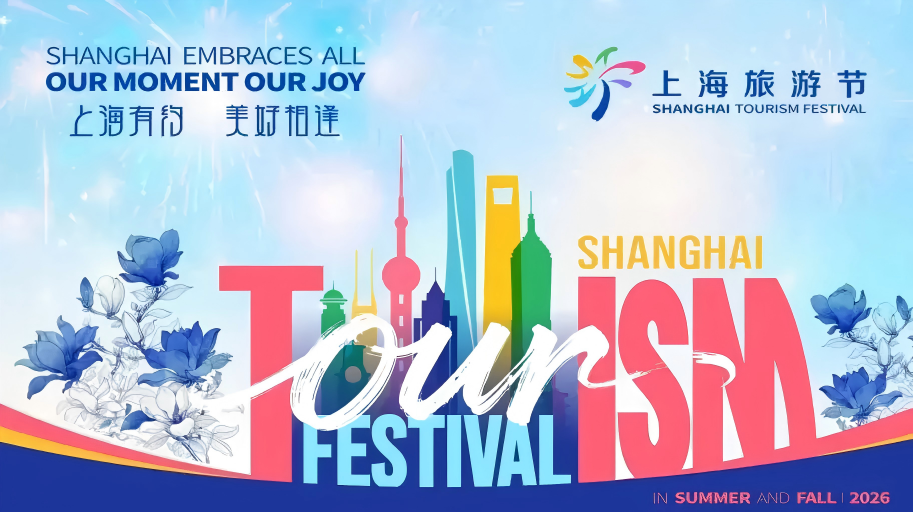
From July 8 to August 31, the 37th Shanghai Tourism Festival will launch the “summer holiday travel season” campaign. Unfolding around themes including “Cute Stars at Sea, Museum and Heritage Charm, Vibrant City Life in Shanghai, Artistic Shanghai, Pastoral Countryside, Exploring the Magic City”, the festival will feature a series of high-quality culture and tourism products.
Source: Shanghai Tourism
2. Shanghai Symphony Orchestra Unveils Its 2026–27 Concert Season
[Keywords: Shanghai Symphony Orchestra, Concert season]

Recently, the Shanghai Symphony Orchestra (SSO) unveiled its 2026–27 concert season. The new season will present a total of 93 performances in diverse formats, structured along the two main lines of SSO Season and SSO Presents. It includes 28 orchestra concerts, 47 performances by visiting artists, 7 SSO Chamber Concerts, 6 Music Map classes and 5 Rush Hour Concerts. Together, these performances present a rich and diverse artistic program for another remarkable season by the SSO.
Source: SSO
3. "Splendor of the Qing Dynasty — Special Exhibition of Cultural Relics from the Kangxi, Yongzheng and Qianlong Reigns" Opens
[Keywords: Qing Dynasty, Kangxi, Yongzheng and Qianlong Reigns]

On July 3, the Minhang Museum opened the “Splendor of the Qing Dynasty — Special Exhibition of Cultural Relics from the Kangxi, Yongzheng and Qianlong Reigns”. The exhibition focuses on three Qing Dynasty emperors, namely, Kangxi, Yongzheng and Qianlong, and features cultural relics such as a Sacred Edict issued in the tenth year of the Kangxi reign, an ivory top-scholar tally, and a blue glass lidded jar with gilt decoration.
Source: Minhang Today
4. Special Exhibition "Reading the Renaissance: Western Books and Manuscripts from the 10th to the 17th Century" Opens
[Keywords: Manuscript, Printing, Bookbinding]

On June 27, the special exhibition “Reading the Renaissance: Western Books and Manuscripts from the 10th to the 17th Century” opened at the East Branch of Shanghai Library. The exhibition is the first major Renaissance-themed exhibition in the Chinese mainland centered on books. It brings together 119 sets of rare exhibits and systematically traces the evolution of knowledge dissemination, intellectual transformation and artistic creation in Europe from the 10th to the 17th century.
Source: Shanghai Library