Three authorities issue the guidelines for building Shanghai's AI standards system (2026-2028) (Issue 152)
Laws and Regulations
National
Eight Authorities Regulate Credit Management in Bidding and Tendering
[Keywords: Bidding and tendering, Credit management]
Recently, the National Development and Reform Commission (NDRC) and seven other authorities jointly issued the Interim Measures for Credit Management in Bidding and Tendering, which will take effect on January 1, 2027. The document focuses on four categories of participants in bidding and tendering activities, namely, tenderees, tenderers, tendering agencies and evaluation experts, and specifies the circumstances and methods for imposing credit-related restrictions on each category.
Source: NDRC
Shanghai
1. Shanghai Municipal People's Government Issues 15th Five-Year Plan for Accelerating the Development of Shanghai as an International Shipping Center
[Keywords: International Shipping Center]
On July 20, the Shanghai Municipal People’s Government issued the 15th Five-Year Plan for Accelerating the Development of Shanghai as an International Shipping Center. The plan sets out 26 key tasks in six areas, including developing a world-class international seaport hub and building a comprehensive international aviation hub serving as a gateway in all respects. Shanghai aims to become an international shipping center by 2030, with strong connectivity, high-quality and convenient modern shipping services, smart and low-carbon development, resilient governance, and enhanced global resource allocation capabilities.
Source: Shanghai Municipal People’s Government
2. Three Authorities Issue the Guidelines for Building Shanghai's AI Standards System (2026-2028)
[Keywords: AI, Standards system]
Recently, the Shanghai Municipal Administration for Market Regulation and two other authorities formulated and issued the Guidelines for Building Shanghai’s AI Standards System (2026-2028). The document covers four areas: development goals, overall approach, priority areas and division of responsibilities. It aims to establish Shanghai as an internationally influential hub for AI standards by 2028.
Source: Shanghai Municipal Administration for Market Regulation
3. Shanghai Unveils Measures to Further Advance AI Plus Manufacturing
[Keywords: AI, Manufacturing]
Recently, the Shanghai Municipal Commission of Economy and Informatization issued the Measures to Further Advance AI Plus Manufacturing in Shanghai. The document sets out 13 measures covering areas such as promoting breakthroughs in key and core technologies, reducing the cost of using intelligent resources, and accelerating the intelligent transformation and upgrading of enterprises.
Source: International Services Shanghai
4. Shanghai Introduces Direct Financing Measures to Strengthen Full Life Cycle Financial Services for Technology Enterprises
[Keywords: Direct financing, Financial services]
Recently, the Office of the Financial Commission of the CPC Shanghai Municipal Committee and eight other authorities issued the Measures for Shanghai to Fully Leverage the Role of Direct Financing and Further Strengthen Technology Finance Services. The document sets out 20 measures in five areas, including enhancing the lead investment and pricing capabilities of early-stage investors, establishing a sound follow-on equity investment mechanism, and giving full play to the capital market’s role as a key hub.
Source: Shanghai Finance
5. Shanghai Municipal Commission of Commerce Issues Overall Plan for Shanghai Summer 2026 International Consumption Season
[Keywords: Shanghai Summer International Consumption Season]
Recently, the Shanghai Municipal Commission of Commerce issued the Overall Plan for the Shanghai Summer 2026 International Consumption Season. The event will run from July to October, featuring activities centered on six themes: sports, city walks, culture and museums, music, entertainment, and leisure. The plan will also introduce themed packages such as family sports viewing packages, combined museum passes, and animation passes. Supporting measures will cover transportation, accommodation and dining, digital convenience, payment services, departure tax refunds, and customized services. These include adding new international direct flight routes, launching EasyGo 2.0 for inbound travelers, introducing inbound tourism packages and NFC digital cards, expanding payment acceptance networks, and improving instant tax refund and mobile tax refund services.
Source: Shanghai Municipal Commission of Commerce
Q&A
1. An official from the NDRC answered questions from the media on the Interim Measures for Credit Management in Bidding and Tendering.
Q1
What provisions does the document set out regarding public credit evaluation and the application of evaluation results?
A1
The document sets out specific requirements for standardizing public credit evaluation and expanding its application scenarios, and deepens the application of public credit evaluation results in the fields of bidding and tendering.
First, the entities authorized to conduct evaluations are strictly limited. The document stipulates that the administrative departments under the State Council responsible for supervising bidding and tendering shall establish unified public credit evaluation rules for their respective fields. Local authorities are explicitly prohibited from independently conducting credit evaluations in bidding and tendering. This is intended to address problems at their source, including fragmented credit evaluation systems and the use of credit evaluations as a form of local protectionism.
Second, a negative list is established for evaluations. The document specifies prohibited practices in public credit evaluation and the application of evaluation results, so as to prevent potential bidders or bidders from being restricted or excluded through such evaluations or their results. Regarding evaluation, differentiated scores may not be assigned on the basis of region, ownership type, enterprise size or other such factors, and information that cannot reflect an enterprise’s credit status, such as past performance and market share, may not be included in the scope of credit evaluation. Regarding application, evaluation results may not be used as the sole criterion or assigned unreasonable weight, and enterprises from different regions or of different ownership types or sizes may not be treated differently when they receive the same credit rating.
Third, the application of evaluation results is strengthened. The document encourages public credit evaluation results to be taken into account at key stages, including setting bid evaluation standards or qualification review standards, determining mechanisms for the payment of bid security, verifying the contract performance capabilities of successful candidate bidders, and issuing letters of guarantee or insurance policies. Administrative departments responsible for supervising bidding and tendering at all levels are required to implement differentiated supervision based on public credit evaluation results, so as to foster a sound environment in which trustworthy entities benefit and untrustworthy entities face restrictions.
Source: NDRC
2. An official from the Ministry of Commerce (MOFCOM) answered questions from the media at a press conference held by the State Council Information Office (SCIO) on China’s commercial performance and operations in the first half of 2026.
Q2
Recently, the MOFCOM and other government departments issued the Action Plan for Stabilizing the Scale and Improving the Quality of Foreign Investment. How does the ministry view the current situation regarding foreign investment attraction? What measures will be taken in the second half of the year to further foster new strengths in attracting foreign investment?
A2
In the first half of this year, China’s actual use of foreign investment reached RMB 402.14 billion. The decline narrowed by 10.2 percentage points compared with the same period last year, while year-on-year growth was recorded in both May and June. China’s foreign investment inflows have shown signs of stabilization and improvement. I would like to elaborate further from the perspectives of scale and structure.
In terms of scale, the existing stock of foreign investment remains stable while new investment continues to grow. By the end of 2025, China’s accumulated foreign investment had approached US$4 trillion, representing a considerable scale. From January to June this year, the number of newly established foreign-funded enterprises increased by 5.3% year on year. More than 530,000 foreign-funded enterprises contribute approximately RMB 2.5 trillion in tax revenue each year. The World Investment Report released by the UN Trade and Development (UNCTAD) in July noted that China has shown signs of stability in attracting foreign investment amid a challenging global investment environment. Overall, the underlying trend of stability in foreign investment has remained unchanged.
In terms of structure, foreign investment is increasingly shifting toward new growth drivers and higher-quality development, with its composition continuing to improve. As China’s industrial and supply chains become increasingly well developed and its industries continue to advance, multinational companies are also steadily increasing investment in advanced technologies and frontier sectors. Let me share some sector-specific data on foreign investment. In the first half of the year, foreign investment in high-tech industries increased by 33.2% and accounted for 42.4% of the total, both reaching a record high. Modern services accounted for 57% of foreign investment. Foreign investment increased by 52% in electronic and communications equipment manufacturing, 57.1% in services for the commercialization of scientific and technological achievements, and 82% in research, development and design services. These investments have provided strong support for the intelligent, green and integrated upgrading of industries and have become an important force driving high-quality development. The quality of foreign investment has continued to improve.
In the second half of the year, we will continue to focus on stabilizing the scale and improving the quality of foreign investment, foster new strengths in attracting foreign investment, and make coordinated efforts to expand new investment, stabilize existing investment, and improve investment quality.
In terms of expanding new investment, we will continue to pursue high-standard opening-up and steadily advance pilot programs to open up sectors including value-added telecommunications, biotechnology, wholly foreign-owned hospitals and vocational skills training institutions in a prudent and orderly manner. We will support Beijing in upgrading the development of the National Integrated Demonstration Zone for Opening up the Services Sector. We will also accelerate the revision and issuance of regulations on foreign investors’ mergers and acquisitions of domestic enterprises. We will continue to build the Invest in China brand and carefully design a series of investment promotion activities. The China International Fair for Investment and Trade is a flagship event under the Invest in China initiative. Its 26th edition will be held this year, and we welcome multinational companies to actively participate in the exhibition and related events.
In terms of stabilizing existing investment, we will effectively implement tax incentives for foreign investors that reinvest profits distributed in China and introduce measures to support foreign-funded enterprises in further expanding localized production, helping existing enterprises operate and develop well. We will also improve services and support, further leverage the role of dedicated task forces for key foreign investment projects under commerce authorities at all levels, and effectively ensure national treatment for foreign-funded enterprises. In particular, we will remove various hidden barriers to ensure that foreign-funded enterprises can both gain market access and operate effectively. The MOFCOM holds a roundtable meeting for foreign-funded enterprises every month. We will continue to broaden the topics covered and the range of participating enterprises so as to hear the views and suggestions of various foreign-funded enterprises.
In terms of improving quality, we will implement the Catalogue of Encouraged Industries for Foreign Investment, guide foreign investment toward advanced manufacturing sectors such as organic polymer materials and high-efficiency, energy-saving maglev power equipment, as well as modern service sectors such as humanoid robot R&D and modern high-end shipping services, and encourage more foreign investment in the central, western and northeastern regions. We will introduce measures to encourage foreign-funded service enterprises to pursue integrated, digital and intelligent transformation, promote the extension of producer services toward greater specialization and higher value-added development, and improve the quality of consumer services. We will also further improve support policies for foreign-funded R&D centers, facilitate the introduction of more high-level foreign talent, and strengthen support for the commercialization of innovative achievements, thereby creating new drivers of high-quality economic development.
Source: SCIO
Expert Perspective
Trends in International Investment Arbitration and Potential Interaction Between Chinese Arbitration and International Investment Arbitration
By Shanghai International Economic and Trade Arbitration Commission (the Shanghai International Arbitration Center)
[Continued from last issue]
[Article Summary]
Against the backdrop of ongoing reform of the investor-state dispute settlement (ISDS) mechanism, some Chinese users have certain misconceptions about the investment arbitration system, particularly regarding procedural costs, forms of relief, dispute resolution culture and geopolitical influence. Drawing on the practical needs of Chinese investors, this article examines the gap between the existing ISDS system and the expectations of Chinese users. It points out that these misunderstandings arise both from the inherent features of the system’s design and from users’ insufficient understanding of its functions. This article also discusses reform trends in international investment arbitration aimed at improving efficiency, diversifying dispute resolution methods and reducing political influence, with reference to the revision of the ICSID Rules, the reform efforts of UNCITRAL Working Group III and the development of investment mediation. It argues that further efforts should be made to clarify the functions and boundaries of the system, guide Chinese investors in forming more reasonable expectations, and better leverage international investment arbitration in protecting cross-border investments.
Article Details
II. Potential Interaction Between Chinese Arbitration and International Investment Arbitration
(I) Misalignment Between the Existing ISDS System and the Distinct Expectations of Chinese Users
The ISDS system has faced criticism in recent years, prompting the reform efforts of UNCITRAL Working Group III. Chinese users have also expressed concerns about the system. In China, some users believe that it does not provide the solutions they expect. The concerns of Chinese users, particularly investors unfamiliar with the mechanism, may generally be divided into four categories. First, proceedings are excessively lengthy and costly. Second, Chinese investors often seek to continue their projects and maintain their business operations, whereas investment arbitration usually provides monetary damages. Third, ISDS is regarded as overly adversarial and inconsistent with the Chinese preference for negotiation and mediation. Fourth, amid heightened geopolitical tensions in recent years, concerns have arisen that arbitrators may be biased against Chinese parties, whether the Chinese government or Chinese investors.
The first area of misalignment concerns procedural costs and duration. In practice, many cases do indeed take too long and cost too much. In some cases, for example, a request for arbitration was submitted in 2017, the hearing was held in 2022, and the award was not issued until 2025, resulting in considerable delays and costs. In another case, proceedings remain ongoing even though a request for arbitration was submitted in 2020 and the case was registered in 2022. Such delays are particularly frustrating for Chinese investors, who generally expect cases to be resolved more quickly and may even call for proceedings to be concluded within six months. However, this expectation of efficiency does not necessarily mean that domestic proceedings can achieve the same speed. First-instance judgments in Chinese litigation are generally subject to appeal, and it often takes one to two years to obtain an effective judgment. Arbitration proceedings also take an average of approximately nine to ten months. A party’s demand for an award within six months is more reflective of intense commercial pressure than of an objective understanding of institutional realities. Two points should be recognized in this regard. First, reforms are underway at the institutional level. For example, the 2022 ICSID Arbitration Rules introduced mandatory time limits for tribunals to render awards, while UNCITRAL Working Group III has also proposed reforms such as establishing procedural time limits. Second, lawyers need to manage client expectations in practice. Investment disputes are inherently highly complex, and excessive compression of the proceedings may not necessarily serve the parties’ interests.
The second area of misalignment concerns the form of relief. Many Chinese investors are primarily concerned with continuing their operations, such as having additional tax burdens removed, licenses restored and work resumed as soon as possible, rather than receiving compensation years later. Their priority is the prompt resumption of project operations. Investment arbitration, however, is generally a remedy of last resort after negotiations have failed, and its principal focus is usually monetary compensation. In practice, tribunals rarely grant specific performance or restitution, as such remedies may intrude more deeply into state sovereignty and policy space. Tribunals therefore tend to adopt a cautious approach. To a certain extent, such caution is also justified. Investors need to understand that the mechanism is not a cure-all. Its core function is to uphold the rule of law and provide remedies for infringed rights, which generally means awarding damages rather than ensuring that a project continues to operate in the manner desired by the investor. Moreover, some proposals before UNCITRAL Working Group III provide that even where a tribunal orders restitution, the state may choose to pay compensation instead.
The third area of misalignment concerns the perception that mediation is incompatible with the prevailing dispute resolution culture. The situation in China, however, has changed. A decade ago, it was rare for Chinese state-owned enterprises to participate in international arbitration as claimants. Today, Chinese companies, including state-owned enterprises, commonly act as claimants, and the number of investment arbitration cases involving them is also increasing. At the same time, ISDS does not exclude negotiation or mediation. Nearly all treaties signed by China contain cooling-off period provisions, and the Chinese government makes systematic use of such periods. As a result, many cases are settled and withdrawn after proceedings have commenced. With the growing use of institutional tools such as the ICSID Mediation Rules and the UNCITRAL Model Provisions on Mediation, mediation is expected to play an increasingly important role in the resolution of investment disputes.
The fourth area of misalignment concerns fears of bias amid geopolitical tensions. Such concerns are understandable from a psychological perspective, but may be overstated in practice. Experience shows that, even in the presence of geopolitical tensions, arbitrators may still decide cases on the basis of the rule of law. To a considerable extent, the investment arbitration mechanism can therefore continue to perform its institutional function of depoliticizing investment disputes.
Therefore, the perceived misalignment arises to a considerable extent from users’ misunderstandings of the mechanism. Practitioners and academics need to explain its advantages and limitations more fully. These limitations are inherent in the institutional design and do not necessarily mean that the system is unsuitable for Chinese users.
[To be continued]
One Week in Shanghai
Latest News
1. 2026 World Artificial Intelligence Conference and High-Level Meeting on Global AI Governance Concludes
[Keywords: World Artificial Intelligence Conference, WAIC]
The 2026 World Artificial Intelligence Conference and High-Level Meeting on Global AI Governance was successfully held in Shanghai from July 17 to 20. Chinese President Xi Jinping attended the opening ceremony and delivered a keynote address. Official representatives from 102 countries and international organizations, as well as guests from industry, academia and research institutions, attended the event. During the conference, 10 bilateral diplomatic activities were held, and the Agreement on the Establishment of the World Artificial Intelligence Cooperation Organization was signed in Shanghai. The organization will be headquartered in Shanghai. Nearly 160 forums were held, bringing together more than 100 investment institutions and over 200 professional investors. More than 180 outstanding startup projects from China and abroad participated in roadshows and exhibitions. The conference attracted 1,568 experts from China and abroad, including 11 recipients of the Turing Award, Nobel Prize, or Fields Medal.
Source: Shanghai Fabu
2. Shanghai Humanoid Robotics Pilot-Scale Service Platform Unveiled
[Keywords: Humanoid robots, Pilot-Scale Service Platform]
Recently, the Shanghai Humanoid Robotics Pilot-Scale Service Platform officially commenced full operations. Open to the entire industry, the platform will provide full-chain services covering trial production, testing and scenario validation, helping address industry challenges including difficulties in bringing prototypes into practical use, unstable mass production and high testing costs.
Source: Shanghai Municipal Commission of Economy and Informatization
Corporate Activities
1. Boeing's Shanghai Flight Training Campus Opens in Yangshan
[Keyword: Boeing]
On July 17, Boeing’s Shanghai Flight Training Campus was officially opened in the Yangshan Special Comprehensive Bonded Zone. Covering more than 6,000 square meters and equipped with two full-flight simulators, the campus is supported by a professional round-the-clock maintenance team. It has developed comprehensive training capabilities covering advanced flight training, aircraft maintenance training and computer-based theoretical instruction. The establishment of the Shanghai Flight Training Campus reflects Boeing’s confidence in the long-term development of China’s civil aviation market, as well as its strong recognition of Lingang’s industrial ecosystem and business environment.
Source: Shanghai Lingang
2. Shanghai Hengju Intelligent Technology Co., Ltd. Settles in Minhang
[Keywords: Hengju, BHS Corrugated]
Shanghai Hengju Intelligent Technology Co., Ltd. recently completed its business registration and officially established operations in Minhang District. The company is affiliated with Germany-based BHS Corrugated. It will develop a functional headquarters for intelligent logistics systems, integrating R&D, operations and supporting services, further strengthening BHS Corrugated’s industrial presence in Shanghai and the Yangtze River Delta region.
Source: Minhang Today
3. Leica Shanghai R&D and Manufacturing Campus Officially Opens
[Keywords: Danaher, Leica]
Recently, the Leica Shanghai R&D and Manufacturing Campus, operated by Danaher, officially opened in Pudong. Danaher China also unveiled its upgraded localization strategy, “China Innovation 3.0”. The base will further integrate R&D, manufacturing, supply chain and lean operations capabilities to respond more efficiently to the needs of the Chinese market. It will also continue to contribute Chinese solutions to the global innovation network and become an important platform for Leica’s “in China, for the world” development strategy.
Source: Pudong Release
Forums and Exhibitions
ChinaJoy Scheduled for July 31
[Keyword: ChinaJoy]

The 23rd China Digital Entertainment Expo Conference, commonly known as ChinaJoy, will be held at the Shanghai New International Expo Center from July 31 to August 3, with the exhibition reaching a record scale. More than 500 game companies and teams will showcase over 1,000 game products on site. Leading enterprises from sectors including technology, hardware, designer toys and automobiles will also present popular products, jointly creating a summer digital entertainment extravaganza.
Source: International Services Shanghai
Competition Events
Shanghai Round of the Oriental Beauty Valley 2026 FIM Motocross World Championship to Be Held in September
[Keywords: Oriental Beauty Valley 2026 FIM Motocross World Championship, MXGP]

The Shanghai round of the Oriental Beauty Valley 2026 FIM Motocross World Championship (MXGP) will be held from September 11 to 13 at Haiwan Outdoor Sports Field in Fengxian District. The event will bring together 33 top teams and more than 90 professional riders from 22 countries and regions, with eight world champions competing on the same track. A total of 40 motorcycles will start simultaneously, showcasing the highest level of motocross competition.
Source: International Services Shanghai
Culture & Art
1. Theme Week of the 37th Shanghai Tourism Festival Summer Tourism Season Opens
[Keywords: Shanghai Tourism Festival, Culture and tourism]
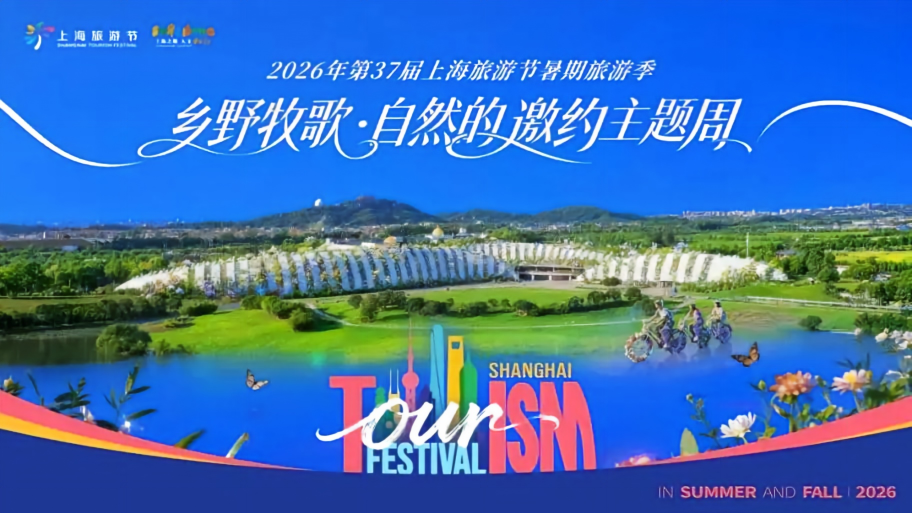
On July 22, the opening ceremony of the “Rural Melody · Nature’s Invitation” theme week, a core event of the 2026 summer tourism season of the 37th Shanghai Tourism Festival, was held at Shanghai Chenshan Botanical Garden, launching a two-month citywide summer cultural and tourism event. The event brings together Songjiang District’s mountain and forest landscapes, ancient towns, theme parks, and rural attractions. It features five distinctive experiential programs designed for families with children, young people, study tour participants, leisure travelers, senior citizens and visitors with special interests. By promoting the integrated development of culture, commerce, tourism, sports, exhibitions and agriculture, the event supports Shanghai’s development as an age-friendly cultural and tourism destination.
Source: Shanghai Tourism
2. Two Exhibitions Open Simultaneously at Jiushi Art Museum, Creating a Dialogue Between Eastern and Western Aesthetics
[Keywords: Porcelain, Glass]

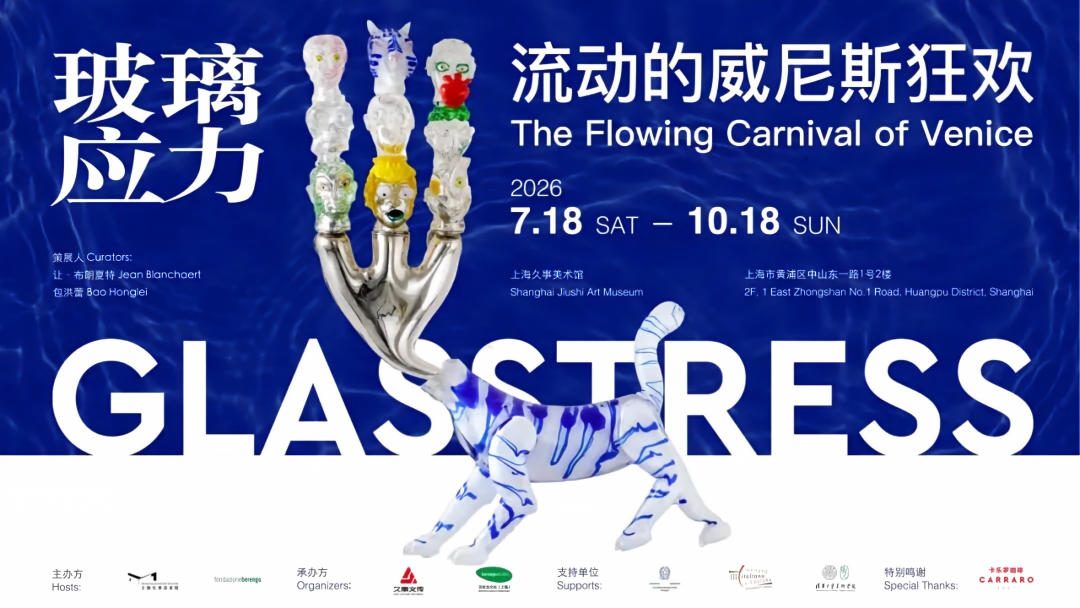
On July 20, an opening ceremony was held at Shanghai Jiushi Art Museum for two exhibitions: “Worlds Within a Glaze: Ming and Qing Monochromes from the Shanghai Museum” and “Glassstress: The Flowing Carnival of Venice”. The former showcases the millennia-old tradition of Chinese monochrome-glazed porcelain, while the latter presents internationally renowned contemporary glass art. Eastern classical monochrome aesthetics and Western contemporary glass art meet along the Huangpu River, creating an artistic dialogue spanning a millennium and bringing diverse artistic experiences to Shanghai’s summer cultural life.
Source: Shanghai Tourism