Shanghai further advances development as a quality-driven city (Issue 158)
Laws and Regulations
National
1. Seven Authorities Issue Guidelines to Expand and Upgrade Goods Consumption
[Keywords: Goods consumption]
Recently, the Ministry of Commerce and six other authorities issued the Implementation Guidelines on Expanding and Upgrading Goods Consumption. The document sets out key tasks, including boosting the consumption of bulk durable commodities, steadily increasing the consumption of daily consumer goods, supporting the consumption of specialty products, cultivating and expanding the consumption of upgraded goods, and strengthening support.
Source: Ministry of Commerce
2. Two Authorities Clarify Individual Income Tax Policy on Dividends and Bonuses for Foreign Individuals
[Keywords: Foreign individuals, Dividends and bonuses, Individual income tax]
Recently, the Ministry of Finance and the State Taxation Administration issued the Announcement on Matters Concerning the Individual Income Tax Policy on Dividends and Bonuses for Foreign Individuals. The document clarifies that dividend and bonus income received by foreign individuals from foreign-funded enterprises is subject to individual income tax under the category of “income from interest, dividends, and bonuses” at a tax rate of 20%. When paying dividends or bonuses to foreign individuals, foreign-funded enterprises shall withhold and remit tax, and declare and pay tax by the 15th day of the month following the month the dividend or bonus is paid. Where the foreign-funded enterprise fails to withhold the tax, the foreign individual who receives the dividends or bonuses shall pay the tax on or before June 30 of the year following the receipt of the income; where the tax authorities issue a notice specifying a deadline for payment, the foreign individual shall pay the tax within the specified time limit. The new policy took effect on September 1, 2026.
Source: International Services Shanghai
Shanghai
1. Market Regulation Authorities in Shanghai, Jiangsu, Zhejiang, and Anhui Unveil 19 Measures to Support Development of the Shanghai (Yangtze River Delta) International Science and Technology Innovation Center
[Keywords: Shanghai (Yangtze River Delta) International Science and Technology Innovation Center]
Recently, market regulation authorities in Shanghai, Jiangsu, Zhejiang, and Anhui jointly issued the Measures for Advancing Integrated Market Regulation in the Yangtze River Delta to Support Development of the Shanghai (Yangtze River Delta) International Science and Technology Innovation Center. Emphasizing integrated, systematic, and project-based implementation, the document introduces 19 measures across six areas, forming a policy package that covers the entire life cycle of science and technology innovation.
Source: Shanghai Release
2. Shanghai Further Advances Development as a Quality-Driven City
[Keywords: Quality-driven city]
Recently, the General Office of the Shanghai Municipal Government issued the Three-Year Action Plan for Further Advancing Shanghai’s Development as a Quality-Driven City. The document sets out key tasks in six areas: supporting the upgrading of industrial capacity, enhancing enterprises’ quality competitiveness, improving product quality, raising the quality of construction projects, accelerating quality improvements in services, and strengthening quality governance.
Source: Shanghai Market Regulation
Q&A
An official from the Shanghai Municipal Commission of Commerce answers questions at a press conference held by the Information Office of the Shanghai Municipal Government on the 15th Five-Year Plan for Accelerating Shanghai’s Development as an International Trade Center.
Q
Shanghai has always been a preferred destination for foreign investment and for multinational companies planning their industrial and supply chains. How will Shanghai develop new strengths in attracting foreign investment during the 15th Five-Year Plan period?
A
Shanghai has always attached great importance to attracting and utilizing foreign investment. During the 14th Five-Year Plan period, the city’s cumulative actual use of foreign investment exceeded US$100 billion. The share of foreign investment actually utilized in high-tech industries increased from 23% during the 13th Five-Year Plan period to 33%, with the scale of foreign investment remaining stable and its quality continuing to improve. During the 15th Five-Year Plan period, Shanghai will adopt multiple measures to stabilize existing foreign investment, attract new investment, and improve its quality. It will focus its efforts on four key areas to accelerate the development of new strengths in attracting foreign investment.
First, efforts will be made to enhance the standard of opening-up. During the 14th Five-Year Plan period, Shanghai remained committed to opening-up, continued to expand market access for foreign investment, and facilitated the establishment of several landmark projects, including China’s first wholly foreign-owned mutual fund company and the country’s first group of Sino-foreign joint venture wealth management companies. During the 15th Five-Year Plan period, Shanghai will further implement the national comprehensive pilot program for expanding the opening-up of the services sector, and advance opening-up projects in areas such as value-added telecommunications, biotechnology, and wholly foreign-owned hospitals. The city will implement the revised Catalog of Encouraged Industries for Foreign Investment, leverage the demonstration effect of landmark foreign-funded projects, guide more foreign investment into advanced manufacturing, modern services, and high-tech sectors, and support foreign-funded enterprises in participating in upstream and downstream industrial chain collaboration, providing them with broader room for investment.
Second, efforts will be made to enhance the development capacity of foreign-funded enterprises. During the 14th Five-Year Plan period, an average of more than 5,700 foreign-funded enterprises were newly established in Shanghai each year. A further 305 regional headquarters of multinational companies and 155 foreign-funded research and development centers were recognized, maintaining Shanghai’s position as the city with the largest concentration of regional headquarters of multinational companies on the Chinese mainland. Shanghai will continue to support regional headquarters of multinational companies in integrating functions such as research and development innovation, treasury management, investment decision-making, and supply chain management, and in upgrading into Asia-Pacific headquarters or global headquarters of business divisions. The city will improve the recognition and dynamic evaluation mechanisms for foreign-funded research and development centers and encourage the integration of research and development innovation with manufacturing. It will continue to effectively implement measures such as the “20 measures for domestic reinvestment”, support foreign-funded enterprises in conducting local research and development, upgrading technologies, and pursuing green and low-carbon transformation, and help them become deeply integrated into the local innovation ecosystem and industrial and supply chains, enabling foreign-funded enterprises to achieve “better” development.
Third, efforts will be made to strengthen investment promotion. Investment promotion is not only at the forefront of attracting foreign investment, but also serves as a window for showcasing the city’s business environment and connecting with global resources. Shanghai will further improve its citywide coordination mechanism for foreign investment promotion. Leveraging its overseas offices, Global Partners for Foreign Investment Promotion network, major event platforms, and international sporting events, the city will organize various forms of investment promotion activities, develop signature events such as the Shanghai City Investment Promotion Conference, build a comprehensive international narrative for investment promotion, and further strengthen the “Invest in Shanghai” brand, making investment and cooperation “smoother” for foreign-funded enterprises.
Fourth, efforts will be made to improve the capacity to serve businesses. During the 14th Five-Year Plan period, Shanghai’s government-enterprise roundtable mechanism was promoted nationwide. More than 100 roundtable meetings were held annually at the municipal and district levels, with over 90% of issues resolved. Going forward, Shanghai will continue to make effective use of service mechanisms such as government-enterprise roundtables and “service packages” for key foreign-funded enterprises. The city will assign dedicated service coordinators, provide tailored policy services directly to enterprises, and improve the closed-loop process covering the receipt, referral, and feedback of various issues of concern to foreign-funded enterprises, including production and operations, access to essential resources, and policy implementation. This will ensure that “every matter is properly addressed” and create a “better” development environment for foreign-funded enterprises.
Source: Information Office of the Shanghai Municipal People’s Government
Expert Perspective
From "Market Access" to "Business Operations": The Institutional Logic and Cross-Border Investment Implications of the Action Plan for Stabilizing Foreign Investment and Improving Quality (Part V)
By LAN Jie, XU He, GUO Huarong, and ZHAO Wenjia [Haiwen & Partners]
[Continued from last issue]
VI. Improving the Regulation of Cross-border Data Flows: A Regulatory Shift from "Whitelist" to "Negative List"
Item 5 of Article 2 of the Action Plan for Stabilizing Foreign Investment and Improving Quality (hereinafter referred to as the “Action Plan”) proposes two measures for managing cross-border data flows. First, it “supports pilot free trade zones and pilot cities for expanding the opening-up of the services sector in exploring the formulation of scenario-based and field-level negative lists for outbound data transfers in more sectors”. Second, it “calls for efforts to formulate national standards for catalogs identifying important data in industries and sectors such as industry, telecommunications, geographic information, automobiles, pharmaceuticals, the seed industry, aerospace, and civil aviation”. Together, these two measures chart a clear path for transforming the regulatory model for cross-border data flows from a “positive list” approach to a “negative list” approach.
(I) Evolution of the Regulatory Approach: From "General Data List" to "Field-level Negative List"
The management of cross-border data flows has become one of the compliance areas of greatest concern to foreign-funded enterprises in recent years. A review of the relevant policy developments reveals three parallel paths of exploration.
The first path involves “green channels plus general data lists”. The Opinions on Further Optimizing the Foreign Investment Environment and Increasing Efforts to Attract Foreign Investment, issued in July 2023, proposed establishing green channels for outbound data transfers by eligible foreign-funded enterprises and piloting general data lists for free flows. At this stage, the approach was to “delineate a scope for free data flows”, reflecting positive-list thinking.
The second path involves a “whitelist system”. The Action Plan for Steadily Advancing High-Standard Opening-Up and Making Greater Efforts to Attract and Utilize Foreign Investment, issued in February 2024, proposed establishing a mechanism for cross-border data flows involving enterprises from Hong Kong and Macao and exploring the establishment of a “whitelist” system for cross-border data flows. In essence, the whitelist system remains a form of positive-list management, but it is more targeted and primarily serves the demand for data flows within the Guangdong-Hong Kong-Macao Greater Bay Area.
The third path involves “scenario-based and field-level negative lists”. In August 2024, the China (Beijing) Pilot Free Trade Zone took the lead nationwide in issuing a scenario-based and field-level negative list for outbound data transfers. Covering five sectors, namely automobiles, pharmaceuticals, retail, civil aviation, and artificial intelligence, the list precisely defines the scope of data subject to security assessments through a three-tier structure comprising data categories, data subcategories, and data fields. Data not included in the list is exempt from filing requirements. This model fundamentally changes the regulatory logic from “specifying what may be transferred out” to “specifying what may not be transferred out”, significantly reducing enterprises’ compliance costs and uncertainty.
The Action Plan expressly supports “scenario-based and field-level negative lists for outbound data transfers”, indicating that the innovative model pioneered by the China (Beijing) Pilot Free Trade Zone will move from pilot implementation to broader application. In May 2026, Beijing further expanded the negative-list management mechanism for outbound data transfers from the pilot free trade zone to the entire city. The expansion covered new sectors, including medical devices and autonomous driving, involving a variety of business scenarios and data fields. Shanghai also issued a revised negative list for outbound data transfers in April 2026, covering four sectors: reinsurance, international shipping, commerce and trade, and meteorology.
(II) Catalogs for Identifying Important Data: From “Local Exploration” to “National Standards”
The Action Plan calls for efforts to “formulate national standards for catalogs identifying important data in industries and sectors such as industry, telecommunications, geographic information, automobiles, pharmaceuticals, the seed industry, aerospace, and civil aviation”. This statement is highly significant.
At present, the negative lists issued by pilot free trade zones in different regions vary in terms of sectoral coverage, granularity, and identification criteria. Enterprises operating across regions must separately assess the compliance requirements of each locality, increasing their management costs. Promoting the formulation of national standards means that unified rules for defining important data will gradually take shape.
In terms of sectoral coverage, among the eight sectors listed in the Action Plan (namely industry, telecommunications, geographic information, automobiles, pharmaceuticals, the seed industry, aerospace, and civil aviation), areas such as industry, geographic information, the seed industry, and aerospace have rarely been covered by the negative lists previously issued by pilot free trade zones and represent newly added sectors. This indicates that the coverage of negative lists for outbound data transfers will extend from the services sector to manufacturing and strategic emerging industries, reflecting a regulatory approach encompassing “all industries and entire industrial chains”.
For foreign-funded enterprises, “scenario-based and field-level” negative-list management can significantly reduce compliance costs. Enterprises no longer need to conduct self-assessments by comparing their data item by item against an ambiguous definition of important data. Instead, they need only check the specific data fields listed in the negative list to determine whether they are required to apply for a security assessment. This management model, characterized by “clear rules and stable expectations”, is a concrete manifestation of “institutional opening-up” in foreign investment administration.
One Week in Shanghai
Latest News
1. "Explore People‑Centered Cities: China's Governance, Global Engagement" Launched — the Diplomatic Envoys' Shanghai - Jiangsu Tour
[Keywords: Diplomatic envoys’ local tour]
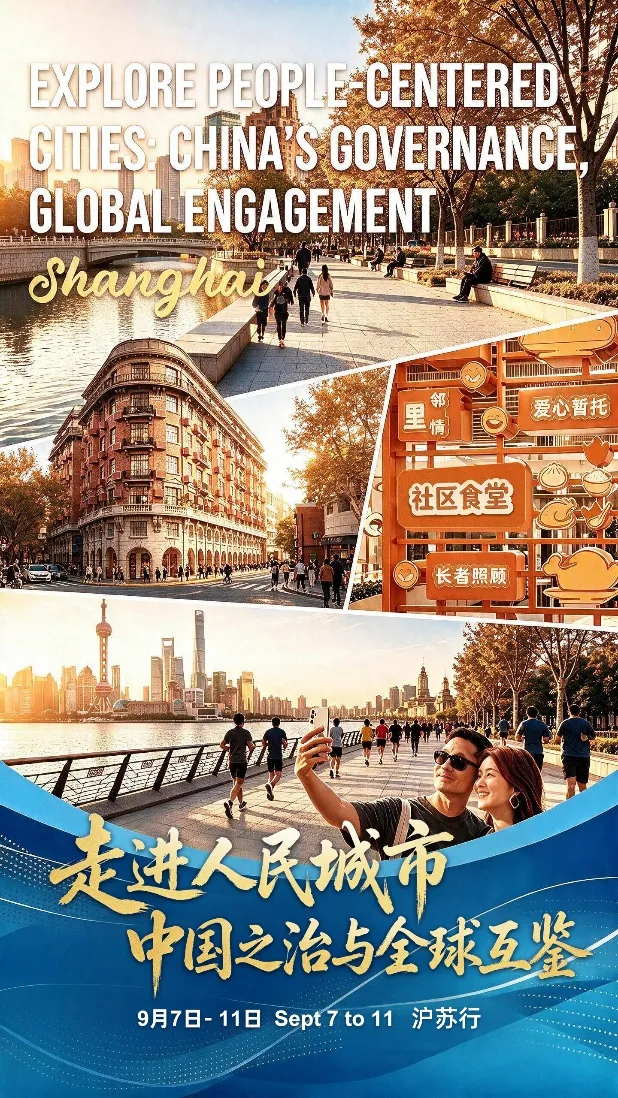
From September 7 to September 11 2026, the Ministry of Foreign Affairs will host a Shanghai - Jiangsu tour for diplomatic envoys in China under the theme “Explore People‑Centered Cities: China’s Governance, Global Engagement”. Diplomatic envoys will visit the Shanghai Municipal People’s Congress, the China Executive Leadership Academy Pudong, and demonstration sites for grassroots governance. The event showcases the urban governance philosophy and local practical achievements of “cities built by the people and for the people”, sharing advanced concepts and successful experience in urban development.
Source: Office of the Spokesperson of the Ministry of Foreign Affairs
2. Hongkou RCEP Enterprise Service and Consultation Center Officially Opens
[Keywords: RCEP, Enterprise Services]
Recently, the launch ceremony for the Hongkou RCEP Enterprise Service and Consultation Center was held in the Hongkou District Administrative Service Center. The center will provide enterprises with a range of RCEP-related consultation services, enhance their ability to apply the rules of RCEP and other free trade agreements, strengthen their international competitiveness, and help them actively integrate into the broader RCEP market.
Source: Shanghai Commerce
3. Jing'an Takes Citywide Lead in Formulating Operational Guidelines for Outbound Data Transfers in the Commerce and Trade Sector
[Keywords: Commerce and trade sector, Outbound data transfers]
Recently, the operational guidelines for outbound data transfers in the commerce and trade sector, covering retail and catering as well as accommodation, were formulated by Jing’an district and officially circulated internally by the Shanghai Cyberspace Administration. This is the first set of sector-specific operational guidelines for outbound data transfers issued since Shanghai achieved citywide coverage of its policies on the negative list and operational guidelines for outbound data transfers. The guidelines provide a reference for commerce and trade enterprises across the city in ensuring compliance with outbound data transfer requirements and further enhance the efficiency of cross-border data services.
Source: Shanghai Jing’an
Corporate Activities
1. Emerson's New Shanghai Factory Opens in Songjiang
[Keywords: Emerson]
Recently, a new factory for Emerson’s Fluid and Motion Control business was officially completed and began production. Located in Shanghai’s Songjiang District, the factory covers approximately 45,000 square meters. It will strengthen Emerson’s localized manufacturing capabilities and develop comprehensive industry application solutions spanning industrial automation, factory automation, and precision fluid control.
Source: Shanghai Observer
2. Honeywell Technologies China Innovation Center Opens in Zhangjiang
[Keywords: Honeywell Technologies]
Recently, the Honeywell Technologies China Innovation Center opened in Pudong. The center integrates three core spaces: the Honeywell Technologies Experience Center (HTEC), the HUE Design Studio, and the Innovation Workshop. HTEC is the first experience center established globally by Honeywell Technologies since it began operating independently in June this year.
Source: Pudong Release
Forums and Exhibitions
2026 World Design Cities Conference Set for September
[Keywords: World Design Cities Conference]
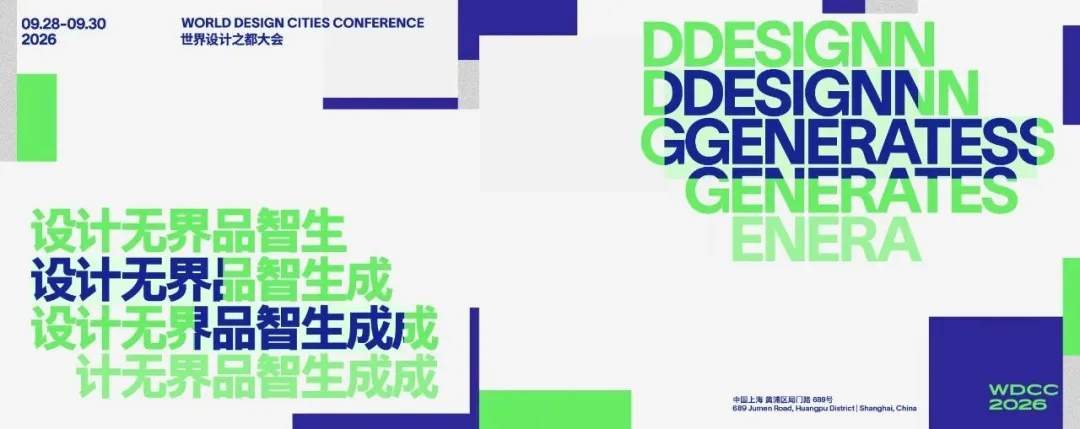
The World Design Cities Conference 2026 (WDCC 2026) will be held in Shanghai from September 28 to 30, with its main venue located in Huangpu District. This year marks the fifth anniversary of the conference. Embracing the concept that “AI-powered design brings art and technology closer together”, the conference will be held under the theme “Design Generates”. It will continue to pursue its mission and vision of building a global platform for design innovation and cooperation, exploring design-driven development of new quality productive forces, and integrating design into every aspect of cities and everyday life.
Source: World Design Cities Conference
Competition Events
1. Inaugural Shanghai "AI + Consumption" Innovation Competition (2026) Opens Global Call for Entries
[Keywords: Shanghai “AI + Consumption” Innovation Competition]
The inaugural Shanghai “AI + Consumption” Innovation Competition (2026), a key themed event of the West Bund International Tech Consumer Carnival (WTCC), has officially launched a global call for innovative projects. The competition pioneers a closed-loop model connecting the competition arena with the market and comprises four major tracks. Applications will be accepted until September 30, 2026.
Source: Shanghai Services Federation
2. Free Registration Opens for 2026 Shanghai’s Most Musical Family Competition
[Keywords: Shanghai’s Most Musical Family Competition]
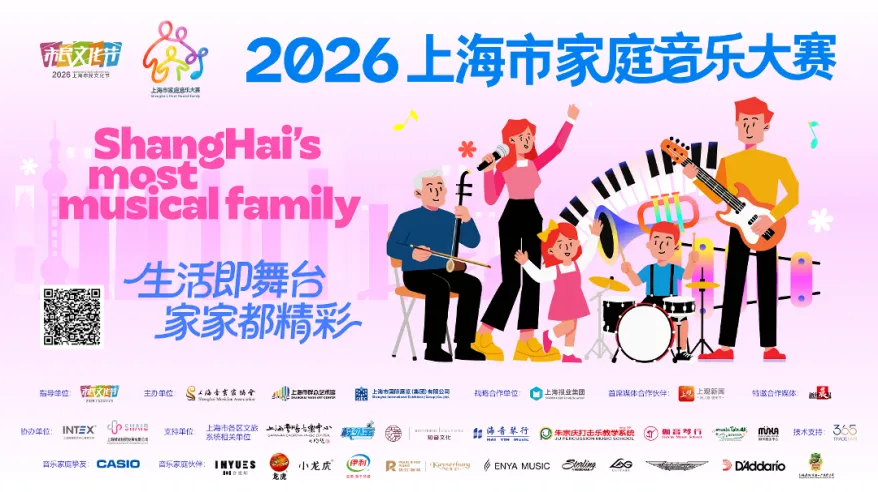
The 2026 Shanghai’s Most Musical Family competition was officially launched. Themed “Life Is the Stage, Every Family Shines”, the competition is open and accessible to all, with no restrictions on age, household registration, or nationality. All families living, working, or studying in Shanghai may register free of charge, and teams comprising two or more family members are eligible to participate. The registration deadline is October 7, 2026.
Source: Shanghai Tourism
Culture & Arts
1. Key Thematic Activities Announced for the “Classic Events Season” of the 37th Shanghai Tourism Festival
[Keywords: Shanghai Tourism Festival]
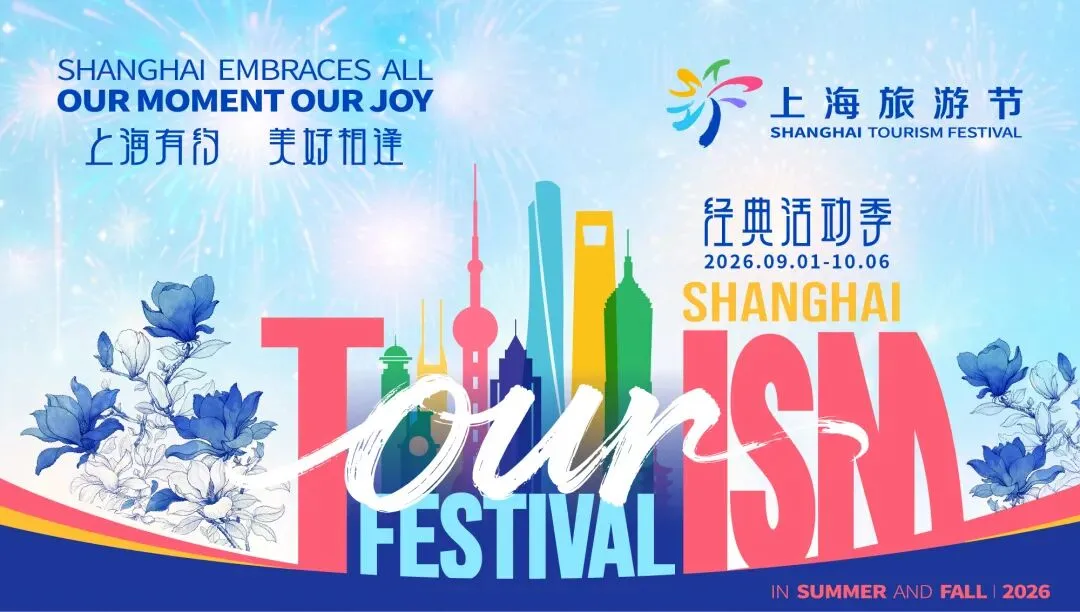
At the press briefing on the key thematic activities of the “Classic Events Season” of the 37th Shanghai Tourism Festival held on September 4, 2026, the Shanghai Municipal Administration of Culture and Tourism introduced the key activities and featured highlights of this year’s Classic Events Season. Commencing on September 1, 2026, the “Classic Events Season” took over the stage and will continue to roll out more than 170 high quality activities, striving to forge a citywide cultural and tourism gala characterized by profound classic heritage, vibrant experiences, and heartwarming public benefits.
Source: Shanghai Tourism
2. Theatre YOUNG Announces "Vowels" 2026 Autumn/Winter Season
[Keywords: Theatre YOUNG, Autumn/Winter Season]
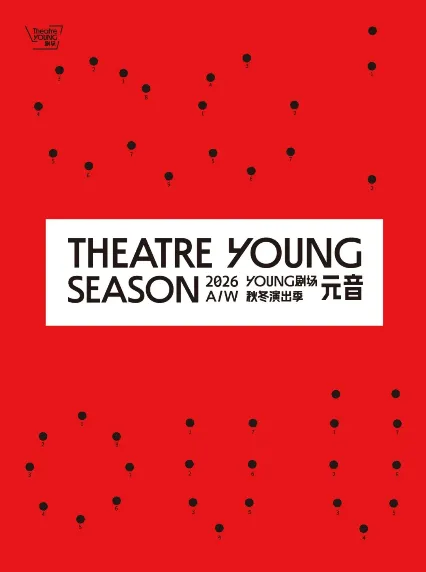
Recently, marking its fourth anniversary, Theatre YOUNG officially announced its 2026 Autumn/Winter performance season. Themed “Vowels”, the new season will run from September through the Lunar New Year in February 2027, presenting more than 30 productions in over 100 performances.
Source: Shanghai Tourism
3. 2026 Shanghai Jing'an Tea Culture Experience Week Set to Open
[Keywords: Jing’an, Tea Culture Experience Week]
The 2026 Shanghai Jing’an Tea Culture Experience Week will be held from September 11 to 20. From September 11 to 13, UArt Center will create a limited-time “Tea Table of Light and Shadow” themed experience space. Shenyu Li at Shanghai Suhe MixC World will host a “tea-themed garden fair”, while the adjacent main stage will present a diverse range of artistic performances during the same period.
Source: Jing’an Culture and Tourism
4. BVLGARI "Kaleidos: Colors, Cultures and Crafts" Exhibition Opens on September 5
[Keyword: BVLGARI]

On September 5, the BVLGARI “Kaleidos: Colors, Cultures and Crafts” exhibition opened at the Power Station of Art in Shanghai. Bringing together 300 masterpieces of jewelry and art, the exhibition traces BVLGARI’s timeless language of color. From the origins of color to the myriad interplay of light and shadow, it takes visitors on a richly layered creative journey.
Source: BVLGARI