Shanghai amends regulations on optimizing the business environment (Issue 161)
Laws and Regulations
National
1. 15th Five-Year Plan for the Pharmaceutical Industry Issued
[Keywords: Pharmaceuticals, Industry]
Recently, the Ministry of Industry and Information Technology (MIIT) and nine other authorities jointly issued and implemented the 15th Five-Year Plan for the Development of the Pharmaceutical Industry. The plan sets out 25 key tasks in eight areas: innovation-driven development, resilience and security, digital and intelligent transformation, precision diagnosis and treatment, efficiency enhancement, value creation, inclusive health, and openness and win-win cooperation.
Source: MIIT WeChat Official Account
2. MIIT Issues Measures for the Administration of Innovative Industrial Clusters
[Keywords: Innovation, Industrial clusters]
Recently, MIIT issued the Measures for the Administration of the Development of Innovative Industrial Clusters. The measures specify application requirements and recognition procedures, providing local authorities with clear guidance for fostering and developing innovative industrial clusters in light of local conditions. They will help promote integrated innovation among industry, universities and research institutes and accelerate the transformation of scientific and technological advances into productive forces.
Source: MIIT WeChat Official Account
Shanghai
1. Shanghai Amends Regulations on Optimizing the Business Environment
[Keywords: Business environment]
Recently, the Decision of the Standing Committee of the Shanghai Municipal People’s Congress on Amending the Shanghai Regulations on Optimizing the Business Environment was adopted and will take effect on October 1, 2026. The decision contains 11 articles and covers four areas, including implementing national requirements and improving governance effectiveness, as well as codifying experience and practices and establishing long-term mechanisms.
Source: Shanghai Municipal People’s Congress
2. Shanghai Adopts Decision on Deepening the Development of an International Consumption Center City
[Keywords: International consumption center]
Recently, the Decision of the Standing Committee of the Shanghai Municipal People’s Congress on Deepening the Development of Shanghai as an International Consumption Center City was adopted and will take effect on October 1, 2026. The decision contains 27 articles and covers four main areas, including implementing national decisions and plans and clarifying overall development requirements, as well as creating diverse consumption scenarios and fostering new drivers of consumption growth.
Source: Shanghai Municipal People’s Congress
3. Shanghai Amends Regulations on the Convention and Exhibition Industry
[Keywords: Convention and exhibition industry]
Recently, the Decision of the Standing Committee of the Shanghai Municipal People’s Congress on Amending the Shanghai Regulations on the Convention and Exhibition Industry was adopted and will take effect on October 1, 2026. The decision contains 14 articles and covers three main areas, including clarifying the industry’s development positioning and enhancing Shanghai’s capacity as an international convention and exhibition hub, as well as responding to development needs and improving measures to promote and regulate the industry.
Source: Shanghai Municipal People’s Congress
4. Shanghai Issues Three-Year Action Plan to Promote High-Quality Development of the Food Industry
[Keywords: Food industry]
Recently, the Shanghai Municipal Commission of Economy and Informatization and five other authorities issued the Action Plan for Promoting the High-Quality Development of the Food Industry (2026–2028). The plan sets out 12 key tasks in four areas, including focusing on priority fields and accelerating the development of new growth drivers, as well as strengthening technological innovation and advancing digital, green and intelligent manufacturing.
Source: Shanghai Municipal Commission of Economy and Informatization
Q&A
An official from the State Administration for Market Regulation (SAMR) answers questions at a press conference held by the State Council Information Office (SCIO) on promoting high-quality development of market regulation during the 15th Five-Year Plan period.
Q
Developing a unified national market is important for leveraging China’s vast market and strengthening the drivers of economic growth. What measures will be taken to resolutely remove the blockages and bottlenecks hindering the development of a unified national market?
A
Significant progress has been made in developing a unified national market in recent years, which has played a very important role in leveraging China’s vast market and unlocking its economic growth potential. During the 15th Five-Year Plan period, this work will be advanced in greater depth and with higher quality and efficiency, placing higher demands on us. From the perspective of the functions of market regulation authorities, several priorities need to be strengthened:
First, fair competition review must be strengthened to uphold and reinforce the foundational role of competition policy. Competition policy should serve as the underlying, fundamental rule across the system of economic policies. Industrial, investment, fiscal and tax policies should all be premised on safeguarding fair competition. Any policy measure involving the economic activities of business operators should be assessed for its impact on fair competition to prevent the creation of artificial market barriers. China has established a fair competition review system, and the ex ante review mechanism now covers proposed policy measures at all four levels of government. Going forward, we will further strengthen the review responsibilities of local governments, improve review rules, standards and procedures, and make the system more binding.
Another priority is to continuously improve the quality and effectiveness of antitrust enforcement and resolutely break down local protectionism and market segmentation. Risk alerts on improper interference with market competition will be issued on a regular basis, and enforcement against the abuse of administrative power to exclude or restrict competition will be intensified. The capacity and efficiency of merger reviews will be enhanced to facilitate lawful and orderly investment and M&A activity. Given the far-reaching and intensive nature of antitrust enforcement, greater attention will be paid to monitoring and providing early warnings of monopoly risks. Compliance guidance, administrative guidance, warning interviews and other measures will be taken earlier to stop monopolistic conduct before it occurs and fully protect the innovative development of all types of business entities. Monopolistic conduct that disregards regulation and knowingly violates the law will be investigated. Antitrust enforcement will also focus more closely on key livelihood-related fields such as active pharmaceutical ingredients, water, electricity, gas and heating, and the platform economy. Every reported case will be investigated, and enforcement outcomes will be published in a timely manner.
A further priority is to unify market institutions and rules and ensure the smooth flow of resources and factors of production. Areas not covered by unified market institutions are often where vicious competition emerges, while inconsistencies in fundamental rules often increase institutional transaction costs. It is therefore essential to establish and implement unified market institutions. At the market-access stage, we will accelerate improvements to unified rules on the establishment, relocation and deregistration of enterprises to safeguard their operational autonomy. In production and business operations, we will accelerate improvements to the national standards system so that different standards are better coordinated and aligned. In circulation and consumption, we will focus on improving rules for regulating online transactions and ensure consistent regulation online and offline.
Implementing unified market institutions is intended to ensure the smooth nationwide flow of resources and factors of production. This serves the overall interest and long-term development. Local authorities need to establish and follow the correct view of performance in promoting economic activity and reject parochialism and short-term thinking. We will intensify monitoring of conduct that violates unified market institutions, including the arbitrary lowering of market-access requirements and product-quality standards, and resolutely rectify such conduct.
Source: SCIO
Expert Perspective
Tiered Adjudication and Matters Left Open by the Rules in AI Disputes: An Interpretation of and Practical Outlook on the Opinions of the Supreme People’s Court on Lawfully Adjudicating Cases Involving AI-Related Disputes (Part III)
By Fu Gang [Dacheng Law Offices (Shanghai)]
[Continued from the Previous Issue]
[Article Overview]
This issue focuses on the protection of personality rights and personal information in AI applications. Using face-swapping, voice imitation, digital likenesses and the commercialization of voices as examples, the article explains that courts should examine whether synthetic content enables the relevant public to identify a specific natural person, and should review the scope of authorization in light of contractual terms, the notice process and actual use. The use of a deceased person’s digital likeness may likewise involve protected personality interests. For publicly available personal information, the article emphasizes separate assessments of whether the information was lawfully disclosed, whether subsequent processing remains within a reasonable scope, whether the individual has expressly objected, and whether the processing result has a major impact on the individual’s rights and interests. Tracking, linking and inferring from public information may also create new private information, so the purpose and impact of processing must still be reviewed and appropriate safeguards applied to sensitive personal information.
[Article Details]
II. Tiered Regulation of Personality Rights Protection and Application Risks
(I) Determining the Protection of Personality Rights Based on Identifiability and Scope of Authorization
A range of rights disputes has already arisen in practice over face-swapping, voice imitation, the use of digital likenesses and the commercialization of voices. Article 4 of the Opinions of the Supreme People’s Court on Lawfully Adjudicating Cases Involving AI-Related Disputes (the Opinions) addresses these circumstances by setting out liability for identifiable virtual digital likenesses, identifiable synthetic voices, reputational harm caused by manipulating a digital likeness or voice, and the unauthorized creation or use of a deceased person’s digital likeness. The common focus is whether the technical processing points to a specific person and whether the generation, use or disclosure has consent or another legal basis.
These provisions are consistent with standards already applied in judicial practice. In the voice actor v. Chengdu Shengru Renxin Co., Ltd. case, the plaintiff alleged that the “Meng Shuai” voice pack in the voice-over software at issue closely resembled his voice and had been cloned without permission. The court asked whether an ordinary member of the public could, by listening to the voice, associate it with a specific person. It held that, without seeing a video bearing the plaintiff’s likeness, the voice was insufficient for the general public to identify the plaintiff and therefore dismissed his claims.[2] The key issue in that case was the identifiability of the voice, an approach continued in the Opinions. Here, “identifiable” links technical facts with legal evaluation. It does not require an AI-synthesized voice or likeness to be identical to that of a natural person. The focus is whether the relevant public can identify a specific natural person based on the voice, image, context, name labels and manner of commercial presentation. Protection of personality rights and copyright protection may therefore operate in parallel: licenses for sound recordings, scripts and performance-related rights, and the natural person’s personality interest in their voice each have an independent subject matter and scope of authorization.
Moreover, the phrase “with the natural person’s consent” in the Opinions points to a review of the scope of authorization. In AI voice-over, for example, permission to distribute an existing recording differs materially from permission to keep generating new voices capable of identifying the voice actor, in terms of purpose, scope of impact and the individual’s degree of control. Determining whether consent was obtained for the use of a voice through AI therefore requires examination of the contract, the explanation and notice process, commercial arrangements and actual use. For a deceased person’s digital likeness, Article 994 of the Civil Code protects interests relating to the deceased person’s name, likeness, reputation, honor, privacy and remains. It likewise requires identification of the proper claimant and the interest infringed; death cannot simply be understood to mean that uses implicating personality interests are no longer subject to constraints.
(II) Use of Publicly Available Personal Information and Review of Purpose and Impact
Article 5 addresses situations in which tracking and analyzing publicly available information gives rise to an invasion of privacy. A person who, for the purpose of prying into another’s privacy, uses public telephone numbers, online accounts or social-media information to obtain private information, or discloses that information or disturbs the individual’s private life, may infringe the right to privacy. The provision is significant because it requires separate review of whether publicly available information was used and whether that use was legitimate.
At the press conference, the SPC stated in response to media questions that processing lawfully disclosed personal information within a reasonable scope for AI model training, where the individual has not expressly objected, will generally not be deemed an infringement; where the processing has a major impact on the individual’s rights and interests, consent should be obtained in accordance with law. This aligns with the structure of Article 27 of the Personal Information Protection Law. The prerequisites are, in sequence, whether the information was lawfully disclosed, whether the processing remained within a reasonable scope, whether there was an express objection, and whether it had a major impact. Article 5 addresses the first of these questions—whether the information was public.
Inferring from and linking scattered pieces of public information may generate new private information and thereby implicate privacy protection. Data-processing compliance therefore cannot be established merely by showing that information was once public. The time of collection, original context, processing purpose, opt-out requests and resulting action should also be recorded. Sensitive personal information, such as biometric information, is subject to corresponding special protection requirements. Where a single passage contains expressive elements of a work, personal information and trade secrets, the different rights and interests should likewise be assessed separately.
[To be continued]
One Week in Shanghai
Latest News
1. 48th WorldSkills Competition Concludes in Shanghai
[Keywords: WorldSkills Competition]
On September 27, the 48th WorldSkills Competition concluded successfully in Shanghai. Under the theme “Skills Change the World, Skills Light the Future”, the Competition was organized by WorldSkills International and jointly hosted by the Ministry of Human Resources and Social Security of the People’s Republic of China and the Shanghai Municipal People’s Government. The WorldSkills Conference and WorldSkills Expo were held concurrently. At the Closing Ceremony, the winners of gold, silver and bronze medals and Medallions for Excellence across the 64 skill competitions, together with the Best of Nation Award recipients from 68 delegations, were announced. China’s He Xiaoman earned the highest score of the Competition in Rail Vehicle Technology and received the Albert Vidal Award. The Chinese delegation competed in all 64 skills, winning 41 gold medals, 11 silver medals, four bronze medals and six Medallions for Excellence. It ranked first in gold medals, total medals and overall team score, achieving China’s best-ever result at the WorldSkills Competition.
Source: Shanghai Release
2. Shanghai's Foreign Trade Posts Double-Digit Growth in First Eight Months, with AI Products Accounting for Nearly One-Quarter
[Keywords: Foreign trade]
According to the latest statistics from Shanghai customs authorities, the city’s total imports and exports reached RMB 3.44 trillion in the first eight months of this year, up 17.1 percent year on year. Imports and exports of five categories of AI-related products—integrated circuits, servers, memory devices, hard disk drives and semiconductor manufacturing equipment—totaled RMB 857.87 billion, an increase of 90.7 percent and nearly 25 percent of Shanghai’s total foreign trade during the period.
Source: International Services Shanghai
3. SHFE Further Expands QFI Investment Scope in Commodity Futures and Options
[Keywords: QFI]
On September 24, Shanghai Futures Exchange (SHFE) issued the Circular on Further Expanding the Investment Scope of Qualified Foreign Investors in Commodity Futures and Options. With the approval of the China Securities Regulatory Commission (CSRC), starting from 9:00 a.m. on September 28, 2026, SHFE will further expand the investment scope of Qualified Foreign Institutional Investors and RMB Qualified Foreign Institutional Investors (collectively referred to as Qualified Foreign Investors, QFI) to include Aluminum Oxide, Cast Aluminum Alloy, Butadiene Rubber and Offset Paper Futures and Options.
Source: Shanghai Futures Exchange
Corporate Activities
Freudenberg Co-Creation Center Opens in Zhangjiang Robot Valley
[Keywords: Freudenberg]
Recently, longstanding technology group Freudenberg announced the opening of its Co-Creation Center in Zhangjiang Robot Valley. Working with several Freudenberg business groups, equipment manufacturers, component suppliers and research institutions, the center will deepen collaboration in sealing, lubrication, vibration reduction and noise reduction, promote joint testing and validation and the co-development of industry standards, and accelerate the large-scale application of key technologies in industrial settings.
Source: Pudong Release
Forums and Exhibitions
26th China International Industry Fair to Open on October 12
[Keywords: CIIF]
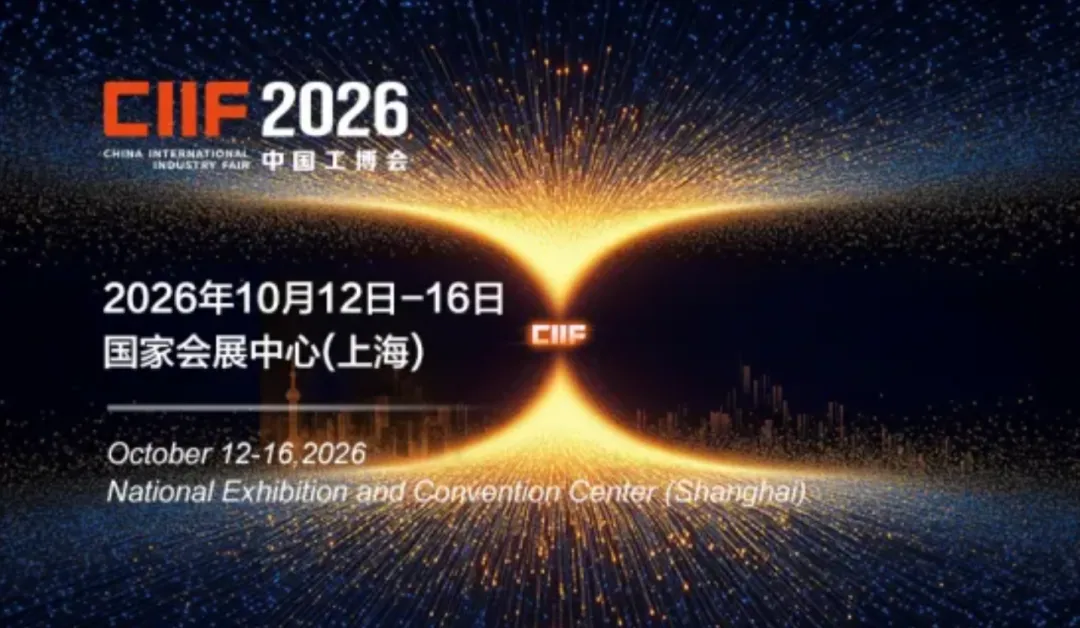
The 26th China International Industry Fair (CIIF) will be held from October 12 to 16. Under the theme “Smart Economy, Boundless Manufacturing”, this year’s CIIF will feature a “1+10+12+100” framework: one high-profile opening event, 10 themed exhibition areas, 12 major industry forums and more than 100 concurrent events—all record highs.
Source: China International Industry Fair
Competition Events
2026 F1H2O World Championship Grand Prix of Shanghai Set to Make a Splash
[Keywords: F1H2O]

The 2026 F1H2O World Championship Grand Prix of Shanghai will return to the waters off Shanghai Long Beach in Baoshan District from October 4 to 5. The 1,959-meter course will feature six buoys, with elite teams and drivers from China, France, the United Arab Emirates, Portugal, Norway, Finland and other countries and regions competing for top honors.
Source: International Services Shanghai
Culture & Arts
1. 4th Shanghai International City Fringeville Festival 2026 Opens
[Keywords: Shanghai International City Fringeville Festival]
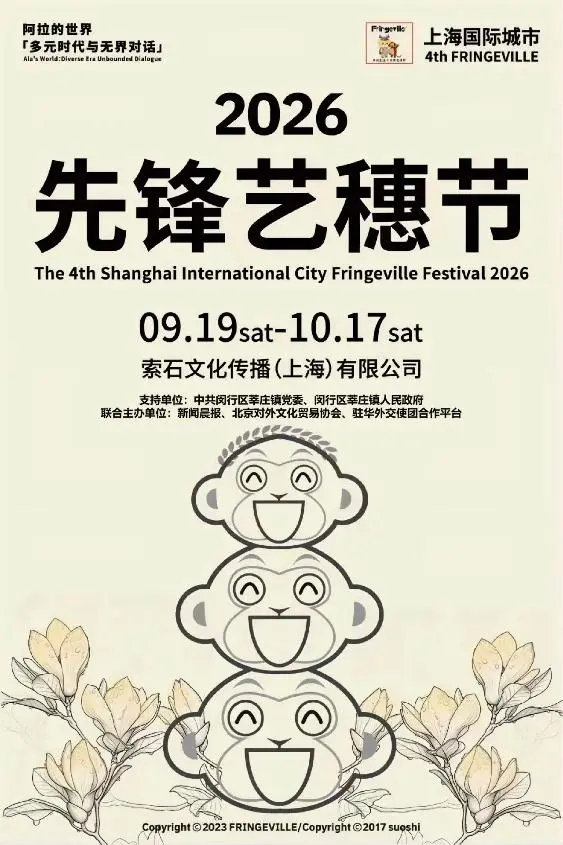
The 4th Shanghai International City Fringeville Festival 2026 recently opened. With Shanghai-style art as its defining character, the festival is themed “Ala’s World: Diverse Era Unbounded Dialogue”. Running for 29 days from September 19 to October 17 and spanning the Mid-Autumn Festival and National Day holiday periods, it will present Shanghai audiences with more than 100 performances and international cultural exchange activities across traditional drama, physical theater, experimental theater, stand-up comedy, musicals and other forms.
Source: Minhang Today
2. "Boundless Questions" Opens at Shanghai Science and Technology Museum on September 22
[Keywords: Boundless Questions]
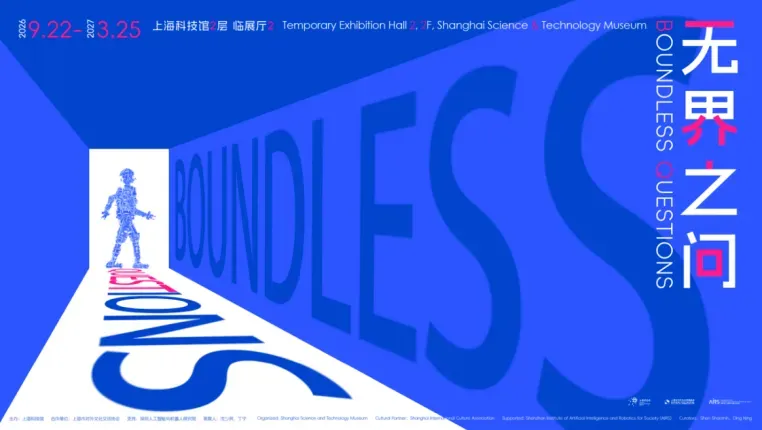
Recently, Boundless Questions opened at the Shanghai Science and Technology Museum. Centered on the theme “All Things Converge, Boundaries Are Never Fixed”, the exhibition features 18 original works created in China, several of which artistically transform the country’s cutting-edge research achievements in intelligent equipment.
Source: Shanghai Science and Technology Museum
3. Maritime Fireworks Cinema Coming to Jinshan City Beach
[Keywords: Fireworks]

“Flames Meet Shanghai: Maritime Film and Fireworks Fantasy Nights at Jinshan City Beach” will present two National Day holiday performances on October 3 and 4. Breaking with conventional viewing formats, the event will introduce China’s first maritime IMAX-scale fireworks cinema. Cinematic color palettes, concert-hall-caliber film music and spectacular movie effects will run through the entire narrative to create a one-of-a-kind maritime fireworks film experience in China.
Source: Shanghai Tourism