Shanghai issues measures for the administration of international joint laboratories (Issue 163)
Laws and Regulations
National
1. CPC Central Committee and State Council Issue Opinions on Developing New-Quality Productive Forces
[Keywords: New-quality productive forces]
The CPC Central Committee and the State Council recently issued the Opinions on Developing New-Quality Productive Forces. The document sets out 19 key measures across five areas: vigorously advancing sci-tech innovation, promoting deeper integration of sci-tech and industrial innovation, focusing on innovation in development approaches, steadily advancing innovation in institutions and mechanisms, and deepening innovation in talent development mechanisms.
Source: Website of the Chinese Government
2. Seven Authorities Launch "Five Excellence" Initiative for Quality E-Commerce
[Keyword: E-commerce]
The Ministry of Commerce (MOFCOM) and six other authorities recently issued the Circular on Implementing the “Five Excellence” Initiative for Quality E-Commerce. The document sets out 15 measures across five areas: encouraging e-commerce platforms to promote quality offerings; supporting merchants of all types in improving quality; helping consumers choose quality products and services; encouraging Silk Road E-commerce partners to compete on quality; and strengthening rules and standards to safeguard quality over the long term.
Source: MOFCOM
3. Four Authorities Jointly Release Typical Cases on Protecting Financial Consumers and Investors
[Keywords: Financial consumers, Investors]
Recently, the Supreme People’s Court and three other authorities jointly released typical cases on protecting the lawful rights and interests of financial consumers and investors. The six cases cover areas including financial lending, fund investment and wealth management, digital finance, personal insurance, and securities investment. They focus on issues of public concern and challenges in judicial practice involving standard-form contract terms, fair trading, suitability obligations, legal remedies, and diversified dispute resolution.
Source: Supreme People's Court
4. Public Comments Sought on Draft Revision to Food Safety Law
[Keywords: Food Safety Law]
Recently, the State Administration for Market Regulation (SAMR) began soliciting public comments on the Food Safety Law of the People’s Republic of China (Draft Revision for Comment). The deadline for feedback is November 10, 2026. The proposed revisions focus on five areas: reinforcing businesses’ primary responsibilities, strengthening oversight in key areas, improving food safety management systems, enhancing smart regulation, and improving the legal liability framework.
Source: SAMR
Shanghai
1. Shanghai Issues Measures to Promote High-Standard Opening-Up and Facilitate Cross-Border Data Flows
[Keywords: Cross-border data flows]
Recently, the Shanghai Cyberspace Administration and the Shanghai Data Bureau jointly issued the Several Measures of Shanghai Municipality on Promoting High-Standard Opening-Up and Facilitating Cross-Border Data Flows. The document outlines 10 measures, including improving the alignment and implementation of outbound data transfer rules, introducing new mechanisms to make online services more convenient, and promoting regional dialogue and cooperation on standards for cross-border data flows.
Source: Cyberspace Administration Shanghai
2. Shanghai Issues Measures for the Administration of International Joint Laboratories
[Keywords: International joint laboratories]
The Shanghai Municipal Commission of Science and Technology recently issued the Measures of Shanghai Municipality for the Administration of International Joint Laboratories. The document specifies that joint laboratories should serve as bridges for cooperation in sci-tech innovation, create an international research environment, promote alignment and interoperability between Chinese and foreign technologies, standards, and specifications, and support the global expansion of innovation and industrial chains. The document will take effect on November 1, 2026, and remain valid through October 31, 2031.
Source: International Services Shanghai
3. Shanghai Issues 15th Five-Year Plan for Energy Conservation, Carbon Reduction, and Circular Economy Development
[Keywords: Energy conservation and carbon reduction, Circular economy]
The General Office of the Shanghai Municipal People’s Government recently issued the 15th Five-Year Plan for Energy Conservation, Carbon Reduction, and Circular Economy Development in Shanghai. The document sets out four key indicators and eight major tasks including fully implementing dual controls on total carbon emissions and carbon intensity, and taking the lead in green and low-carbon technological innovation. It also outlines eight key initiatives, including developing zero-carbon industrial parks and intensifying carbon reduction efforts in key industries.
Source: Shanghai Municipal People’s Government
4. Shanghai Revises Measures for the Supervision and Administration of Microcredit Companies
[Keywords: Microcredit companies]
The Shanghai Municipal Financial Regulatory Bureau recently issued the revised Measures of Shanghai Municipality for the Supervision and Administration of Microcredit Companies. The revisions cover six areas, including standardizing market access provisions and improving exit mechanisms, as well as expanding the permitted scope of business and clarifying operating requirements. The document took effect on October 1, 2026, and will remain valid through September 30, 2031.
Source: Shanghai Municipal Financial Regulatory Bureau
5. Guide to Tailored Legal Services for Sci-Tech Innovation Enterprises Released
[Keywords: Sci-tech innovation enterprises, Legal services]
The Guide to Tailored Legal Services for Sci-Tech Innovation Enterprises was recently released at the launch ceremony and first joint meeting of the Shanghai Legal Consortium for Sci-Tech Innovation. The guide addresses the legal needs throughout the entire life cycle of sci-tech innovation enterprises, from the startup, growth, and maturity to restructuring stages. It systematically maps legal service resources and ways to access them, providing businesses with a legal services roadmap that is “easy to find, understand, and use”.
Source: Shanghai Municipal Bureau of Justice
Q&A
An official from the National Development and Reform Commission (NDRC) answers press questions on the Opinions on Developing New Quality Productive Forces.
Q
Why does the Opinions place particular emphasis on fully implementing the “AI Plus” initiative?
A
In the section on “promoting deeper integration of sci-tech and industrial innovation”, the Opinions outlines key tasks including “transforming and upgrading traditional industries,” “fostering and expanding emerging industries,” “planning ahead for future industries,” and “promoting deeper integration of the real and digital economies.” The emphasis on “fully implementing the ‘AI Plus’ initiative” is based on three main considerations.
First, AI is a strategic technology driving a new round of sci-tech revolution and industrial transformation in the digital economy era. As AI technologies evolve at an accelerating pace worldwide, accelerating the development of next-generation AI has become a strategic imperative for China to seize the opportunities presented by this new round of sci-tech revolution and industrial transformation. In the section on building a modern industrial system, the Opinions emphasizes fully implementing the “AI Plus” initiative to draw on China’s strengths, including its comprehensive industrial system, vast market, and diverse application scenarios. The aim is to accelerate continued advances in AI technology through practical applications, creating a virtuous cycle in which innovation drives application and application spurs innovation.
Second, AI provides core support for developing new quality productive forces and building a modern industrial system. AI is moving from laboratories into production and everyday life, opening up new fields and avenues for growth in autonomous driving, humanoid robots, autonomous drones, brain-computer interfaces, smartphones, smart TVs, smart computers, and smart wearable devices. It also plays an important role in enabling traditional industries to upgrade. The Opinions emphasizes fully implementing the “AI Plus” initiative to promote deeper integration of AI with the real economy, support the transformation and upgrading of traditional industries, foster and expand emerging industries, and plan ahead for future industries. The aim is to promptly apply AI innovations to specific industries and industrial chains, using intelligent technologies to drive high-end and green industrial development and enable transformation and upgrading across all sectors.
Third, achieving breakthroughs in AI technology and deploying it commercially at scale is a complex, long-term undertaking that requires a systematic approach. Technological breakthroughs require stronger basic theoretical research and innovation in key and core technologies, alongside the development of independent, controllable foundational software and hardware systems that operate in coordination. Providing the necessary resources require coordinated development of compute infrastructure, deeper development and utilization of data resources, greater open access and sharing, and stronger talent recruitment and development. Large-scale application requires deeper integration of AI across all industries to build an intelligent economy with vibrant innovation and a more people-centered intelligent society. Ensuring safety and security requires accelerating the formulation and improvement of relevant laws and regulations, policies and systems, application standards, and ethical guidelines. Systems for technical monitoring, early risk warning, and emergency response must also be established to ensure that AI is safe, reliable, and controllable. The Opinions emphasizes fully implementing the “AI Plus” initiative to better carry out this complex undertaking.
Source: National Development and Reform Commission
Expert Perspective
Tiered Adjudication and Matters Left Open by the Rules in AI Disputes: An Interpretation of and Practical Outlook on the Opinions of the Supreme People’s Court on Lawfully Adjudicating Cases Involving AI-Related Disputes (Part V)
By Fu Gang [Dacheng Law Offices (Shanghai)]
[Continued from the Previous Issue]
[Article Overview]
This section examines intellectual property protection throughout the AI workflow and explains how liability is determined when generated content infringes copyright or constitutes unfair competition. The article emphasizes that liability should be reasonably allocated among developers, providers, and users based on a comprehensive assessment of service types, training data sources, each party’s degree of involvement and ability to exercise control, necessary measures, and profits earned, avoiding simplistic attribution based solely on generated output. Copyright infringement assessments should focus on specific protected expression, distinguishing substantial similarity from similarities in subject matter, ideas, or abstract styles. Drawing on a case involving “AI-written product recommendation posts”, the article also analyzes how fabricated experiences, false advertising, and similar practices affect platforms’ competitive interests and market order. It emphasizes that the applicable elements of liability should be assessed in light of the specific features, business models, and duties of care involved.
[Article Details]
III. Aligning Intellectual Property Protection Rules with AI Workflows
(I) Determining Infringement Based on Actual Involvement and Ability to Exercise Control
For copyright infringement involving AI-generated content, Article 12 of the Opinions of the Supreme People’s Court on Lawfully Adjudicating Cases Involving AI-Related Disputes requires a comprehensive assessment of service types, industry characteristics, training data sources, each party’s degree of involvement, necessary measures, and profits earned to reasonably determine the liability of developers, providers, and users. It was further emphasized at the press conference for the Opinions that liability should be commensurate with the parties’ ability to exercise control and their duties of care. The fact that generative technology participates in content creation does not lessen the parties’ obligations to explain their actual conduct and bear the corresponding liability. Model-generated content is shaped by multiple stages, including model development, provision, and use. When a dispute arises, tracing the infringement back to the specific stage at which it occurred and accurately attributing liability are therefore particularly important for allocating responsibility fairly.
The same infringing result can arise from different factual structures. In one scenario, a user uploads a copyrighted work and requests partial modifications. In another, an application operator preloads a specific work as reference material. In a third, a model repeatedly generates content closely resembling a particular work in response to general prompts. These three scenarios differ in who supplies the material, predetermines its use, controls the risk of reproduction, and decides on public dissemination. Regarding users, the Supreme People’s Court has stated that a user who knows or should know of a preexisting work, uses AI to generate a substantially similar work, and lacks defenses such as fair use should be found to have infringed copyright. Substantial similarity in this context must refer to protected expression. Careful comparison is needed to distinguish subject matter, basic ideas, and common techniques from specific original expression. Merely sharing similar themes or an abstract style is generally insufficient to establish infringement. At the same time, copying specific compositions, character depictions, or combinations of expressive elements cannot be excluded from scrutiny merely by characterizing it as a matter of overall style.
In addition, Article 12 of the Opinions sets out rules for determining unfair competition. It expressly requires parties to bear liability in accordance with the law for acts such as infringement and counterfeiting, false advertising, artificially inflating traffic and orders, with its focus on the impact of business operations on rights holders, consumers, and market order. A tool’s general-purpose nature, the deliberate configuration of specific features, and its revenue models may all affect assessments of the nature of the conduct and the applicable duty of care.
For example, in the case involving “AI-written product recommendation posts” heard by the Hangzhou Intermediate People’s Court, the application offered features for generating product recommendation copy, travel guides, and post titles specifically for Xiaohongshu. By entering just a few product details, users could generate content containing fabricated personal experiences and impressions of product use. The court of second instance assessed the duty of care against four factors: whether the service qualified as a generative AI service; whether its application layer was tailored to specific scenarios; whether it involved clear targeting and inducement; and whether it constituted profit-making commercial activity. The court found that the services harmed the platform’s competitive interests built on the sharing of genuine experiences and disrupted market order. Viewed alongside this case, Article 12 of the Opinions further clarifies liability for unfair competition involving generated content, but the applicable elements of liability must still be established in each individual case.
[To be continued]
One Week in Shanghai
Latest News
1. 25th China Shanghai International Arts Festival Opens at Shanghai Grand Opera House
[Keywords: China Shanghai International Arts Festival]

Hosted by the Ministry of Culture and Tourism and organized by the Shanghai Municipal People’s Government, the 25th China Shanghai International Arts Festival (CSIAF) opened at the Shanghai Grand Opera House on October 17. This year’s festival features nearly 400 programs comprising 1,100 performances, exhibitions, and other events, bringing together nearly 20,000 artists, institutional representatives, and industry experts from more than 80 countries and regions. The “Art Space” community-focused art events introduce a citywide performance network spanning water, land and air for the first time, weaving more than 100 high-quality performances into the fabric of the city. The Rising Artists’ Works (R.A.W.!) program refines its comprehensive, full-lifecycle support system, showcasing nine performing and visual arts projects. The International Performing Arts Fair and international forums have attracted 500 institutions and more than 2,000 Chinese and international guests to Shanghai, taking international performing arts exchanges and cooperation to new heights.
Source: Shanghai Release
2. Shanghai Wins Inaugural WIPO City of Innovation Award
[Keywords: WIPO, City of Innovation Award]
The World Intellectual Property Organization (WIPO) held its inaugural “City of Innovation” award ceremony during the sixth meeting of the United Nations Forum of Mayors in Geneva. Shanghai in China, Charleroi in Belgium, and Liverpool in the United Kingdom became the first cities to receive the honor. WIPO officially launched the City of Innovation award this year to recognize the efforts and achievements of cities in its member states in driving urban transformation by unlocking creative potential and advancing innovation. The award has attracted widespread attention.
Source: International Services Shanghai
3. Lin-gang Launches China's First Independent Neutral Evaluation Mechanism for IP Disputes
[Keywords: Intellectual property, Disputes, Neutral evaluation]
Recently, the Lingang Special Area Administration, the Shanghai Intellectual Property Administration, and the Shanghai Council for the Promotion of International Trade jointly issued the Rules on Neutral Evaluation of Intellectual Property Disputes in Lingang Special Area. This marks the implementation of China’s first rules establishing neutral evaluation as an independent dispute resolution mechanism.
Source: Shanghai Lin-gang
4. Shanghai FTZ Among First to Pilot Independent Opening-Up in Standardization
[Keywords: Standardization, Independent opening-up pilots]
Recently, the general offices of the SAMR and the MOFCOM jointly issued a document approving China’s first pilot programs for independent opening-up in standardization in five pilot free trade zones (ports), including the China (Shanghai) Pilot Free Trade Zone. The pilots will run for three years.
Source: Shanghai Municipal Administration for Market Regulation
5. Shanghai Sets New Single-Day Record for Foreign Arrivals
[Keywords: Entry, Foreign nationals]
Shanghai’s ports of entry recorded more than 31,000 arrivals by foreign nationals on October 11, setting a new single-day record. In the first three quarters of this year, the city’s ports of entry processed 5.138 million arrivals by foreign nationals, up 18.5% year-on-year. Of these, 3.431 million were made under visa-free entry policies or the 240-hour visa-free transit policy, accounting for 66.8% of the total.
Source: Shanghai Release
6. Shanghai Releases Industrial Map and List of 30 Established Hundred-Billion-Yuan-Level Industrial Clusters
[Keywords: Industrial map, Industrial clusters]
The Shanghai Municipal Commission of Economy and Informatization recently released the Shanghai Industrial Map (2026 Edition) and announced a list of 30 established hundred-billion-yuan-level industrial clusters with “city-district coordination”. Structured around Shanghai’s modern industrial system for the 15th Five-Year Plan period, the 2026 edition uses a unified spatial base map from Tianditu. Following an overall framework of “one industrial system, one industrial ecosystem, and one set of infrastructure facilities,” it comprises 101 maps in 41 groups across four categories: overall layout maps, regional layout maps, sector-specific maps, and thematic maps. It covers nearly 900 key public platforms, nearly 700 core professional service providers, more than 100 major policies, and over 300 enterprises in foundational industrial segments, providing a comprehensive picture of Shanghai’s industrial landscape.
Source: Shanghai Municipal Commission of Economy and Informatization
Corporate Activities
1. Boehringer Ingelheim Opens China R&D Center
[Keywords: Boehringer Ingelheim]
Recently, Boehringer Ingelheim announced the official opening of its new China Research and Development Center in Zhangjiang, Shanghai, marking a new phase in its R&D presence in China. The center will further expand the company’s early-stage clinical development capabilities in China, deepen collaboration with external innovation partners, and accelerate the translation of cutting-edge scientific discoveries into innovative treatments benefiting patients in China and worldwide.
Source: International Services Shanghai
2. Nuoshang Life Sciences Industrialization Base Launched in Zhangjiang
[Keywords: Nuoshang, Novartis]
The Nuoshang Life Sciences Industrialization Base project was recently launched at Novartis’ Shanghai campus. With a total investment of approximately RMB 1.8 billion, the base will be open to life sciences companies in fields such as innovative drugs and medical devices, and support a wide range of industrial activities, including open innovation, R&D, and production services.
Source: Invest in Shanghai
Forums and Exhibitions
1. 2026 North Bund Forum Opens on October 20
[Keywords: North Bund Forum]
The 2026 North Bund Forum will take place on October 20 and 21 at the Grand Halls on the North Bund in Hongkou district. Under the theme “Common Challenges, Shared Mission — Promoting the Resilient Development of Global Shipping and Aviation”, the forum will feature an opening ceremony, two main forums on international maritime transport and international aviation, and five thematic forums on maritime safety, finance and insurance, digital intelligence, green and low-carbon development, and maritime law and arbitration. Concurrent events will include Shanghai Pudong International Shipping Week and the Global Maritime Forum Annual Summit, bringing the total number of activities to more than 60.
Source: Shanghai Release
2. Visitor Registration Opens for WTCC 2026
[Keywords: WTCC, West Bund Tech Consumer Carnival]
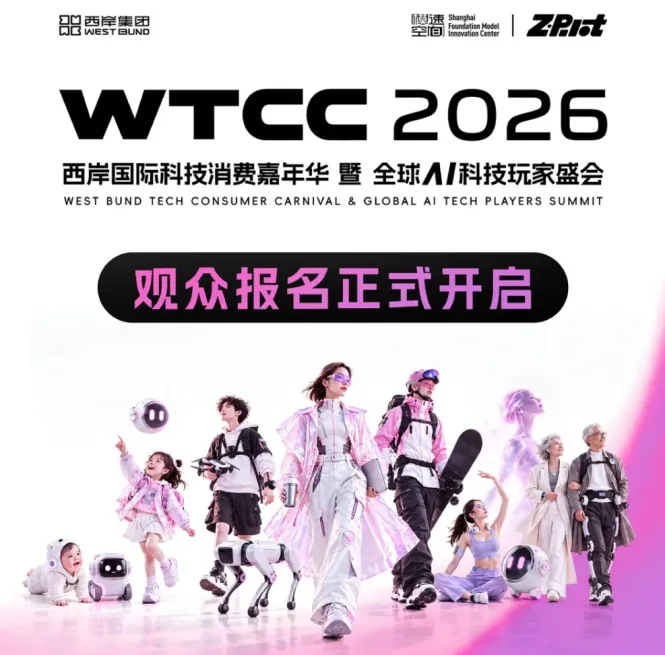
Visitor registration has officially opened for WTCC 2026, the West Bund Tech Consumer Carnival & Global AI Tech Players Summit. The event will take place from October 22 to 25 at the Shanghai West Bund International Convention and Exhibition Center. Its eight themed pavilions will showcase more than 400 new tech products over four consecutive days, offering visitors an immersive experience of life in the future.
Source: Shanghai Release
Competition Events
2026 Global Developer Pioneers Summit and International Embodied Intelligence Competition to Be Held from October 23 to 25
[Keywords: Global Developer Pioneers Summit, International Embodied Intelligence Competition]
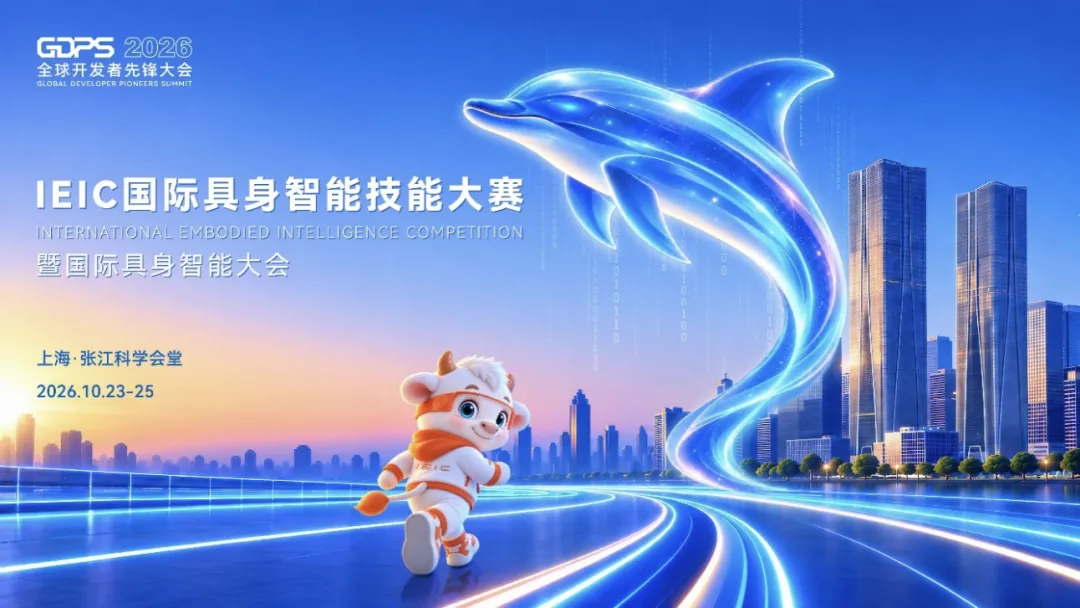
The Global Developer Pioneers Summit 2026 and the International Embodied Intelligence Competition will take place in Pudong, Shanghai, from October 23 to 25. Continuing the theme “Developers, Keep Searching”, the summit will feature one competition, one opening ceremony, and a series of developer activities. With a focus on real robots and practical training in real-world settings, it aims to further strengthen Shanghai’s “City of Developers” brand and build a closed-loop industrial ecosystem linking training, competition, industrial scaling, and financing. It will also expand the range of embodied intelligence applications, build capacity to deploy tens of thousands of robots, and support Shanghai’s development as an international sci-tech innovation center.
Source: International Services Shanghai
Culture & Arts
1. Shanghai Grand Opera House Officially Opens on October 17
[Keywords: Shanghai Grand Opera House]

On October 17, the Shanghai Grand Opera House officially opened, unfolding like a giant Chinese fan on the bank of the Huangpu River. From watching a performance to understanding a building, exploring an art form, and taking part in the creative process, these everyday experiences beyond the stage will continue through the opera house’s dedicated arts education brand, “goGO”. Its four sections, “Words in Song”, “Musical Journeys”, “Beyond the Music”, and “Sing and Sway”, will offer expert talks, theater tours, public exhibitions, parent-child workshops, and other activities, expanding the theater’s role from a performance venue to an open space for experiencing the arts.
Source: Shanghai Release
2. 2026 Shanghai City Lawn Concert Lineup Unveiled
[Keywords: Lawn Concert]

From October 17 to November 4, the “Autumn Rhapsody” series of the 2026 Shanghai City Lawn Concert will feature 15 performances at Shanghai City Lawn Music Plaza. Six “Theater on the Streets” performances will take place at the Bund Finance Center (BFC), Sinan Mansions, Jiuhai Plaza, and TX Huaihai. The “Lawn Performing Arts and Lifestyle Season” will also be held in the ginkgo grove on the eastern side of the plaza.
Source: Shanghai Tourism