Shanghai issues revised measures on intelligent connected vehicle testing and demonstration (Issue 166)
Laws and Regulations
National
1. Guidelines on Principal Tax Incentive Policies for Enterprise Mergers and Restructurings Updated
[Keywords: Mergers and restructurings, Taxation]
The Ministry of Finance and the State Taxation Administration recently updated and issued the Guidelines on Principal Tax Incentive Policies for Enterprise Mergers and Restructurings. The document also compiles examples illustrating how the relevant policies apply to different forms and scenarios of mergers and restructurings, aiming to provide taxpayers with concise and user-friendly operational guidance and help enterprises make full and effective use of these policies.
Source: Ministry of Finance
2. Measures for the Administration of Asset Management Trusts Released
[Keywords: Asset management, Trust administration]
The National Financial Regulatory Administration (NFRA) recently released the Measures for the Administration of Asset Management Trusts. The document covers main areas including maintaining a private placement focus, strengthening risk management, tightening sales management, enhancing investment management, and strictly regulating net asset value management and information disclosure. The document will take effect on January 1, 2027.
Source: NFRA
3. Guiding Opinions on Strengthening Consumption Infrastructure and Promoting Virtuous Cycle Between Consumption and Investment Released
[Keywords: Consumption infrastructure, Investment]
The National Development and Reform Commission (NDRC) and four other authorities recently issued the Guiding Opinions on Strengthening Consumption Infrastructure and Promoting a Virtuous Cycle Between Consumption and Investment. The document sets out 20 tasks across six areas, including improving urban and rural commercial facilities, upgrading facilities for service consumption, improving travel and mobility consumption facilities, strengthening distribution networks, and advancing infrastructure for new forms of consumption.
Source: NDRC
4. 15th Five-Year Plan for Patent and Trademark Examination Issued
[Keywords: Trademarks, Patents, Examination]
The China National Intellectual Property Administration (CNIPA) recently issued the 15th Five-Year Plan for Patent and Trademark Examination. The document sets out key tasks in four areas: patent examination, trademark examination, international cooperation in examination, and examination capacity building.
Source: CNIPA
5. Provisions on Discretion in Administrative Penalties for Market Regulation Released
[Keywords: Market regulation, Administrative penalties]
The State Administration for Market Regulation (SAMR) recently released the Provisions on Discretion in Administrative Penalties for Market Regulation, which will take effect on January 1, 2027. The document establishes five levels of administrative penalties: non-imposition of penalties, mitigated penalties, lighter penalties, standard penalties, and heavier penalties, and specifies the applicable circumstances for each level.
Source: SAMR
6. Protocol to Upgrade China-Peru Free Trade Agreement Takes Effect
[Keywords: Peru, Free trade agreement]
The Protocol Between the Government of the People’s Republic of China and the Government of the Republic of Peru on Upgrading the Free Trade Agreement Between the Government of the People’s Republic of China and the Government of the Republic of Peru recently took effect. Building upon the original agreement, the upgraded protocol refines seven existing chapters, including rules of origin, customs procedures and trade facilitation, and adds five new chapters, including cooperation on standards and conformity assessment, and competition policy.
Source: MOFCOM WeChat Official Account
7. China and Switzerland Sign Protocol to Upgrade Free Trade Agreement
[Keywords: Switzerland; Free trade agreement]
China and Switzerland recently signed a protocol to upgrade their free trade agreement. Under the protocol, both sides will, on the basis of the existing agreement, make high-standard opening-up commitments in goods, services, and investment, and further upgrade rules in areas including rules of origin, trade facilitation, technical barriers to trade, digital trade, competition, and trade and sustainable development.
Source: MOFCOM WeChat Official Account
Shanghai
1. Shanghai Issues Revised Measures on Intelligent Connected Vehicle Testing and Demonstration
[Keywords: Intelligent connected vehicles, Testing, Demonstration]
The Shanghai Municipal Commission of Economy and Informatization and two other departments recently issued the revised Implementation Measures for Intelligent Connected Vehicle Testing and Demonstration in Shanghai. The revisions cover main areas including introducing tiered and categorized vehicle management, strengthening safety safeguards for testing and demonstration, tightening oversight of enterprise operations, and establishing a complete framework for commercial operations. The document took effect on October 30, 2026, and will remain valid through October 29, 2031.
Source: Shanghai Municipal Commission of Economy and Informatization
2. Shanghai Financial Court Releases Seventh Batch of Selected Cases in Chinese and English and Guidelines on Ascertainment of Foreign Law
[Keywords: Financial disputes]
The Shanghai Financial Court recently released its seventh batch of selected cases in Chinese and English. The 20 typical cases serve three primary purposes: they clearly define the rights and responsibilities in new types of financial disputes, stabilizing market expectations through the rule of law; they encourage financial institutions and financial infrastructure providers to fulfill their duties and responsibilities in accordance with the law, thereby strengthening the legal foundation for financial governance; and they highlight the role of foreign-related financial adjudication in setting legal standards, thereby enhancing the international influence of China’s financial judiciary. At the event, the Shanghai Financial Court Guidelines on Ascertainment of Foreign Law was also released to further facilitate the participation of Chinese and foreign parties and legal experts in foreign-related litigation and enhance the professionalism and standardization of foreign-related financial adjudication.
Source: Shanghai Financial Court
3. Shanghai Seeks Public Comments on Draft Measures for Off-Site Regulatory Enforcement
[Keywords: Off-Site, Regulatory enforcement]
The Shanghai Municipal Bureau of Justice recently invited public comments on the Measures for Off-Site Regulatory Enforcement in Shanghai (Draft). The document covers several key areas, including bringing supervision within its scope, standardizing off-site regulatory enforcement methods, and establishing a system for off-site regulatory enforcement. The deadline for submitting comments is November 29, 2026.
Source: Shanghai Municipal Bureau of Justice
Q&A
An official from relevant departments of the NFRA answers press questions on the Measures for the Administration of Asset Management Trusts.
Q1
How does the Measures define asset management trusts?
A1
The Measures defines asset management trusts as privately offered asset management products based on a trust relationship, with the following characteristics:
First, they reflect the essential nature of asset management. Trust companies must uphold the nature of asset management trusts as asset management products, serve investors’ interests, and adhere to the principle that “sellers must fulfill their duties, buyers must bear their own risks, and sellers who fail to fulfill their duties must pay compensation in accordance with the law”. They must ensure management throughout the entire process, including suitability management, sales management, investment management, asset custody, net asset value management, and information disclosure.
Second, they adhere to the private placement positioning. Trust products are offered privately to qualified investors, with no more than 200 investors per product.
Third, they apply strict investor eligibility criteria. In addition to meeting the investor criteria under the new asset management rules, higher-risk trust products are subject to stricter investor qualification requirements and higher minimum investment amounts. Trust companies must also execute qualified investor assessment procedures when selling trust products and transferring trust units.
The Measures also specifies that asset management trusts must be established with funds, prioritize investors’ interests, and be independently managed by trust companies. Accordingly, terms such as “property rights trusts”, “financing trusts”, and “administrative trusts” should not be used to describe asset management trust business.
Q2
What are the main requirements for the sale of asset management trusts under the Measures?
A2
Trust companies conducting asset management trust business must fully explain the risks to investors and must not promise to guarantee principal or returns in any form.
First, the Measures limits the types of authorized distributors. At present, only trust companies, commercial banks, insurance companies, and securities companies may distribute trust products. Other institutions and individuals are prohibited from selling trust products in disguised forms.
Second, the Measures imposes strict risk disclosure requirements. Trust documents must prominently disclose the risks of trust products and the principles governing who bears those risks. For trust products that intend to invest in other asset management products, the investment strategies and risk-return profiles of the underlying assets must be disclosed through a "look-through" approach.
Third, the Measures tightens sales management. Trust companies must strengthen the management of sales channels, documents, and personnel, and clearly delineate their responsibilities and those of distributors. The Measures also specifies prohibited conduct for trust companies and distributors during product sales.
Fourth, the Measures upholds the principle of risk matching. Trust companies must assign a risk rating to each trust product and clearly define the target investor base. They must also assess and rate the risk tolerance of each ordinary investor, including natural persons, and sell investors trust products that match their levels of risk tolerance.
Q3
What requirements do the measures impose on key business areas?
A3
First, the Measures strictly prohibits non-compliant channel business. It specifies that asset management trusts must be independently managed by trust companies, which must not delegate their management responsibilities to other institutions or individuals. Trust companies are prohibited from using trust products to facilitate illegal or non-compliant activities by other institutions or individuals. The Measures limits the proportion of a single trust product that any one investor may hold and sets out four prohibitions to further clarify trust companies’ active management responsibilities. Under the Measures, the exemption in Article 10 of the Circular on Matters Concerning the Investment of Insurance Funds in Collective Fund Trusts (Yin Bao Jian Ban Fa〔2019〕No. 144), concerning insurance funds invested in collective fund trusts with an AAA credit rating, will no longer apply.
Second, the Measures strictly prohibits fund pooling. Trust companies must manage each trust product separately, maintain separate books, and conduct separate accounting. They must calculate the net asset value of trust products in accordance with accounting standards for business enterprises, the new asset management rules, and other applicable requirements, and must not price products independently of the actual returns and risks of the underlying assets. The Measures also specifies maturity-matching requirements and prohibits open-end trust products from investing in non-standard assets.
Third, the Measures strictly regulates related-party transactions. Trust companies must comprehensively and accurately identify related parties, establish sound internal assessment and approval mechanisms for related-party transactions, and standardize their identification, pricing, and execution. The Measures also specifies management requirements for the use of trust funds by related parties and details the reporting and information disclosure requirements for related-party transactions.
Source: NFRA
Expert Perspective
Tiered Adjudication and Matters Left Open by the Rules in AI Disputes: An Interpretation of and Practical Outlook on the Opinions of the Supreme People’s Court on Lawfully Adjudicating Cases Involving AI-Related Disputes (Part VIII)
By Fu Gang [Dacheng Law Offices (Shanghai)]
[Continued from the Previous Issue]
[Article Overview]
This section examines the requirements in the Opinions of the Supreme People’s Court on Lawfully Adjudicating Cases Involving AI-Related Disputes for establishing technical facts and maintaining order in litigation, focusing on the review of electronic evidence and the boundaries of responsibility in AI-assisted litigation. The article notes that electronic data should be assessed for authenticity and integrity in light of how it was generated, collected, stored, and transmitted, distinguishing technical preservation of evidence from the truthfulness of its content. When collecting evidence of generated content, the model version, complete prompts, conversation context, and test results should be preserved. Evidence should be evaluated in light of the conditions under which the content was generated and the facts it is intended to prove, avoiding inferences about a model’s standard capabilities based on a single output. Those who use AI to help prepare litigation documents and case research reports must verify the content and disclose how AI was used. Liability for fabricating evidence, obstructing judicial proceedings, and using AI to commit crimes should be determined separately under the statutory conditions applicable to each.
[Article Details]
IV. Ascertainment of Technical Facts and Regulation of Litigation Procedures
(II) Reviewing Electronic Evidence in Light of Generation Conditions and Processes
Article 18 requires particular scrutiny of the authenticity and integrity of electronic data throughout its generation, collection, storage, and transmission, with the focus of review determined by the type of technology involved. For big data analysis reports, the sources of the raw data, data cleaning rules, and analytical methods should be established. For blockchain-based evidence preservation, attention should be paid to the authenticity of data before it is recorded on the blockchain and the reliability of the technical platform. The evidentiary value of technology in establishing the preservation process should be assessed separately from the authenticity of the preserved content.
Article 18 lists prompt design and its effects, the degree of similarity, consistency across repeated tests, training and algorithms, and filtering mechanisms among the factors to consider when reviewing evidence of generated content. In evidence collection, it is advisable to preserve the model and version, time, complete prompts and uploaded materials, conversation context, number of tests, and relevant results.
In collecting evidence, successfully generating the content at issue under a particular set of prompt conditions can establish the generation phenomenon under those conditions. To further establish the model’s standard capabilities, consistent reproducibility, or foreseeability on the part of the operator, the test design and complete results must also be examined. The opposing party may also explain how the results were produced by reference to the model version, uploaded materials, retrieval sources, or filtering mechanisms. The Opinions thus extends the inquiry beyond the presentation of a single output to an examination of the generation conditions and the facts the evidence is intended to prove.
(III) Fulfilling Verification and Disclosure Obligations in AI-Assisted Litigation
Article 19 regulates conduct such as using AI to obtain false evidence, fabricate case facts, or forge evidence. It also requires verification of litigation documents and case research reports prepared with AI assistance, disclosure to the court of how AI was used, and responsibility for their authenticity and accuracy in accordance with the law.
Conduct that obstructs judicial proceedings under Article 19 should be assessed against the applicable legal elements. When rights holders conduct targeted tests to understand a model’s functions, the authenticity of the testing process and results must still be examined. Where selective presentation, the input of specific instructions, or the alteration of labels, combined with other conduct, amounts to obtaining false evidence or fabricating the basic facts of a case, the corresponding legal consequences apply. Verification of litigation materials and disclosure of AI assistance are separate requirements expressly set out in the article.
Article 20 further requires punishment in accordance with the law for crimes committed using AI, including fraud, insult, defamation, infringement of citizens’ personal information, and illegal acquisition of data from computer information systems. It also cautions against conduct that circumvents driver-assistance monitoring and causes accidents. The press conference emphasized that novel conduct should be handled cautiously, in keeping with the principle of legality and proportionality between offenses, penalties and criminal responsibility. The determination of civil liability, the imposition of procedural sanctions, and the pursuit of criminal liability must each meet their respective statutory conditions.
One Week in Shanghai
Latest News
1. 9th CIIE Concludes
[Keyword: CIIE]
The 9th China International Import Expo (CIIE) concluded successfully on November 10. Five key metrics, including the number of exhibitors and exhibition area, reached record highs. Nine innovative measures were introduced, and services were comprehensively upgraded across nine areas, significantly enhancing the event’s market-oriented, distinctive, and professional standards. This year’s CIIE drew participants from 162 countries, regions, and international organizations, with a total exhibition area exceeding 440,000 square meters. The value of tentative deals for one-year purchases reached US$85.45 billion, up 2.3% from the previous edition.
Source: Shanghai Release
2. 2026 Shanghai City Investment Promotion Conference Held
[Keywords: City Investment Promotion Conference]
On the occasion of the 9th China International Import Expo in Shanghai, the 2026 Shanghai City Investment Promotion Conference was held on November 6 to promote Shanghai’s opening-up policies, showcase the city’s development opportunities, and welcome more companies to enter China and invest in Shanghai.
Source: Shanghai Release
3. Shanghai's First Data Property Rights Registration Service Center Opens in Hongqiao
[Keywords: Data property rights, Registration service center]
The Hongqiao Data Property Rights Registration Service Center and the Shanghai Data Exchange Hongqiao Service Center, jointly established by the Hongqiao International Central Business District Administrative Committee and the Shanghai Data Exchange, were recently inaugurated. With front-office services in Hongqiao, middle- and back-office support at the Shanghai Data Exchange, and services covering the Yangtze River Delta, the two centers will take the lead in implementing the national data property rights system and complete the business district’s data factor service chain. The centers will also provide data support for the business district’s efforts to become the first stop for Yangtze River Delta enterprises going global and a hub for manufacturing research and development, help transform Hongqiao’s strength in flows into efficient data-factor allocation capacity, and foster new growth drivers for the digital economy.
Source: Shanghai Hongqiao
Corporate Activities
Construction Begins on Danobat’s Asia-Pacific Headquarters Project for High-End CNC Machine Tools
[Keywords: Danobat]
A ceremony was recently held to mark the start of construction on Danobat’s Asia-Pacific headquarters project for high-end CNC machine tools. Located in Xinzhuang Industrial Park in Minhang District, the new facility will occupy a site of approximately 15,400 square meters, with a floor area of approximately 11,000 square meters. It will integrate assembly, engineering, service, and customer support functions and is scheduled to begin operations in late 2027 or early 2028.
Source: Minhang Today
Forums and Exhibitions
1. Shanghai to Host 35 Trade Shows in November
[Keywords: Trade shows]
The China International Import Expo (CIIE) takes center stage among Shanghai’s trade shows in November. Other events include the 29th FHC Shanghai Global Food Trade Show, the Hongqiao International Science and Technology Expo, and ITMA ASIA + CITME.
Source: Shanghai Commerce
2. 2026 Shanghai International Art Book Fair Opens Soon
[Keywords: International Art Book Fair]

The fourth Shanghai International Art Book Fair (SABF) will take place from November 12 to 15, 2026, in Huangpu District. This year’s fair brings together 43 exhibitors and nearly 140 brands from 21 cities across eight countries. More than 20 leading overseas art publishers will showcase over 1,000 original-language art publications.
Source: Shanghai International Art Book Fair
Culture & Arts
1. 8th Shanghai International Artwork Trade Week Opens
[Keywords: Shanghai International Artwork Trade Week]

The 8th Shanghai International Artwork Trade Week takes place from November 10 to 15. Under the theme “Global Art in Shanghai”, this year’s event will promote the sustainable development of the art industry ecosystem through talent incubation, trend reports, industry forums, art and technology integration, and art retail.
Source: Shanghai Tourism
2. 2026 Shanghai Chrysanthemum Exhibition Links Venues Citywide Through a "1+6+N" Format
[Keywords: Shanghai chrysanthemum exhibition]
The 2026 Shanghai chrysanthemum exhibition recently opened. Themed “Four Decades of Splendor in Autumn Colors, a New Chapter of Chrysanthemum Charm Across the Gardens”, this year’s exhibition features one main venue and six distinctive branch venues. Leveraging diverse business formats, it combines exquisite chrysanthemums and traditional chrysanthemum art with markets, sports, and science popularization activities to create a comprehensive, high-quality, immersive chrysanthemum exhibition.
Source: International Services Shanghai
3. West Bund Week 2026 Returns with a Fresh Look
[Keywords: West Bund Week]
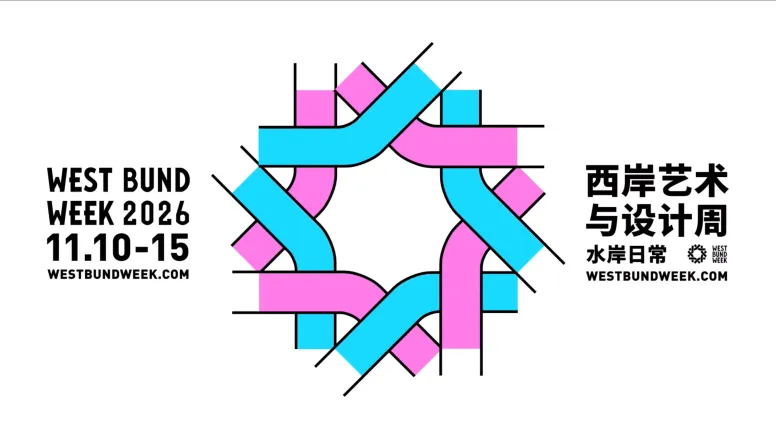
West Bund Week 2026 will take place from November 10 to 15. Continuing its core theme of “Resonance and Co-Creation”, this year’s edition centers on “Everyday Life by the Waterfront”. Anchored by the first concurrent staging of Westbund Art & Design Fair and the Art and Design Education: FutureLab Land, it uses a “Professional Fair + In-depth Co-creation and Collaboration + District-wide Multi-scenarios” framework to create “an art and design celebration without walls along the Huangpu River”.
Source: Shanghai West Bund