Shanghai vows deeper reforms to spur high-level opening-up
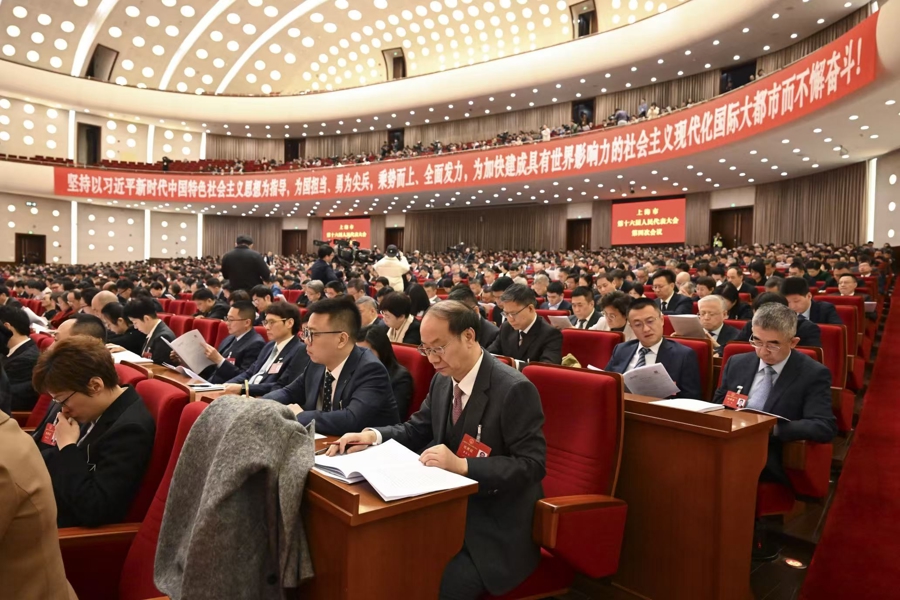
Shanghai will continue to deepen reforms in key areas and expand institutional opening-up to enhance high-quality development, according to the government work report delivered by Shanghai Mayor Gong Zheng at the opening of the fourth session of the 16th Shanghai People's Congress, the annual session of the city legislature, on Feb 3.
The city aims to pioneer new systems and chart new development paths for the nation by amplifying the synergistic effects of reforms, driven by the implementation of major national strategic tasks.
Specifically, Pudong New Area will further its development into a pioneer of China's socialist modernization.
"We will continuously advance the comprehensive reform pilot program, further relaxing market access and promoting reforms toward the market-based allocation of factors such as data, technology, and land," Gong said.
The area will also facilitate cross-border investment, financing, and settlement, while developing new business models such as global procurement and cross-border distribution.
The China (Shanghai) Pilot Free Trade Zone will optimize its layout and enhance its functions through high-standard institutional opening-up.
Lin-gang Special Area will expand its functions, including offshore trade, cross-border data flow, and high-end shipping services, with the promotion of new "bonded plus" business formats within the Yangshan Comprehensive Special Bonded Zone.
According to the report, industries of the future, such as brain-computer interfaces and fourth-generation semiconductors, will be vigorously developed.
The Hongqiao International Opening-up Hub will implement a new round of high-standard opening-up plans.
The hub will focus on creating a pioneer zone to serve Chinese enterprises in their global expansion and developing the Hongqiao headquarters cluster for enterprises going global.
The Eastern Hub International Business Cooperation Zone will expedite the development of functional hubs, including a global center for medical device training, exhibitions, trading and innovation, as well as a sci-tech research and development and incubation base.
"We will actively explore institutional frameworks designed to facilitate the cross-border movement of overseas goods and personnel," Gong said.
At the same time, Shanghai will continue to enhance the capabilities of regional headquarters of multinational corporations and foreign-funded research and development centers, Gong said.
The city will implement a new version of the catalogue of industries encouraging foreign investment and enhance the service capabilities for major foreign investment projects.
In 2026, Shanghai expects several foreign-funded projects to take root in sectors such as finance, telecommunications, healthcare, and culture and tourism.
Source: Shanghai Observer