Shanghai tech conference showcases AI in action
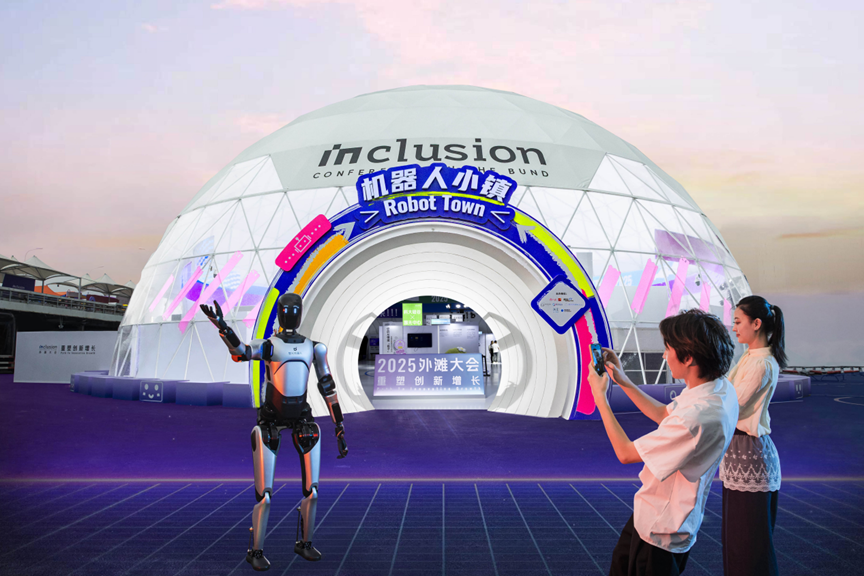
The 2025 Inclusion Conference on the Bund, which spotlighted the real-world application of artificial intelligence, embodied intelligence, and advanced technologies across various industries and aspects of daily life, kicked off on Sept 10 in the Huangpu World Expo Park in Shanghai.
Industry leaders, researchers, and enthusiasts gathered to explore the latest advancements and discuss the future of technology.
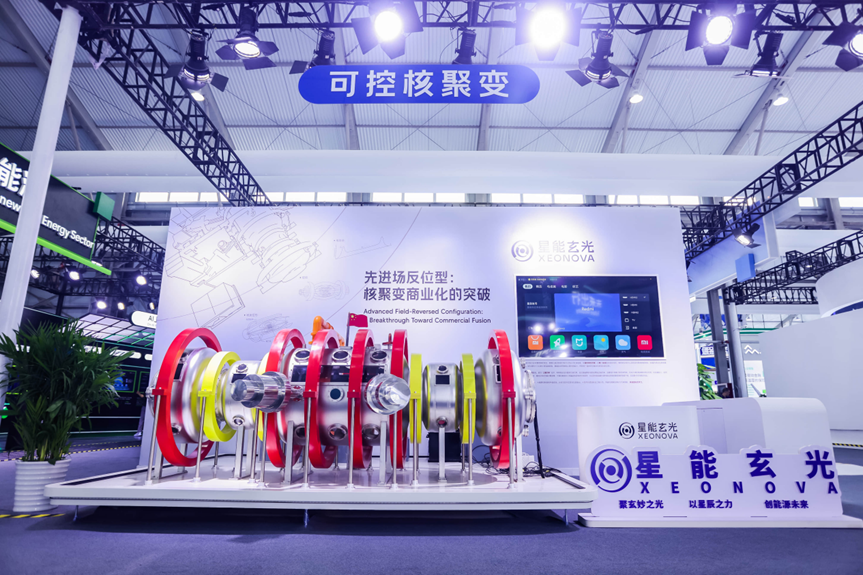
Xeonova, a Hefei-based commercial fusion company, aims to accelerate fusion energy development through AI, according to Wang Ge, chief scientist at the firm.
“We are working to integrate AI into our current fusion engineering process,” Wang said. The company aims to use AI to build digital twins of fusion reactors, enabling rapid iteration and optimization in a virtual environment.
In addition to energy, AI applications in robotics garnered significant attention. Boulhol Clement from France, working in social media in Shanghai, said he was excited about the future and impressed by the AI and robot technology.
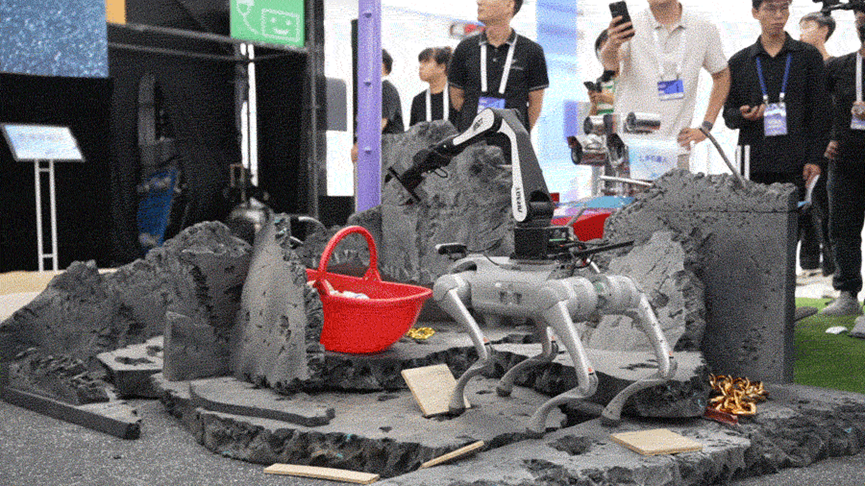
"I really like all the technology stuff with AI and with robots, and I think some robots are very impressive," Clement said, highlighting the potential of robots in various fields, including rescue operations.
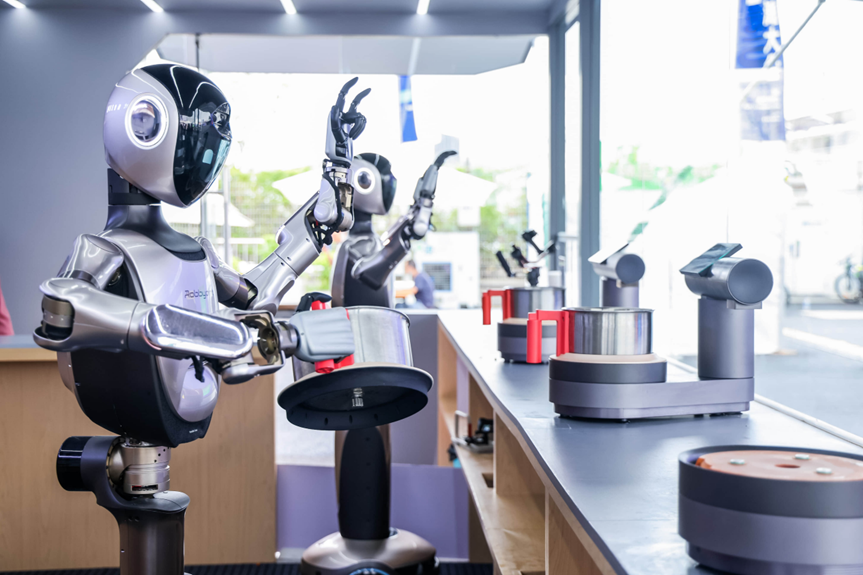
Robbyant, an embodied intelligence company under Ant Group, showcased its R1 robot, a versatile robot capable of cooking complete meals with minimal human intervention.
Liu Yibo, a solution architect at Robbyant, explained that the robot can autonomously handle the entire cooking process. "The whole cooking procedure has about 20 steps," he said.
The conference featured a 10,000-square-meter technology exhibition and a 5,000-square-meter tech market, attracting nearly 200 companies and showcasing over 30 new tech products.
The exhibition was divided into sections exploring the limits of intelligence, in-depth industrial practices, and global innovation collaboration.
A "Robot Town", created in partnership with four major robot industrial parks, highlighted the symbiotic relationship between humans and machines.
Xeonova’s focus on AI-driven fusion technology also addresses the growing energy demands of AI itself.
Wang said, "We also expect AI computing to have high electricity demand, which traditional electricity supply methods may not be able to meet, so our own demand is to power future AI data centers."
He also mentioned that AI can optimize plasma control in fusion reactors, an area previously relying on empirical methods.
China possesses notable strengths in the fusion energy supply chain, despite global competition, according to Wang.
“From a technology assessment by a team of Massachusetts Institute of Technology's Chinese alumni, our country has three advantages compared to other countries.” These advantages include ultra-high voltage power transmission technology, thin-film superconducting materials, and tritium extraction.
Xeonova has ambitious goals, with plans to generate electricity from its fusion device within five to ten years.
"Within 5 to 10 years, we want to achieve the first kilowatt-hour of electricity in our device," Wang said. "If this goal is achieved, we will be the first company in China to generate electricity from nuclear fusion."
The company aims to increase the temperature within its device to 100 million degrees Celsius within one to two years.
Clement also sees how AI is being integrated into everyday life, from smart appliances to medical applications. "I think it will make our life easier," he said. "Maybe we will live longer with AI, and someday robots will be able to perform surgery."
While acknowledging potential concerns, Clement expressed trust in the technology's progress and capabilities.
Robbyant's R1 robot is currently being deployed in various real-world scenarios, including scenic spot guidance and shopping mall navigation.
Liu added, "We are actively exploring pilot programs for solutions in key social and livelihood scenarios such as medical care and rehabilitation."
The company aims to leverage large embodied AI models to generalize robot capabilities and integrate them into households.
AI applications extended beyond robotics and energy, with exhibits showcasing advancements in healthcare, agriculture, and finance. For example, AI health manager AQ introduced an AI-powered skin detection feature, while other companies demonstrated AI tools for detecting false medical advertisements and assisting in cancer screening.