AI is entering its 'era of experience'
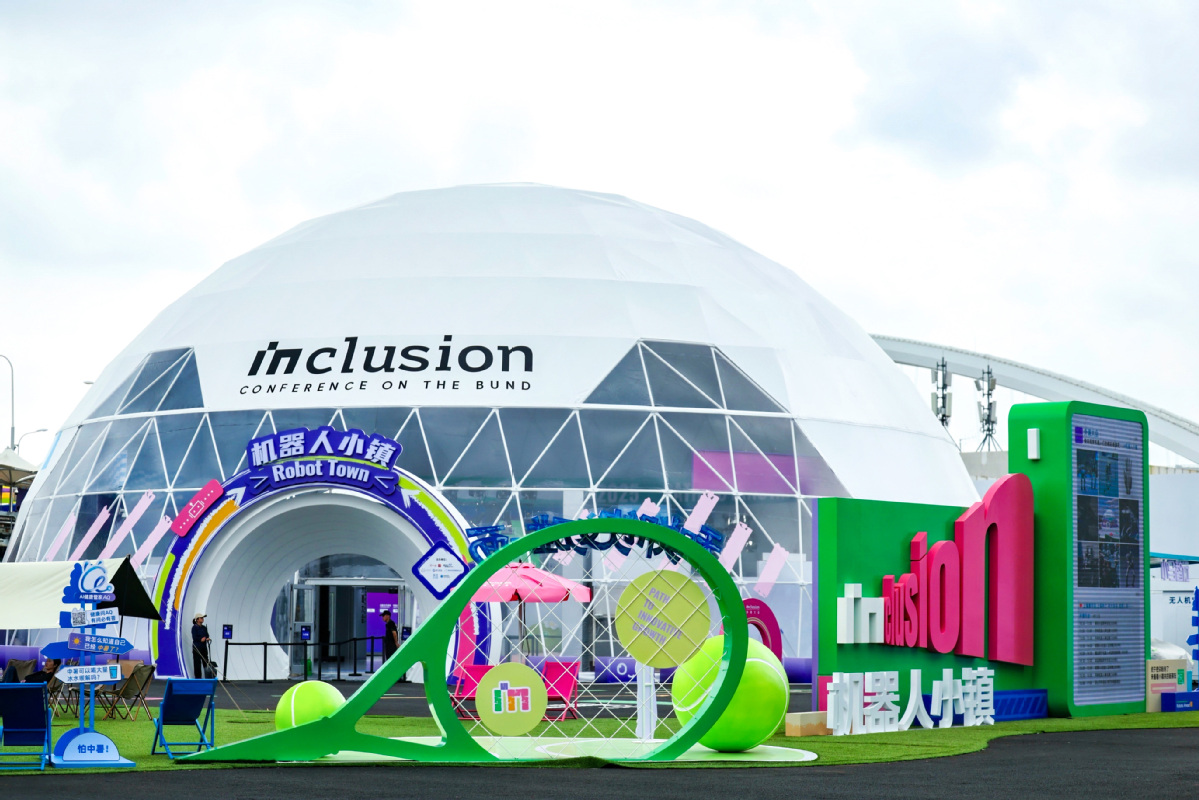
Artificial intelligence is gradually starting to reach the limits of human data, and is expected to unleash more potential in a new "era of experience", with continual learning as one of the cores, an expert has said at the ongoing 2025 Inclusion Conference on the Bund in Shanghai.
The 2024 Turing Award winner Richard Sutton pointed out at the event's opening ceremony that, in the current era of human data, AI is trained to predict words and labels constructed by humans, and is fine-tuned by human experts. The purpose of most machine learning today is to transfer existing knowledge from humans to static, non-learning AI.
"We are gradually starting to reach the limits of human data and realize that we can't generate generally new knowledge with this approach," said Sutton.
"This method is not suitable for continual learning, which is critical to the intelligence's utility."
Human beings and other animals naturally learn and improve through first-person interaction with the world, from which they constantly gain experience, he added.
"We are entering the 'era of experience', where we need a new source of data that grows and improves as the AI agent becomes stronger," Sutton added.
"The experience mindset is that an agent exchanges signals with the world, and these are what constitute experience."
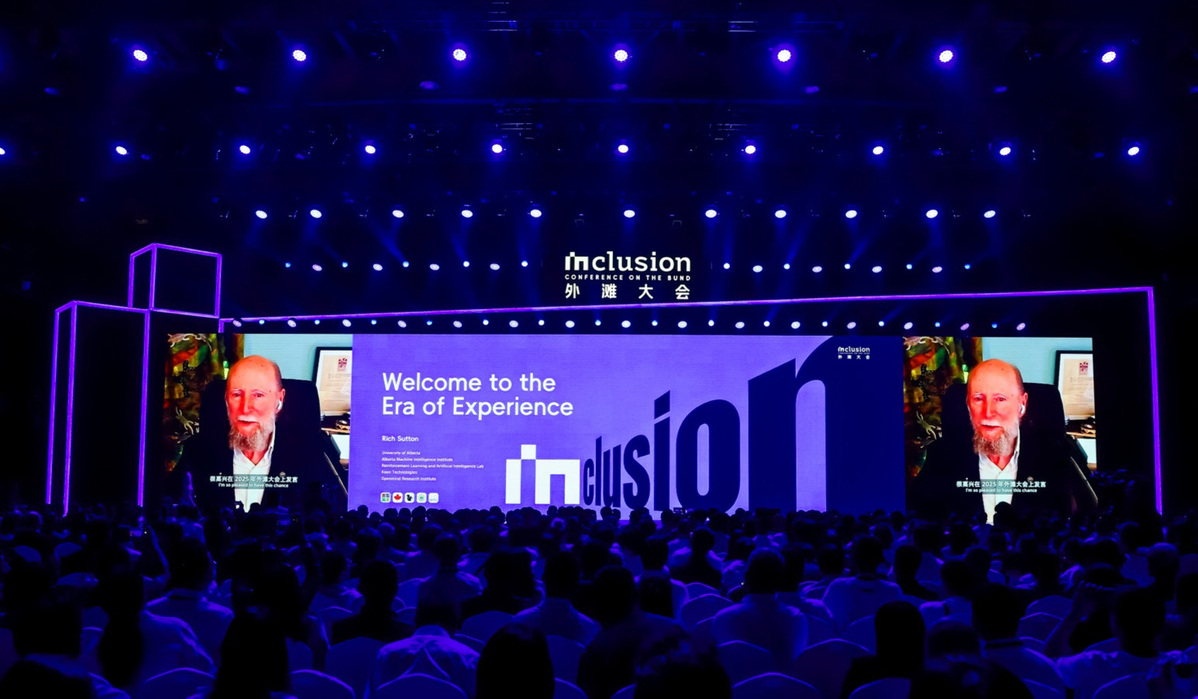
The Canadian computer scientist referred to the "experience" as three signals, namely the observation, the action and the reward, which keep passing back and forth between the agent and the world, eventually fostering the data of life. He considers an AI agent intelligent to the extent that it can predict and control its input signals, particularly its reward.
"Experience is the focus and the foundation of all intelligence," he said.
"The field of reinforcement learning is based on the experiential mindset… but to realize the full power of experience will require continual learning and meta-learning, which we don't yet have."
Sutton said that fear among the public that AI will lead to bias, job loss and even human extinction is exaggerated. Just like different people with different goals and abilities working together for the same goals in economies, the AI agents can also coexist in peace, achieve "decentralized cooperation" for a common purpose and thus unleash vast potential, he added.
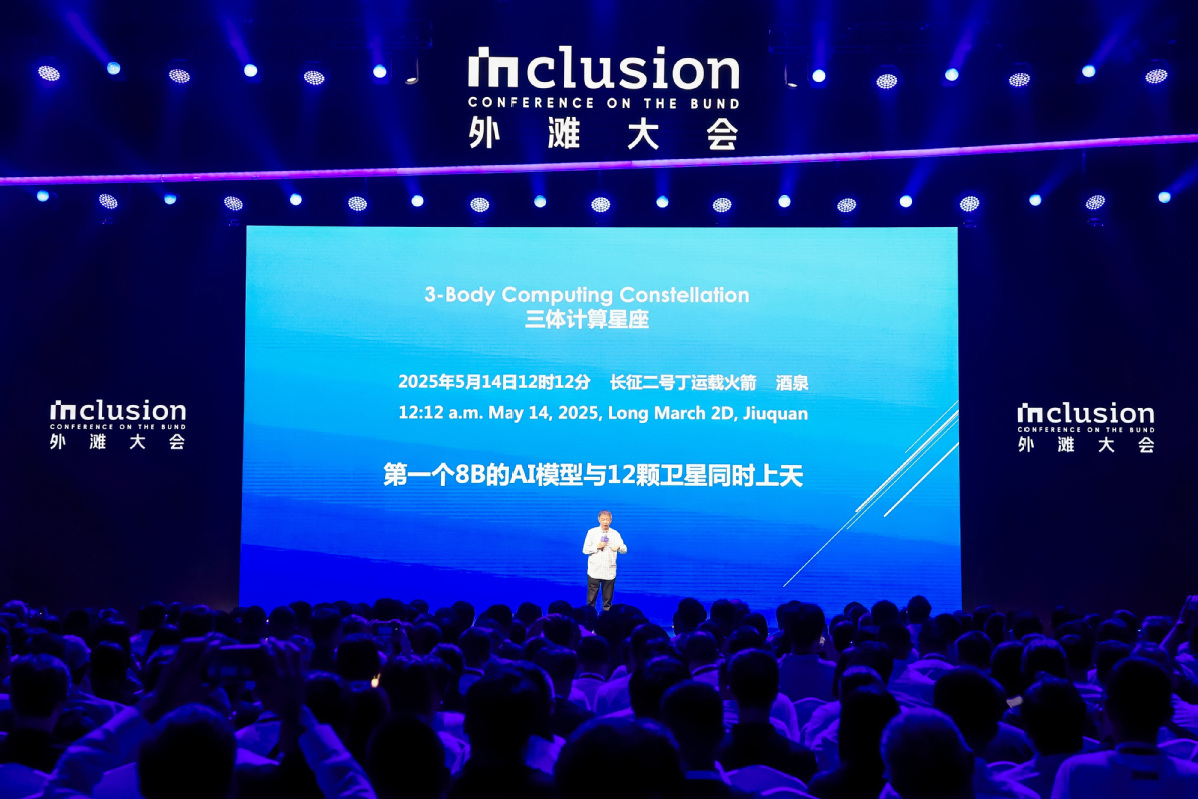
Wang Jian, director of Zhejiang Lab and founder of Alibaba Cloud, the cloud computing arm of Alibaba Group, highlighted AI's potential in the area of space exploration.
In May, Zhejiang Lab launched a batch of 12 computing satellites into orbit as the first part of the "Three-Body Computing Constellation", which is designed to enable real-time in-orbit data processing and handling in space.
"Space is the greatest resource for humans," said Wang at the opening ceremony.
"Computing and AI are our traveling companions for the journey to Mars, and it is the most exciting thing I see in the next 10 or even 20 years."
Running until Saturday, the 2025 Inclusion Conference on the Bund has attracted more than 200 business exhibitors as well as around 550 guests from 16 nations and regions, including leading scholars, business representatives, youth entrepreneurs and scientists.
Featuring a main forum, more than 40 sight forums, exhibitions, markets and diverse sci-tech activities in various forms, the event, which is in its fourth edition, brings people in the sector together to explore innovative paths for and the commercial future of AI.
Topics covered at the conference include fintech, AI security, embodied intelligence, as well as industrial applications of AI in sectors such as healthcare, mobility, finance, payment, energy, agriculture, manufacturing and lifestyle.