Pudong firms accelerate AI-driven drug discovery
Pharmaceutical companies in Shanghai's Pudong New Area are accelerating the integration of artificial intelligence and biomedicine, driving drug discovery into a new era of autonomous research and development.
As AI reshapes the R&D paradigm, intelligent laboratories are evolving from mere executors of instructions to systems capable of autonomously coordinating complex research tasks. For instance, Insilico Medicine, a leading Pudong-based AI drug discovery company, announced the launch of its next-generation intelligent laboratory operating system, LabClaw, on May 7. Designed specifically for the company's fully automated LifeStar2 laboratory, it is among the first laboratory autonomy systems built on a lightweight AI-agent architecture.
Powered by five collaborative AI agents and 28 specialized skill modules, LabClaw orchestrates a fully integrated intelligent workflow covering target discovery, compound screening, automated experiment execution, data analysis, and report generation. The system also incorporates a "Human-in-the-Loop" approval mechanism at key stages, ensuring scientific rigor and compliance while enhancing research autonomy. Researchers can assign tasks using natural language without advanced programming knowledge, while the AI agents independently interpret and execute instructions.
By taking over standardized operations and task scheduling, LabClaw acts as a tireless AI co-pilot for scientific research, allowing scientists to focus on generating hypotheses, interpreting complex data, and designing innovative strategies.
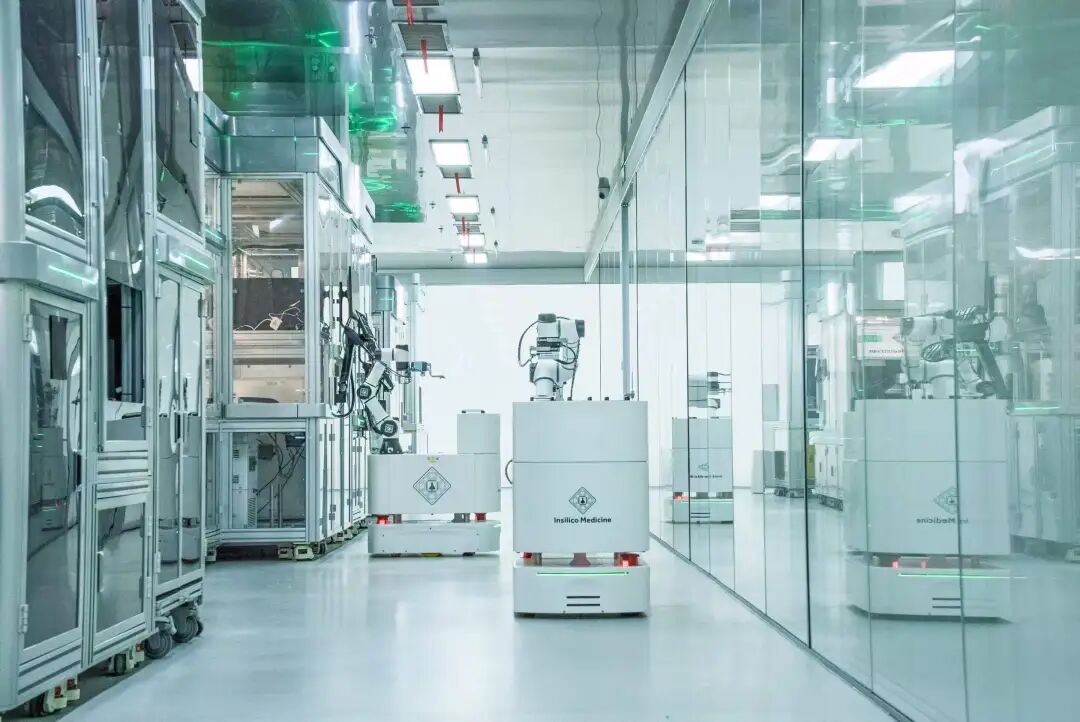
Robots at Insilico Medicine are at work. [Photo: Official WeChat account of the Publicity Department of CPC Pudong New Area Committee at "pdnews"]
Studies also indicate that AI can reduce both the time and cost of first-in-class drug discovery by up to 50 percent during the preclinical and clinical stages, with the benefits particularly evident in virtual drug screening.
MindRank, a company based in Pudong's Zhangjiang Pharma Valley, collaborated with researchers from University of Macau and Imperial College London to develop an AI-powered platform that integrates a million-compound library with multiple predictive modules. The platform facilitates the discovery of active ingredients in traditional Chinese medicine and natural products.
Using virtual screening and cross-species experimental validation, the team identified promising small-molecule compounds with potential therapeutic effects for Alzheimer's disease, marking a milestone in applying large AI models to the development of drugs targeting complex central nervous system disorders.
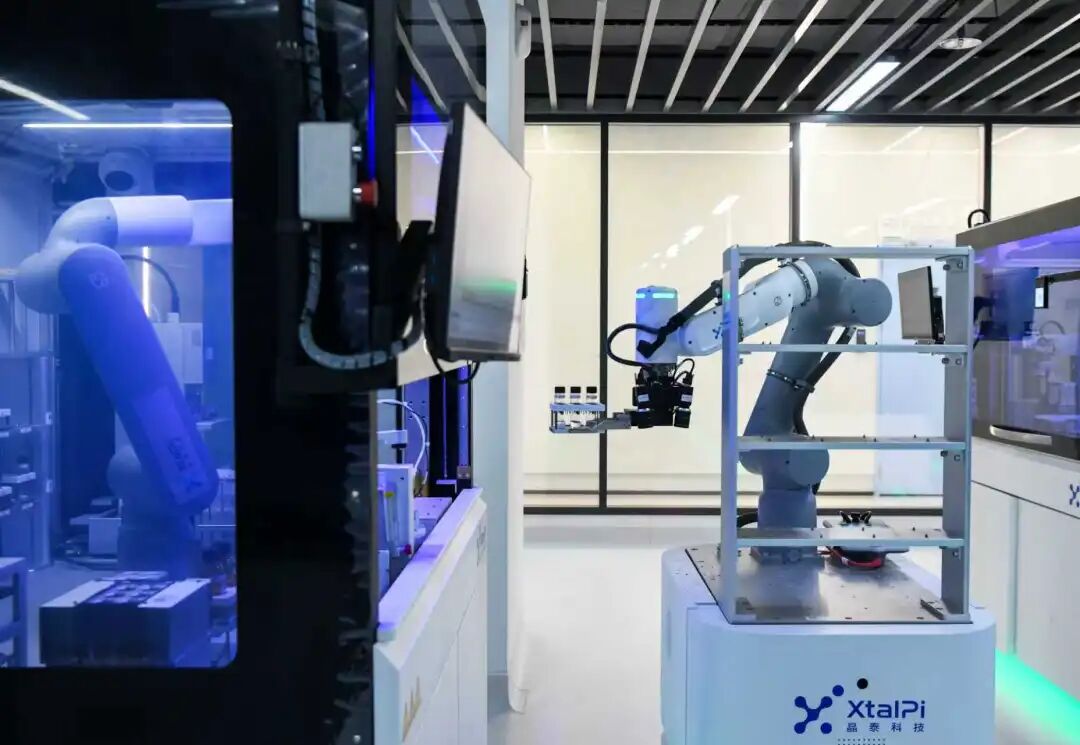
Meanwhile, another Pudong-based AI pharmaceutical company, XtalPi, announced dual progress in its partnership with PharmaEngine. PEP08, a next-generation PRMT5 inhibitor discovered with XtalPi's support, has begun patient enrollment for solid tumors. At the same time, the two companies have launched a second AI-driven drug discovery program targeting a new "synthetic lethality" pathway — one of the most promising and technically challenging frontiers in next-generation cancer therapies.
Industry forecasts predict that the global synthetic lethality drug market will grow from $4.2 billion in 2024 to $17.6 billion by 2033. Wen Shuhao, chairman of XtalPi, noted that the steady progress of PEP08 and the launch of the second project demonstrate the replicable innovation capabilities of XtalPi's underlying AI and robotics platform.
Alex Zhavoronkov, founder and CEO of Insilico Medicine, emphasized that LabClaw will not only improve R&D efficiency but also fundamentally upgrade the scientific research paradigm.
Source: Pudong Times