Historic architecture in Qibao Ancient Town
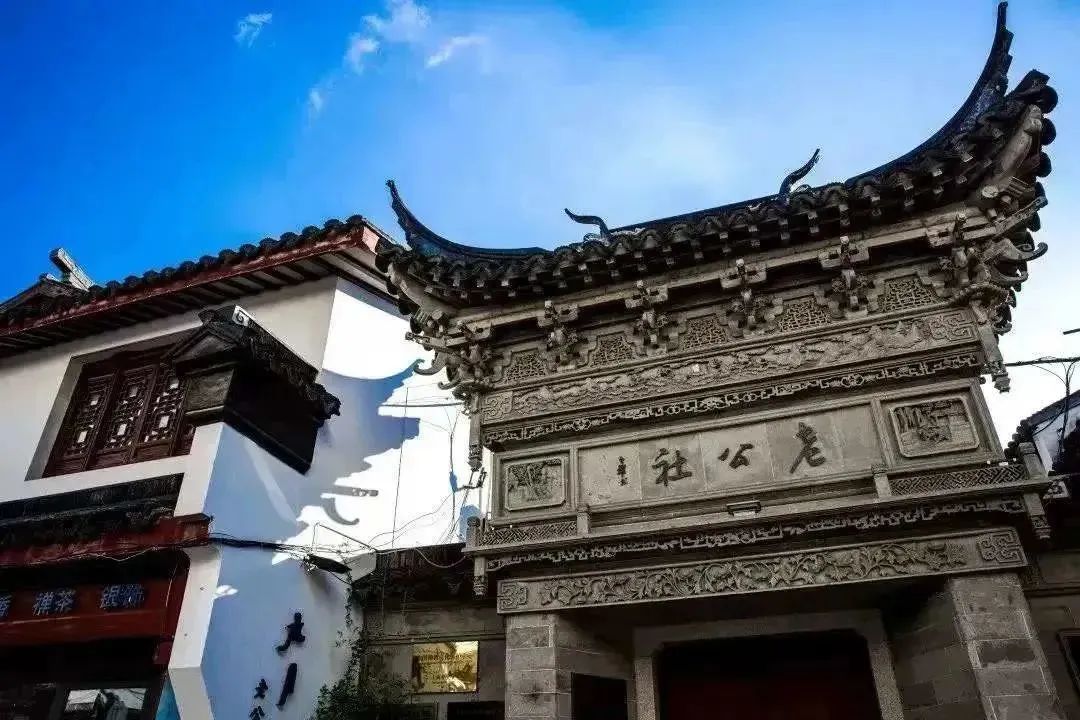
Old People's Commune
Located at No 4 Yutang Street, this site was once part of the Wenchang Palace. On Sept 21, 1958, it became home to the Seven-One People's Commune, the first rural people's commune in Shanghai.
This location was later converted into the office of the governing body of the Seven-One People's Commune and was commonly known as the "Old People's Commune".
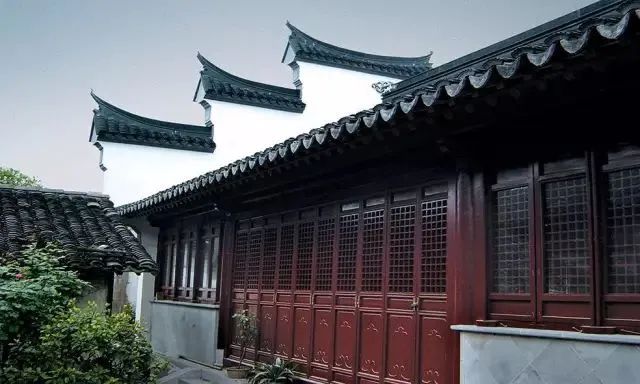
Jieyuan Hall
Jieyuan Hall is the hall of the former residence of Lyu Kexiao, a senior official of the ministry of labor during the Ming Dynasty (1368-1644)'s Wanli period (1573-1620). The Hall was built in 1597, when Lyu was ranked number one in the provincial academic examination.
The beams, purlins, rafters and columns of the original building were all made in Phoebe zhennan, or golden-thread nanmu.
In the spring of 1880, the sixth year of the Guangxu reign of the Qing Dynasty (1644-1911), the Shadow Play Troupe of Hongxu Hall set up by Mao Gengyu performed for the first time at the venue.
In 1989, it was listed as a cultural relics protection unit in Shanghai (county-level). A major restoration took place in 2002, during which severely corroded beams and columns were replaced with new wood.
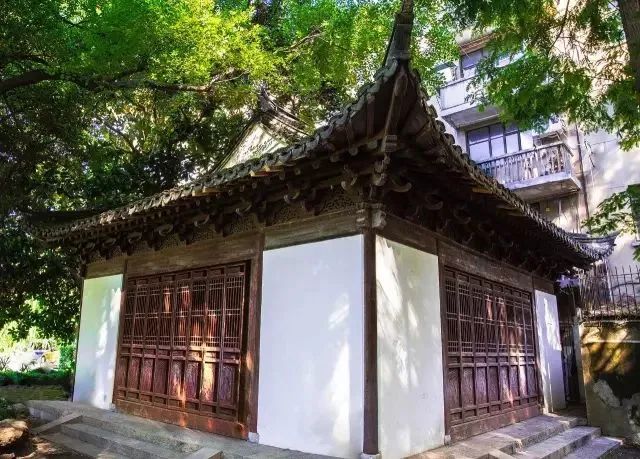
Four-sided Hall
Also known as Flower Hall, this site is located in the School of Agriculture and Biology, Shanghai Jiao Tong University.
Originally constructed during the Song Dynasty (420-479), it has undergone renovations over the centuries.
The building blends elements of a pavilion, terrace, hall, and chamber. It features long French windows on all sides, with overlapping brackets and beams decorated with intricate colored paintings. Outside the hall are ancient trees and stone carvings.
In 1987, it was listed as a cultural relics protection unit in Shanghai (county-level). An extensive renovation was carried out in 2000, but its original appearance was preserved.
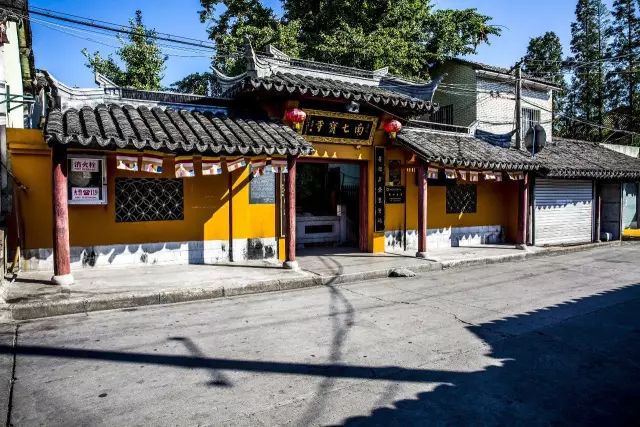
East Holy Hall
Also known as South Qibao Temple and commonly referred to as Iron Buddha Temple, the origins of this historic site are shrouded in debate. Two main theories exist regarding its initial construction date. According to the Qing Dynasty's Qingpu County Records, construction began in 1008, while the Records of Songjiang Prefecture suggest that construction commenced during the Zhizheng period of the Yuan Dynasty (1271-1368).
In 1595, a local resident named Xu Pan, along with others, cast an iron Buddha statue for worship. Unfortunately, this iron Buddha was destroyed in August 1966.
Today, the temple retains its hall and two ancient ginkgo trees.
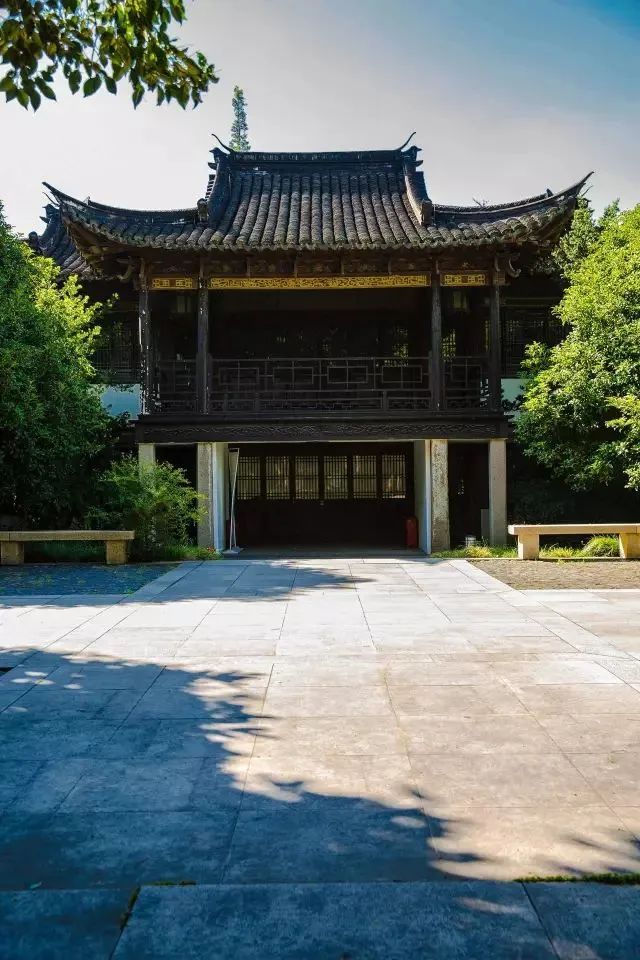
Doumu Pavilion
Located at the School of Agriculture and Biology of Shanghai Jiao Tong University, the exact date of this building's original construction remains unknown. However, it was reconstructed during the Qing Dynasty and once served as an opera house.
The building boasts a two-story pavilion design characterized by white walls, dark tiles, red beams, and intricately painted rafters, spanning 176 square meters. Its roof adopts a complex, intersecting structure with bracket sets supporting the eaves, which are elegantly upturned with numerous angles that are difficult to enumerate precisely.
Designated as a cultural relic protection unit of Shanghai (county-level) in 1987, the building underwent significant renovations in 2000, including the addition of a gate at the main entrance.
Sources: Minhang district government, WeChat account of Qibao Ancient Town
Editor's Pick
FAQs
- What if my passport expires but my Chinese visa is still valid?
- Can pets and owners depart from different countries while complying with customs regulations?
- Can a minor travel to China and stay in a hotel without a parent's presence?
- Who is eligible for the 240-hour visa-free transit policy in China?