Shanghai universities to add 21 new undergraduate majors
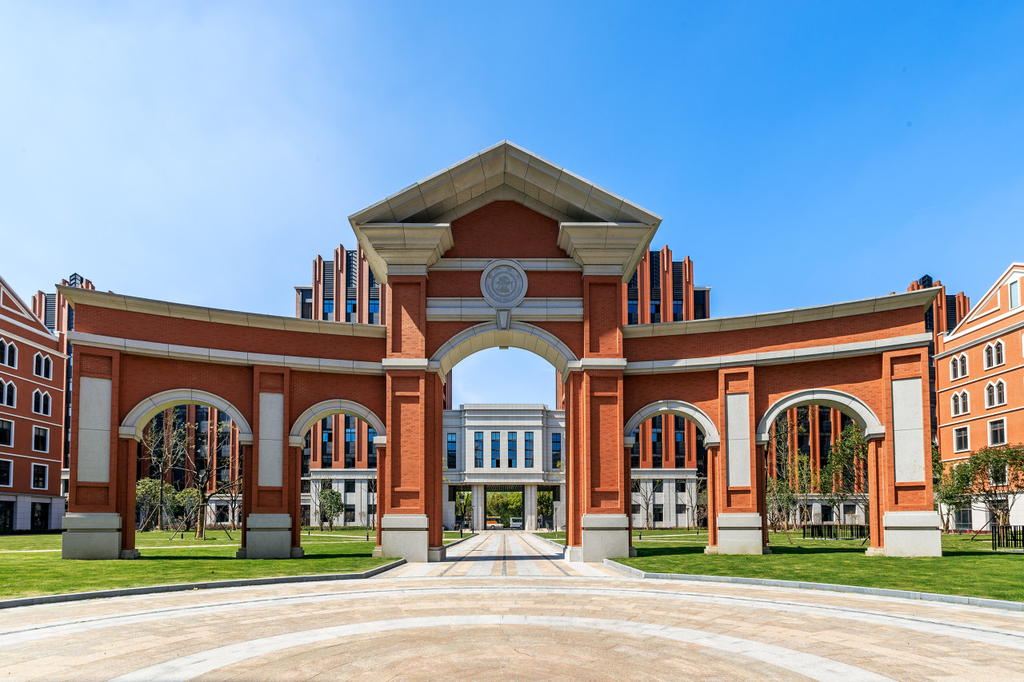
Chinese universities have applied to add 863 new undergraduate majors, according to the Ministry of Education's newly released application list for the 2025 academic year. Once approved, these majors could begin admitting students as early as September 2026.
The initiative reflects China's strategy to align education with emerging national priorities while offering students more diverse academic choices.
Among the most popular proposed majors, low-altitude technology and engineering tops the list with 120 universities applying, followed by cyberspace security with 55 applications, and sports training with 42 requests.
Many of the top 20 proposed majors overlap with the 29 disciplines newly approved by the Ministry of Education this year. These include low-altitude technology and engineering, artificial intelligence education, regional and country studies, pharmaceutical economics and management, medical device and equipment engineering, and geriatric medicine and healthcare.
In Shanghai, 15 universities submitted applications for 21 new undergraduate majors. East China Normal University proposed the following programs: cryptography science and technology, artificial intelligence education, computational linguistics, big data management and application, pharmaceutical science, artificial intelligence, and remote sensing science and technology.
Tongji University received approval this year for majors in marine science and technology as well as art and design, and applied to add two interdisciplinary programs: future robotics and engineering internet, emphasizing international relevance and flexible study paths.
Shanghai Jiao Tong University applied for marine intelligence and unmanned technology, while Fudan University proposed international organizations and global governance. Donghua University and Shanghai University applied for sports training. Shanghai University of International Business and Economics applied for regional and country studies, Shanghai Maritime University applied for shipping finance, and Shanghai University of Engineering Science applied for low-altitude technology and engineering and digital public governance.
The new applications signal a shift toward majors that cultivate "new quality productive forces," promoting interdisciplinary innovation and integrating emerging technologies.
Wang Hongdong, deputy director of the academic affairs office at Shanghai Jiao Tong University, said universities are focusing on three categories of majors: those aligned with national development orientation, those in step with technological and AI trends, and those responding to social and livelihood needs.
Strengthening AI capabilities and fostering industry-education integration are key priorities of the new programs, Wang said.
Shanghai Jiao Tong University, the first institution in China to establish naval architecture and ocean engineering, noted that the growing demand for intelligent ships and unmanned technology has driven companies to seek highly talented graduates, with starting salaries roughly 20 percent higher than comparable positions. The new majors will give students opportunities to engage in industry-university cooperation from their sophomore year, with diploma projects focused on developing intelligent unmanned marine equipment.
Source: Shanghai Observer