'Qingtuan': A taste of spring in every bite
In Shanghai, you'll know spring has arrived when shop windows start filling up with soft, jade-green rice balls.
Known as qingtuan (青团, qīng tuán), these chewy, herb-scented treats appear for just a few weeks each year, usually in the run-up to Qingming Festival, which falls in early April. Some are filled with classic red bean paste, others with savory combinations such as salted egg yolk, pork floss, or even local dishes reimagined as fillings.
Small and easy to miss, they are nonetheless a seasonal ritual for many locals.
Origin: From ancient rituals to a seasonal tradition
The story of qingtuan begins with the Cold Food Festival (寒食节, hán shí jié), a tradition that dates back more than 2,000 years. On this day, people were once forbidden from lighting fires, so they prepared food in advance and ate it cold.
This custom later became closely linked with Qingming Festival, when families visit ancestral graves and make seasonal offerings.
As early as the Southern Dynasties (420-589), records describe foods made by mixing rice flour with the juice of wild herbs. By the Tang and Song dynasties (618-1279), a herbal-stained rice dish known as qingjing fan (青精饭, qīng jīng fàn) had become common.
These early foods were not yet qingtuan, but they laid the foundation for using seasonal plants to color staple foods.
The modern form of qingtuan is more clearly documented from the Ming and Qing dynasties (1368-1911) onward. Texts from this period describe green rice balls made by mixing herbal juice with glutinous rice flour, then shaping and filling them, which are much closer to today's version.
Over time, qingtuan became a familiar part of Qingming customs in the Jiangnan region. Its original role as a ritual offering has gradually faded, and today it's best understood as a seasonal food.
What makes it special
The appeal of qingtuan lies in its texture and contrast.
The outer layer is soft, chewy, and slightly elastic, with a light herbal aroma. Inside, the classic filling is smooth red bean paste (红豆沙馅, hóng dòu shā xiàn), mildly sweet and perfectly balanced.
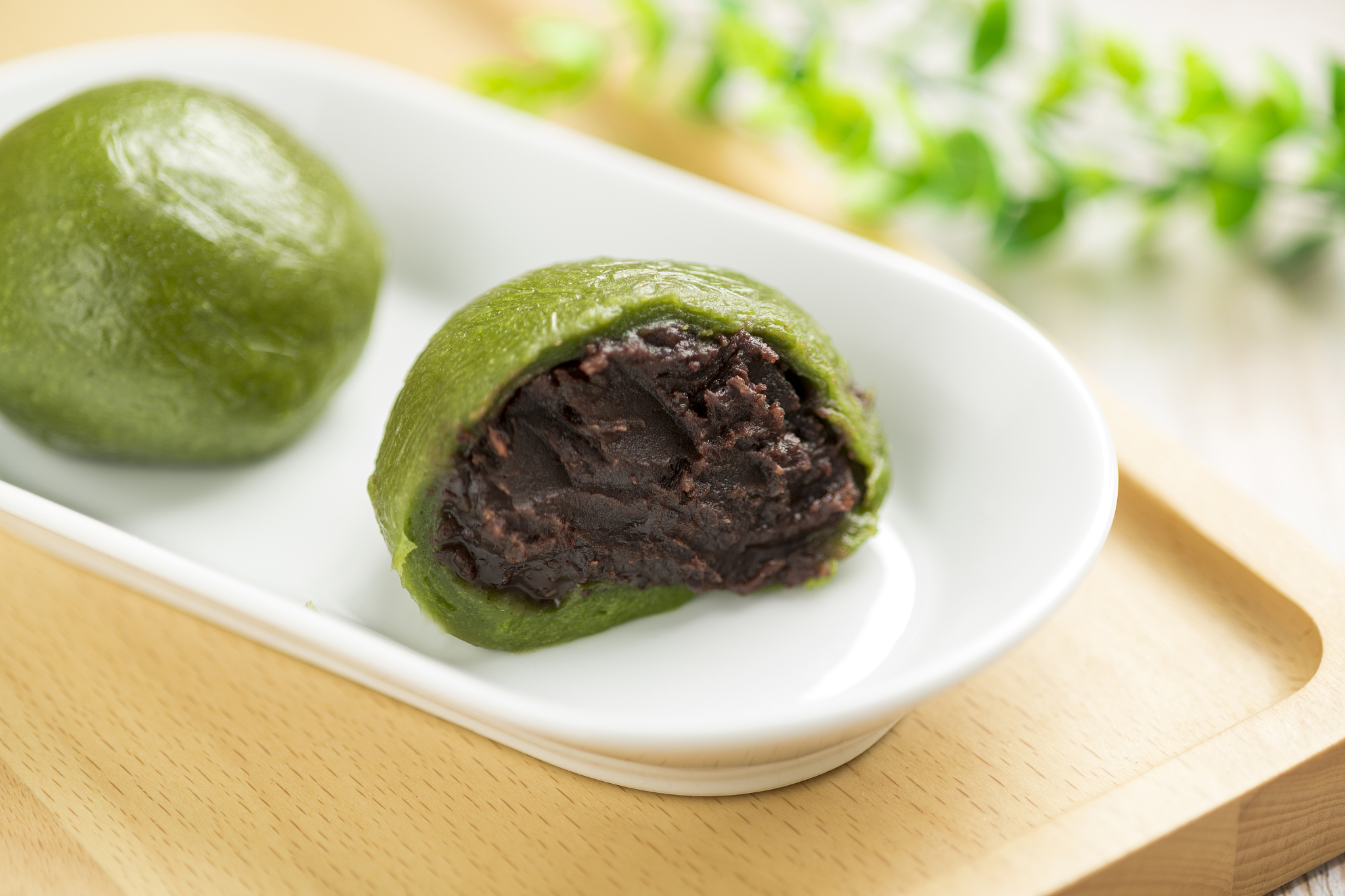
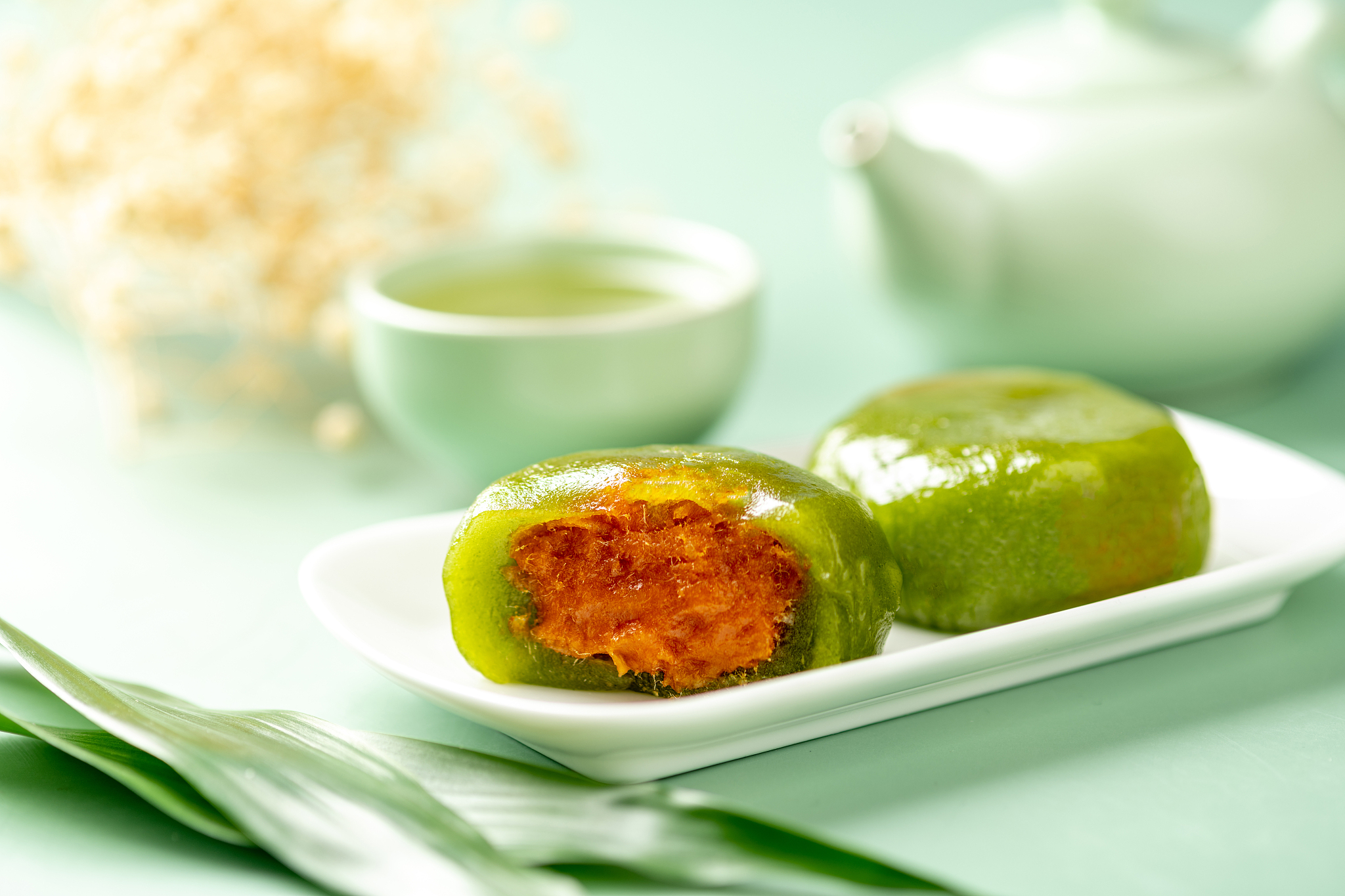
In recent years, the range has expanded. Savory options such as salted egg yolk (咸蛋黄, xián dàn huáng) with pork floss (肉松, ròu sōng) and diced pork with spring bamboo shoots have become popular in Shanghai, alongside more experimental flavors inspired by local dishes.
How to eat qingtuan
Traditionally, qingtuan was eaten cold, a habit linked to the Cold Food Festival.
Today, how you eat it depends on how it is stored. Ready-to-eat qingtuan stored at room temperature can be enjoyed as is. Qingtuan that has been kept refrigerated should be reheated before eating, either by steaming it or microwaving it on medium-high heat after removing any plastic wrapping. Overheating should be avoided, as the soft skin can collapse or split.
Take small bites and chew slowly, as the texture is sticky. Qingtuan is typically high in sugar and fat, so it is best eaten in moderation.
Where to try it in Shanghai
Spring is qingtuan season in Shanghai, and many time-honored brands release both classic and creative flavors each year.
Shen Da Cheng (沈大成)
A staple of Shanghai's pastry scene, known for its consistently soft texture and balanced sweetness. Classic red bean remains a reliable choice, while newer flavors such as mashed potato and bacon offer a savory twist.
- Multiple locations include No 636 East Nanjing Road, Huangpu district
- Business hours: 7:30 am to 10 pm
Sunya Cantonese Restaurant (新雅粤菜馆)
Known for turning local dishes into qingtuan fillings, its yanduxian version combines pork, bamboo shoots, and cured meat in a rich, layered bite.
- Multiple locations include No 719 East Nanjing Road, Huangpu district
- Business hours: 7:30 am to 10 am, 11 am to 1:30 pm, 2 pm to 4 pm, 5 pm to 8:30 pm
Taikang Foods (泰康食品)
A long-standing favorite with a nostalgic touch. Its red bean and malted milk combination is especially popular among locals.
- Multiple locations include No 766 East Nanjing Road, Huangpu district
- Business hours: 9 am to 10 pm
Xing Hua Lou (杏花楼)
A historical brand that blends classic and seasonal flavors, including versions made with pork, bamboo shoots, and mushrooms.
- Address: No 343 Fuzhou Road, Huangpu district
- Business hours: 10 am to 2 pm, 5 pm to 9 pm
Wang Bao He Restaurant (王宝和酒家)
The shop offers more sophisticated qingtuan, featuring fillings such as crab roe with shrimp and malantou with bamboo shoots.
- Address: No 603 Fuzhou Road, Huangpu district
- Business hours: 11 am to 1:30 pm, 5 pm to 9 pm
A small bite with hidden meaning
One lesser-known detail about qingtuan is that its green color was not just decorative.
The wild herbs used in the dough, such as mugwort, were traditionally believed to ward off insects and seasonal ailments. In early spring, when the weather turns warmer and damper, these plants were valued not only for their flavor but also for their practical uses in daily life.
This gives qingtuan an added layer of meaning. It is not just a festive food, but is also tied to the seasonal use of wild herbs.
There is also a phrase often used in Shanghai, "tasting spring" (尝春, cháng chūn), which refers to eating the first seasonal foods of the year. For many locals, qingtuan is one of the earliest and most recognizable signs of spring.
Sources: Xinhua Daily, WeChat accounts of the General Office of the Shanghai Municipal People's Government, Huangpu, Xuhui, and Minhang districts