Classic local breakfast staples

For many people in Shanghai, the day begins with four classic local breakfast staples, collectively known as the "Four Heavenly Kings" (四大金刚, sì dà jīn gāng): dabing (大饼, dà bǐng), youtiao (油条, yóu tiáo), cifantuan (粢饭团, cí fàn tuán), and doujiang (豆浆, dòu jiāng).
Humble yet satisfying, these foods have long been a cornerstone of the city's daily morning routine. Warm, inexpensive, and convenient to eat on the way to work or school, they remain closely tied to everyday life in Shanghai.
Breakfast rooted in street culture
The Four Heavenly Kings were not always defined in the same way. In older versions, they could include mantou (馒头, mán tou) and laohujiaozhua (老虎脚爪, lǎo hǔ jiǎo zhuǎ), a wheat snack baked in the same kind of oven as dabing and named for its tiger-paw shape. Over time, the familiar combination of dabing, youtiao, cifantuan, and doujiang became the standard version most people know today.
Shanghai's breakfast culture grew around street stalls and small neighborhood eateries. According to historical records, the city's earliest known dabing-and-youtiao shop opened in 1912, and by the 1930s, Shanghai had already formed a thriving breakfast trade centered on staples such as dabing, youtiao, and mantou.
Dabing
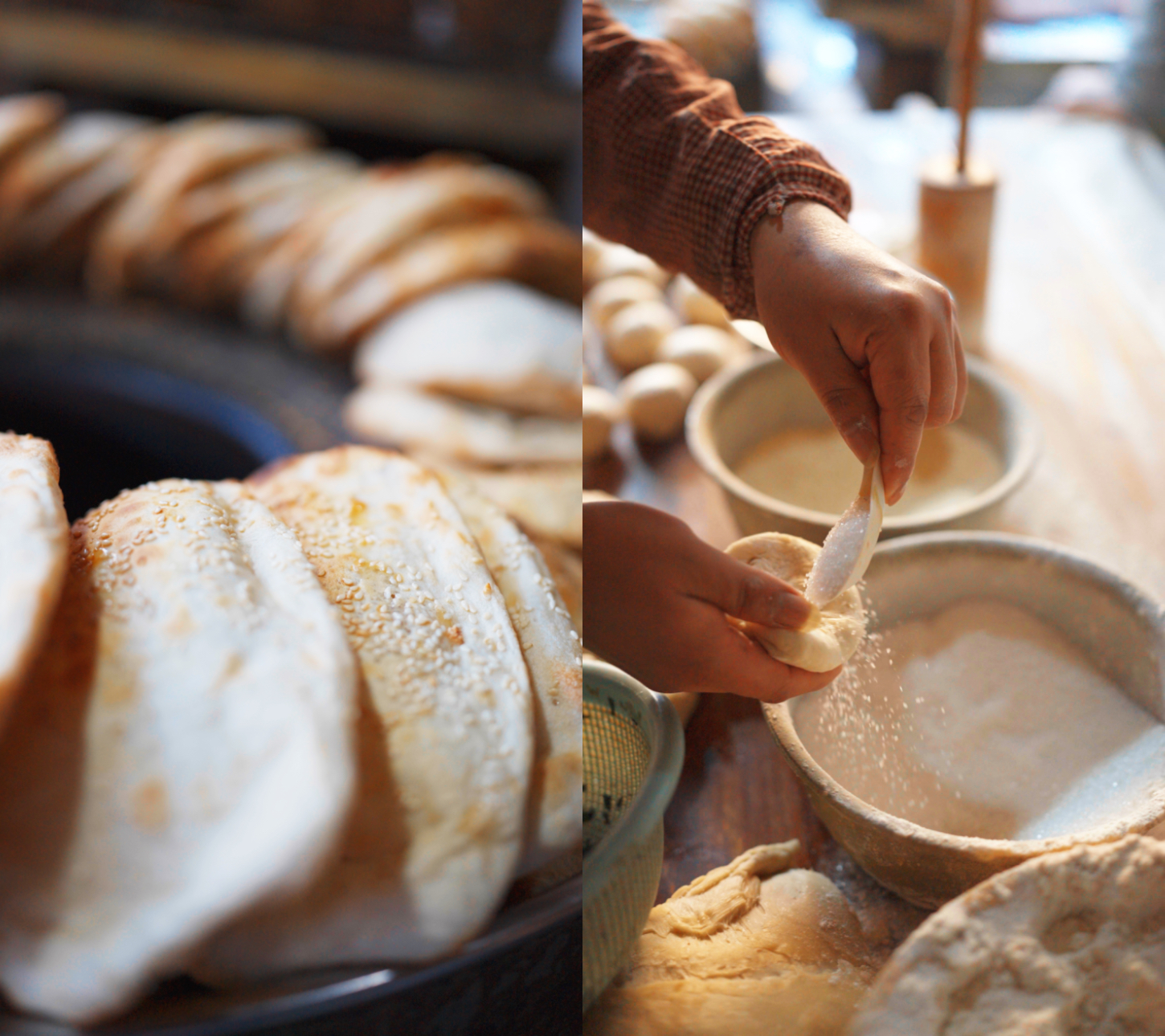
Dabing is a baked wheat flatbread cooked inside a clay or metal oven. It comes in both sweet and savory versions. Savory dabing is often topped with scallions, while sweet versions are brushed with sugar or syrup before baking.
A century ago, dabing was commonly known as tabing (塌饼, tā bǐng). Different varieties included chaoban (朝板, cháo bǎn), the long savory version, and panxiang (盘香, pán xiāng), the round sweet version. Another related pastry, xiekehuang (蟹壳黄, xiè ké huáng), named for its round shape and golden color, later developed into its own separate category.
Dabing is often eaten on its own, but one of the most classic local combinations is to wrap a youtiao inside. The contrast between the soft, slightly chewy bread and crisp fried dough continues to delight many locals.
Youtiao
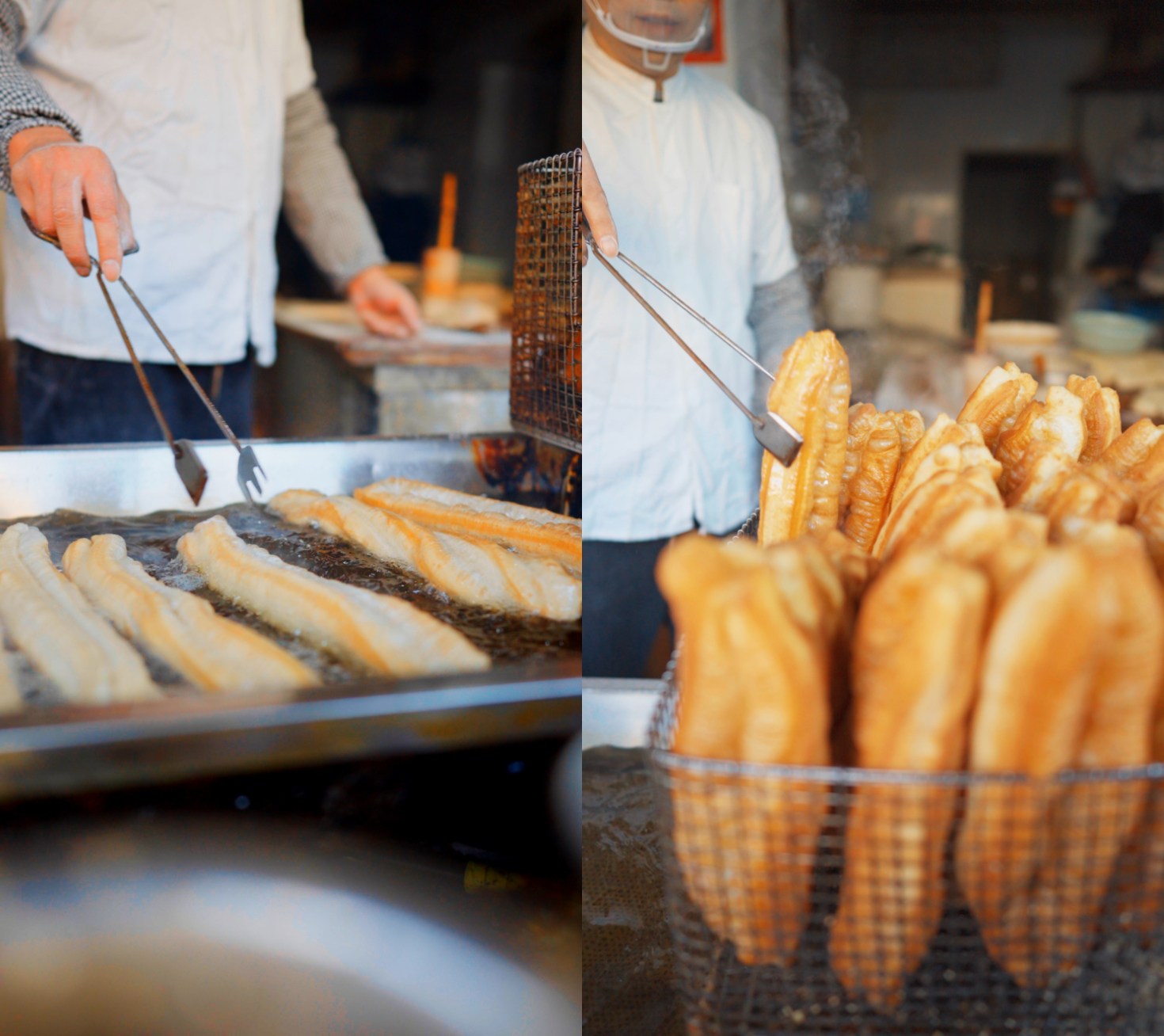
Youtiao is one of the most recognizable Chinese breakfast foods. Deep-fried until golden and crisp on the outside, it has a light and airy interior. In Shanghai, it is usually served hot, either on its own or paired with dabing or cifantuan.
Historically, it evolved from earlier fried dough snacks, including a street food once known as youzhahui (油炸桧, yóu zhá huì). Freshly fried youtiao is considered the ultimate version, while cooled or re-fried pieces are often used inside dabing or cifantuan for added texture.
Cifantuan
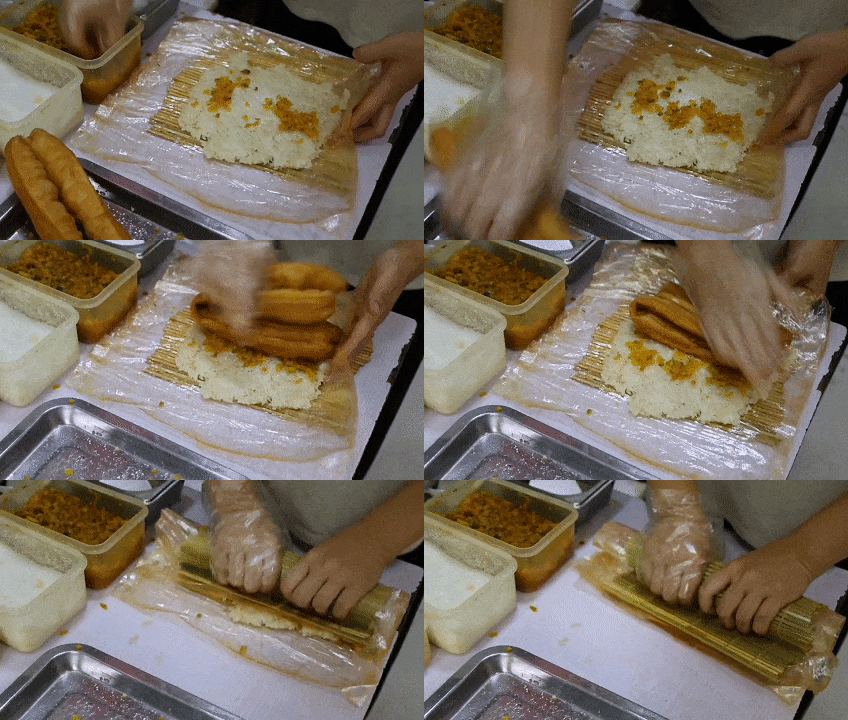
Cifantuan is a steamed glutinous rice roll wrapped around a stick of youtiao. Depending on the shop and personal preference, it may also include sugar, pickles, or pork floss. Earlier versions were often simpler, filled mainly with youtiao or white sugar.
Soft, sticky, and filling, cifantuan was especially practical for people heading out early in the morning. Compact enough to hold in one hand, it became closely associated with Shanghai's fast-moving commuting culture.
Doujiang
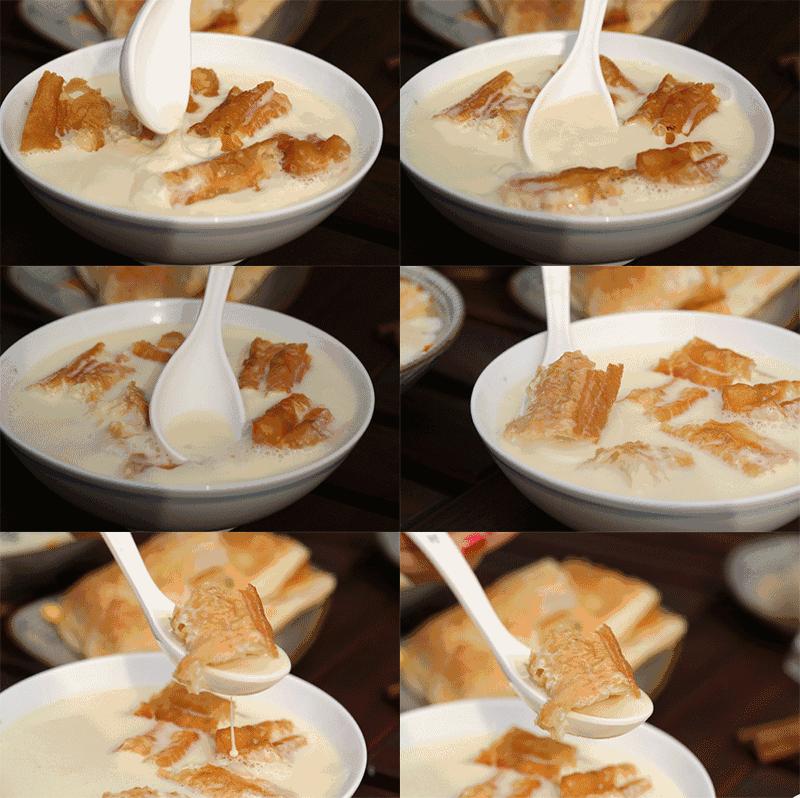
Doujiang, or soy milk, is commonly served in sweet, plain, or savory versions in Shanghai. The savory version is especially distinctive. It is typically mixed with chopped youtiao, seaweed, dried shrimp, scallions, and soy sauce for a lightly salty, layered flavor.
Rather than being treated as a standalone drink, doujiang is usually enjoyed alongside other breakfast foods, completing the traditional breakfast set.
Where to try them
You can find them at many traditional breakfast shops. Older residential neighborhoods, wet market areas, and streets near metro stations are often good places to look. For the freshest experience, go before 9 am, when youtiao is still hot, dabing is warm from the oven, and doujiang is freshly served.
Sources: General Office of the Shanghai Municipal People's Government, Xinmin Weekly, The Paper, WeChat accounts of Pudong, Huangpu, and Qingpu districts