Deep-fried pork chop
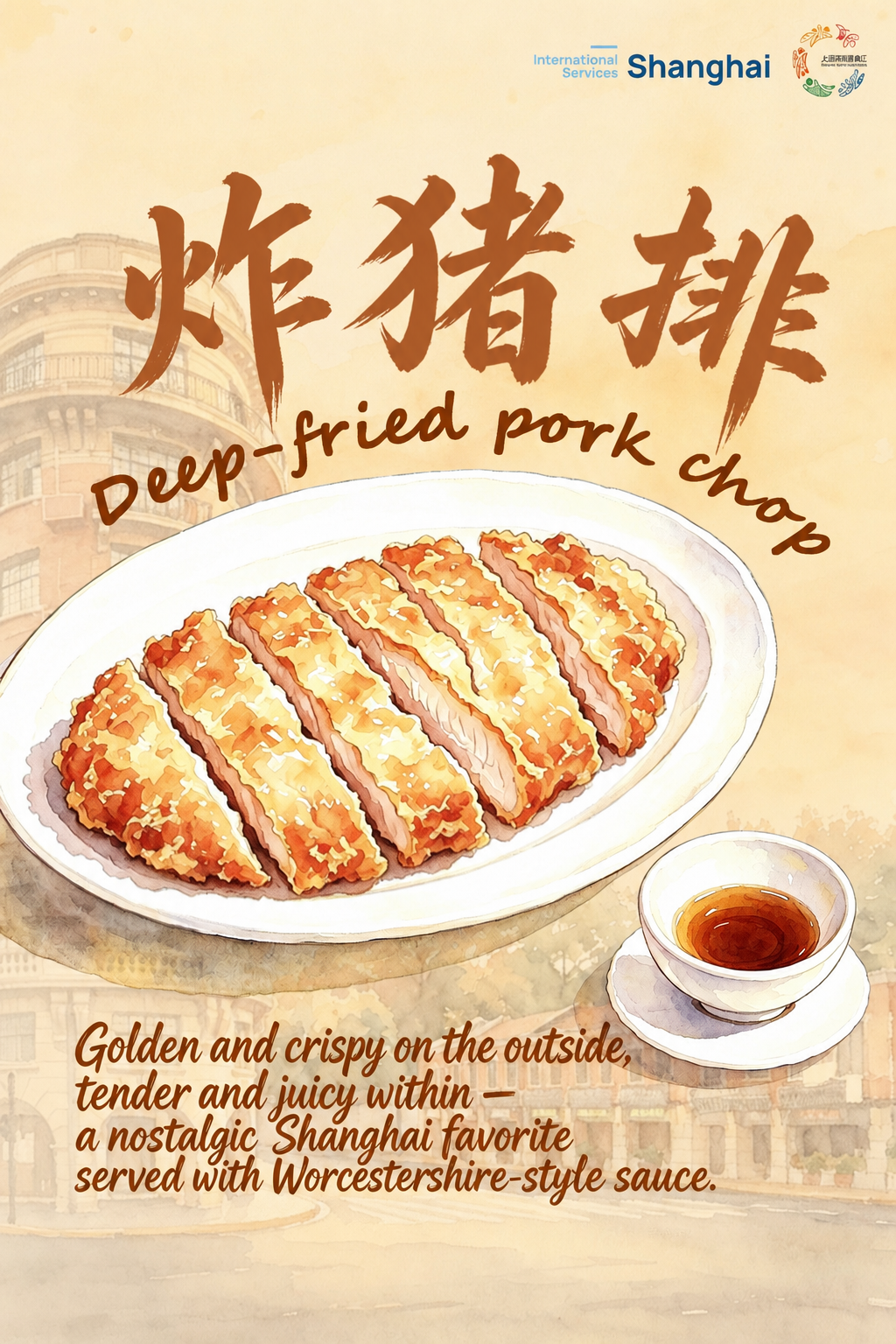
In Shanghai, deep-fried pork chop (炸猪排, zhà zhū pái) is more than just a local snack. Crispy on the outside, tender on the inside, and almost always served with Shanghai's own take on Worcestershire sauce (辣酱油, là jiàng yóu). It remains a familiar favorite in Shanghai-style Western restaurants, neighborhood noodle shops, and home kitchens.
Origin
To appreciate deep-fried pork chop, it helps to understand Haipai cuisine, often translated as Shanghai-style Western food.
In the early 20th century, local chefs adapted European dishes using Chinese ingredients, familiar seasonings, and more affordable cooking methods. Over time, these dishes became something uniquely Shanghainese rather than strictly Western.
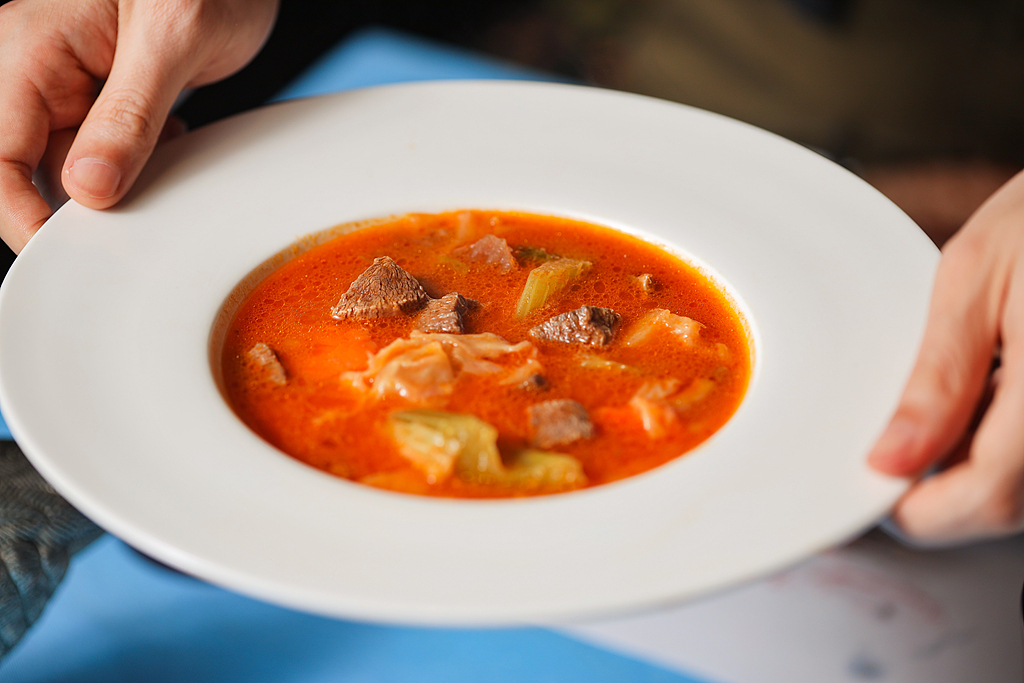
Among the classics, three dishes became especially well-known: Shanghai-style borscht (罗宋汤, luó sòng tāng), deep-fried pork chop, and potato salad. Together, they became representative dishes of Shanghai-style Western food.
What makes it special
The appeal of a deep-fried pork chop lies in its contrast of textures: a crispy coating and tender meat inside.
That texture depends on careful preparation. Fresh pork chops are first tenderized by repeatedly pounding both sides with the back of a knife. This breaks down the muscle fibers and loosens the meat, helping it remain moist during and after frying.
The pork is then marinated with scallion- and ginger-infused water, cooking wine, salt, and light soy sauce. Some home cooks also add egg and starch to create a softer texture.
Breadcrumbs matter too. Fine breadcrumbs produce the classic deep golden crust commonly found in small local eateries. Coarser breadcrumbs create a lighter-colored coating with a drier, crunchier bite, although that version is less common.
Another Shanghai variation skips breadcrumbs entirely: pork chop rice cakes (排骨年糕, pái gǔ nián gāo), a classic combination of fried pork chop and glutinously harmonious rice cakes. The dish drew renewed attention after the 2023 television drama Blossoms Shanghai premiered.
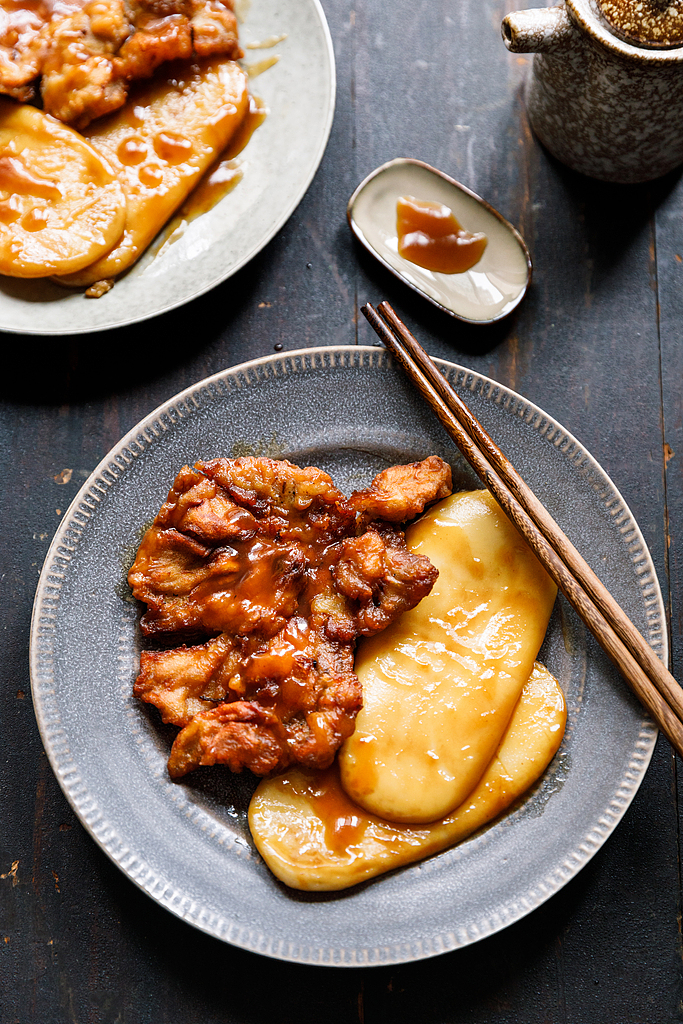
For this version, the pork is coated with a thin batter before frying instead of breadcrumbs. The result is a softer and more delicate version rather than intensely crispy. Paired with sticky rice cakes and sweet sauce, it offers another way to enjoy this Shanghai favorite.
The Shanghai way to enjoy it
Ask a local diner how to enjoy a deep-fried pork chop, and most will say the same thing: do not forget the "spicy soy sauce".
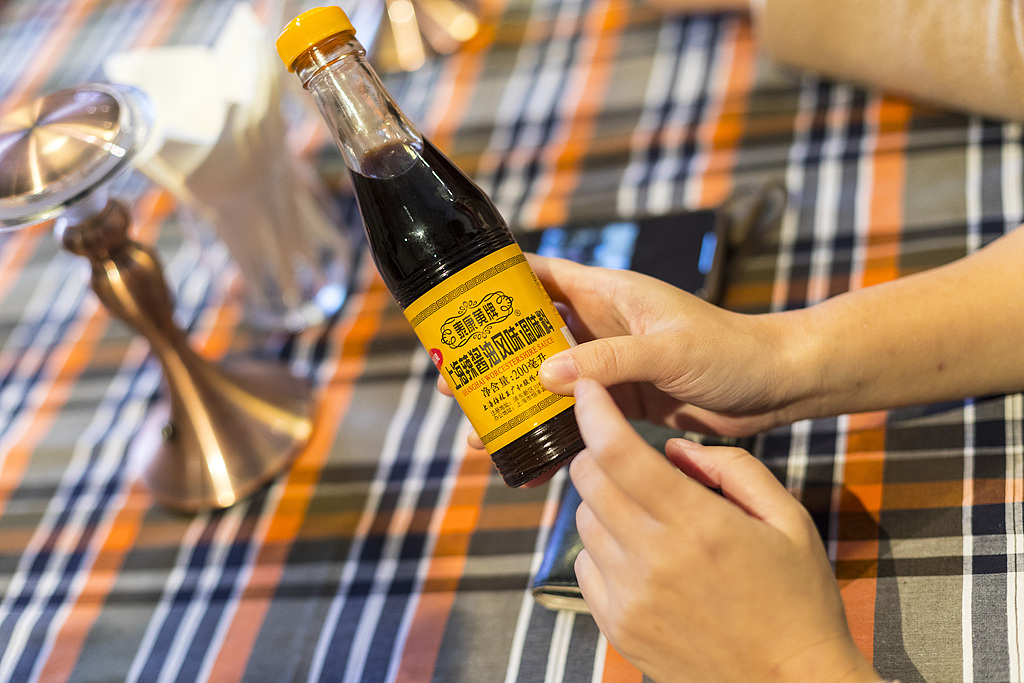
Despite the name, the condiment is not actually soy sauce. It is a local version of Worcestershire sauce, which gradually became part of the city's local food culture. In Shanghai, it developed into its own category of flavor: lightly tangy, mildly sweet, and faintly spicy.
There are two common ways to use it.
Some diners prefer a light dip, keeping the crust crisp while adding just enough acidity to cut through the oiliness.
Others douse it over the entire chop, letting the crust soften and absorb the flavor.
A classic way to enjoy a deep-fried pork chop is to pair it with a bowl of Shanghai-style borscht. The sweet-and-sour tomato-based soup helps balance the richness of the fried pork.
Where to try it
Chun Yuan
春园﹒四如春
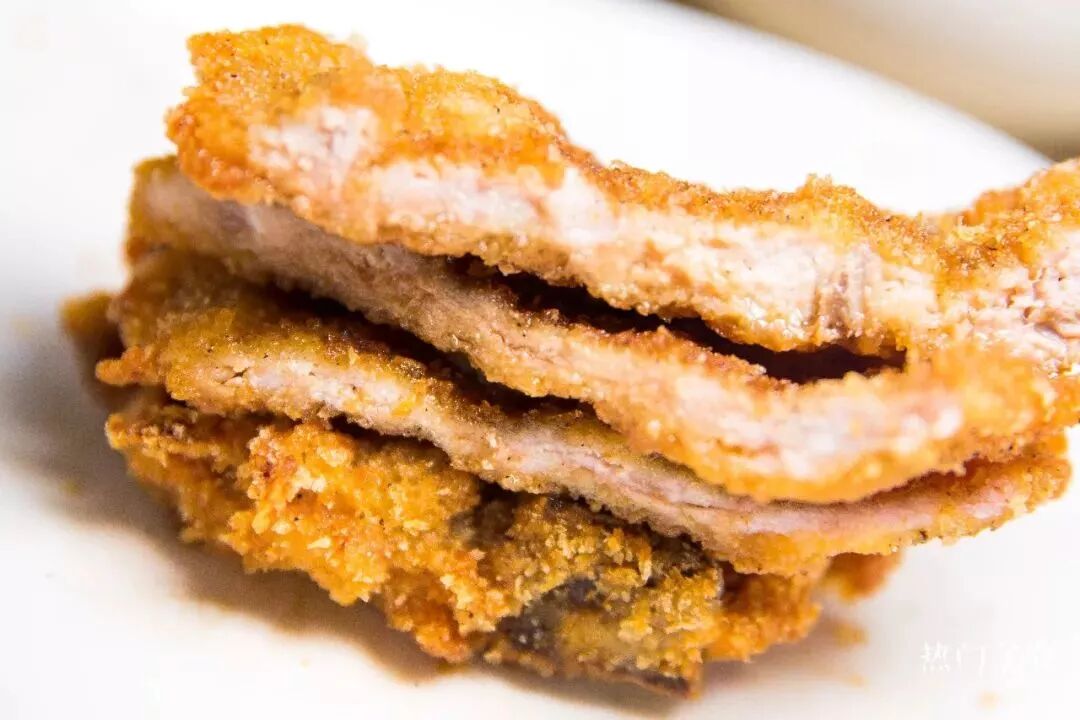
This long-established local restaurant is known for its made-to-order deep-fried pork chop, typically served with Taikang-brand Worcestershire sauce.
- Address: No 183 South Chongqing Road, Huangpu district
- Business hours: 6:30 am to 7 pm
- Price: 16 yuan ($2.35) per serving
Deda Western Restaurant
德大西餐社
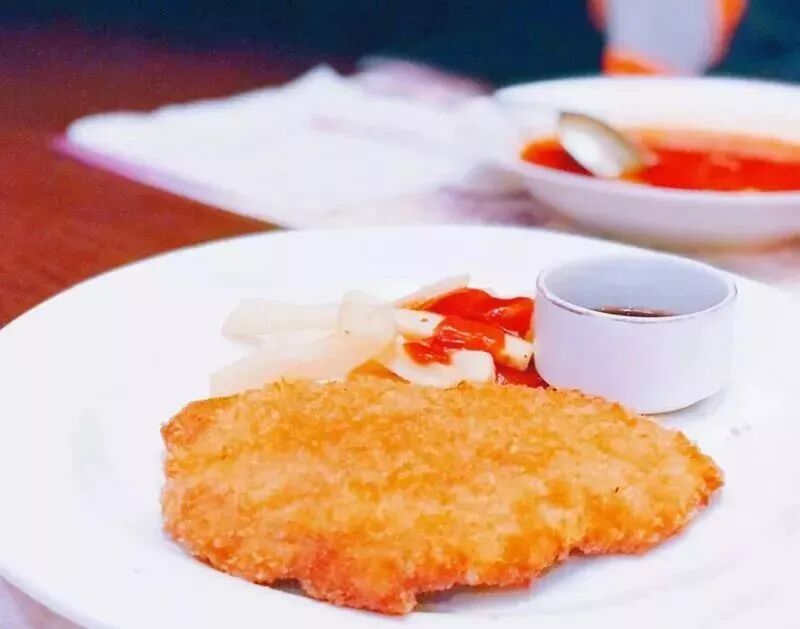
This historical Shanghai-style Western restaurant is known for its deep-fried pork chop and the traditional "three classics" of Shanghai-style Western food.
- Address: No 473 West Nanjing Road, Huangpu district
- Business hours: 11 am to 1:30 pm, 5 pm to 8 pm
- Price: 39 yuan per serving
Hong Ling Restaurant
宏玲餐厅
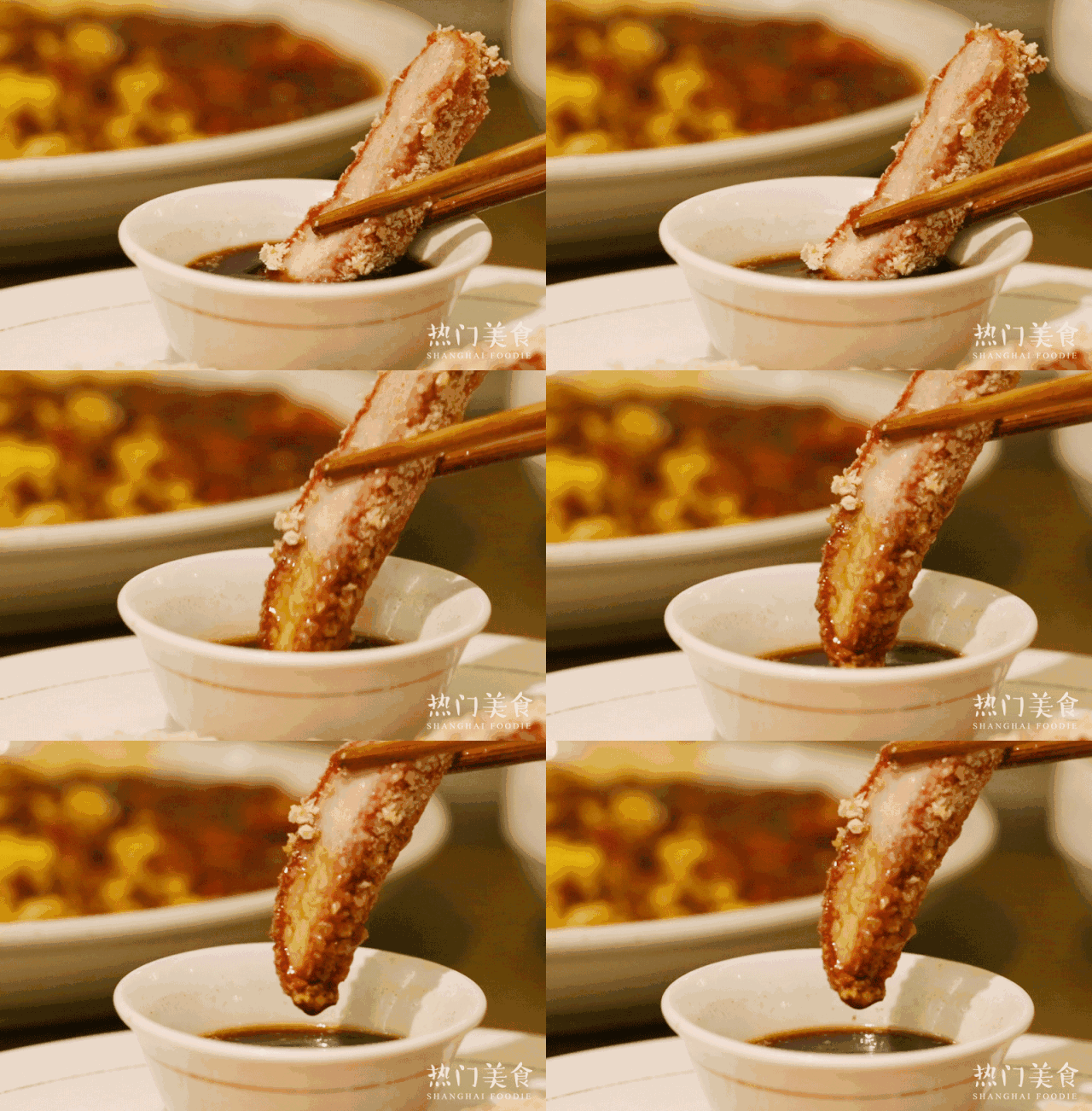
This restaurant adds fermented red bean curd (南乳, nán rǔ) to its pork chop marinade, giving the crust a reddish color and a subtle savory aroma.
- Address: No 29 South Sichuan Road, Huangpu district
- Business hours: 11 am to 2 pm, 5 pm to 9:30 pm
- Price: 68 yuan per serving
Pan Guoxian Erguang Wonton
潘国仙耳光馄饨

The restaurant is renowned for its wontons, while its pork chop is also popular. The pork chop is crispy without being greasy.
- Address: No 109 Huangjiaque Road, Huangpu district
- Business hours: 7 am to 2 am the next day
- Price: 16 yuan per serving
Yangege Linhu
焱格格﹒临湖
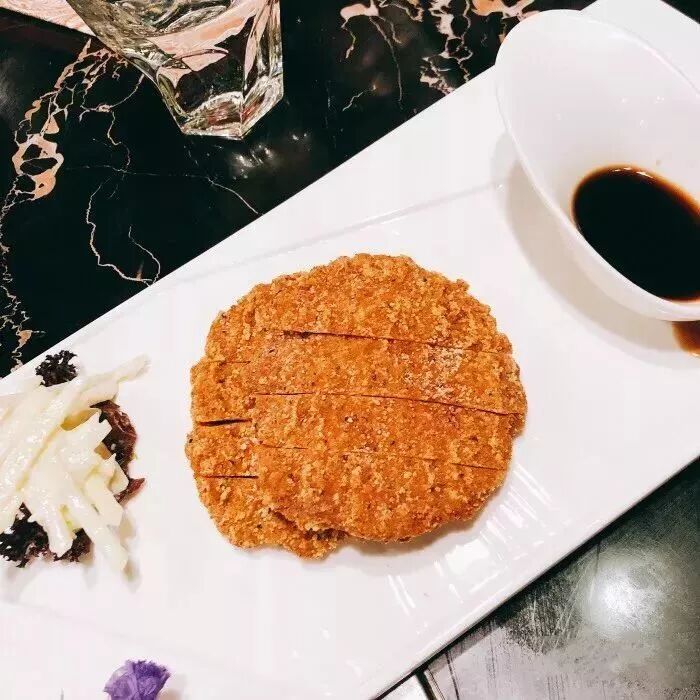
The restaurant offers a vegetarian version made with plant-based ingredients that resemble the texture of pork.
- Address: No 800 Changde Road, Jing'an district
- Business hours: 11 am to 9 pm
- Price: 38 yuan per serving
*Restaurant information is for reference only and may be subject to change. Please check before you go.
How to make it at home
Ingredients
Pork chops, scallions, ginger, one egg, flour, breadcrumbs, starch, cooking wine, light soy sauce, salt, Worcestershire sauce, and cooking oil.
Method
1. Tenderize the pork chops by pounding both sides with the back of a knife. Cut the fatty edges slightly to prevent curling during frying.
2. Marinate the meat with scallion- and ginger-infused water, light soy sauce, salt, and cooking wine. Add one egg and a small amount of starch, then let it rest for a while.
3. Coat the pork in three layers: flour first, then egg wash, then breadcrumbs, pressed firmly onto the surface.
4. Heat the oil until moderately hot. Fry over medium-low heat until one side turns lightly golden, then flip. Once both sides are golden, briefly raise the heat for about 10 seconds to remove any excess oil. Total frying time is about three minutes.
5. Slice into strips and serve immediately with Worcestershire sauce on the side.
Sources: WeChat accounts of Huangpu, Jing'an, Xuhui, and Fengxian district governments