Tradition with a twist: Shanghai's zongzi guide
Dragon Boat Festival, a major traditional Chinese festival, has arrived.
Across Shanghai, time-honored food brands and shops in ancient towns are offering zongzi — glutinous rice dumplings wrapped in leaves. Here is a closer look at the history of zongzi, Shanghai's favorite flavors, and some places to try them around the city.
Origin
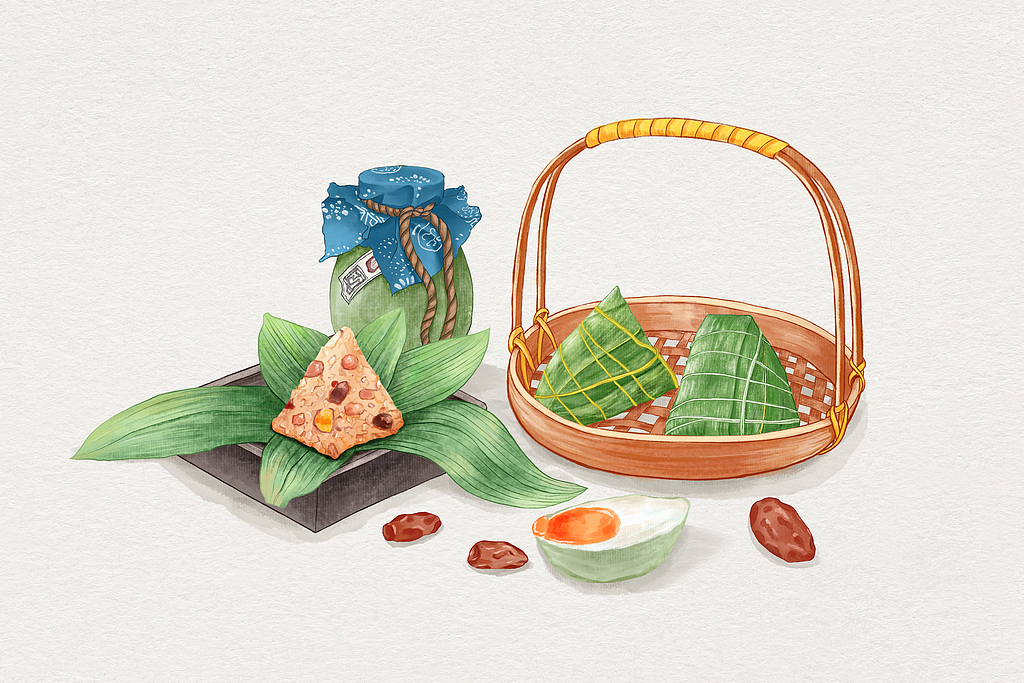
Zongzi were known in ancient China as jiaoshu (角黍, jiǎo shǔ), a name referring to their angular shape and millet fillings.
By the Jin Dynasty (265-420), eating leaf-wrapped millet dumplings around the fifth day of the fifth month of the Chinese calendar and the summer solstice had become an established custom.
Zongzi were believed to be associated with Qu Yuan (c. 340-278 BC), a poet and statesman of the ancient State of Chu. According to Xu Qixie Ji, written by Wu Jun during the Liang Dynasty (502-557), people threw bamboo tubes filled with rice into the Miluo River as offerings after the poet Qu Yuan took his own life there. Over time, this practice evolved into the Dragon Boat Festival custom of eating zongzi.
During the Ming and Qing dynasties (1368-1911), zongzi took on additional meanings of good fortune and success in examinations. Students were said to eat long, brush-shaped zongzi before imperial examinations because bizong (笔粽, bǐ zòng), or "brush-shaped zongzi", sounded similar to bizhong (必中, bì zhòng), meaning "certain to succeed".
How Shanghai likes its zongzi
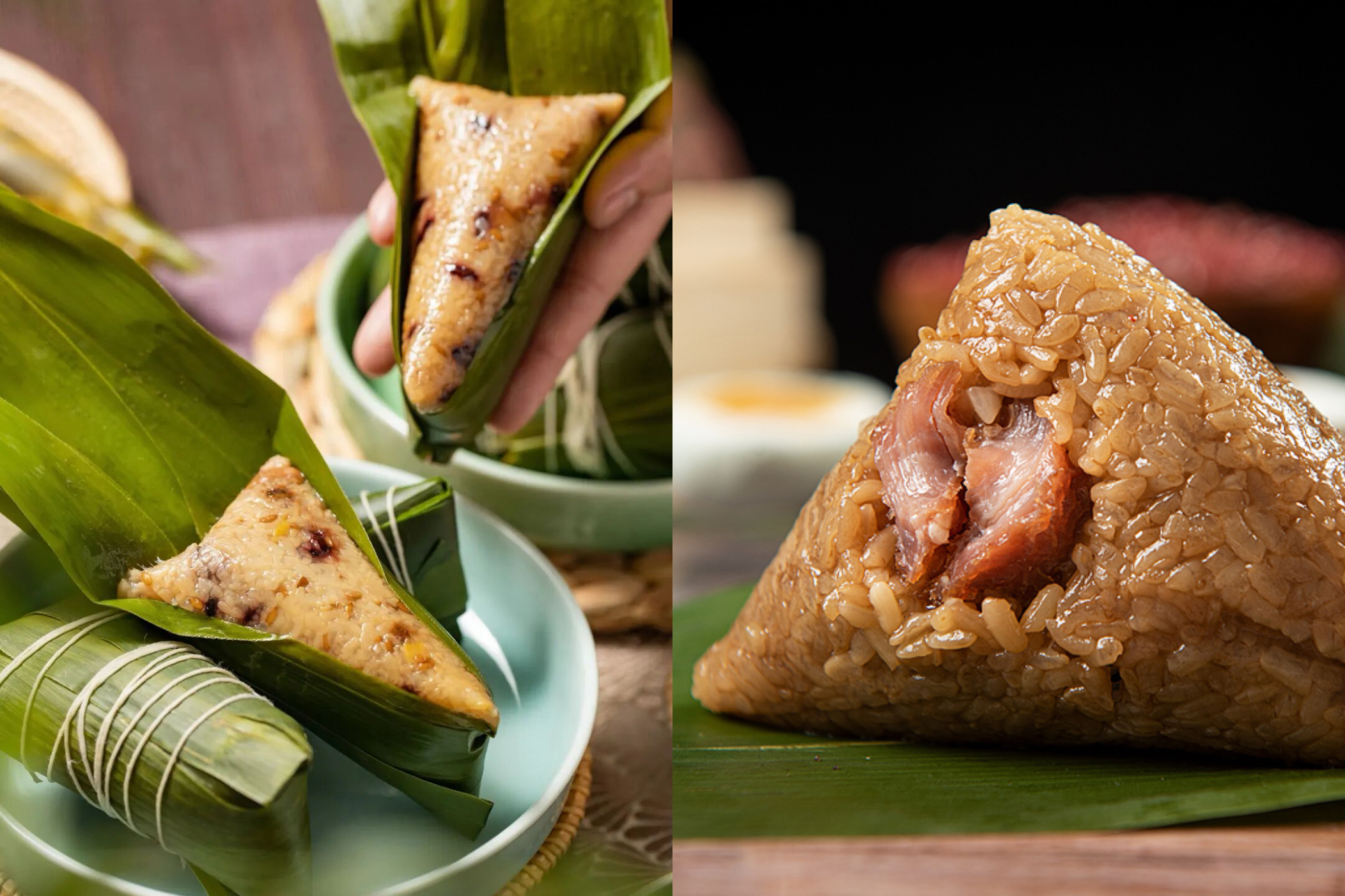
Shanghai's zongzi traditions embrace both savory and sweet flavors.
Among the savory varieties, pork zongzi and pork zongzi with salted egg yolk remain local favorites. Popular sweet versions include red bean and candied jujube zongzi, as well as zongzi with smooth red bean paste.
Time-honored flavors and new creations
Shao Wan Sheng
邵万生
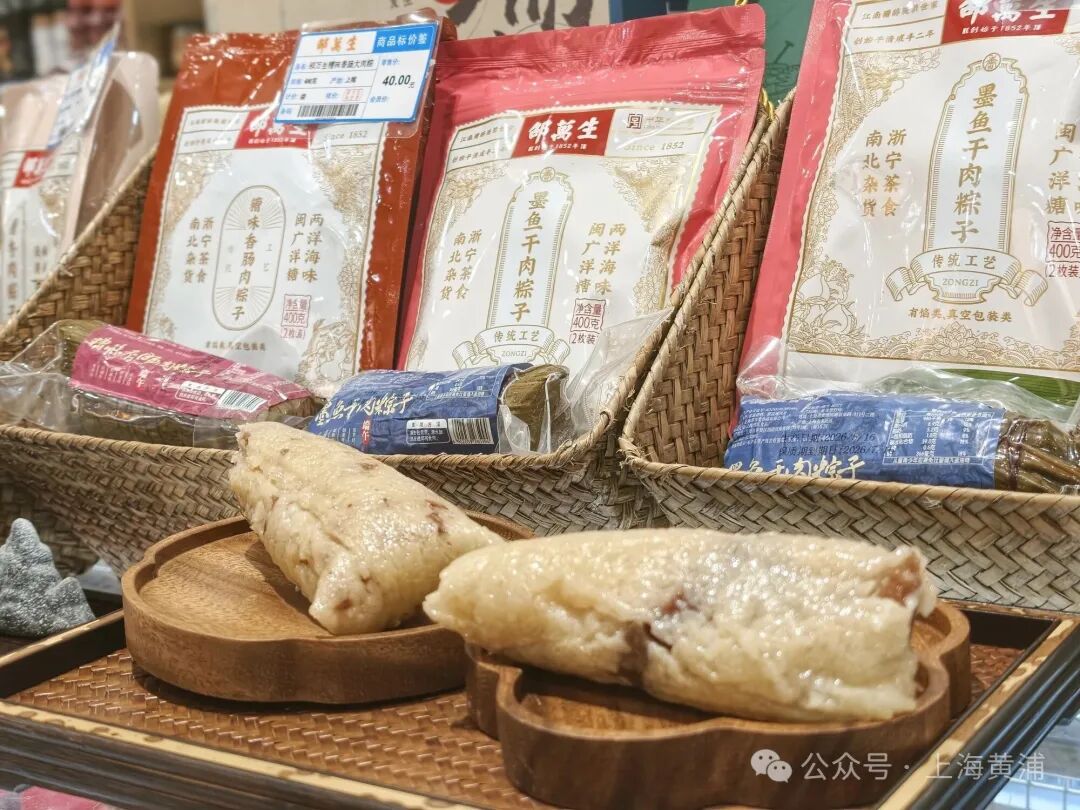
Founded more than 170 years ago, Shao Wan Sheng is known for its fermented rice-wine flavoring method.
For its signature pork zongzi flavored with fermented rice wine, only the pork is marinated in zaolu (糟卤, zāo lǔ), a seasoned brine made with fermented rice wine. This preserves the natural fragrance of the glutinous rice while giving the meat a distinctive savory aroma.
Address: No 414 East Nanjing Road, Huangpu district
Guang Ming Cun
光明邨大酒家
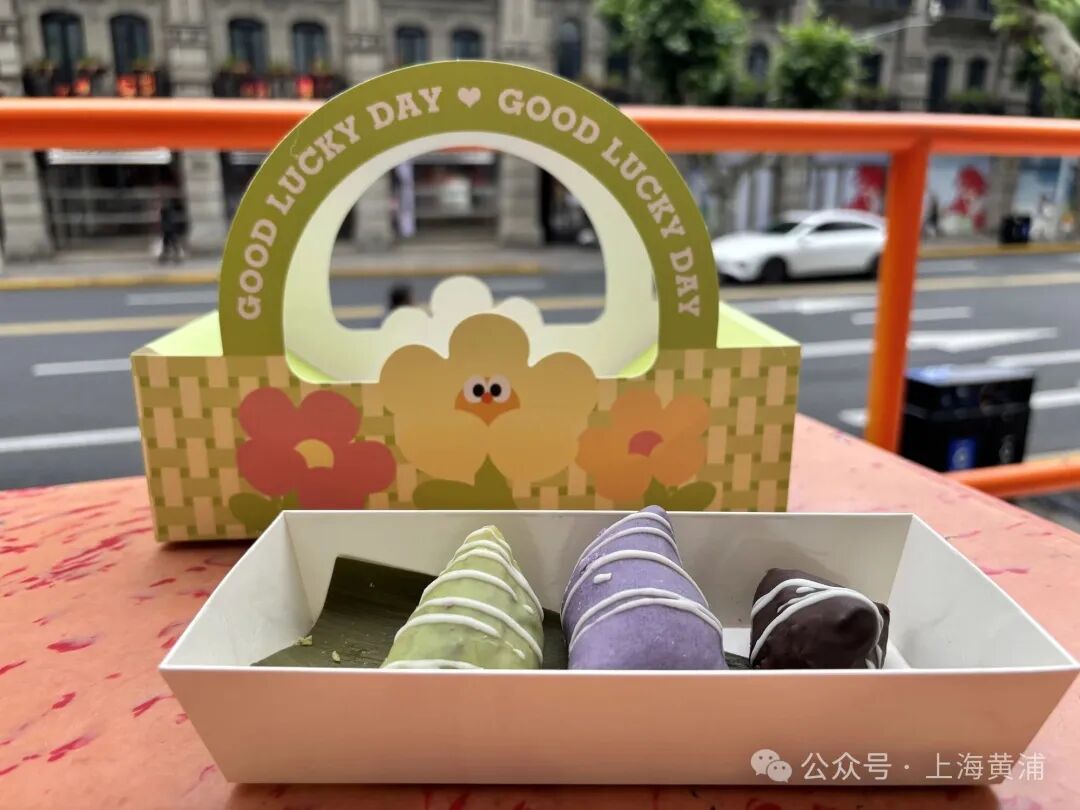
Guang Ming Cun introduced two new mini zongzi selections this year.
The first is a box of three mini chocolate zongzi: purple white chocolate with savory pork and glutinous rice, matcha white chocolate with rose red bean paste, and dark chocolate with dried cranberries.
The second is a box of eight mini pork zongzi with salted egg yolk. Their smaller size offers a lighter way to enjoy a traditional savory zongzi.
Address: No 588 Middle Huaihai Road, Huangpu district
Shen Da Cheng
沈大成
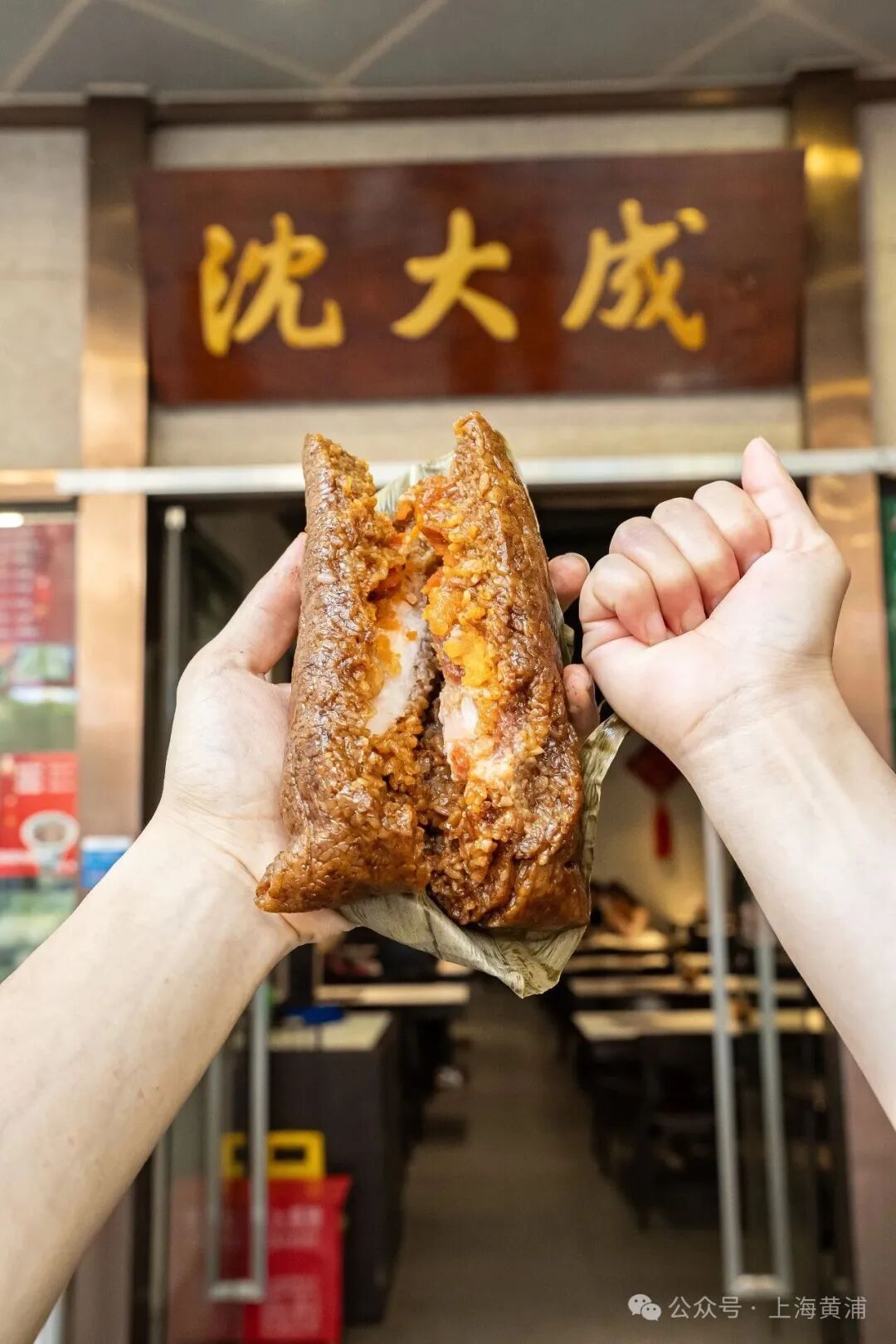
With a history of more than 150 years, Shen Da Cheng is one of Shanghai's best-known pastry and dim sum brands.
This year, the brand has launched a 500-gram giant pork zongzi. Its most distinctive feature is the seven salted egg yolks tucked inside with layers of pork belly and glutinous rice.
Address: No 636 East Nanjing Road, Huangpu district
Sunya Cantonese Restaurant
新雅粤菜馆
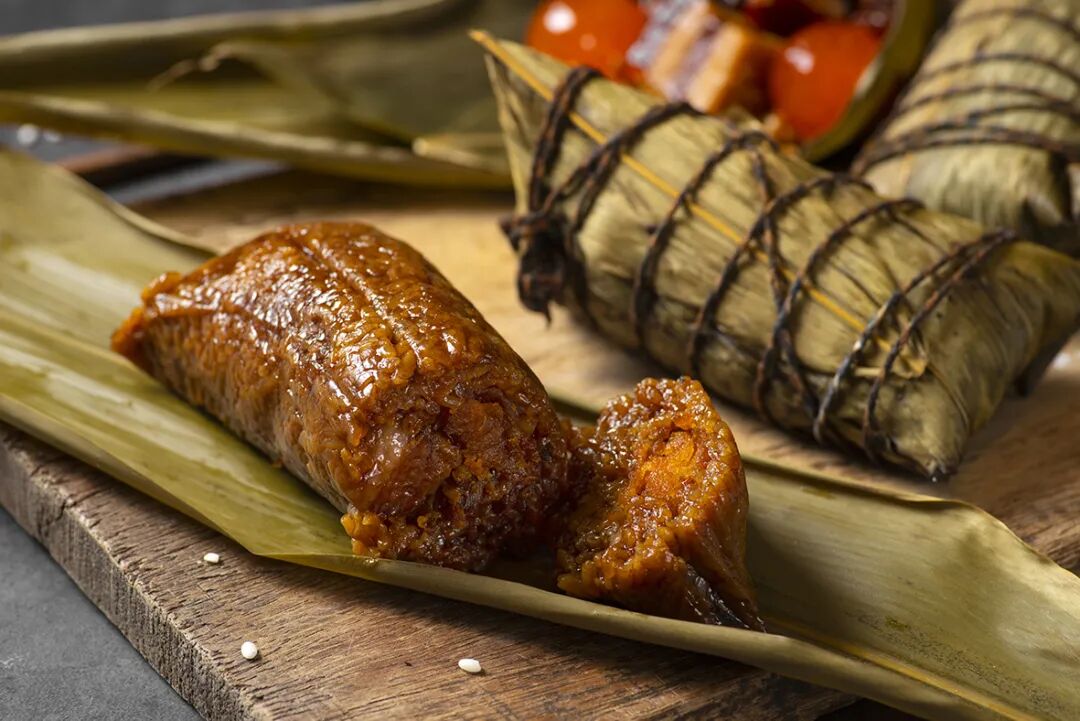
Sunya Cantonese Restaurant continues to offer its popular zongzi filled with Iberian pork belly this year.
Each dumpling contains four pieces of Iberian pork belly, comes in a pillow-like shape, and is larger than a standard zongzi.
Another standout is the restaurant's red bean paste zongzi made with glutinous rice naturally colored with juice from Vaccinium bracteatum (Asiatic bilberry) leaves, giving it a glossy black appearance after cooking.
Address: No 719 East Nanjing Road, Huangpu district
Zongzi in Shanghai's ancient towns
Yinxingshu Apo Zongzi at Zhujiajiao
银杏树阿婆粽
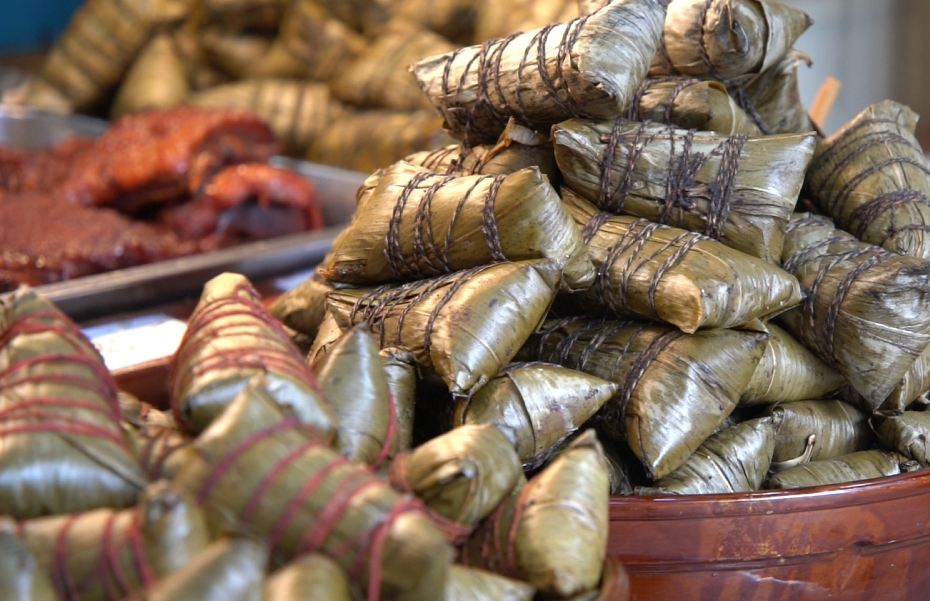
Opened in 1999, this popular shop takes its name from the 400-year-old ginkgo tree standing outside.
Its handmade zongzi are prepared through 16 steps and simmered for around 10 hours. During the busiest days before the festival, the shop's experienced staff can wrap more than 1,000 zongzi a day.
Address: No 262 Beidajie Street, Qingpu district
Guangli Zongzi at Sijing ancient town
广利粽子
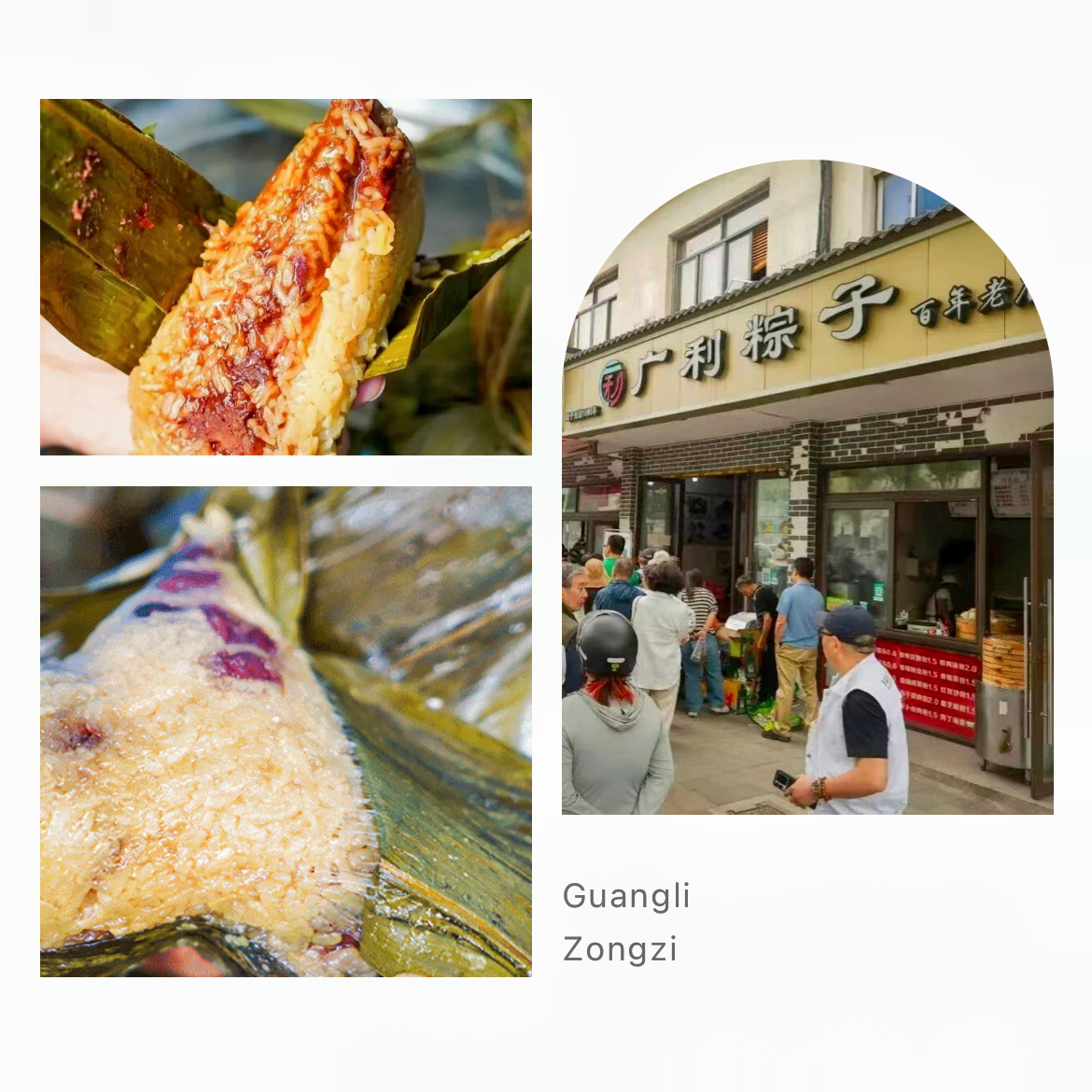
Recognized as a district-level intangible cultural heritage item in Songjiang, Guangli Zongzi uses a traditional master-stock cooking method.
Fresh broth is added to the master stock over time, and the stock is then reused in later batches. Its zongzi are made with early-season bamboo leaves from Fujian province and simmered for around six hours.
Address: No 155 North Jiangchuan Road, Songjiang district
Aunt Kang's Zongzi Shop at Xinchang ancient town
康阿姨的粽子铺
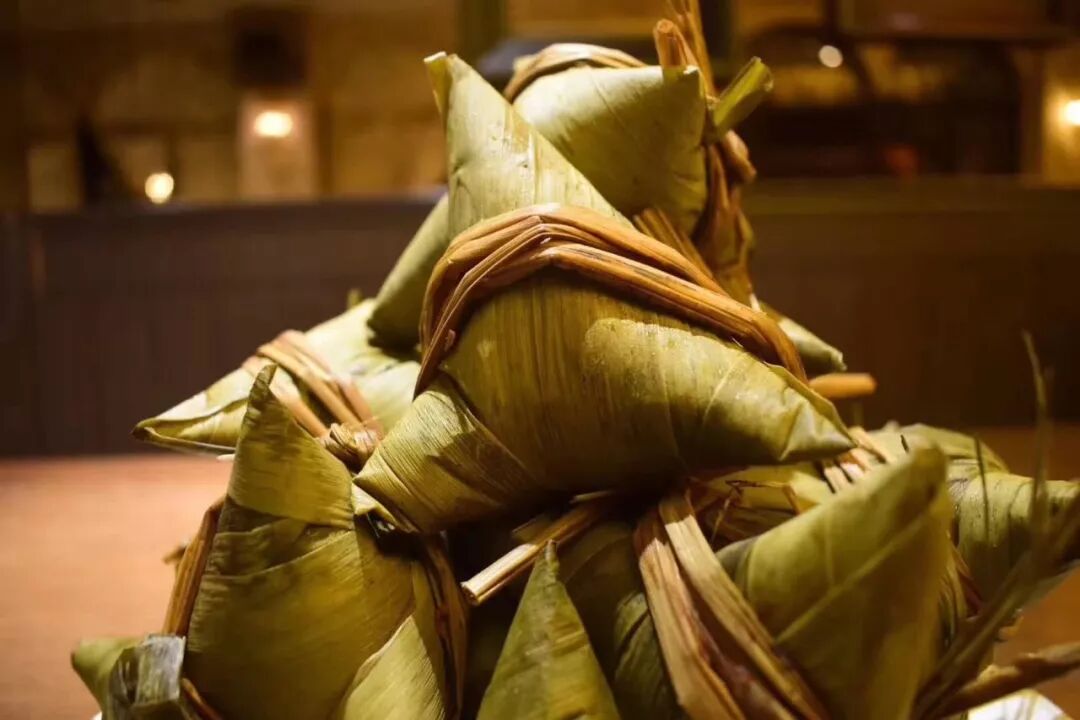
The shop is known for pork zongzi with dried malantou (马兰头, mǎ lán tóu), a wild edible plant commonly used in regional cooking. After long cooking, the herb's fresh aroma helps balance the richness of the meat.
Address: No 1 Alley 6, Hongqiao Xiatang Street, Xinchang ancient town, Pudong New Area
Reheating tips
Steam room-temperature zongzi for 15 to 20 minutes. Frozen zongzi can usually be steamed without thawing for about 30 minutes. Follow the packaging instructions and make sure they are heated through properly before eating.
Note: Product availability and opening arrangements are subject to change. Please check with individual stores before visiting.
Sources: Shanghai Observer and the WeChat accounts of district authorities and relevant food brands