Future Industries
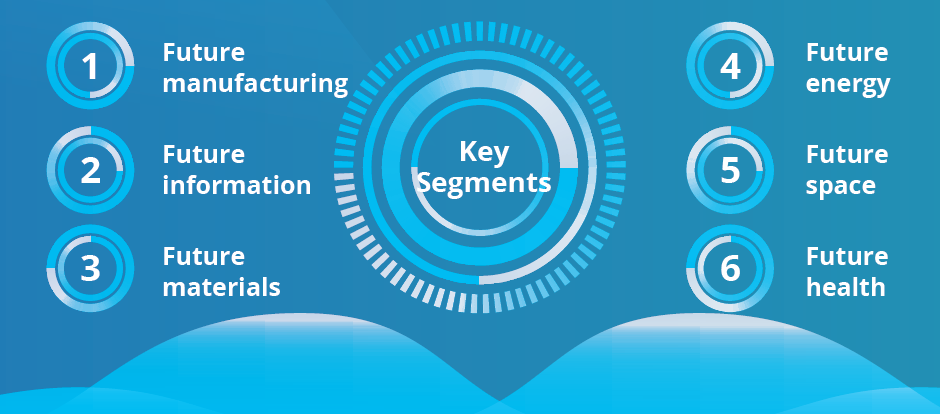
During the 15th Five-Year Plan (2026-30) period, Shanghai will focus on six key segments: future manufacturing, future information, future materials, future energy, future space, and future health. Meanwhile, the city will accelerate the development of emerging sectors, including quantum technology, brain-computer interfaces, controlled nuclear fusion, bio-manufacturing, and sixth-generation mobile communications (6G).
In September 2025, Shanghai issued the Several Measures for Accelerating Frontier Technology Innovation and Future Industries Cultivation to establish the city as a globally influential hub for future industries. The policy outlines six key segments and 15 specific measures, focusing on priority development areas, critical links, enterprise innovation, leading industry clusters, core factors, and a dynamic cultivation framework.
Quantum Technology
Shanghai has established a complete quantum technology innovation chain, spanning basic research to industry application. The city has secured an early-mover advantage in areas such as quantum communication and quantum computing, as it has attracted a dense cluster of innovation entities and research institutions, with several quantum technology enterprises establishing operations in Shanghai.
Global Leadership in Technological Breakthrough
- Launched the world's first quantum science computing platform – UnitaryLab;
- Developed AI-assisted large-scale reconfiguration technology for universal atomic arrays, setting a world record for defect-free neutral atom array scale and being recognized as a major international physics breakthrough in 2025;
- Independently developed a 336W 1064nm single-frequency continuous-wave fiber laser, breaking the world record for power output.
Industry Support
- Shanghai Research Center for Quantum Sciences
- Shanghai Quantum Technology Equipment Industry Innovation Alliance
- Joint Quantum AI Initiative of Shanghai
- Shanghai Quantum City Spacetime Innovation Base
- Shanghai Key Laboratory for Quantum City Spacetime Innovation
- Top ten application scenarios for quantum computing in Shanghai
Brain-Computer Interfaces
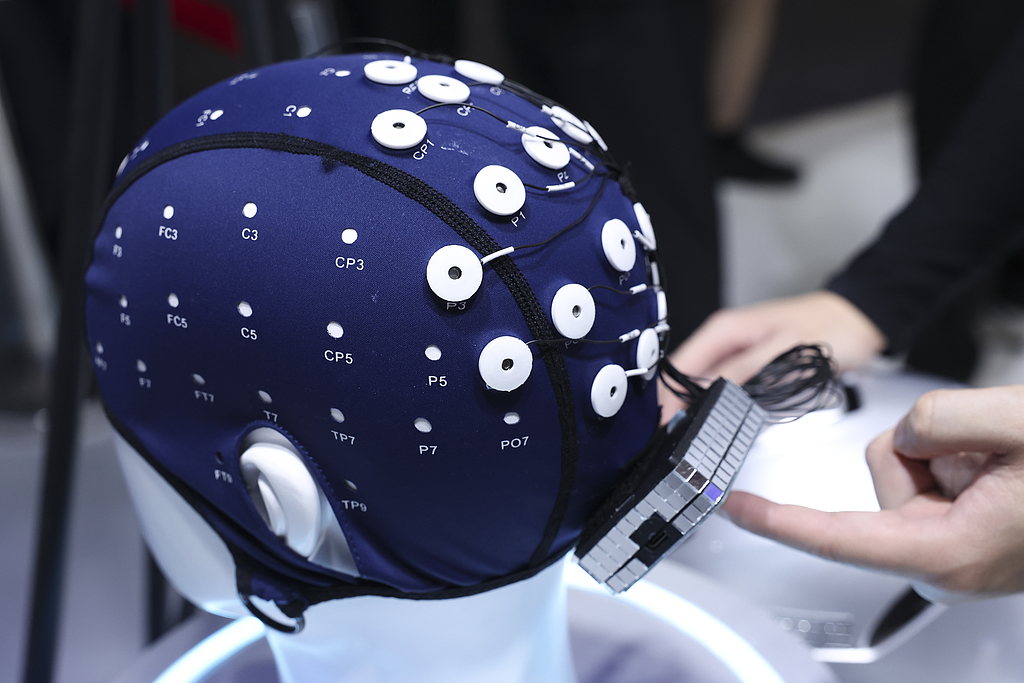
Shanghai has seen a steady stream of breakthroughs and start-ups across invasive, semi-invasive, and non-invasive brain-computer interface (BCI) technologies. The city has established a range of key laboratories and public service platforms, positioning itself as a national innovation hub spanning the full spectrum of BCI technologies.
National Leadership in Innovation
Shanghai is home to China's first future industry cluster for brain-computer interfaces, Neuro Space, which spans the full technology pathway. The cluster has established the country's first BCI clinical trial consortium, BCI proof-of-concept platform, invasive electroencephalography database (iBRAIN), dedicated policy framework for BCI development, and future industry fund.
Support Policies
In January 2025, the city issued the Shanghai Action Plan for Cultivating the Brain-Computer Interface Future Industry (2025-30). The action plan prioritizes medical-grade applications and strategic products, advances the deployment of invasive and semi-invasive BCI technologies and products, and supports the development of non-invasive BCI solutions.
Controlled Nuclear Fusion
In recent years, Shanghai has prioritized fusion energy as a frontier technology and future industry. The city has led breakthroughs in core technologies such as high-temperature superconductors and has begun to develop a relatively complete and technologically diversified nuclear fusion industry chain.
A Relatively Complete Industry Chain with Multiple Technological Pathways
- In the upstream segment, centered on key materials and components, Shanghai is home to core global suppliers of second-generation high-temperature superconducting materials;
- In the midstream equipment and device manufacturing segment, Shanghai supports multiple mainstream technological pathways in magnetic confinement fusion.
Strategic Support
- Promoting breakthroughs in core technologies, with a focus on high-temperature superconducting magnets and other critical technologies;
- Strengthening coordinated collaboration and applying AI to fusion diagnostics and control technologies;
- Supporting the development of innovation consortia and deepening the integration of sci-tech and industry innovation;
- Improving the open innovation ecosystem in the fusion sector and guiding the clustering of innovation resources.
Biomanufacturing
Shanghai has built strong capabilities in biomanufacturing and hosts China's most comprehensive synthetic biology research ecosystem. The ecosystem brings together leading universities and research institutions while fostering a growing base of high-quality biomanufacturing enterprises.
Pioneering Industry Innovation
- Home to China's first operational biomanufacturing demonstration line for natural products;
- Established China's first key laboratory of synthetic biology;
- Formed China's first synthetic biology innovation alliance.
A Continuously Improving Industry Ecosystem
- Established Shanghai's first industry fund dedicated to biomanufacturing;
- Built a full-chain ecosystem integrating enterprises, research institutions, and capital through the Biomanufacturing Value Partner initiative.
Industry Support
- Shanghai Biomanufacturing Industry Innovation Center
- CAS Key Laboratory of Synthetic Biology
- Synthetic Science Innovation Research Center at Shanghai Jiao Tong University
- Shanghai Synthetic Biology Innovation Strategic Alliance
- Synthetic Biology and Biomanufacturing Committee of the China Pharmaceutical Association of Plant Engineering
- Chinese National Human Genome Center – Shanghai (CHGC)
Sixth-generation Mobile Communications (6G)
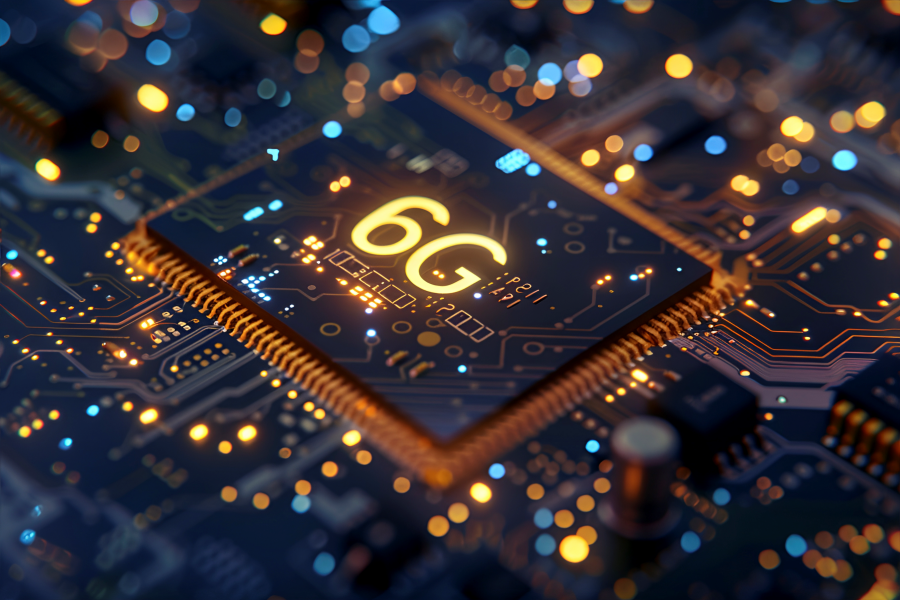
Shanghai has identified sixth-generation mobile communications (6G) as a priority future industry during the 15th Five-Year Plan period. The city is advancing the development of a national comprehensive testing base and working with the Yangtze River Delta region to create an innovation cluster for future networks. By 2030, Shanghai aims to become one of the first cities in China to deploy commercial 6G networks.
Emerging Industry Clusters
6G AI-Valley Future Industry Park serves as the core hub of Shanghai's 6G future industry cluster, providing platforms and facilities for technological R&D, incubation and acceleration, proof-of-concept validation, pilot testing, and industry exchange and showcase activities;
By the end of 2025, more than 30 upstream and downstream enterprises along the communications industry chain had established a presence in the park.
Industry Support
- Shanghai Satellite Internet Testing and Verification Technology Service Platform
- 6G Industrialization Proof-of-concept Laboratory
- 6G Product R&D Testbed
- 6G Testing and Certification Laboratory
- "Liuji Xingtong" Incubator
- Shanghai Songjiang Information and Communications Industry Technology Research Institute
Source: 2026 Shanghai Foreign Investment Guide