2026 DIA China helps China's innovative drugs go global
The 2026 DIA China Annual Meeting was held from May 13 to 16 at the Zhangjiang Science Hall in Shanghai's Pudong New Area.
The event brought together regulators, scientists, entrepreneurs, and investors from the global life sciences sector to explore ways innovative medical products and services can reach patients more quickly.
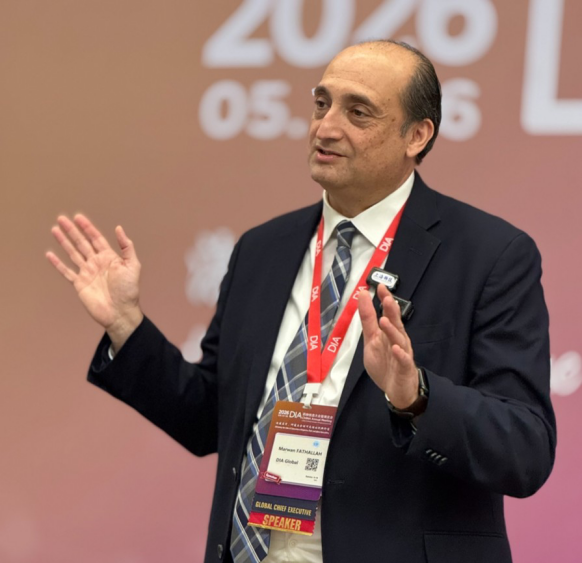
At this year's meeting, Marwan Fathallah, president and chief executive officer of the Drug Information Association, highlighted how China's innovative drugs can gain greater access to global markets.
In the first quarter of 2026, outbound licensing transactions exceeded $60 billion, nearly half of 2025's total, reflecting growing recognition by overseas pharmaceutical companies of China’s innovative molecular pipeline.
The report notes that, supported by favorable policies, faster regulatory processes, and technological advances, China's biopharmaceutical sector is evolving from a market long dominated by generic drugs into a global hub for innovation.
Fathallah emphasized, however, that data on efficacy, quality, and safety alone are not enough to ensure overseas success. Equally important, he said, are trust and relationships, including long-term communication and mutual confidence with drug regulators across jurisdictions.
As a neutral platform, DIA invited 12 of the world's leading drug regulatory agencies, including the US Food and Drug Administration, the UK's Medicines and Healthcare products Regulatory Agency, and the Brazilian Health Regulatory Agency, to Shanghai for face-to-face dialogue with Chinese innovators.
Reflecting on his frequent visits to Shanghai, Fathallah said he could not recall the exact number but enjoyed each one. He described Shanghai as a highly ambitious city where many elements of success converge, explaining why DIA has designated it as its core hub in China. The goal, he said, is to project the city’s remarkable energy to the world. Fathallah urged the new generation of researchers to remain open, both by traveling abroad to experience different cultures and by welcoming more of the world into China.
According to KPMG's 2026 China Life Sciences Sector Overview and Outlook, China's outbound licensing deals have shifted from a "China for China" model to a "China for global" model since 2021.
In the first quarter of this year, the value of outbound licensing transactions exceeded $60 billion, nearly half the total for 2025, indicating a significant increase in overseas pharmaceutical companies' recognition of China's innovative molecular pipeline.
The report adds that, supported by favorable policies, faster regulatory processes, and technological advances, China's biopharmaceutical sector is evolving from a market dominated by generic drugs into a global hub for innovation.
Fathallah stressed, however, that data on efficacy, quality, and safety alone are not enough to secure overseas success. The other half of success, he said, lies in trust and relationships, including long-term communication and mutual trust with drug regulators in different jurisdictions.
Serving as a neutral platform, DIA invited 12 of the world's leading drug regulatory agencies, including the US Food and Drug Administration, the UK's Medicines and Healthcare products Regulatory Agency, and the Brazilian Health Regulatory Agency, to Shanghai for face-to-face dialogue with Chinese innovators.
Fathallah said the new generation of researchers should remain open, both by going abroad to experience different cultures and by allowing more of the world to enter China.
Founded in 1964 and headquartered in Washington, DC, DIA is a nonprofit organization dedicated to advancing global health through knowledge exchange. Its annual China meeting has grown into a leading platform for professional dialogue on pharmaceutical R&D.
In May 2024, DIA opened its Shanghai office to strengthen international collaboration and exchange in the life sciences sector and support the global development of Shanghai's biopharma industry.
Source: Shanghai Observer