Birdwatching gets closer as Shanghai records 543 wild bird species
Shanghai has recorded 543 wild bird species, up from 475 in 2016, according to the Shanghai Wild Bird Society.
The figure represents 35.2 percent of China's recorded bird species and places Shanghai among the top megacities in the world for urban bird diversity.
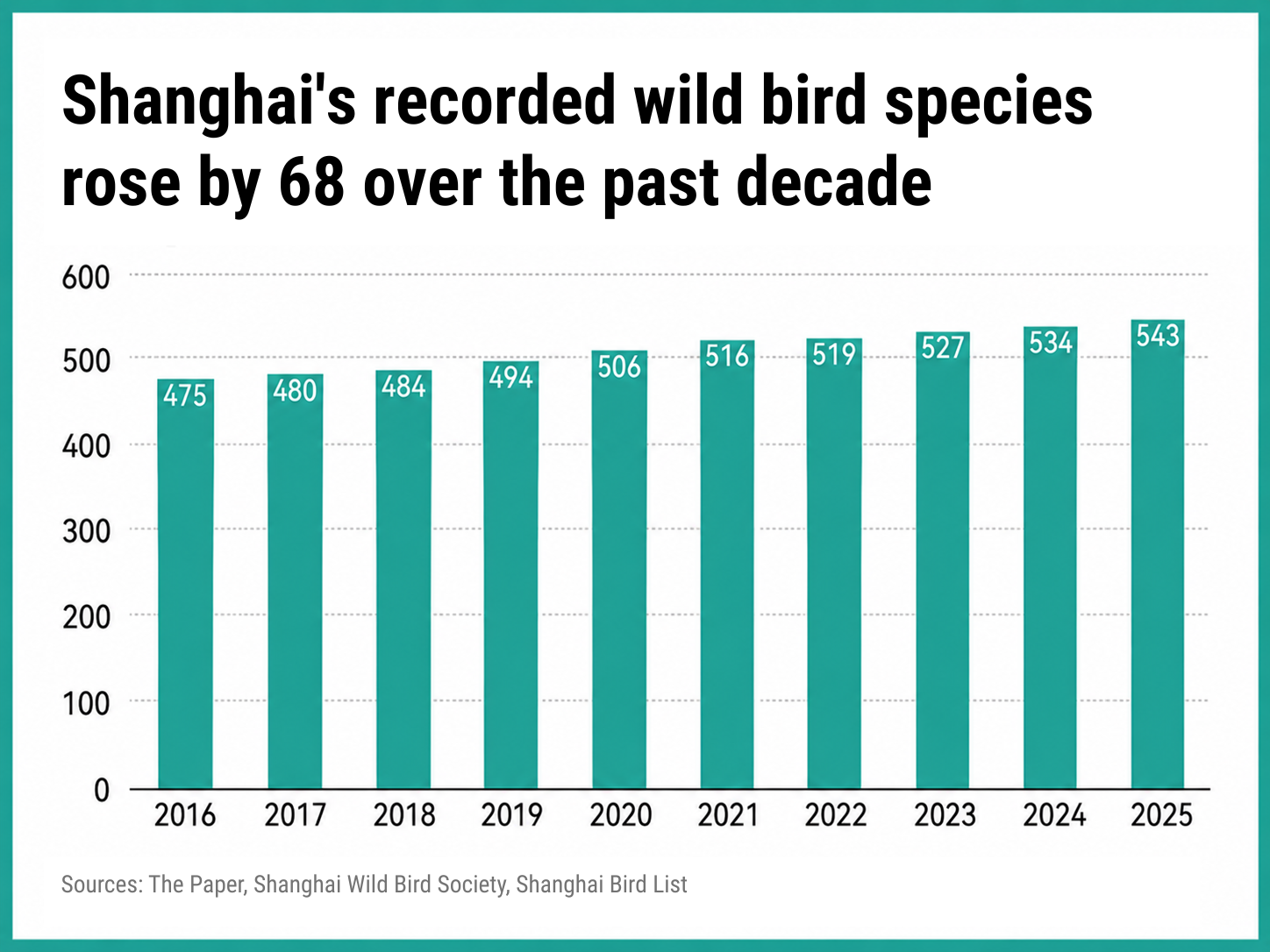
Shanghai's rich birdlife is closely tied to its geographical location. Sitting at the estuary of the Yangtze River, the city lies along the East Asian-Australasian Flyway, one of the world's most important migratory bird routes.
Its wetlands cover about 439,800 hectares, including coastal wetlands, rivers, lakes, and marshes. Together with the city's parks and green spaces, these habitats provide important places for migratory birds to rest and feed, while also supporting a wide variety of resident urban species.
Geography, however, is only part of the story. Shanghai's expanding park system has also created a growing number of urban habitats for wildlife.
As of August 2025, Shanghai had 1,013 parks, including 522 urban parks, 371 pocket parks, 119 recreational forest parks, and one theme park. Many of these green spaces have evolved into thriving habitats for birdlife.
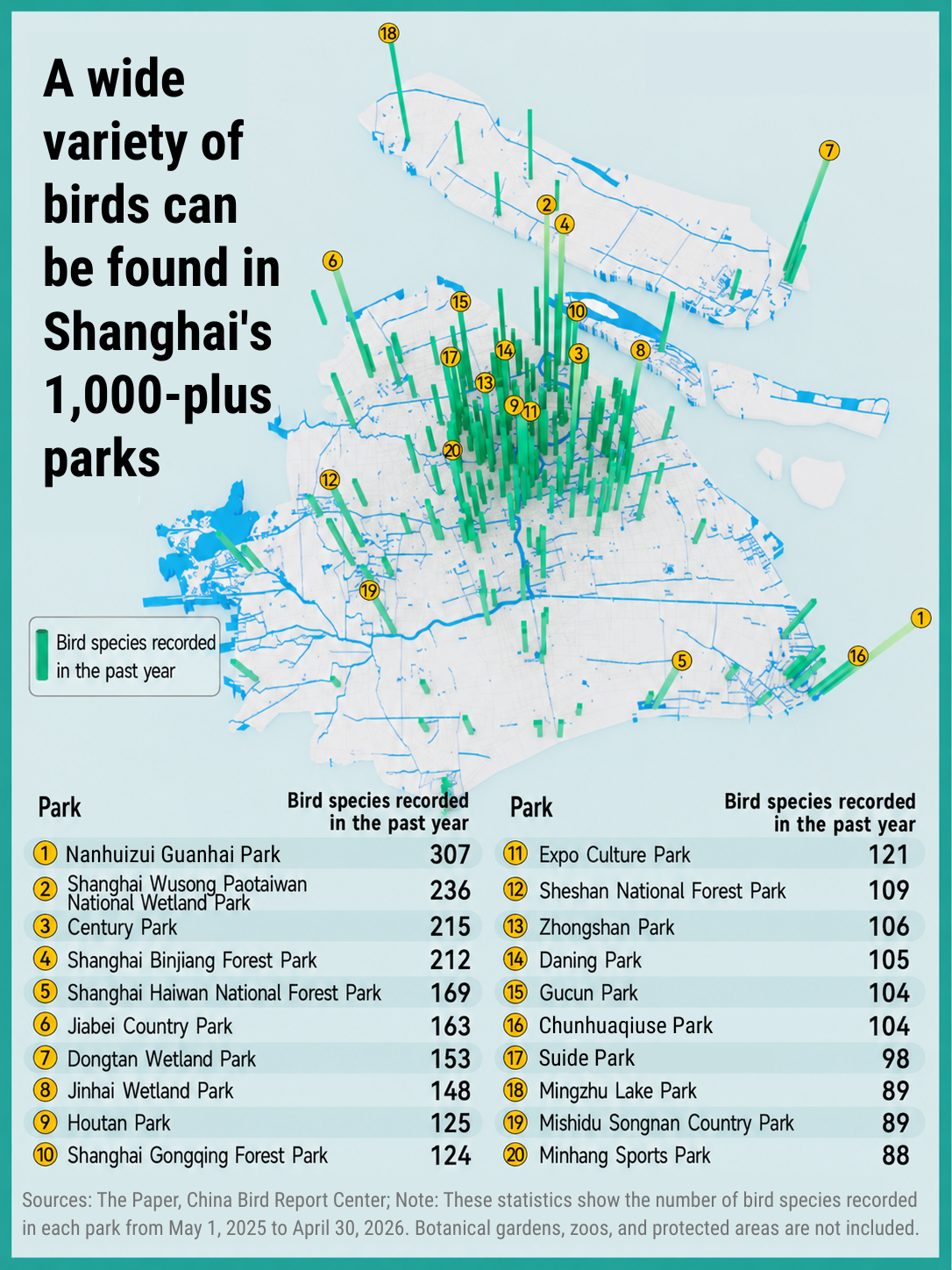
Birdwatching in Shanghai is not limited to vast wetlands or suburban forests. According to data from the China Bird Report Center, nearly 250,000 of the 594,000 birds recorded in Shanghai between May 2025 and April 2026 were spotted in parks across the city.
The figures show that birdwatching has become increasingly woven into daily urban life. Birds can often be seen in residential compounds, school campuses, and especially in parks near people's homes. Century Park, the largest urban park in central Shanghai, recorded 215 bird species during the period.
Among the most commonly seen in the city are the Eurasian tree sparrow, spotted dove, Chinese blackbird, and light-vented bulbul, all familiar sights for local birdwatchers.
More unexpected species have appeared in downtown areas as well. At Daning Park in Jing'an district, the crested goshawk, a bird of prey, has returned for several consecutive years to nest and breed during the spring season. In Zhongshan Park, visitors may encounter spot red-whiskered bulbuls, while tiny goldcrests have also been recorded in Century Park.
Shanghai continues to expand and connect its ecological spaces, integrating parks, forest corridors, waterways, and green areas more closely into the urban landscape. For residents and visitors, birdwatching no longer requires a journey far from the city — sometimes, it begins in a park just around the corner.
Source: The Paper