Zuibaichi Park
Zuibaichi Park in Shanghai's Songjiang district is named after the renowned Tang Dynasty (618-907) poet Bai Juyi.
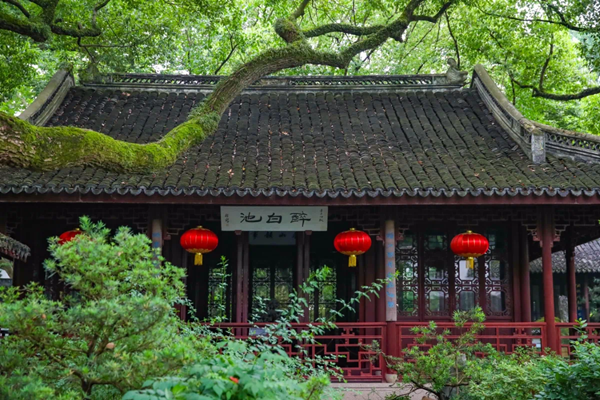
A view of Zuibaichi Park in Shanghai's Songjiang district. [Photo/WeChat account: sh_songjiang]
The park was initially established as a private garden by Zhu Zhichun during the Song Dynasty (960-1279). Zhu was an imperial scholar who passed the jinshi - the highest and final degree in the imperial examinations in ancient China.
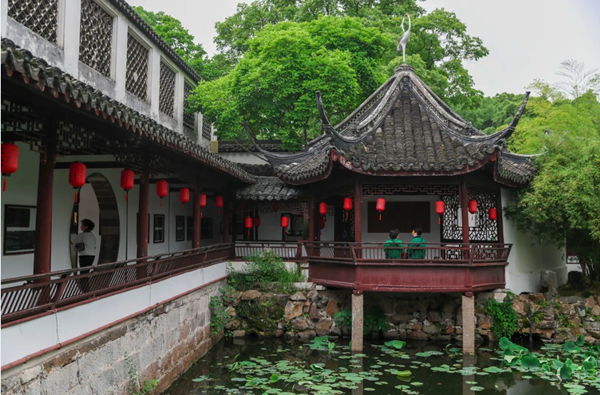
A pavilion in Zuibaichi Park in Shanghai's Songjiang district. [Photo/WeChat account: sh_songjiang]
The park was later transformed by Gu Dashen, a notable painter and official during the Qing Dynasty (1644-1911). Gu admired Bai so much that he renamed the park after Zuibaichi, which literally translates as "Drunken Bai Pond". This play on words reveals that he felt "drunk" from the beauty of Bai's poetic verses.
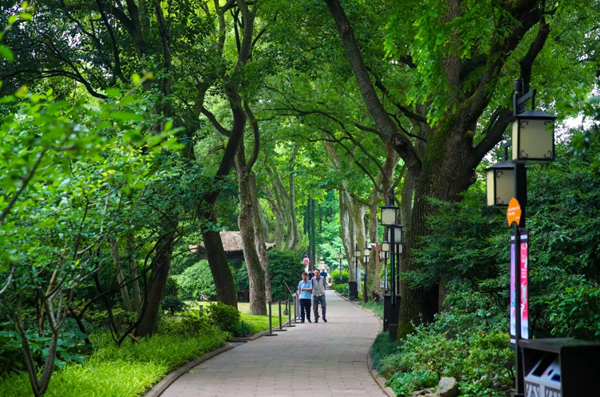
People enjoy taking strolls in Zuibaichi Park in Shanghai's Songjiang district. [Photo/WeChat account: sh_songjiang]
Covering an expanse of 5 hectares, Zuibaichi Park is revered as one of Shanghai's five classical gardens. The park's landscape architecture embodies classical elements and features halls, pavilions, verandas, and rockeries that seamlessly blend with their serene surroundings.
Visitors are guided through long corridors that provide picturesque views and sheltered spots. Throughout the park, visitors can explore a variety of seasonal flowers, such as peonies in spring, lotus flowers in summer, chrysanthemums in autumn, and plum blossoms in winter.
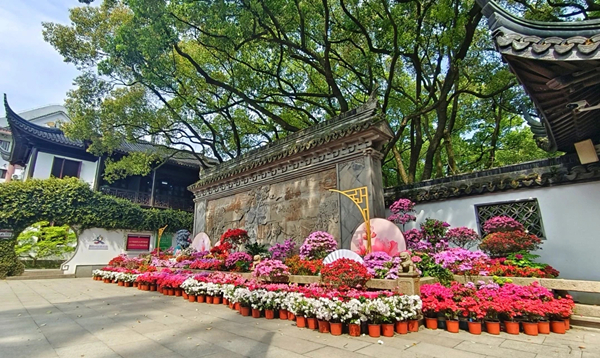
Flowers bloom throughout the year in Zuibaichi Park, located in Shanghai's Songjiang district. [Photo/WeChat account: zuibaichi-park]
Address: No 64 South Renmin Road, Songjiang district
(Updated on Oct 22, 2025)
Sources: "sh_songjiang" "rwsj-sh" "zuibaichi-park" WeChat accounts
Editor's Pick
FAQs
- What if my passport expires but my Chinese visa is still valid?
- Can pets and owners depart from different countries while complying with customs regulations?
- Can a minor travel to China and stay in a hotel without a parent's presence?
- Who is eligible for the 240-hour visa-free transit policy in China?