International Science and Technology Innovation Center
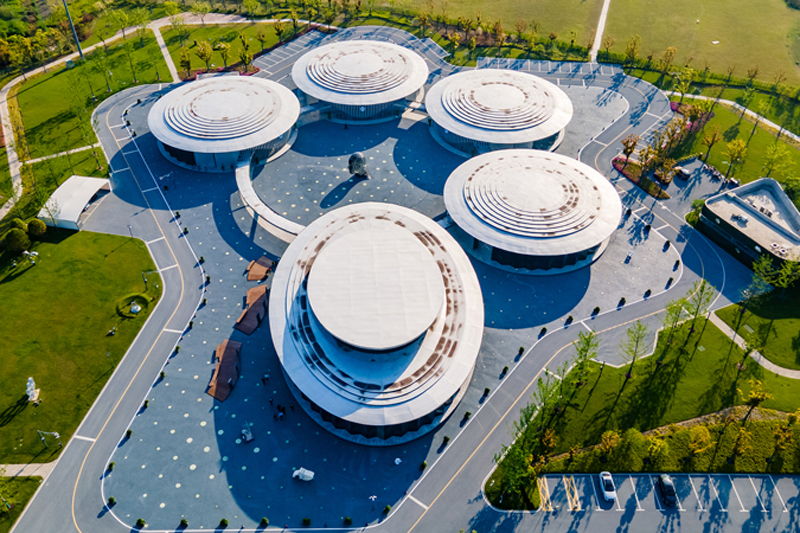
In recent years, Shanghai has consistently implemented national strategies to strengthen its advanced scientific and technological capabilities. The city has concentrated on cultivating talent, enhancing basic research, accelerating technological breakthroughs, and fostering international collaboration. These efforts have significantly elevated Shanghai's overall scientific and technological strength and improved the efficiency of its innovation system.
Comprehensive strength of science and technology
In 2025, Shanghai allocated approximately 4.5 percent of its GDP to research and development. Of that R&D expenditure, about 12 percent went to basic research, a crucial foundation for scientific progress.
Shanghai's scientists have made significant contributions, publishing 180 papers in prestigious journals such as Science, Nature and Cell in 2025, accounting for 30.6 percent of the national total.
The city boasted over 25,000 high-tech enterprises. Technology contracts reached a total value of 649.68 billion yuan ($93.77 billion), representing a 24.9 percent growth compared with the previous year.
In the Global Innovation Index 2025 by the World Intellectual Property Organization, the Shanghai-Suzhou Cluster ranked sixth among the world's "Best Technology Clusters", with its position continuing to ascend.
Shanghai took the lead in developing AI foundation models, achieving a series of groundbreaking innovations.
New research and development institutions, such as the Shanghai Wusong Materials Laboratory, have been established. The construction of the high-efficiency and low-carbon gas turbine test facility has been completed. The innovation ecosystem in Zhangjiang High-Tech Park and Grand Neobay has been optimized.
Flourishing high-level scientific and technological innovation
Shanghai vigorously reorganized its key State laboratories. High-level scientific and technological innovation platforms, along with new R&D institutions, are rapidly emerging. The National Innovation Center par Excellence collaborates with leading enterprises, establishing joint innovation centers to support innovation consortia.
Key institutions like the Tsung-Dao Lee Institute, Shanghai Qi Zhi Institute, and the Shanghai Research Center for Brain Science and Brain-Inspired Intelligence have achieved remarkable milestones.
Shanghai added more than 320 new sci-tech companies daily in 2025. Emphasis was placed on nurturing both "unicorn" enterprises and "invisible champions". Leading companies collaborated with universities, institutions, and upstream/downstream partners.
Shanghai plans to allocate research and development funding equivalent to around 4.6 percent of its total GDP in 2026, up from 3.41 percent in 2014 when the city first set the goal of becoming an international center for science and technology innovation.
The city has launched a global science and technology partnership program. A new batch of labs involving collaborations between local scientists and those from countries and regions involved in Belt and Road Initiative will be established.
Flagship events and global recognition
The impact of Shanghai's science and technology innovation events is steadily growing.
Flagship events:
- Pujiang Innovation Forum
- Shanghai Science Festival
- Shanghai Science Communication Conference
- "Startup in Shanghai" International Innovation and Entrepreneurship Competition
- Pujiang Innovation Forum of Advances of Basic Science
- PCST 2027 (May 24-27, 2027)
Shanghai boasts over 300 municipal science popularization venues. These spaces promote scientific literacy and engagement.
The scientific literacy of Shanghai's residents is among the highest in China and reaches a world-leading level.
Updated in February 2026
Sources: The Paper, People's Daily Online, Shanghai Municipal Commission of Science and Technology, 2025 Shanghai Basic Facts