Shanghai's AI large-model incubator thrives with new approaches
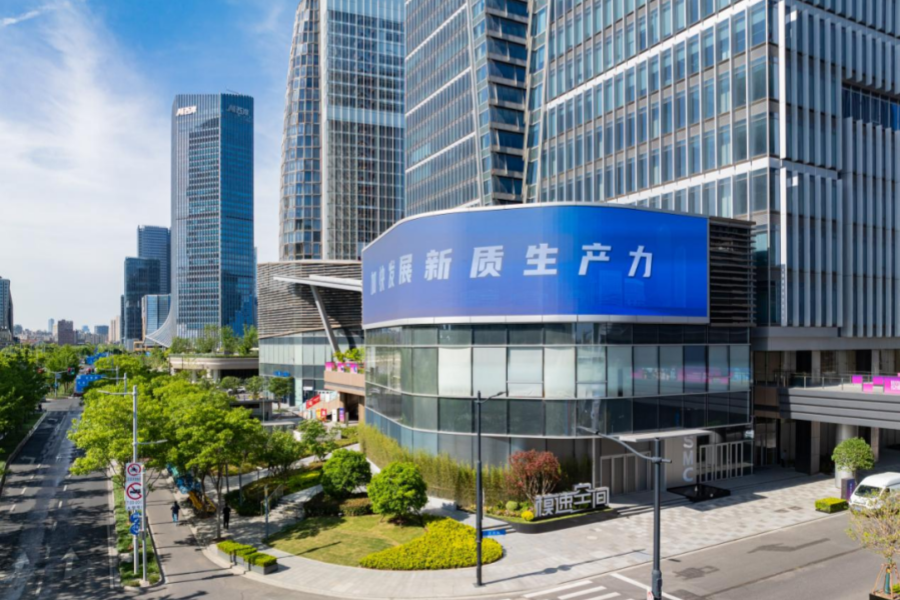
A groundbreaking initiative is believed to be reshaping the landscape of innovation and community living in the bustling heart of the West Bund Media Port in Shanghai's Xuhui district.
The Shanghai Foundation Model Innovation Center is deemed to stand out as one of China's first dedicated incubators and accelerators for large-scale artificial intelligence models.
The SMC is regarded as being a dynamic hub, fostering collaboration and creativity among over 300 enterprises and investment institutions.
Revolutionizing urban development through mixed land use
The Xuhui district bureau of planning and natural resources has revealed a strategic shift in its urban development paradigms.
By allocating nine commercial and office land parcels around the southern extension of the Huangpu River from 2013 to 2016, Xuhui attracted industry giants and projects — among them, internet behemoth Tencent, established its East China headquarters there.
The approach not only accelerates industrial aggregation there, but also optimizes land utilization — providing a solid foundation for emerging industrial ecosystems such as the SMC.
The first phase of the SMC was opened in September 2023 and it's currently home to more than 100 enterprises, with plans to expand to a total of 100,000 square meters of industrial space for more businesses from initial 10,000 square meters.
Embracing the concept of "industrial-city integration", Xuhui's innovative approach is deemed to break away from traditional zoning restrictions by blending residential, commercial, office, cultural and leisure functions within the same area.
The model not only aims to maximize land use efficiency but also to enhance spatial vitality, social interaction and the overall quality of urban life.
Similar strategies are evident in the development of the West Bund digital and intelligent center, where mixed land use development principles are driving integrated commercial and office spaces.
The Pujiang Laboratory, which is set to house top AI teams there, is said to exemplify the success of this approach in fostering innovation and collaboration.
Expediting project construction with specialized services
Xuhui's riverside AI industry zone has adopted an innovative approach that integrates underground spaces, above-ground plans and green building criteria.
The goal of the method is to enhance collaborative development efficiency, ensuring the efficient division of underground rights and unified above-ground designs.
It aims to enable all the buildings there to comply with national two-star green building standards — with some 10 percent to meet three-star benchmarks — to create a low-carbon business district.
The Xuhui district bureau of planning and natural resources has formed a special team, offering services like fast-track acceptance and integrated approvals, to expedite construction processes for the SMC.
To cater to the practical spatial needs of AI large-model enterprises, the bureau has allowed adjustments in building usage formats internally — on the basis of related policies — so that enterprises can swiftly establish operations at the SMC.
Streamlining approvals processes for infrastructure building
A key advantage of Xuhui's mixed land use model is viewed as being its ability to expedite infrastructure development.
By coordinating the planning and construction of municipal roads and other essential infrastructure, the district aims to create a well-connected transportation network — enhancing the overall appeal and competitiveness of the SMC.
Furthermore, flexible policy tools are utilized to accelerate licensing procedures, ensuring efficient project approvals.
In projects like the South Tianyaoqiao Road project, the Xuhui district bureau of planning and natural resources has implemented mechanisms such as the notification-commitment system to advance design plans swiftly.
Additionally, innovative approaches like the notification-commitment system for pipeline construction projects have streamlined approvals processes, allowing efficient project implementation.
All in all, by fostering a conducive environment for growth and innovation, Xuhui is poised to strengthen its position as a hub for AI industry clusters.
Source: Jiefang Daily