Shanghai nights: Where silence outbeats sound
Can deaf people go clubbing? The answer is yes.
In early July, along the banks of Shanghai's Huangpu River, sound was no longer the only ticket to the party at the first Connect + Festival of Inclusive Culture.
As dazzling lights flashed and music flowed from the fingertips of deaf DJ Troi "DJ Chinaman" Lee, and deaf rapper MC Geezer "rapped" his lyrics through his hands, a bridge between the deaf and hearing worlds was built.
But... can they actually 'hear' the music? You're probably wondering. The answer is "Yes — and no".
As we know, sound is vibration, traveling through air, solids, or liquids before reaching our ears. Hearing loss exists on a spectrum, from normal hearing to profound deafness. Some deaf individuals can still perceive certain sounds, while others rely on vibrations transmitted through the air, dance floors, or speakers to experience music.
At Connect + Festival, beats weren't just heard — they were felt.
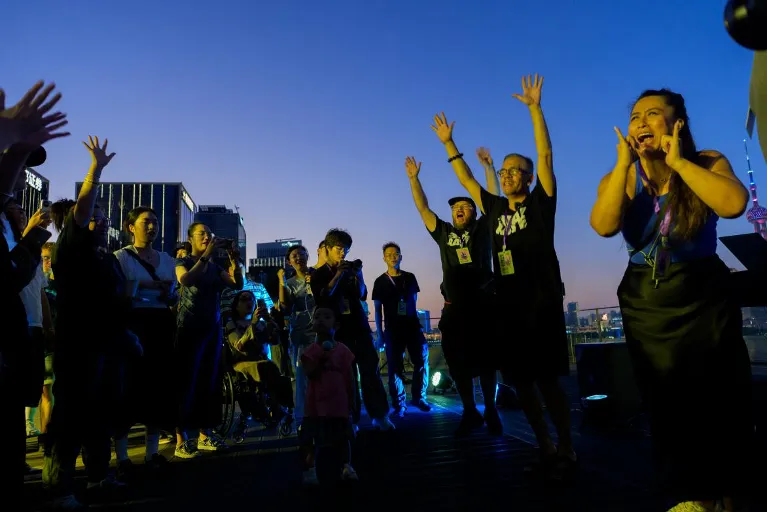
"We deaf people can feel the rhythm with our hearts," said Alice Hu, founder of Connect + Festival of Inclusive Culture. "For example, low frequencies create powerful vibrations in our bodies ... The VJ's visual effects, the DJ's performance, and even the crowd's dancing can all become part of how we experience music."
As a deaf artist, she has spent years working on deaf art projects overseas. And five years ago, she chose to return to Shanghai and build something new.
28-year-old Wang Zihao also moved to Shanghai just over two months ago. He was "amazed" by seeing so many deaf friends enjoying themselves together.
"The floor trembles, letting me experience the music's pulse through my whole body. Even the handrails carry these vibrations," said Wang.
"Standing near the speakers enhances the sensation; now I can detect shifts in the music," said Ye, an Internet professional working in Shanghai.
Beyond feeling sound vibrations through their bodies, deaf people can also use assistive devices like vibration vests connected to the DJ console to amplify the physical experience of music. This helps them enjoy the beats more fully and even empowers them to become deaf DJs.
The Connect + Festival also hosted a DJ workshop, where British-Chinese deaf DJ Troi "DJ Chinaman" Lee explained how deaf individuals can mix tracks, guiding both deaf and hearing participants in creating music together.

"I can DJ. It means now I can teach deaf children. I am hoping for the future, we have more and more deaf DJs... I hope to guide more deaf individuals and people with other disabilities toward a new path," said Lee.
In 2003, Lee founded Deaf Rave, an initiative dedicated to providing a platform for deaf, blind, and disabled artists. By blending music, sign language performances, and visual arts, this creates inclusive musical experiences.
China has about 27.8 million people with hearing disabilities. With a rapidly aging population, this demographic continues to expand.
"In daily life, deaf people rarely get the chance to go clubbing. Many often feel lonely and bored, usually only socializing within the deaf community. But events like this attract so many deaf people; it's a space to be free and be our true selves," said Hu.
"I hope they don’t have to depend on others, but can actively experience life and speak up for themselves."
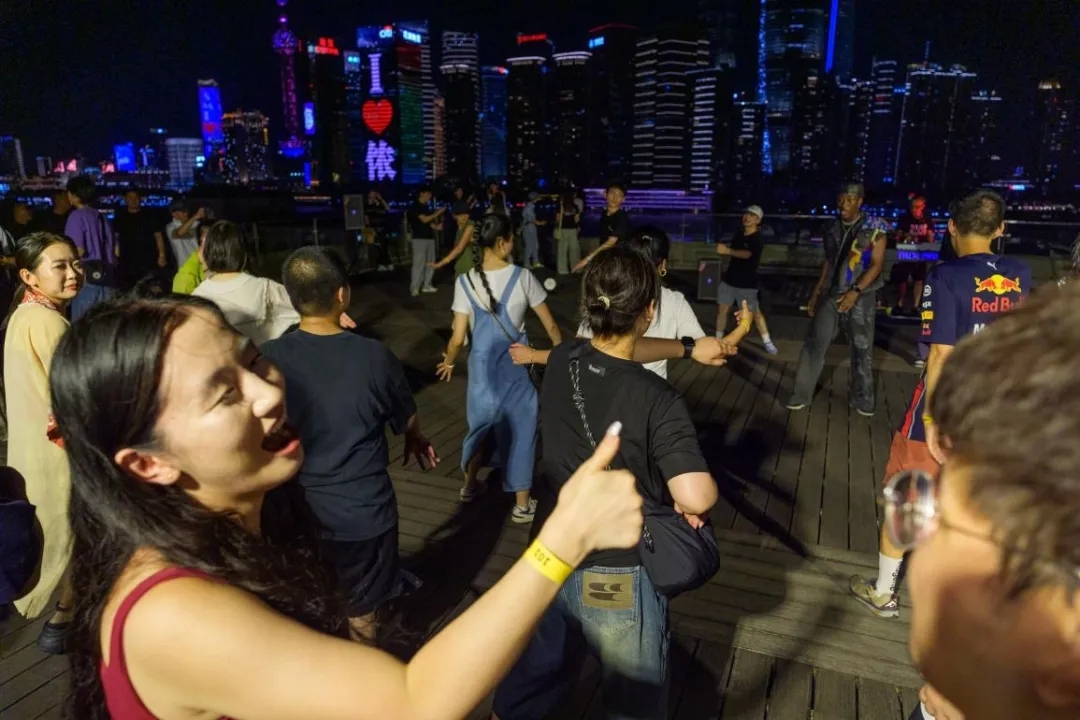
On this ordinary weekend night, the boundary between deaf and hearing communities blurred, all moving to the same musical rhythm.
"My hope is to bridge the deaf and hearing worlds, to help people without hearing impairments understand us, and to exchange our cultures. Once they're in this space, they realize language isn't a barrier at all. We just... smile at each other, laugh together, and suddenly, the two communities blend as one. No more 'us versus them' — just connection," said Hu.