How to fly a drone in Shanghai
Shanghai's Interim Measures for the Administration of Flight Safety of Civil Unmanned Aircraft took effect on Feb 1, 2026. Before flying, drone owners and users must complete real-name registration, check the airspace map, and obtain approval when necessary through the Suishenban (随申办) app or its WeChat mini-program.
1. Drone categories and license requirements
China classifies civil unmanned aircraft as micro, light, small, medium, or large according to weight and other performance specifications. The table below lists the main weight criteria. Additional statutory technical requirements may also apply.
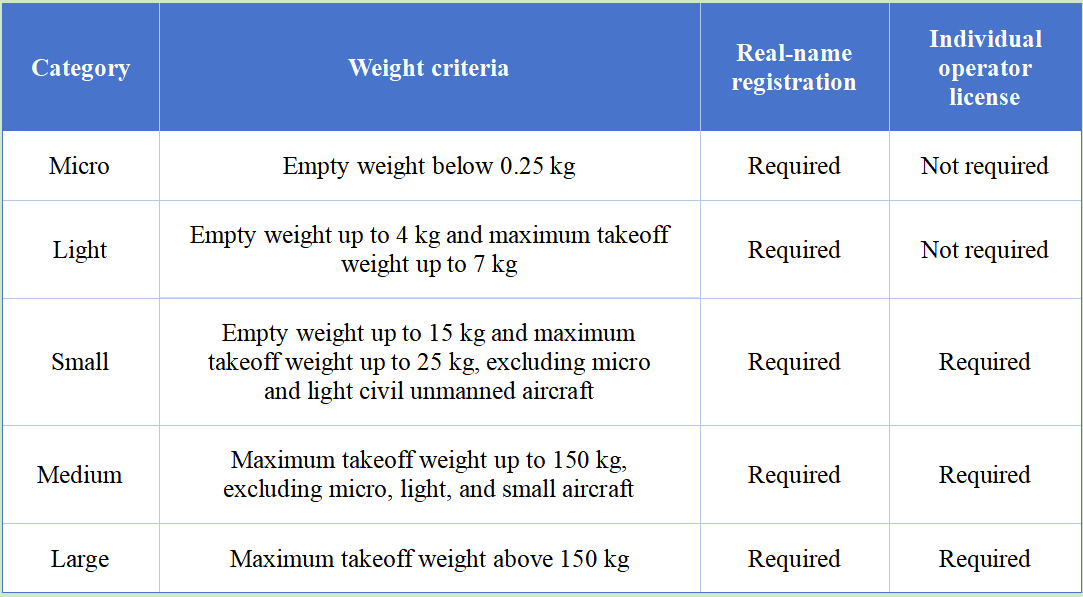
Requirements
- Owners and users of all civil unmanned aircraft must complete real-name registration.
- An organization using civil unmanned aircraft other than micro aircraft for flight operations must obtain a civil unmanned aircraft operator certificate. Conventional agricultural drone operations are exempt from this requirement when they meet the statutory conditions.
- A civil unmanned aircraft operator certificate is issued to a company or organization, authorizing it to legally conduct drone operations.
- A civil unmanned aircraft operator license, issued by the Civil Aviation Administration of China, is granted to an individual and certifies that the holder is qualified to safely operate the relevant category of civil unmanned aircraft. Operators of light civil unmanned aircraft are not required to obtain an operator license. However, those flying light civil unmanned aircraft in controlled airspace must have full capacity, complete the required theoretical training, pass the examination, and obtain a certificate of completion for safety-operation theoretical training.
2. Before you fly
Step 1: Register your aircraft
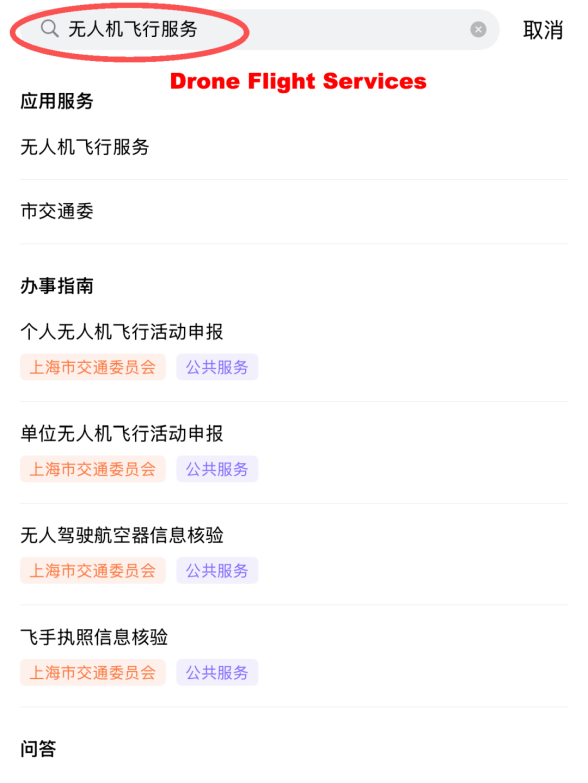
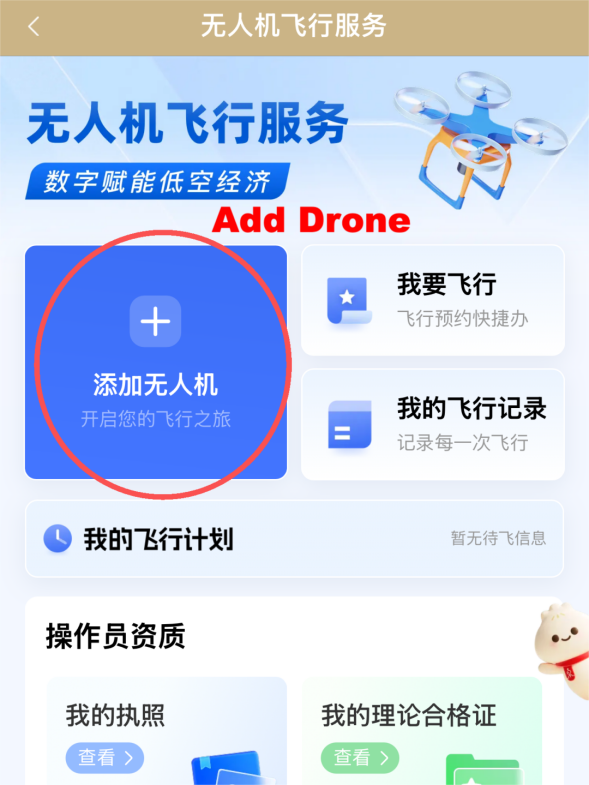
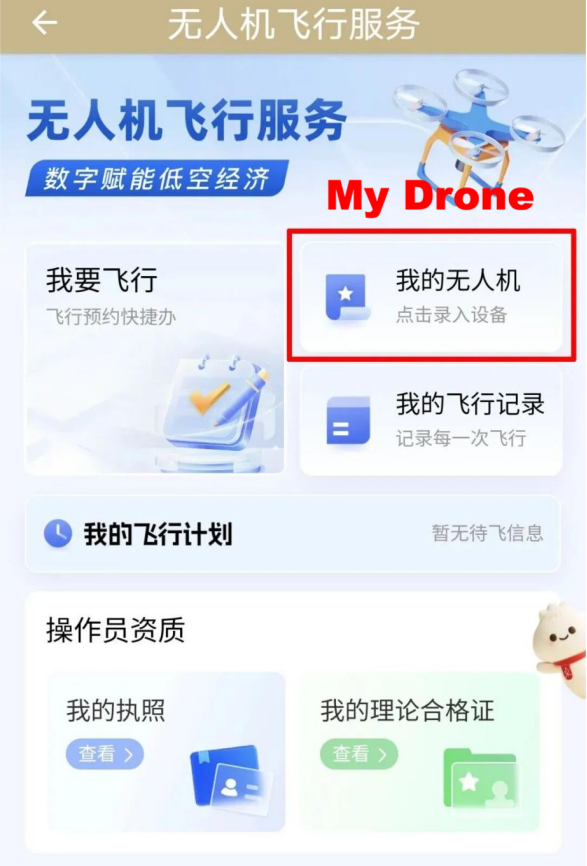
Open the Suishenban app, go to the Drone Flight Services section, tap Add Drone, and enter the aircraft information.
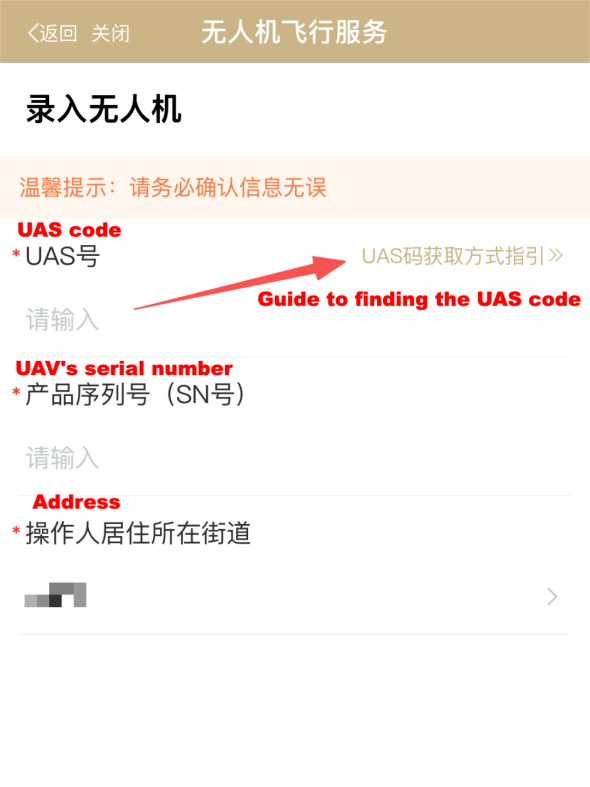
Follow the instructions displayed in the app if you need help locating the aircraft's UAS identification code.
Tap My Drones to view, add, delete, or edit your registered drone(s).
Step 2: Check the digital airspace map
Review the Shanghai digital airspace map before every flight.
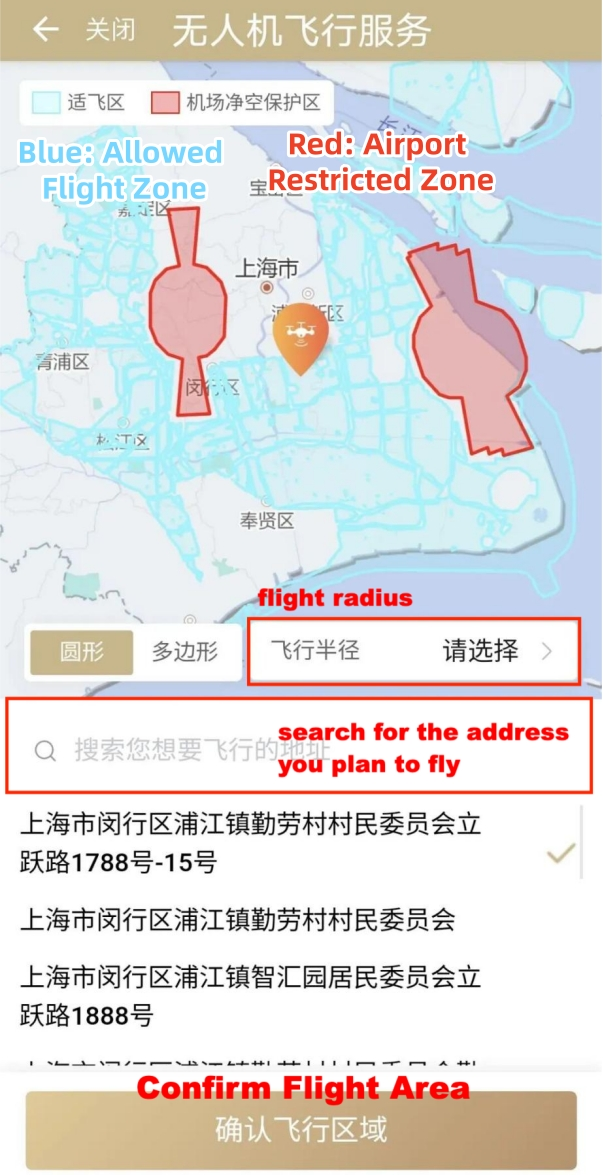
Blue areas indicate designated suitable airspace for micro, light, and small drones. Flights in these areas do not require prior airspace approval, but users must complete the required filing process through the app before flying.
Red areas indicate airport clearance protection zones, where flights require approval.
Step 3: Submit flight information
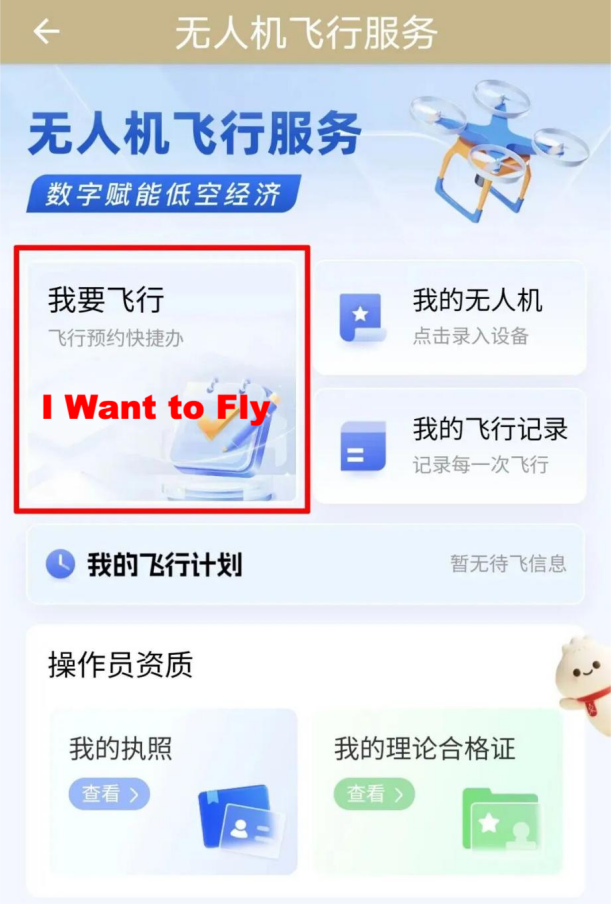
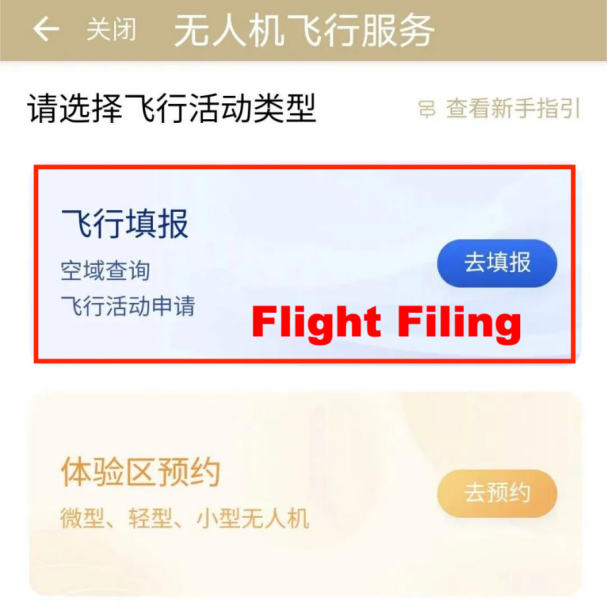
Tap I Want to Fly, then select Flight Filing to open the airspace map. Whenever possible, choose a designated suitable airspace.
After selecting the location and flight radius, tap Confirm Flight Area to continue.
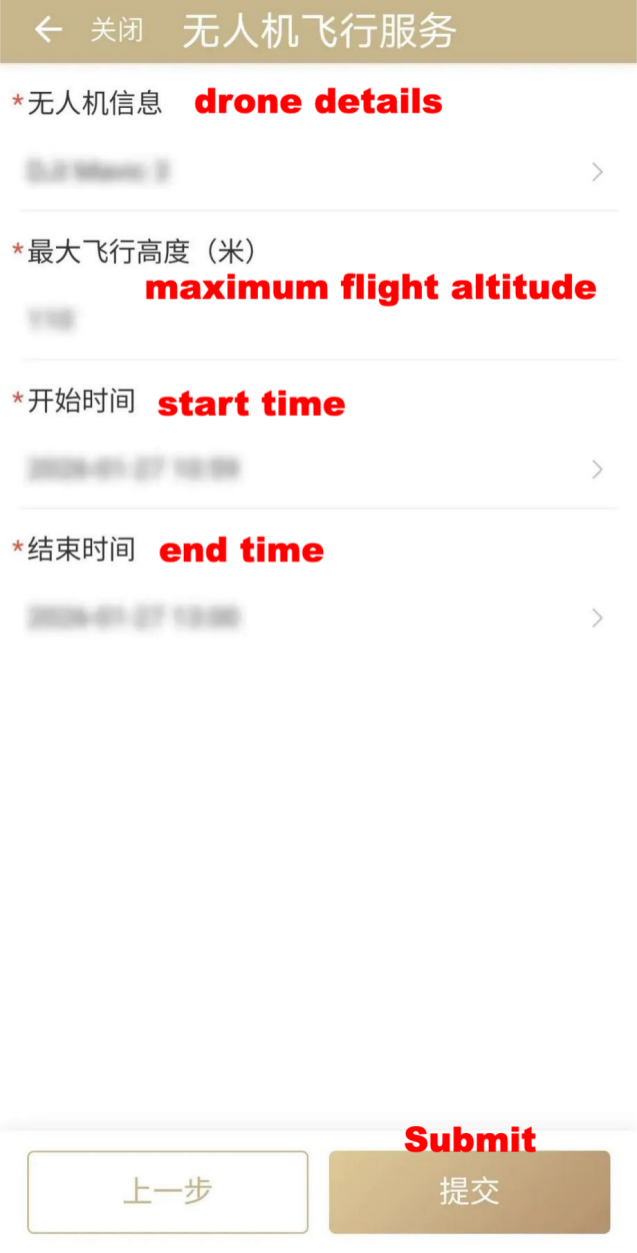
Enter the required information, including the drone details, a maximum flight altitude of less than 120 meters, and the start and end times, then tap Submit.
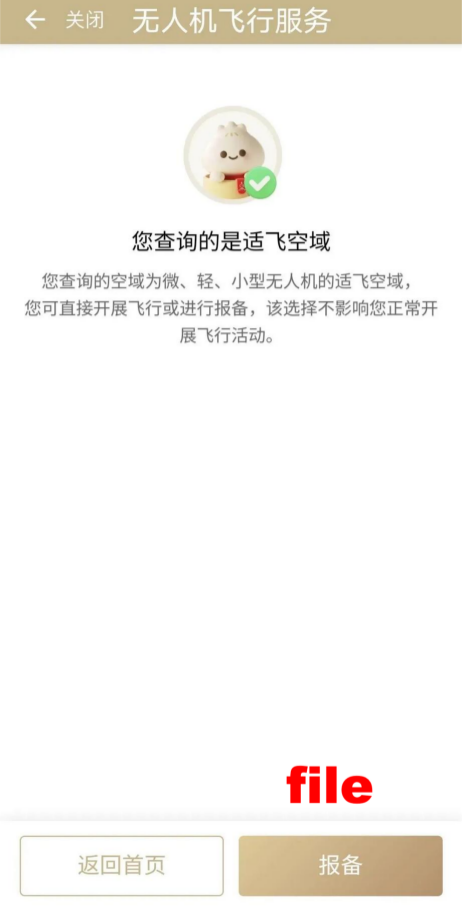
If a message appears stating that the selected area is designated suitable airspace, tap File to complete the process.
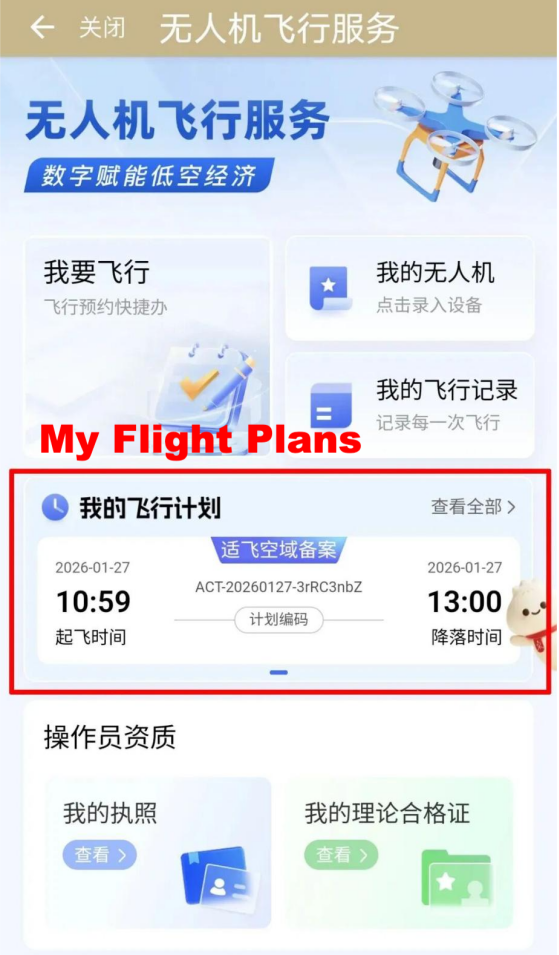
You can view the record under My Flight Plans on the homepage, where it will appear as a Designated Suitable Airspace Filing.
If the selected area is controlled airspace, the app will display a prompt. You can either change the flight area or proceed with a flight activity application.
Submit your application through the Suishenban app by noon on the previous day.
Do not enter controlled airspace until the application has been approved by the air traffic management agency.
You can check the status of your application to fly in controlled airspace under My Flight Plans.
3. What is controlled airspace?
In Shanghai, controlled airspace includes all airspace at a true height of 120 meters or above, as well as airspace below 120 meters that lies outside designated areas suitable for micro, light, and small drones. True height refers to the vertical distance measured from the ground or water surface directly beneath the aircraft, excluding buildings and other structures.
Controlled airspace also includes prohibited airspace, restricted airspace, and their surrounding buffer zones, military ultra-low-altitude flight airspace, and the airspace above or surrounding the following areas:
- airports and their surrounding areas;
- areas within a designated range along China's national borders, lines of actual control, and border lines;
- military restricted zones, military administrative zones, detention facilities, other classified or security-sensitive sites, and their surrounding areas;
- major defense facilities, nuclear facilities, facilities producing or storing flammable, explosive, or other hazardous materials, and large warehouses storing significant combustible materials;
- power plants, substations, fuel, and gas stations, waterworks, public transport hubs, navigation and power hubs, major water conservancy facilities, ports, highways, electrified railways, and their surrounding areas;
- drinking water source protection areas;
- radio astronomy observatories, satellite tracking, telemetry, command and navigation stations, aviation radio navigation stations, radar stations, and other facilities requiring special electromagnetic protection, and their surrounding areas;
- important revolutionary memorial sites, important immovable cultural relics, and their surrounding areas; and
- other areas designated by the national air traffic management authority.
The boundaries of these areas may extend beyond the facilities themselves. Users should rely on the official digital airspace map rather than judging the boundaries independently.
4. Public flight experience zones for consumer-grade drones
Shanghai currently has three public flight experience zones for recreational drone users, covering micro, light, and small drones:
- Shanghai Expo Culture Park
- Century Park
- Shanghai Botanical Garden
Reserve a time slot through the Drone Flight Services section of the Suishenban app.
5. Requirements for liability insurance
Users conducting commercial flight activities, or non-commercial flights with small, medium, or large unmanned aircraft, must obtain liability insurance as required by law.
For non-commercial flights with micro and light drones, liability insurance is encouraged.
6. Penalties for illegal drone flights
Flying a civil unmanned aircraft without completing real-name registration may result in an order to correct the violation and a fine of up to 200 yuan. In more serious cases, the fine may range from 2,000 yuan to 20,000 yuan.
Flying a civil unmanned aircraft in violation of airspace-management rules, including entering controlled airspace without approval, may lead to detention for 5 to 10 days if the circumstances are deemed relatively serious. Modifying a drone's factory-set performance parameters, including its ability to remain within assigned airspace, be reliably monitored, or comply with speed and altitude limits, may also result in legal liability.
Illegal cross-border flights may result in a detention period of 10 to 15 days. If such conduct causes serious consequences, it may also constitute a criminal offense.
Reminder:
Children under eight may operate only micro drones and must receive on-site guidance from an individual with full capacity for civil conduct.
Minors aged eight or older but under 18 may operate only micro or light drones. When operating light drones, they must receive on-site guidance from an individual with full legal capacity for civil conduct who also meets the relevant safety-operation requirements.
Updated July 1, 2026
Sources: Civil Aviation Administration of China, Shanghai Municipal People's Government, Shanghai Municipal Bureau of Public Security, Shanghai UAV Security Management Association