Shanghai Innovation Institute marks first anniversary with AI innovations
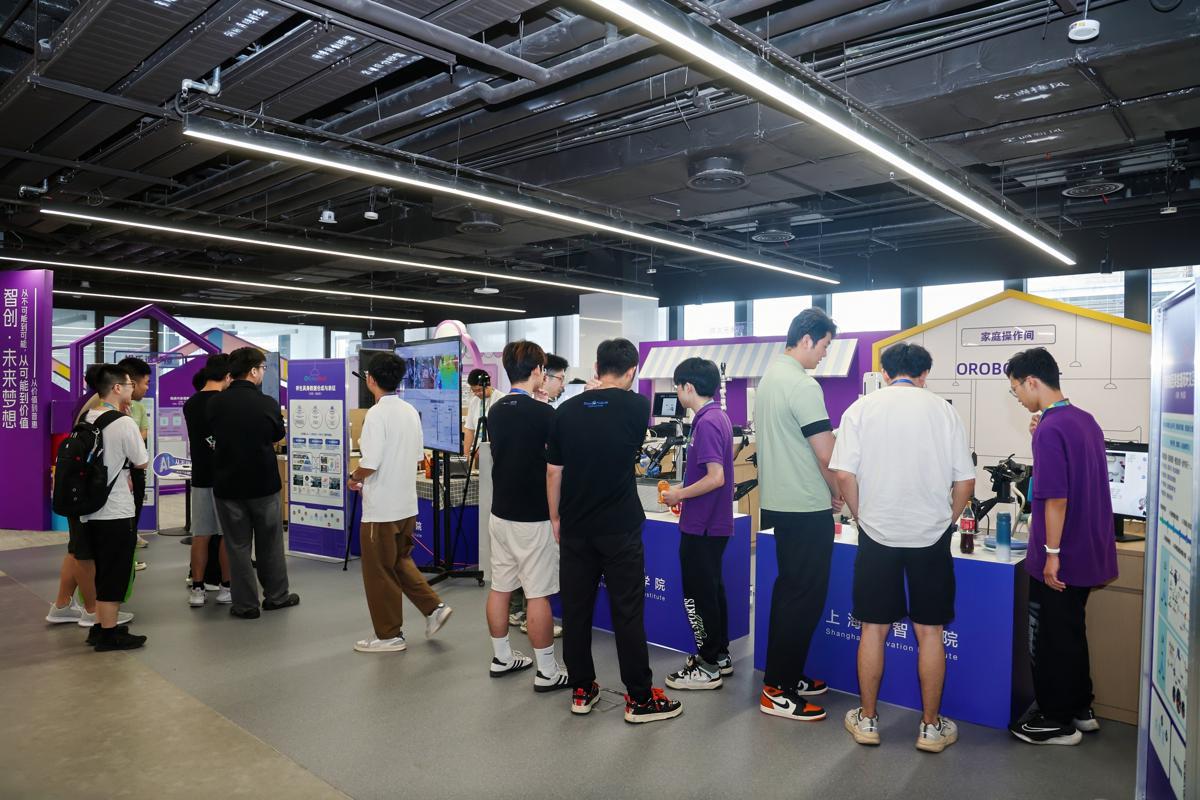
The Shanghai Innovation Institute celebrated its first anniversary by showcasing cutting-edge artificial intelligence achievements at its inaugural TechFest held from Sept 11 to 13, highlighting the institute's novel approach to nurturing top-class AI talent.
Since its establishment last September in Shanghai's Xuhui district, the institute has pioneered an innovative doctoral education model and formed partnerships with 31 universities nationwide to create a dynamic talent pipeline.
The event unveiled several major technological breakthroughs. Liu Pengfei's team introduced cognitive active data processing technology that converts raw data into high-quality input for advanced AI systems. Their AI superintelligence research system can discover over 100 new network architectures in just two days, compared to the average 2,000 hours needed by human experts to discover one.
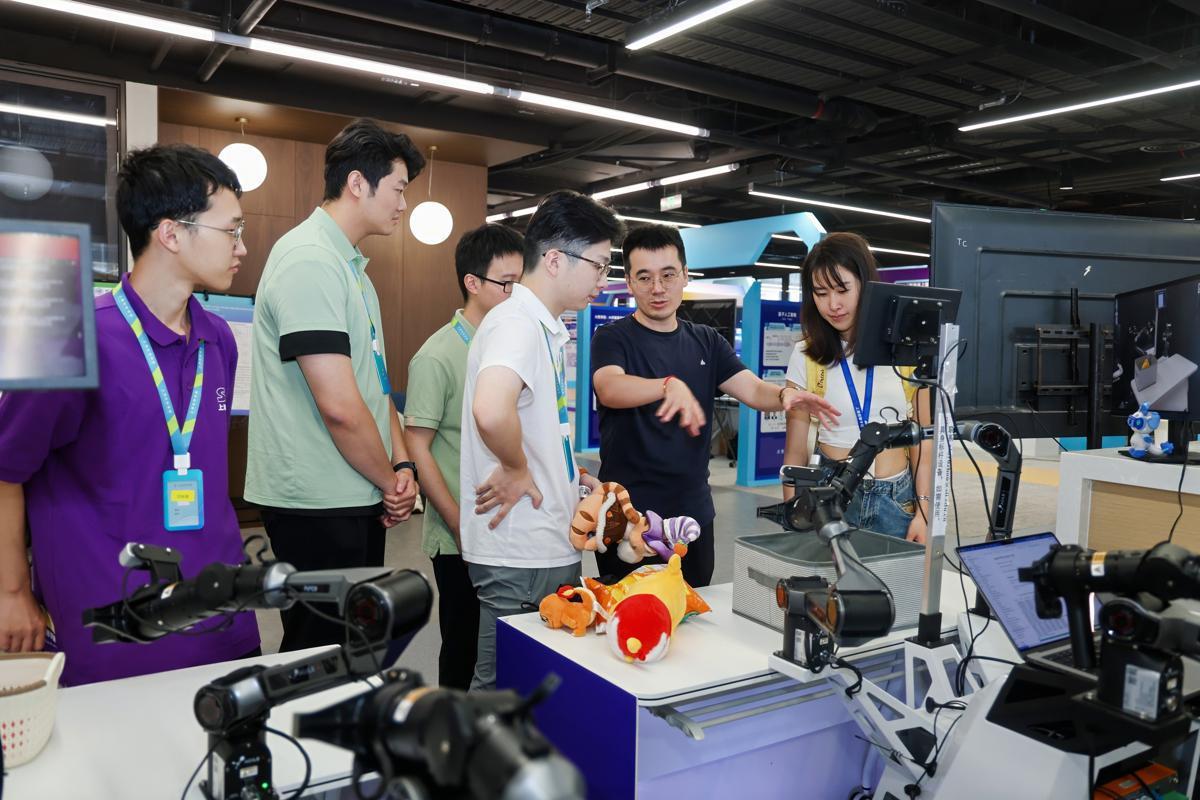
Other breakthrough innovations include the world's first scalable whole-process interpretation framework for large language models by Qiu Xipeng's team, while Cai Panpan's ORoboSoul project enables robots to truly understand the world. Zhou Aimin's team introduced a pioneering interactive creativity evaluation system for AI, transforming talent assessment methods.
Dai Guohao's team achieved breakthroughs in digital-biological intelligence interaction, addressing the "impossible triangle" of power consumption, memory, and intelligence in smart terminals. Zhang Weinan's team developed the Holos system, integrating hundreds of public network agents for various academic tasks.
The institute's educational approach has already yielded impressive results. Ma Weijie, a 2024 doctoral student, has achieved a breakthrough in seamless ultra-wide-angle real-time glasses-free 3D display technology, with his research accepted for publication in the journal Nature.
The institute has also incubated 10 student and faculty startups, including doctoral student Ye Yuxiang's venture developing emotionally intelligent robot companions. "Joining SII has exposed me to diverse thought systems and empowered me to pursue world-changing innovations," Ye said.
"Our selection process differs from conventional doctoral admissions," Wu Libo, vice-president of the institute said. "Rather than focusing solely on academic scores, we evaluate candidates through intensive training camps, looking for qualities such as ambition, courage, vision, potential, and risk awareness."
The institute fosters a unique learning environment with 81 full-time mentors, over 130 part-time instructors, and more than 120 industry mentors from leading technology companies.
"We've created an environment where mentors and students code together, more like partners than traditional teacher-student relationships," Ding Xiaodong, Party secretary and executive vice-president of the institute said.
Students receive resources including computing power, laboratory facilities, and venture capital opportunities, with the flexibility to adjust their research focus based on interests and progress. Through five recruitment camps, the institute has attracted over 3,300 applicants and selected more than 800 students from 45 specialties.
"By bringing together these students and faculty, a high-density pool of top talent will be formed," Ding said, noting that the ultimate goal is to incubate startups and research achievements in AI, thereby contributing to Shanghai's AI industry.
"Building a talent cultivation system requires constant iteration," Ding said. "While we're still exploring and refining our approach, we're on the way."