Computing power paradigm shift spurs Shanghai's AI infrastructure push
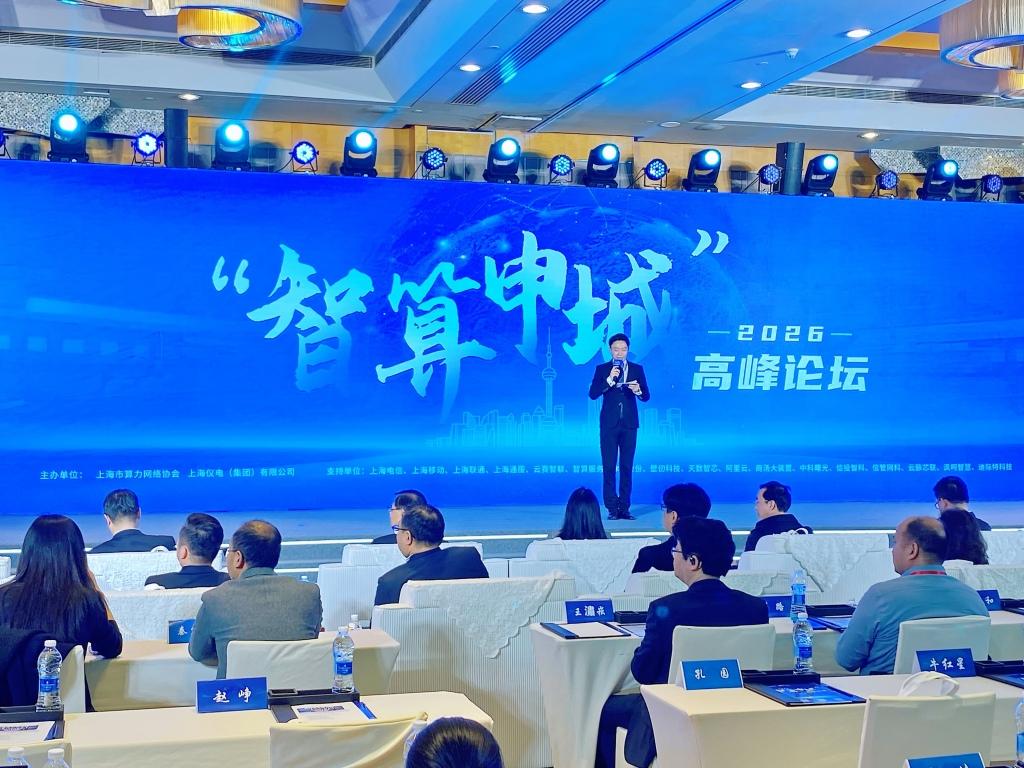
Shanghai is moving to upgrade its intelligent computing infrastructure amid a fundamental shift in how computing power is measured, with performance increasingly assessed by token consumption rather than traditional measures such as floating point operations per second (FLOPS). The change was outlined at the 2026 "Intelligent Computing Shanghai" Summit on Jan 27.
The shift reflects the growing practice of pricing large-scale AI model application programming interfaces by token usage. In response, the China Academy of Information and Communications Technology (CAICT), working with three major telecom operators and local computing service providers, launched the Shanghai Computing Power Economy Empowerment Co-creation System.
Overseen by the city's commission of economy and informatization, development and reform, data, and communications authorities, the system is designed to address the challenge of converting computing resources into tangible economic value. It adopts a dual-track approach that combines technical verification and commercial application.
Pan Yan, deputy director of the Shanghai Municipal Commission of Economy and Informatization, said the city is actively advancing national strategies to promote AI integration and accelerate the digital transformation of manufacturing.
Shanghai's intelligent computing capacity has already surpassed 120,000 petaFLOPS (PFLOPS), with nearly 20,000 PFLOPS managed through the municipal intelligent computing platform.
Zhang Jianming, CEO of INESA (Group) Co Ltd, highlighted the shift from prioritizing infrastructure scale to overall effectiveness in China's computing power industry.
He described an emerging four-tiered architecture linking hardware, intelligent cloud computing, models, and applications.
Wang Xiaoli, deputy secretary of the Party committee of CAICT, underscored computing power's role as a core productive force in the digital economy and a key driver of economic transformation.
She added that the Ministry of Industry and Information Technology has rolled out a series of policies to strengthen computing infrastructure nationwide.
The summit also saw the launch of the "Shanghai Intelligent Computing Industry High-Quality Development Initiative", which aims to build next-generation intelligent computing centers and a high-level cloud service system.
In addition, INESA and members of the scientific community introduced a "Scientific Intelligence Open Community Computing Power Support Program", offering researchers around the world access to scientific computing infrastructure and cloud services.
Sources: Shanghai Observer; The Paper